

NATURAL LIVING · INDOOR PLANTS & BIOPHILIC DESIGN
Large Indoor Plants: How to Use Scale Without Overcrowding a Room
A practical guide to choosing and positioning large indoor plants so they add structure, softness and scale without overwhelming the room.
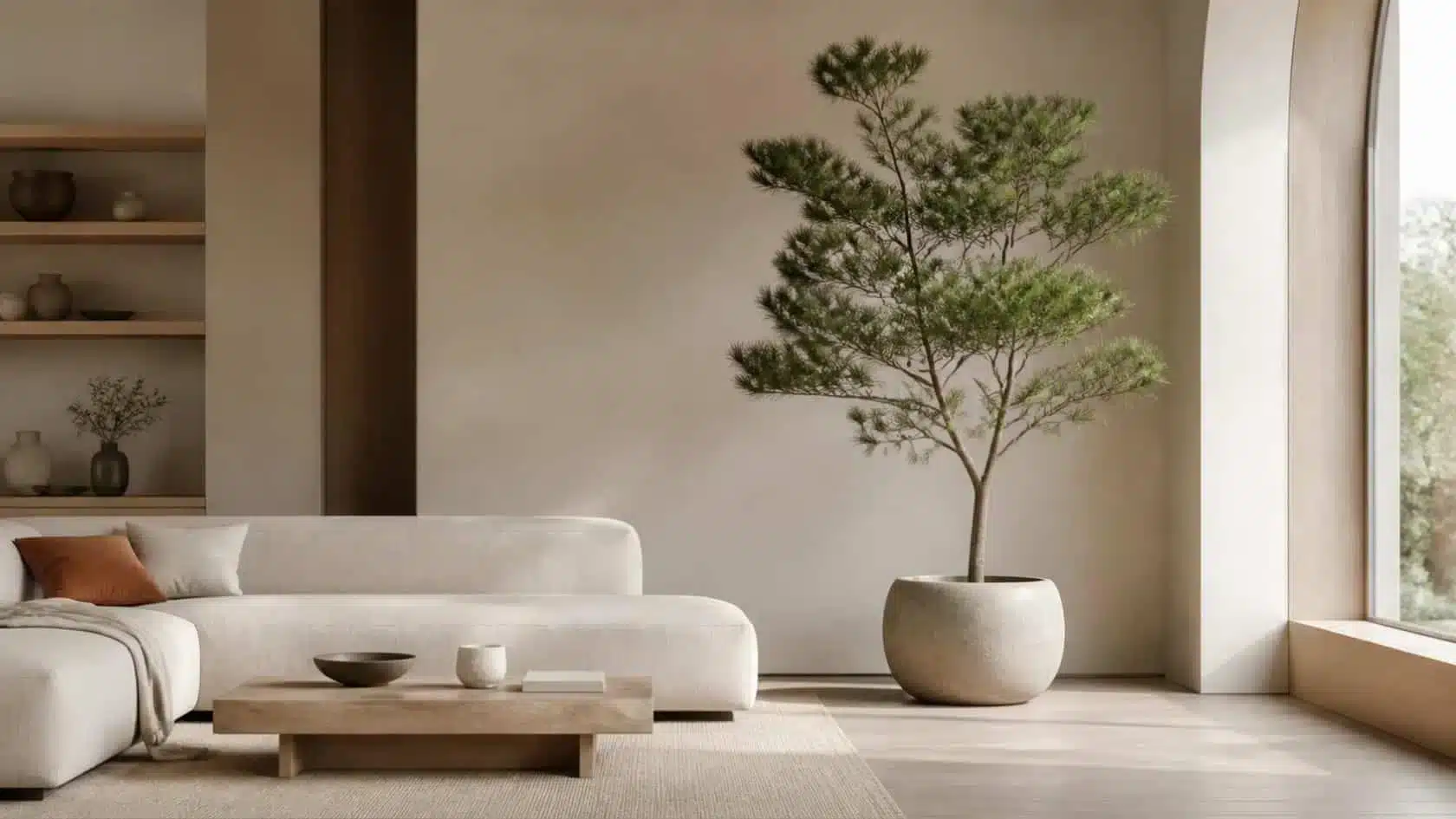
Large indoor plants can make a room feel more architectural, more settled and more connected to nature. But scale only works when the plant has enough physical and visual space to belong there.
This guide focuses on the part that often gets missed: how to judge proportion, placement and mature size before a statement plant becomes an obstacle.
Why Large Indoor Plants Work So Well
Large indoor plants behave differently from small houseplants. Once a plant reaches floor-standing scale, it stops reading as a decorative accessory and starts acting more like a piece of furniture: it occupies volume, alters sightlines and changes the balance of the room.
That is why a large plant can be so effective. One well-positioned specimen can soften a hard corner, add height beside low furniture, interrupt a long blank wall or create a calmer transition between architectural elements.
The risk is that scale can become clutter just as easily as impact. A plant that is too wide for the circulation route, too tall for the ceiling line or too dense beside already-heavy furniture can make a room feel smaller rather than more considered.
Start With the Room, Not the Plant
Before choosing a species, decide where the plant would actually live.
The Royal Horticultural Society recommends selecting houseplants for the conditions of their location because light, temperature and humidity can vary significantly from room to room and through the year. RHS
For a large plant, add two more questions to that horticultural assessment: how much physical space is available, and how much visual weight can the room comfortably take?
- How much natural light reaches the exact position?
- How close is the plant to radiators, draughts or glazing?
- How wide can the plant become before it interferes with movement?
- How high is the ceiling, and where are shelves, artwork and lighting?
- Can you still water, rotate and clean around the plant comfortably?
Measure the Plant as You Would Furniture
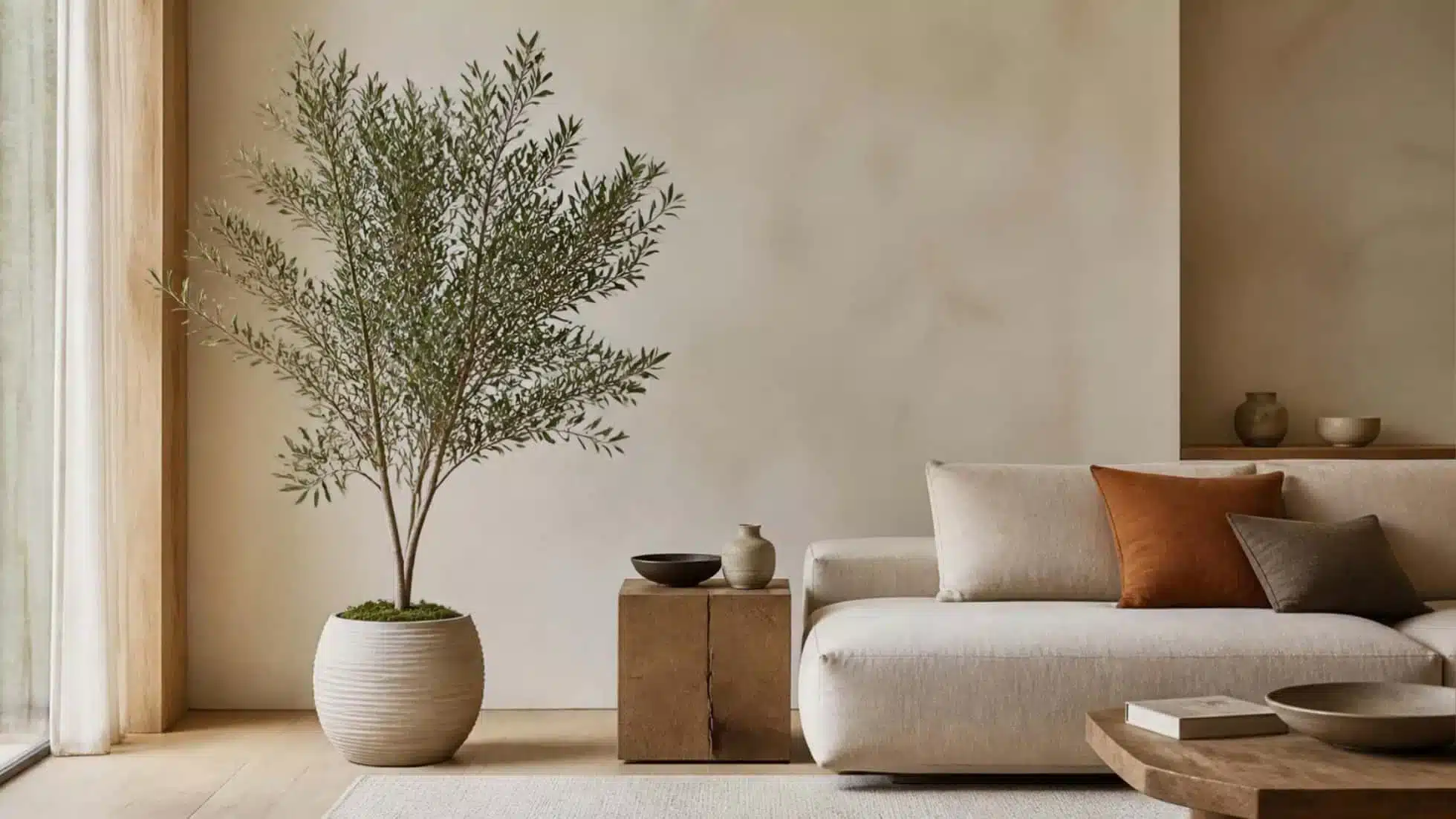
A useful rule is to measure the intended plant zone before you shop.
Mark out three dimensions: height, mature width and container footprint. The pot matters because a large decorative container may add far more width than the nursery pot alone suggests.
If the plant is intended for a corner, check the diagonal spread rather than measuring only against one wall. Broad foliage can project into the room even when the trunk or central stems sit neatly inside the corner.
Temporarily placing a chair, box or taped outline in the intended footprint can make the scale much easier to judge than relying on a mental estimate.
Mature Size Matters More Than Nursery Size
The specimen you see in a shop is only its current size.
Some large houseplants continue to expand substantially in height or width when they are healthy and given suitable conditions. That growth should be part of the original placement decision rather than something you deal with later.
This does not mean you need to predict an exact final measurement. It means choosing a position with enough tolerance for growth and enough access to prune, rotate or repot when necessary.
A plant that perfectly fills every centimetre of an empty corner on day one has very little room to mature gracefully.
Where Large Indoor Plants Work Best
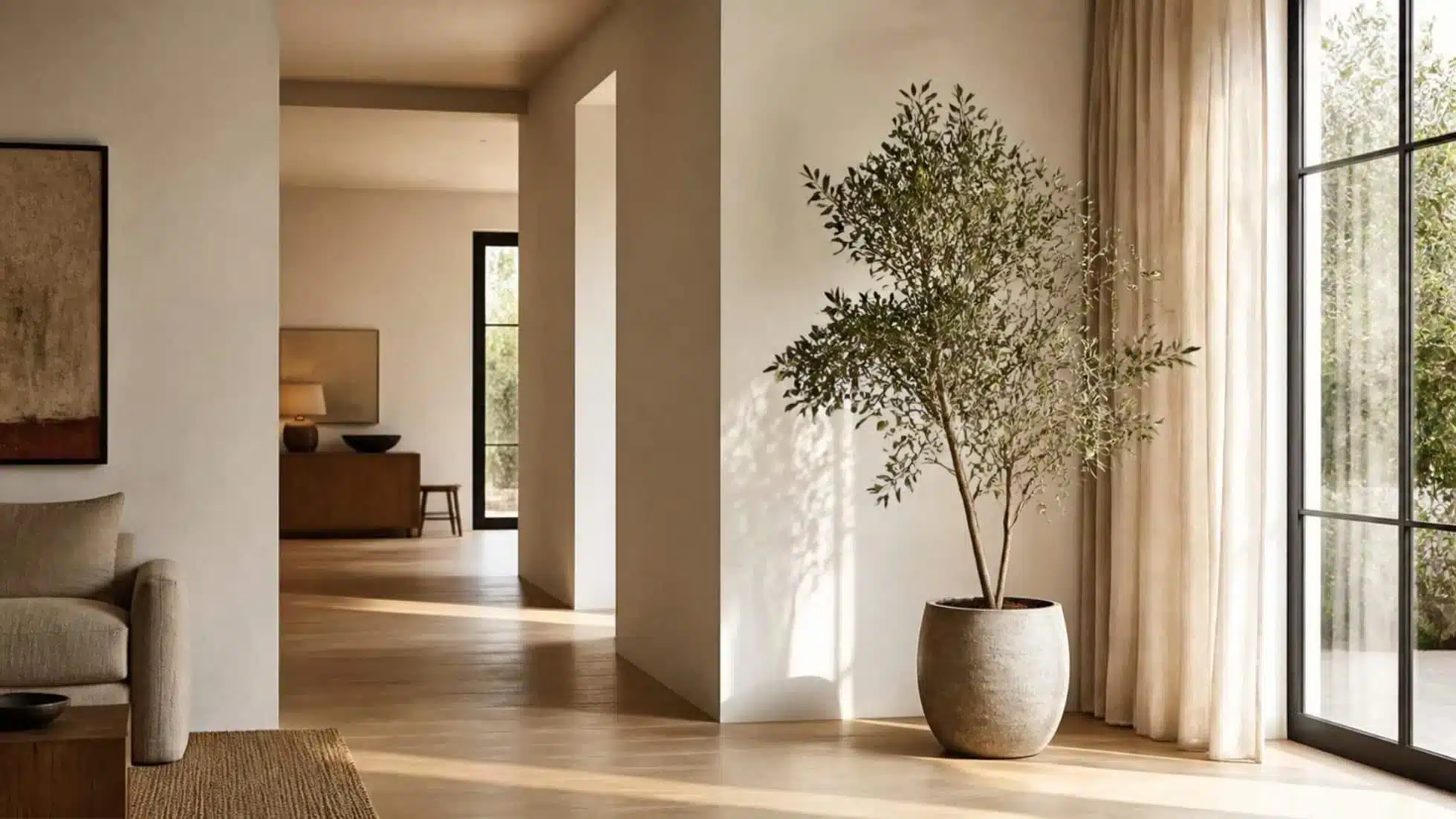
Large plants are most convincing when they have a clear spatial role. They should solve a compositional problem rather than simply occupy an unused patch of floor.
Beside a window
A bright window can provide the growing conditions many foliage plants need while allowing the plant to frame daylight rather than block it.
Keep enough clearance for curtains, blinds and opening windows, and remember that strong summer sun through glass can be much harsher than winter light. The RHS notes that positions can change in suitability through the seasons as light intensity changes. RHS
At the end of a furniture group
A tall plant can visually finish the end of a sofa, sideboard or reading area without requiring another piece of furniture. For a broader room-specific approach, our guide to living room plant placement covers how plants sit alongside sofas, windows and circulation.
This works particularly well where the plant creates height beside lower horizontal forms.
In an architectural corner
An empty corner can benefit from a sculptural plant, but only if the foliage has room to spread.
Leave breathing space between leaves and adjoining walls so the plant reads as an intentional object rather than something wedged into storage space.
Near a transition between zones
In an open-plan room, a large plant can help mark the transition between dining, living or working areas without creating a hard visual barrier.
The plant should support circulation, not narrow it.
Use One Anchor Plant Before Adding More
The simplest way to avoid overcrowding is to begin with one large anchor plant.
Live with it for a while before adding other substantial greenery. Once the anchor is in place, you can see whether the room actually needs another large plant or whether smaller tabletop and trailing plants would create a better hierarchy.
This mirrors the three-layer approach used in our indoor plants guide: one strong anchor, a smaller middle layer and a restrained detail layer. The result is usually calmer than placing several equally dominant plants around the same room.
Think About Visual Weight, Not Only Height
With tall indoor plants, height is only one part of the equation: two plants of the same height can still feel completely different in a room.
A narrow upright form may read as relatively light, while broad leaves or dense branching can create much more visual mass. Dark foliage can also feel heavier than fine, airy foliage even when the physical footprint is similar.
When judging scale, look at the silhouette from across the room. Ask whether the foliage balances the furniture or competes with it.
The aim is not symmetry. It is visual equilibrium.
Large Indoor Plants in Small Rooms
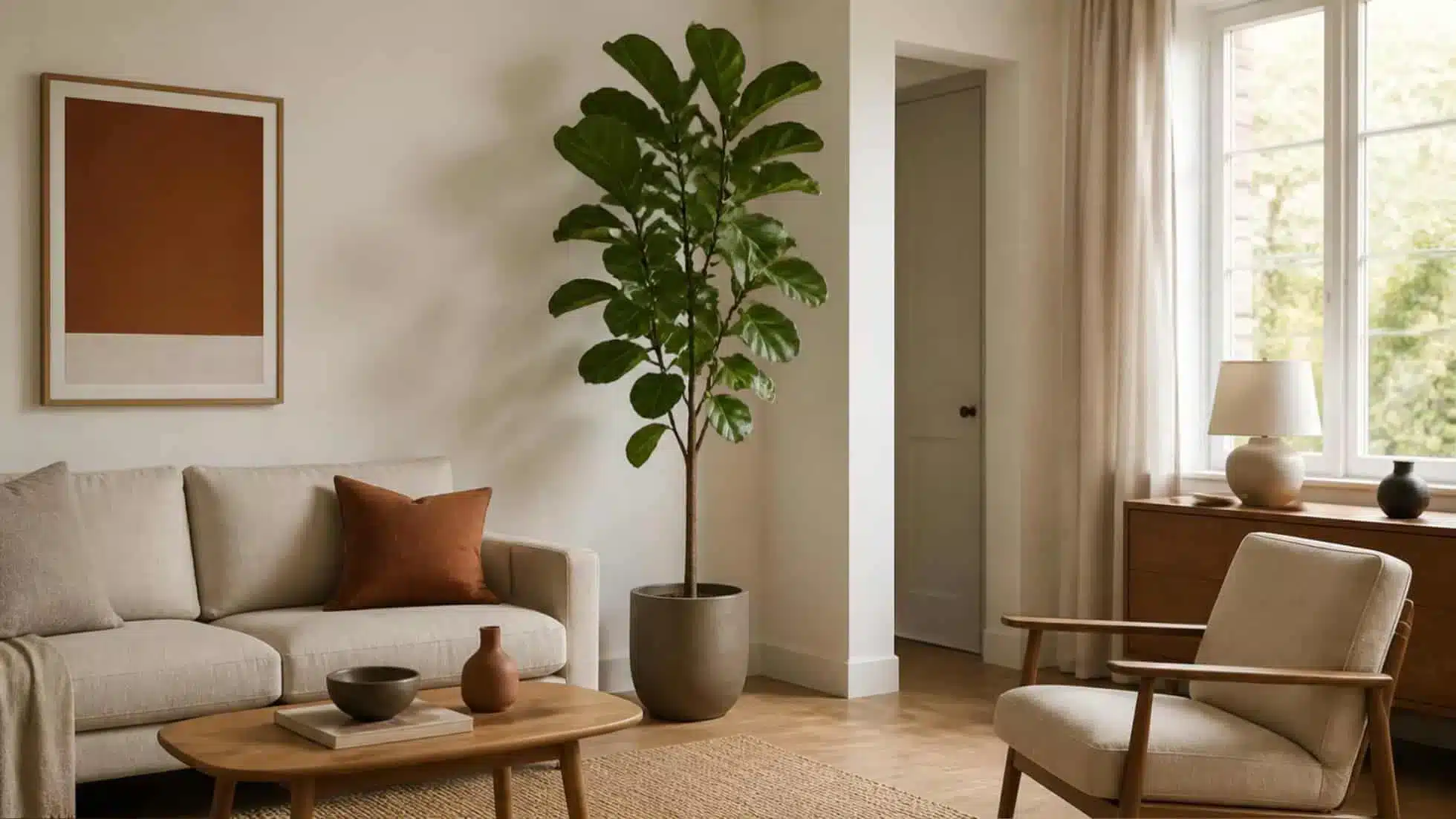
A small room does not automatically require only small plants. Large house plants can still work well when their footprint, growth habit and placement suit the space.
In fact, one larger plant can sometimes create a stronger and quieter composition than many small pots scattered across several surfaces. The important distinction is between large and oversized for the available space.
In a compact room, choose a position that preserves the main circulation route and does not block natural light. A more upright growth habit is often easier to accommodate than foliage that spreads widely at shoulder height.
Keep the surrounding styling restrained. If the plant is already the main organic focal point, it does not need to share the same corner with baskets, stools, floor lamps and several smaller pots.
Choose the Pot as Carefully as the Plant
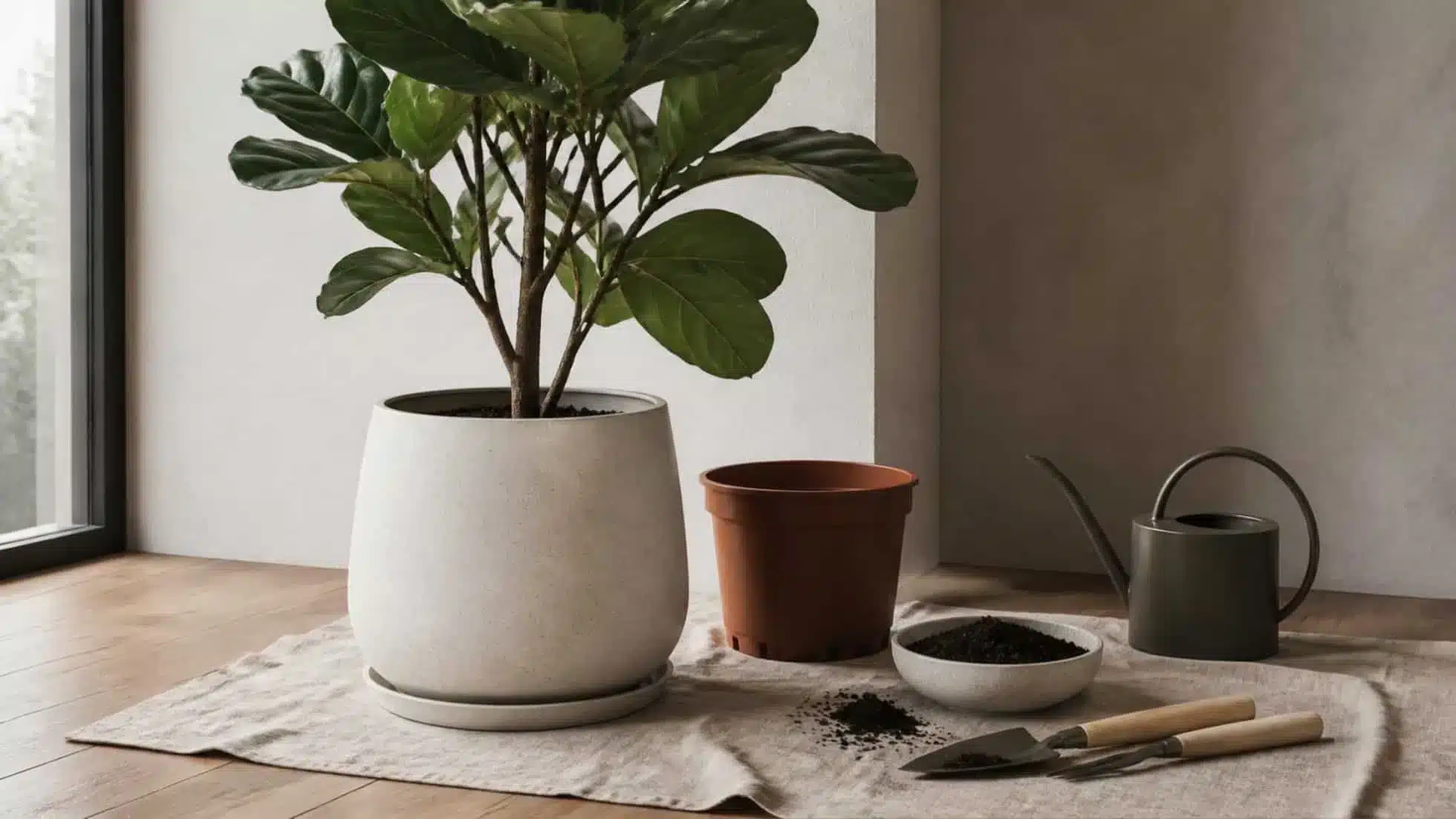
Large containers have both horticultural and interior-design consequences.
The pot must support drainage and root health, but its scale, material and weight also affect how the plant sits in the room. A very small decorative pot can make a large plant look top-heavy, while an oversized container can dominate the floor area and hold too much wet growing medium around a relatively small root system.
The RHS advises moving container plants into appropriately larger pots rather than making a dramatic jump in size. Its repotting guidance notes that a new container should generally be no more than about one third larger than the current one. RHS
For interiors, consider using a practical inner pot with drainage inside a decorative outer container, provided excess water is never left standing around the roots. Our main guide also explains how to approach choosing the right pot for indoor plants.
Allow for Light and Seasonal Positioning
A large plant is harder to move than a small one, so light should be assessed carefully before the plant becomes established. For the broader principles, see our guide to light for indoor plants.
The RHS identifies light as one of the main factors in houseplant success and notes that a position that works in winter may become too intense in summer, while a shaded winter position may provide too little useful daylight. RHS
If a plant may need seasonal repositioning, plan that route in advance. A heavy pot that fits tightly between furniture is much less flexible once it is watered and established.
Water Large Indoor Plants by Condition, Not Calendar
Large plants are often assumed to need frequent watering simply because they are large. That is not a reliable rule.
Water demand depends on the species, root system, light, room temperature, humidity, pot size and growing medium. The RHS recommends checking the moisture in the compost rather than watering houseplants automatically on a fixed schedule. RHS
Drainage becomes especially important with large containers because they can hold a significant volume of wet compost. After watering, allow excess water to drain and do not leave the root zone sitting in accumulated water. RHS
Plan for Moving and Repotting Before You Need To
A large indoor plant can be easy to place and surprisingly difficult to move six months later.
Before buying, consider doorway width, stairs, flooring, the weight of the container and whether the plant can be rotated without damaging leaves.
Repotting is not automatically required every year. The RHS recommends assessing root congestion and the condition of the growing medium; vigorous growth, restricted roots and poor drainage are more useful indicators than a rigid timetable. RHS
For very large specimens, maintenance access is part of the design decision. If you cannot comfortably reach the pot to water, inspect or clean around it, the placement is probably too tight.
Common Mistakes With Large Indoor Plants
- Buying for immediate impact alone. A dramatic plant still needs suitable light, temperature and room to grow.
- Ignoring mature width. Height gets attention, but spreading foliage is often what interferes with walkways and furniture.
- Using several competing statement plants. More scale does not automatically create more impact.
- Choosing the container after the plant arrives. Pot size, drainage, material and weight should be considered from the beginning.
- Placing a plant where it cannot be maintained. Beautiful placement is not useful if watering and repotting become impractical.
- Treating a dark corner as a styling opportunity. A large plant still needs enough light to grow.
A Simple Selection Method
Use this sequence before bringing a large plant home.
- Choose the exact location.
- Observe the light at different times of day.
- Measure height, width and container footprint.
- Check circulation and access.
- Research the mature form and growing requirements.
- Decide whether you can move and maintain the plant later.
- Choose the container and drainage strategy.
- Only then select the individual plant.
Frequently Asked Questions About Large Indoor Plants
Can a large indoor plant work in a small living room?
Yes, provided the plant’s actual footprint and growing conditions suit the room. One carefully placed large plant can feel calmer than many small plants, but it should not obstruct movement, windows or essential furniture.
How close should a large plant be to a window?
There is no universal distance. The correct position depends on the species, window orientation, glazing, season and surrounding shade. Assess the exact light at the intended location rather than relying on a generic distance rule.
Should I buy the biggest plant that fits?
Usually not. Allow space for foliage to develop and for you to water, rotate and maintain the plant. A specimen that completely fills the available space from the beginning leaves no tolerance for growth.
How do I stop a large plant making the room feel crowded?
Reduce competing objects around it. Give the plant breathing space, preserve clear circulation and let it act as the main organic focal point rather than one element in a crowded corner.
Do large plants need larger pots straight away?
Not necessarily. Repot because the root system or growing medium needs it, not simply because the top growth looks large. Move up in container size gradually rather than overpotting.
Use Scale With Restraint
Large indoor plants work best when they are treated as part of the architecture of a room rather than as oversized accessories.
Start with the conditions. Measure the space. Consider mature width, circulation, light and maintenance. Then choose a plant whose form supports the room rather than filling it indiscriminately.
The strongest result is often simple: one plant with enough space around it to grow, be cared for and remain visually distinct. Browse our planters and botanical decor for pieces with room to grow.

Leave a Reply