

MINDFUL ROUTINES · AROMATHERAPY & HOME FRAGRANCE
Room Diffuser Guide: Choosing Fragrance for Different Spaces
A room-by-room guide to home fragrance—covering scent intensity, fragrance families, airflow, placement and how to make different spaces feel connected without using the same diffuser everywhere.

A room diffuser works best when the fragrance belongs to the space rather than simply being strong enough to notice. The living room, hallway, bedroom and bathroom all have different airflow, materials, existing smells and patterns of use, so they do not need the same scent intensity or the same diffuser setup.
The useful question is not “Which fragrance is best?” but “What should this room smell like when it is being used normally?” That shift makes it easier to choose scent families, output and placement without turning the house into a collection of unrelated fragrances.
For diffuser types, maintenance and general placement, see our oil diffuser guide. This article starts with the room and works backwards to the fragrance.
Choose Room Scents From the Room Outwards
Start with how the room is used. A sitting room may need a fragrance that can coexist with books, timber, textiles and occasional food or drink. A hallway can carry a clearer first impression because people pass through it rather than sit there for hours.
Also notice how long people stay in the space. A fragrance that feels attractive for two minutes near an entrance may feel too insistent after an evening on the sofa.
Match Fragrance Strength to the Space
Room size matters, but so do ceiling height, ventilation and how enclosed the space is. A small closed bedroom usually needs less output than an open-plan ground floor.
Start at the lower end of the diffuser’s recommended output or fragrance amount. If the scent disappears too quickly, first check placement and airflow before increasing the concentration.
A Simple Way to Think About Fragrance Families
Fragrance descriptions can become complicated quickly. For everyday home use, broad families are often enough to begin.
- Citrus and fresh notes can make a composition feel brighter and lighter.
- Herbal and green notes can introduce a drier, leafier character.
- Floral notes range from airy and transparent to richer and sweeter.
- Wood, resin and spice notes often give a fragrance more depth and persistence.
- Soft gourmand notes can add warmth but may compete with cooking or dining aromas if overused.
These are descriptive scent families, not claims about how a fragrance will affect mood, sleep or health.
Living Room

A living-room fragrance has to work for the longest and most varied period. It may sit alongside coffee, books, candles, textiles, television and guests, so balance matters more than immediate impact.
Woody, green, soft citrus or restrained floral compositions can all work depending on the room, but keep the diffuser away from the main seating position. You should notice the fragrance as part of the room, not feel that the source is aimed directly at you.
Hallway and Entrance

The hallway is often the first scented space people encounter, which makes restraint important. A clear fragrance can establish the home’s overall character without needing a powerful diffuser.
Because hallways can be draughty, avoid placing a diffuser directly beside the front door. A side console further into the space usually gives fragrance more time to disperse before the air carries it away.
Bedroom
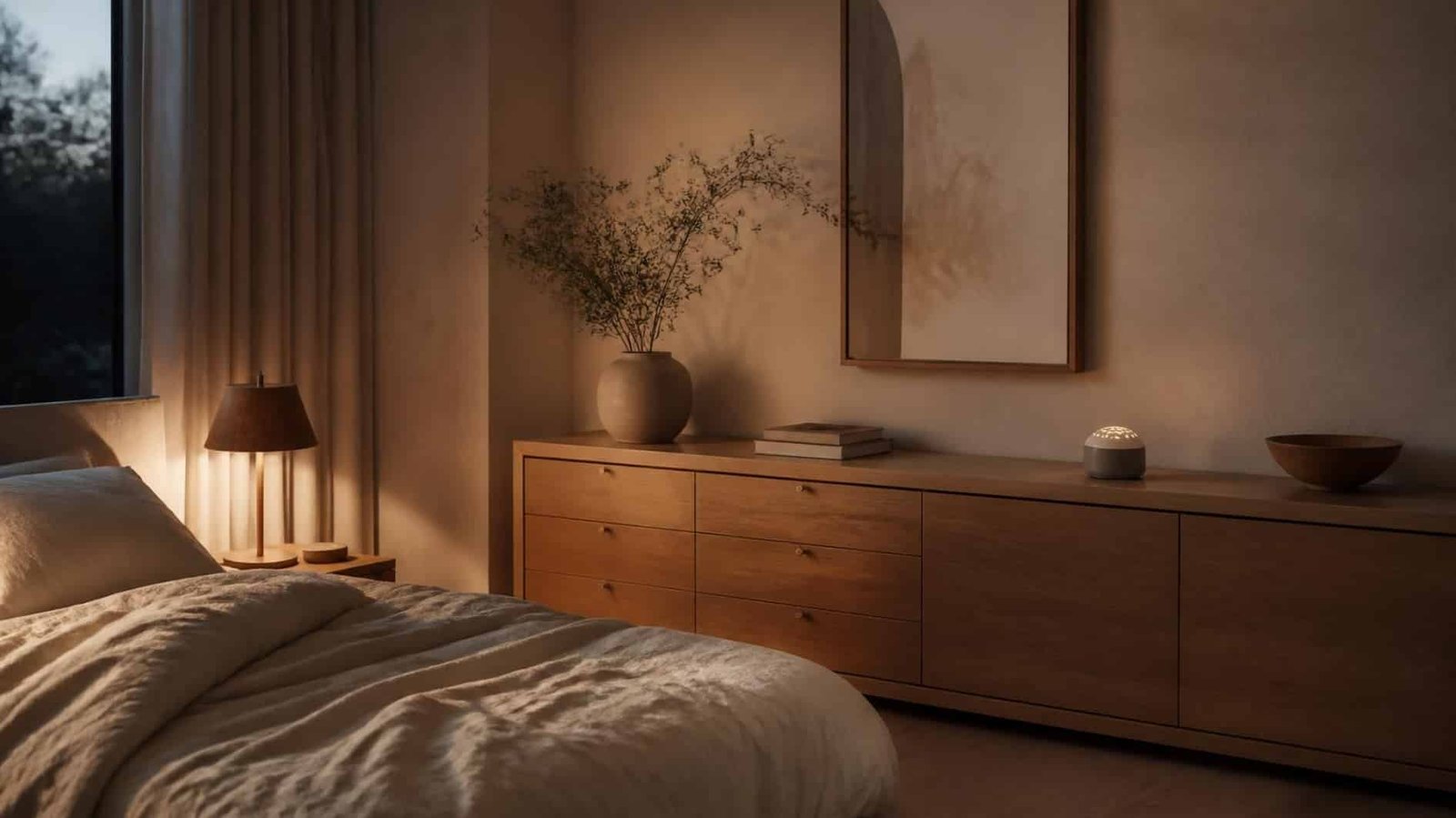
Bedroom fragrance should be especially easy to control. Choose a lower output, short operating period or passive format rather than trying to maintain a strong scent all night.
Keep powered diffusers away from the bedside breathing zone and use fragrance as an atmospheric layer rather than attaching claims about sleep, relaxation or treatment to particular oils.
Bathroom
Bathrooms already contain humidity, ventilation and strong functional smells, so placement and materials deserve extra attention.
Use a diffuser only where the device is suitable for the environment and can stay clear of splashes. Fresh, herbal or dry woody profiles can sit more cleanly than very sweet fragrances in a compact bathroom, but the right intensity is more important than the fragrance family.
Kitchen and Dining Areas
Food already provides complex aromas. A room diffuser that competes with cooking can make the space feel confused rather than clean.
If you use fragrance near a kitchen or dining area, keep it subtle and separate from food preparation surfaces. Consider switching it off while cooking or eating rather than trying to mask normal food aromas with more scent.
Home Office and Reading Spaces
In a room used for concentrated work or reading, avoid making fragrance another thing that demands attention. A low-output diffuser or passive scent source can provide background character without becoming a dominant feature.
Position it away from keyboards, papers, books and electronics if the diffuser produces mist. A dry desk surface matters more than placing fragrance within immediate reach.
Open-Plan Rooms

Open-plan spaces tempt people to choose a stronger diffuser simply because the floor area is larger. Often a better solution is to define which zone actually needs fragrance.
A living area may benefit from scent while the kitchen zone does not. Place the diffuser where air can circulate through the seating area without pushing fragrance directly towards food preparation or dining.
Keep Adjacent Rooms Connected
You do not need the same fragrance in every room, but neighbouring spaces should not feel as though they belong to completely different homes.
One approach is to repeat a shared note. A hallway fragrance might contain citrus and cedar, while the living room uses cedar with softer floral or resin notes. The scents remain distinct but have a recognisable relationship.
Placement Changes the Fragrance
The same room diffuser can feel weak in one position and overpowering in another.
- Keep the source away from the main seating or sleeping position.
- Avoid strong draughts and open windows immediately beside the diffuser.
- Give misting diffusers clear space above the outlet.
- Protect timber, stone and painted surfaces from spills and repeated moisture.
- Keep fragrance liquids where children and pets cannot reach them.
Airflow, Doors and Windows
Moderate air movement helps fragrance spread. Strong airflow removes it before it can settle into the room.
Watch what happens when doors are open. A diffuser in a hallway may scent several adjoining rooms even if each space seems to need its own fragrance when considered separately.
Think About Textiles and Materials
Rooms with curtains, rugs and upholstered furniture can hold background fragrance differently from hard-surfaced spaces. That can make scent feel more persistent even after a powered diffuser is switched off.
Do not spray or apply diffuser oils directly to fabrics unless the product is specifically designed for that use. A room diffuser and a textile fragrance are not interchangeable products.
Seasonal Changes Without a Complete Reset
Seasonal fragrance does not require replacing every scent in the home. Adjust one part of an existing profile instead.
A citrus-and-wood combination can become greener in spring, drier in summer or more resinous in winter while keeping the same underlying structure. This creates continuity rather than a completely new fragrance identity every few months.
Shared Spaces, Children and Pets
Home fragrance is shared environmental exposure, so other occupants matter. Keep oils and diffuser liquids out of children’s reach and prevent pets from licking, spilling or directly contacting fragrance materials.
Use product-specific warnings, manufacturer instructions and veterinary advice where relevant. In shared rooms, moderate output and ordinary ventilation are more considerate than maintaining a strong scent continuously.
Common Room-Fragrance Mistakes
- Choosing one very strong fragrance for the whole house.
- Using unrelated scents in every adjacent room.
- Placing the diffuser beside the sofa, bed or dining chair.
- Increasing oil before checking airflow and placement.
- Trying to mask cooking or damp smells instead of addressing the source.
- Assuming a scent has a therapeutic effect because of its ingredients.
A Simple Room-Fragrance Planning Method
- Identify the room’s normal use.
- Choose a broad fragrance family or two.
- Start with low output.
- Place the diffuser away from people and strong draughts.
- Observe adjoining rooms before adding another diffuser.
- Adjust one variable at a time: position, output, operating time or fragrance amount.
Frequently Asked Questions About Room Diffusers
Where should I put a room diffuser?
Use a stable surface with moderate airflow, away from the main seating or sleeping position. For misting diffusers, leave clear space above the outlet and protect moisture-sensitive surfaces.
Should every room have a different fragrance?
Not necessarily. Different rooms can use related scents, but repeating one or two notes between adjacent spaces often creates more continuity than completely unrelated fragrances.
How strong should a room diffuser be?
Strong enough to be noticed without becoming the first thing you register when entering or sitting in the room. Start with a lower setting or amount and adjust gradually.
Can I use a room diffuser in a bedroom?
Yes, if the product is suitable for the setting and used according to its instructions. Keep fragrance restrained, provide normal ventilation and avoid positioning the source directly beside the bed.
Can a room diffuser remove bad smells?
A diffuser adds fragrance; it does not solve the underlying cause of persistent odours. Address ventilation, cleaning, moisture or other sources first rather than covering them with stronger scent.
Aim for Continuity, Not Maximum Scent
A successful room diffuser should support the character of the space without announcing itself from the doorway.
Choose fragrance from the room outwards, keep intensity proportional to how long people spend there, pay attention to airflow and let neighbouring spaces share a few common notes.
The result is a home-fragrance scheme that feels connected and deliberate rather than a series of competing scented zones.

Leave a Reply