

MINDFUL ROUTINES · AROMATHERAPY & HOME FRAGRANCE
Oil Diffuser Guide: Types, Placement and Everyday Use
A practical guide to choosing and using an oil diffuser at home—covering diffuser types, room placement, fragrance strength, cleaning, materials and how to create a more considered scent routine without overcomplicating it.

An oil diffuser is a simple way to introduce fragrance into a room, but the quality of the experience depends on more than the scent itself. Diffuser type, room size, placement, output and cleaning all affect how evenly fragrance moves through a space and how easy the device is to live with.
The most useful approach is to treat fragrance as another layer of the room rather than something that should dominate it. Start lightly, notice how the scent behaves in the space, and adjust the diffuser or placement before simply adding more oil.
This guide focuses on home fragrance, ambience and practical product use. It does not treat essential oils as medicines or make therapeutic claims.
What Is an Oil Diffuser?
An oil diffuser disperses fragrance into the surrounding air. Some models use water, some move undiluted oil through air, and others rely on gentle heat or passive evaporation.
The basic purpose is the same: to release scent gradually enough that it can be noticed without becoming overwhelming. The method changes the intensity, maintenance needs and suitability for different rooms. For waterless options, explore our waterless diffuser collection and compatible fragrance oils.
The Main Types of Oil Diffuser
Before comparing features, decide which diffusion method suits the way you want to use fragrance.
- Ultrasonic diffusers use water and high-frequency vibration to create a fine mist.
- Nebulising diffusers disperse concentrated oil without a water reservoir.
- Heat diffusers use warmth to encourage fragrance to evaporate.
- Passive diffusers rely on evaporation through reeds, porous materials or exposed fragrance surfaces.
None is automatically best. The right choice depends on room size, desired intensity, noise tolerance, maintenance and how much control you want over output.
Ultrasonic Diffusers
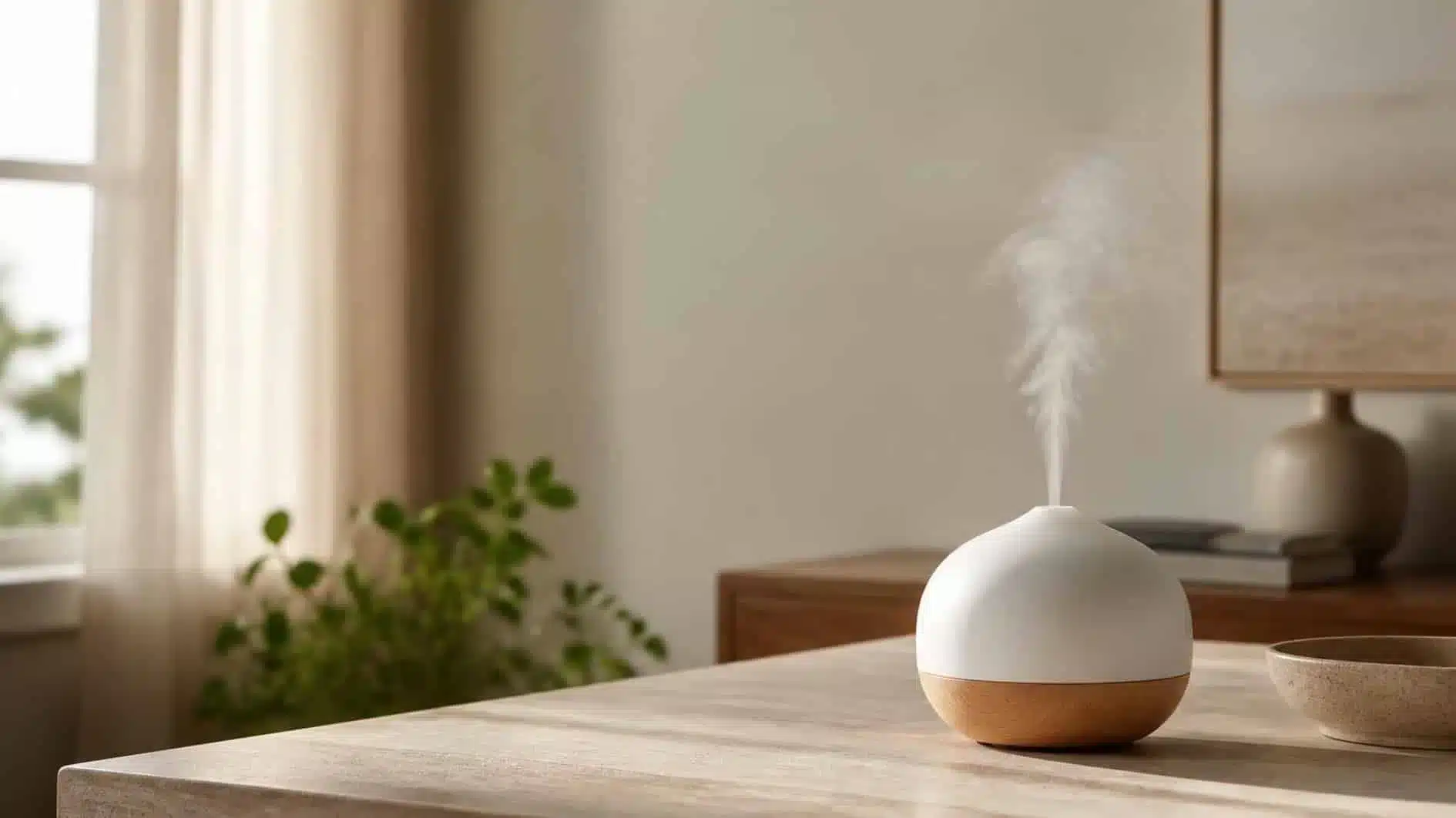
An ultrasonic diffuser combines water with a small amount of suitable essential or fragrance oil, then uses vibration to produce a cool mist. The mist carries fragrance into the room while the water reservoir softens the concentration of the scent.
They are popular because they can offer timers, intermittent modes and adjustable output. They do, however, need regular cleaning because oil residue and standing water remain inside the reservoir.
For a closer look at the mechanism, reservoir size, mist output and useful controls, see our ultrasonic diffuser guide.
Nebulising Diffusers
A nebulising diffuser generally uses airflow to break oil into very small droplets without adding water. Because the oil is not diluted in a water tank, the fragrance can feel stronger and more immediate.
That makes output control particularly important. Short operating periods and lower settings can be more useful than leaving a concentrated diffuser running continuously in a small room.
Heat-Based Diffusers
Heat-based diffusers warm fragrance material to encourage evaporation. They are mechanically simple, but the amount of heat and the product’s design matter.
Use only oils or fragrance materials the diffuser manufacturer says are suitable. Do not improvise by placing oils onto a hot surface or appliance that was not designed for fragrance use.
Passive and Reed-Style Diffusion
Passive fragrance systems do not use electricity. Reed diffusers draw scented liquid upward through porous reeds, while ceramic or other porous materials release fragrance through evaporation.
They provide a steadier background scent but less precise control than a powered diffuser. Placement therefore matters: a passive diffuser beside a strong draught may empty quickly or send too much fragrance in one direction.
Match the Diffuser to the Room
A diffuser should be sized by practical output rather than by how decorative it looks on a shelf.
Small rooms usually need less fragrance and shorter operating periods. Open-plan spaces may need a diffuser with a larger reservoir or stronger output, but increasing intensity is not the only answer. A well-placed moderate diffuser can often create a more even result than one powerful source pushed to maximum output.
Where to Place an Oil Diffuser

Place the diffuser where fragrance can move into the room without sitting directly beside someone’s face, an open window or a delicate surface.
- Use a stable, level surface.
- Keep powered diffusers away from the edge of furniture.
- Leave enough clear space around mist outlets.
- Avoid placing the diffuser immediately beneath shelves that can collect moisture or oil residue.
- Do not position it where curtains or soft furnishings will sit directly in the mist path.
Height, Airflow and Nearby Surfaces
Air movement can help distribute scent, but strong airflow can also carry fragrance out of the room too quickly. A central console, sideboard or open shelf is often easier to control than a windowsill or the space directly beside a door.
For misting diffusers, use a surface that can tolerate occasional moisture and wipe it regularly. A decorative tray can create a visual boundary and add another layer of protection for timber or stone furniture.
Control Fragrance Strength

More oil does not necessarily create a better room fragrance. Strong scent can flatten the distinction between notes and make the space tiring to occupy.
Begin with the minimum amount recommended for the diffuser, then adjust gradually. Intermittent modes can be useful because they allow fragrance to disperse between bursts instead of building continuously.
How to Use an Oil Diffuser in Different Rooms
Different rooms can support different fragrance profiles, but avoid making every doorway a collision between unrelated scents.
- Living room: choose a balanced fragrance that can sit quietly alongside food, books, textiles and other everyday smells.
- Hallway: a restrained scent can create continuity without needing high output.
- Bedroom: favour subtle fragrance and easy shut-off rather than continuous intensity.
- Kitchen: be careful with fragrance near food preparation and strong cooking aromas.
- Bathroom: consider humidity, ventilation and whether the diffuser’s materials are suitable for the environment.
For room-by-room fragrance planning, see our Room Diffuser Guide, which looks more closely at scent intensity, placement and how to keep adjacent spaces coherent.
Choosing Oils and Fragrance Materials
Use only fragrance materials that the diffuser manufacturer says are compatible with the device. An ultrasonic diffuser may be designed for a few drops of essential oil in water, while another product may require a proprietary fragrance blend.
Read the label, dilution guidance and product instructions before use. Avoid treating “natural” as a synonym for harmless or universally suitable.
For choosing oils for home fragrance, see our Aromatherapy Oils guide, which covers oil types, diffuser compatibility, fragrance strength and everyday use without unsupported health claims.
Blending Fragrances at Home
Blends are easier to control when each ingredient has a role. Start with two or three compatible notes rather than combining many oils at once.
One note can provide freshness or lift, another can form the body of the fragrance, and a deeper note can add weight or persistence. The goal is not to follow a rigid formula but to avoid a mixture in which every note competes for attention.
For a practical blending method, see our Essential Oil Blends guide, which explains scent roles, proportions, testing and room-aware home-fragrance combinations.
How to Clean an Oil Diffuser
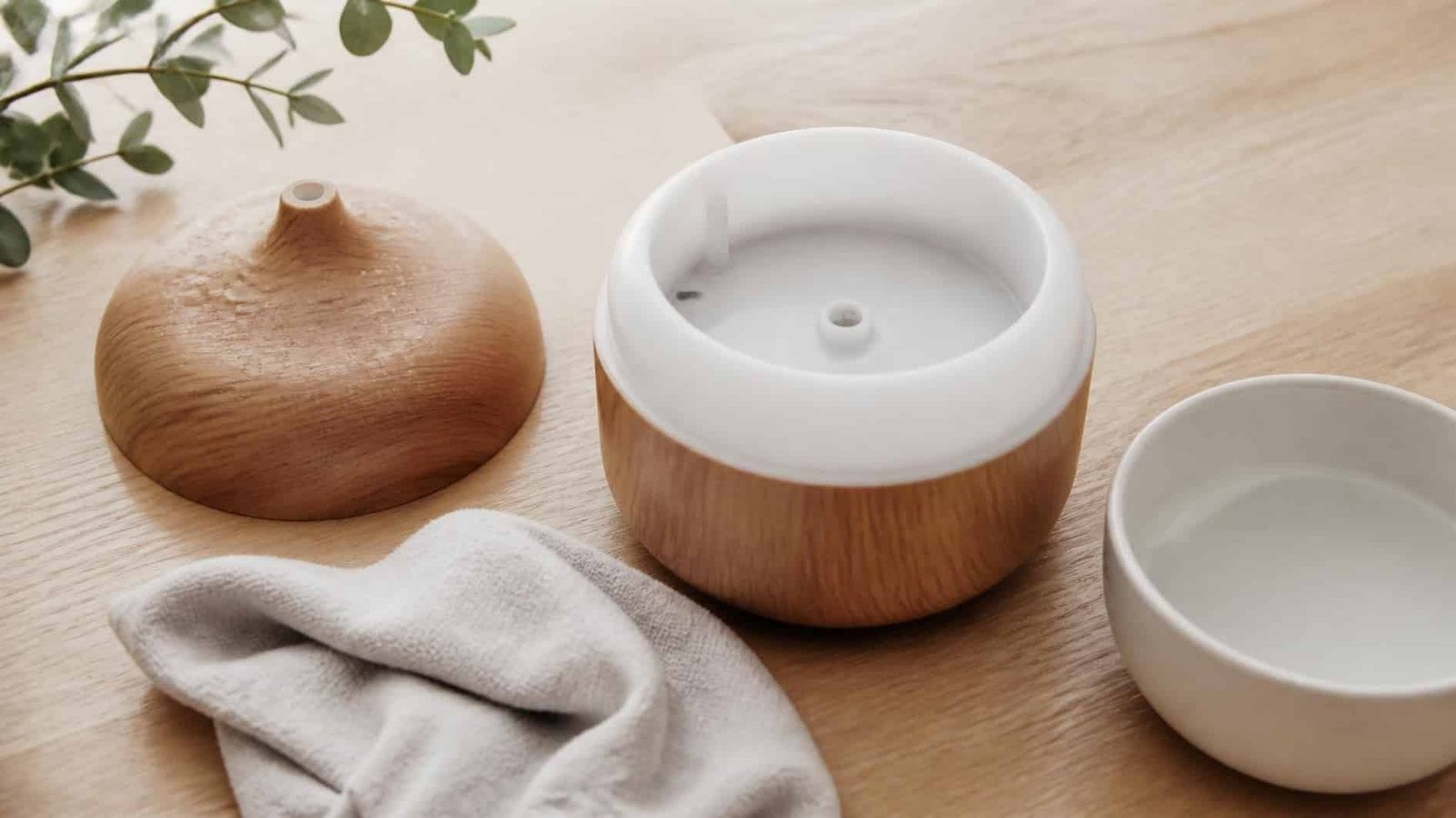
Oil residue can build up inside powered diffusers and alter the next fragrance you use. Clean the reservoir and other user-serviceable parts at the intervals stated by the manufacturer.
Empty water-based diffusers when they are not being used for an extended period rather than leaving old water and oil sitting in the tank. Do not immerse electrical components unless the instructions explicitly say the part is washable.
Protect Furniture and Surfaces
Essential and fragrance oils can mark some finishes, and water-based mist can leave moisture on nearby surfaces.
Wipe spills promptly, use the diffuser on a suitable stable surface, and consider a washable tray beneath vessels that are filled by hand. Be particularly careful around unfinished timber, painted surfaces and porous stone.
Children, Pets and Shared Spaces
Fragrance products should be used with the whole household in mind. Keep oils and diffuser liquids out of children’s reach, avoid allowing pets to contact or ingest oils, and follow product-specific warnings and veterinary advice where relevant.
In shared spaces, give people and animals the option to move away from fragrance. Ventilation and moderate use are more considerate than trying to maintain a strong scent continuously.
Common Diffuser Mistakes
- Using more oil when the real problem is poor placement.
- Running a strong diffuser continuously in a small room.
- Ignoring the manufacturer’s compatible-oil guidance.
- Placing mist directly beneath shelves, artwork or delicate finishes.
- Allowing old fragrance residue to build up between oils.
- Choosing fragrance by strength rather than by how it sits in the room.
- Making therapeutic or health assumptions based on scent alone.
What to Look For Before Buying
- Diffusion method: ultrasonic, nebulising, heat or passive.
- Room coverage: treat manufacturer figures as a starting point rather than a guarantee of scent intensity.
- Output control: low, high or intermittent settings are more useful than one fixed mode.
- Reservoir size: balance runtime against how much water or oil you are comfortable leaving in the device.
- Cleaning access: simple reservoirs and removable parts are easier to maintain.
- Automatic shut-off: useful on water-based powered diffusers where supported.
- Materials and finish: choose something appropriate for the moisture, oil and cleaning involved.
Frequently Asked Questions About Oil Diffusers
What does an oil diffuser do?
It disperses fragrance into the surrounding air. Different diffuser types use water mist, airflow, heat or passive evaporation to do this.
Where is the best place to put an oil diffuser?
Use a stable surface with clear space around the outlet and moderate airflow. Keep mist away from delicate furniture, soft furnishings and shelves that could collect residue or moisture.
How much oil should I put in a diffuser?
Follow the diffuser and oil manufacturer’s instructions. Start at the lower end of the recommended amount and increase only if the room genuinely needs more fragrance.
Can I leave an oil diffuser on all day?
Use the operating times and safety guidance supplied with the specific device. For fragrance quality, intermittent or shorter periods are often enough in ordinary rooms and make it easier to judge the scent level.
Can I use any essential oil in any diffuser?
No. Check the diffuser manufacturer’s compatibility guidance. Some devices are designed for essential oils, while others require specific fragrance liquids or exclude certain materials.
Keep the Fragrance in Balance
A useful oil diffuser should make a room feel considered rather than heavily scented.
Choose the diffusion method that fits the room, start with restrained output, place the device where fragrance can circulate without damaging nearby materials, and clean it often enough that yesterday’s oil does not become part of today’s blend.
When fragrance works quietly alongside light, texture and material, it becomes part of the atmosphere rather than a layer competing for attention.
AROMATHERAPY & HOME FRAGRANCE
Explore Home Fragrance
Room fragrance
Room Diffuser Guide: Choosing Fragrance for Different Spaces
Aromatherapy oils
Aromatherapy Oils: A Beginner’s Guide to Choosing and Using Them at Home
Oil blends
Essential Oil Blends: How to Build Balanced Home-Fragrance Combinations
Ultrasonic diffuser
Ultrasonic Diffuser Guide: How It Works and What to Look For
Candle fragrance
Aromatherapy Oils for Candle Making: What to Know Before You Blend

Leave a Reply