

MINDFUL ROUTINES · AROMATHERAPY & HOME FRAGRANCE
Ultrasonic Diffuser Guide: How It Works and What to Look For
A practical guide to ultrasonic diffusers—covering how the mist is produced, reservoir size, output, timers, noise, placement, cleaning and the features that matter in everyday home-fragrance use.

An ultrasonic diffuser is one of the most common ways to add fragrance to a room without using heat. It combines water with a small amount of compatible fragrance or essential oil, then uses high-frequency vibration to create a fine cool mist.
The appeal is control. Many models offer intermittent mist, timers and more than one output level, which makes it easier to keep scent restrained rather than letting it build continuously.
For a comparison with other diffuser types, placement and wider home-fragrance use, see our oil diffuser guide. This article focuses specifically on ultrasonic models and the practical differences between them.
What Is an Ultrasonic Diffuser?
An ultrasonic diffuser is a powered fragrance device with a water reservoir and a vibrating element at its base. Rather than heating the liquid, it uses vibration to turn a small amount of water and fragrance material into tiny airborne droplets.
Because the output is a cool mist, the diffuser can sit quietly in living rooms, bedrooms, hallways and other domestic spaces where a heat source would be unnecessary.
How an Ultrasonic Diffuser Works
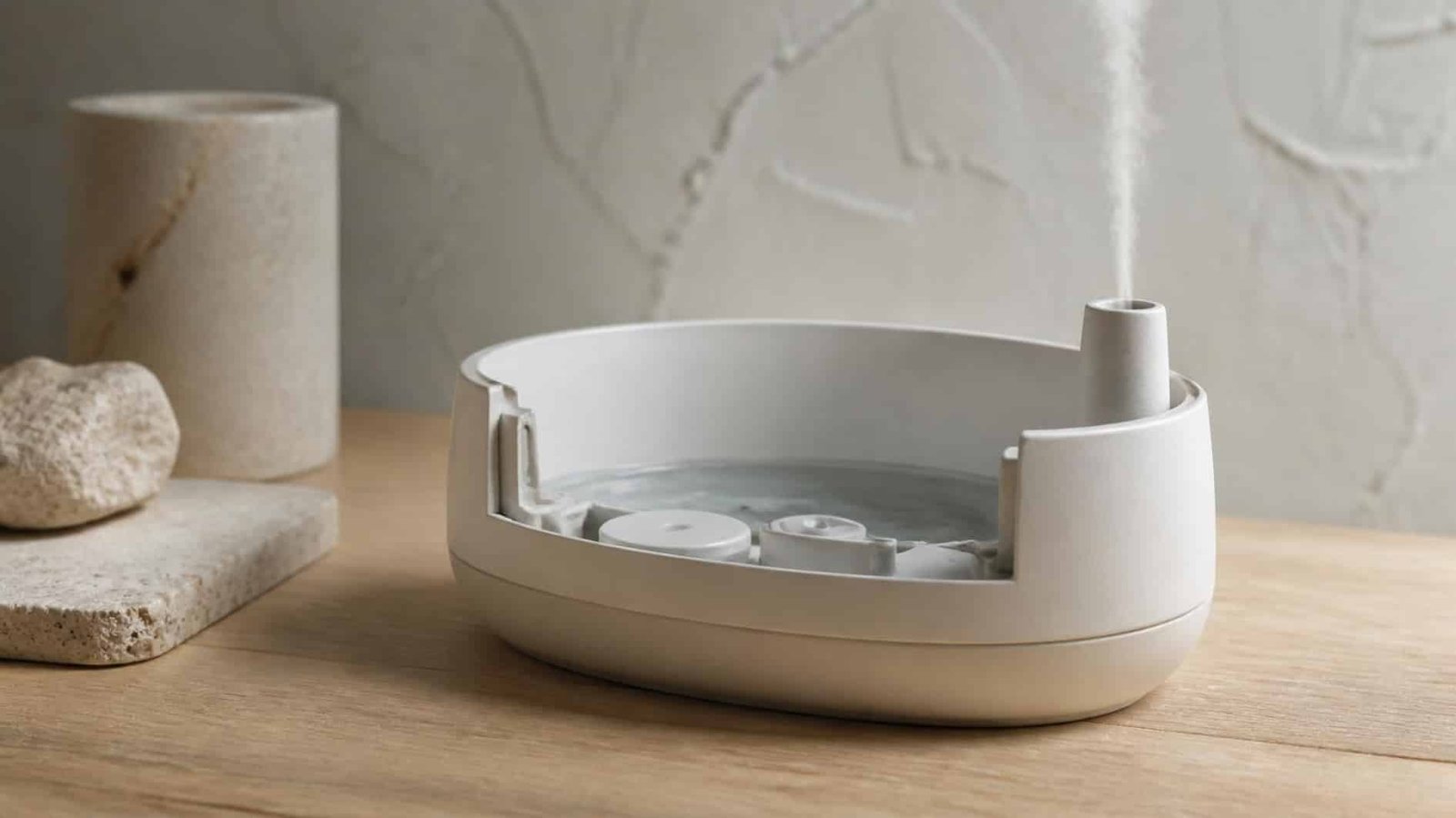
At the bottom of the reservoir is a small ultrasonic plate or transducer. When powered, it vibrates rapidly. Those vibrations agitate the water above the plate and create a fine mist that rises through the diffuser outlet.
If the manufacturer permits compatible essential or fragrance oils in the reservoir, a small amount of that material is dispersed with the water droplets. A fan or the movement created inside the device may help carry the mist upwards, depending on the design.
The important distinction is that the device is not boiling the water. The mechanism relies on vibration rather than a heating element.
The Mist Is Not Steam
The visible plume from an ultrasonic diffuser can look like steam, but it is a cool aerosol of fine liquid droplets. That matters for placement because the droplets still contain moisture.
Keep the outlet clear and avoid positioning it directly beneath shelves, artwork or finishes that should not receive repeated moisture. A diffuser can produce a delicate-looking mist while still leaving a damp area if it is too close to a surface.
Choose the Right Reservoir Size
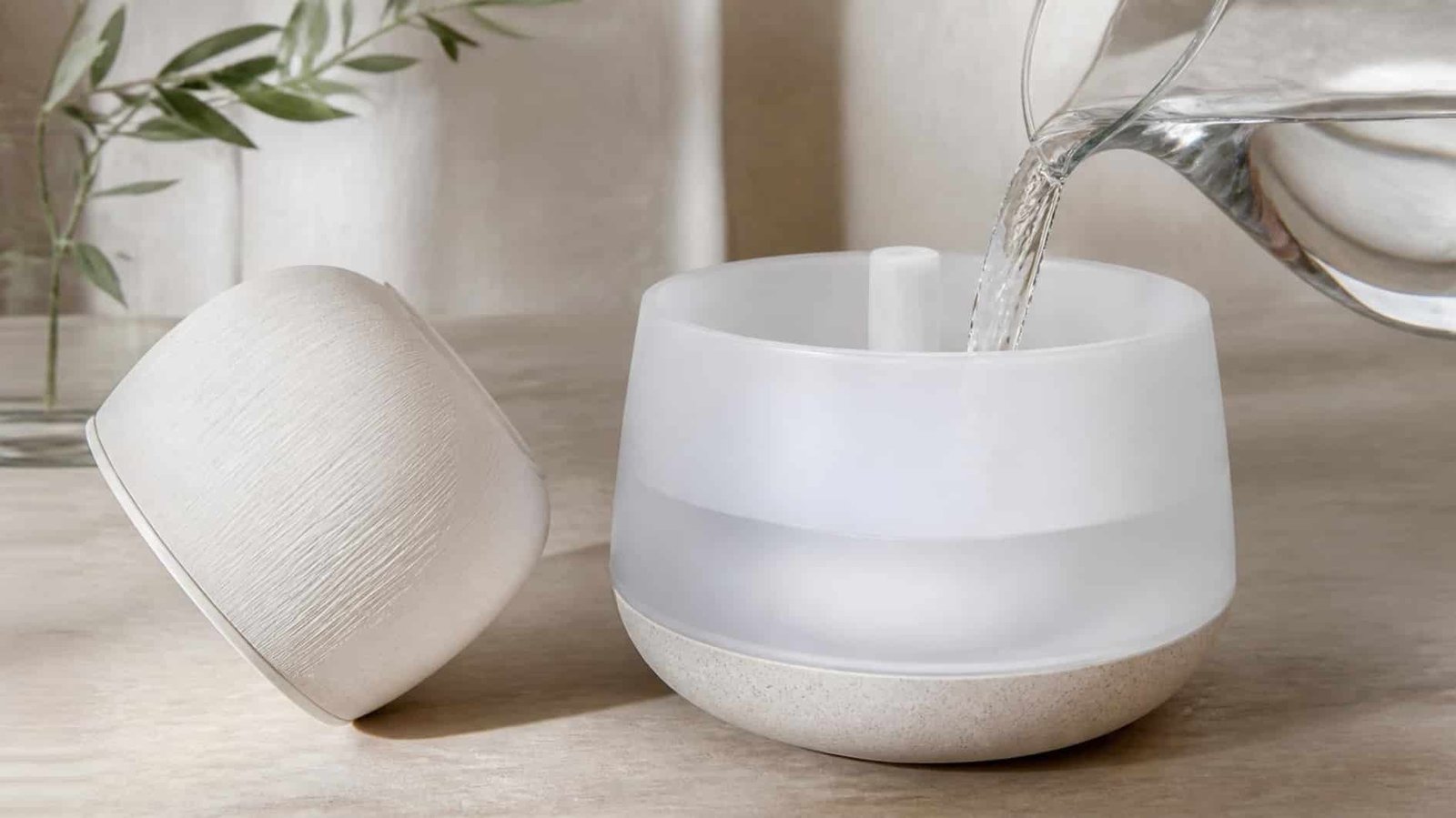
Reservoir capacity affects how often the diffuser needs refilling, but a larger tank is not automatically better.
A compact reservoir can suit occasional evening use and is easier to empty frequently. A larger model can be useful in an open-plan room or where the diffuser runs for longer periods, provided the device still offers enough control over output.
Think about how much water you are comfortable leaving in the unit rather than choosing the largest capacity simply for maximum runtime.
Mist Output and Fragrance Strength
Mist output determines how quickly water and fragrance are introduced into the room. A stronger plume is useful in some larger spaces, but it can make a small room feel over-scented quickly.
Look for at least two useful output levels where possible. The lower setting often matters more in everyday use because it gives you somewhere to go when a fragrance is naturally strong.
Continuous vs Intermittent Modes
Continuous mode releases mist without regular pauses. Intermittent mode alternates between active and resting periods.
Intermittent operation is useful when you want fragrance to disperse before the next burst. It can also make a smaller amount of oil feel more balanced over a longer period instead of creating an intense first impression.
Timers and Automatic Shut-Off
Timers make a diffuser easier to fit into a routine because you do not have to remember to return and switch it off manually. Look for simple durations you are likely to use rather than a complicated control panel.
Many water-based diffusers also include automatic shut-off when the reservoir becomes too low for normal operation. Check the specific model rather than assuming every device behaves in the same way.
Noise and Bedroom Use
Ultrasonic diffusers are often quiet, but they are not completely silent. You may hear the fan, vibration system, water movement or an occasional drip inside the reservoir.
If the diffuser will sit in a bedroom or reading area, look beyond a generic “quiet” description. Reviews or manufacturer specifications that mention operating noise can be more useful than choosing by appearance alone.
Built-In Lights and Displays
Many ultrasonic diffusers include an illuminated ring, coloured light or digital display. Decide whether that feature supports the atmosphere you want or simply adds another visible light source.
For evening use, the ability to switch indicator lighting off independently can be more valuable than a long list of colour effects.
Where to Place an Ultrasonic Diffuser

Use a stable, level surface with open space above the mist outlet and enough room around the device to fill and clean it comfortably.
- Keep the diffuser away from the edge of a table or console.
- Avoid aiming mist directly at curtains, books or upholstery.
- Do not place it immediately beneath wall art or timber shelving.
- Avoid strong draughts that carry fragrance straight out of the room.
- Keep the power cable arranged so the diffuser cannot be pulled or knocked easily.
Protect Nearby Surfaces
Mist contains water, and fragrance materials can mark some finishes if spilled. A washable tray beneath the diffuser can make refilling easier and protect a timber or stone surface from small drips.
Wipe the surrounding area periodically. If moisture is collecting nearby, move the diffuser, reduce output or provide more open space rather than accepting dampness as normal.
What Oils Can You Use?
Use only oils or fragrance materials the diffuser manufacturer identifies as compatible with that model. Some devices are designed for essential oils in water, while others specify particular formulations or exclusions.
Do not assume that because a liquid smells suitable it belongs in the reservoir. Carrier oils, thick liquids or unsuitable fragrance products may not disperse correctly and can be difficult to clean from the mechanism.
How Much Oil Should You Add?
Follow the instructions for both the diffuser and the fragrance material. Reservoir size, oil concentration and room size all affect how strong the result feels.
Start with the lower end of the recommended amount. If the scent is too subtle, increase gradually on the next fill rather than adding a large amount at once.
Cleaning an Ultrasonic Diffuser
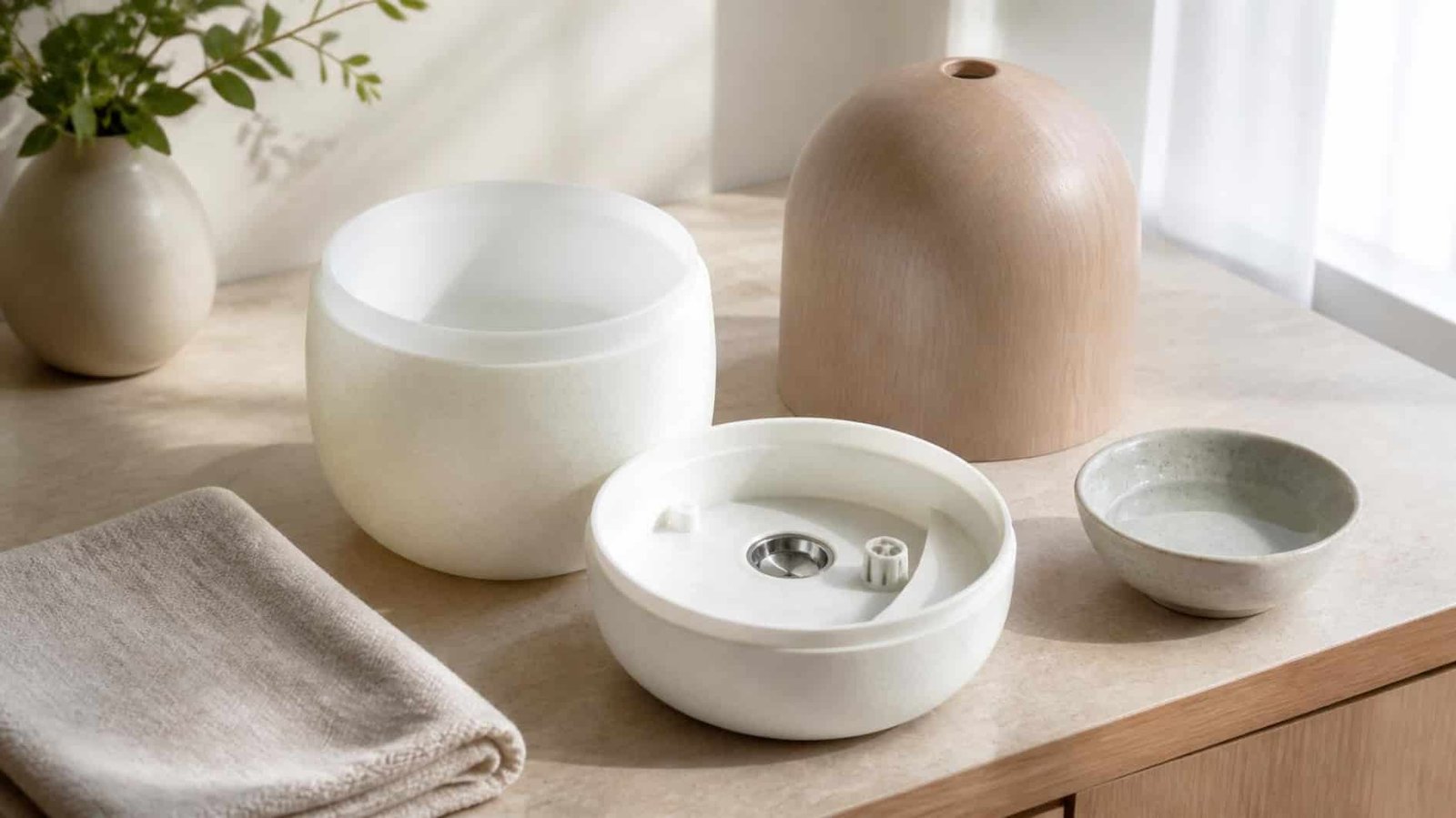
Regular cleaning matters because fragrance residue can remain in the reservoir and around the ultrasonic plate. That residue can carry into the next blend and may make the interior feel sticky or difficult to wipe.
Follow the manufacturer’s cleaning procedure, especially around the ultrasonic plate and electrical housing. Use only cleaning materials the instructions permit, and never immerse electrical sections simply because the reservoir itself holds water.
When changing to a very different fragrance, cleaning between fills helps prevent the previous scent from becoming an unintended part of the next one.
Water Quality and Refilling
Use the water type specified by the manufacturer. Some designs are intended for ordinary tap water, while others may give different instructions.
Fill only to the marked level. Overfilling can interfere with normal mist production, while running with too little water may trigger the device’s low-water protection where that feature exists.
If the diffuser will not be used for an extended period, empty and dry the reservoir according to its care instructions rather than storing it with old water inside.
Materials and Build Quality
The outer shell is only one part of the product. Look at the reservoir opening, buttons, cable connection and how easily the lid lifts for refilling.
A beautiful ceramic cover is useful only if the water tank beneath it is simple to reach and clean. In everyday use, a wide reservoir opening and clearly marked fill line often matter more than decorative complexity.
What to Look For Before Buying
- Reservoir size: enough for your normal use without encouraging water to sit for long periods.
- Output levels: useful low and high settings.
- Intermittent mode: helpful for restrained fragrance over longer periods.
- Timer options: simple durations you will actually use.
- Low-water shut-off: confirm whether the model includes it.
- Cleaning access: wide openings and removable covers simplify maintenance.
- Independent light control: useful if the diffuser has decorative LEDs.
- Operating noise: especially important in bedrooms and quiet rooms.
- Compatible fragrance materials: check before buying oils separately.
Common Ultrasonic Diffuser Mistakes
- Choosing the largest reservoir without considering how often it will actually be used.
- Running maximum mist output in a small room.
- Placing the device directly beneath a shelf or artwork.
- Adding more oil instead of adjusting placement or output.
- Using fragrance materials not approved for the model.
- Leaving old water and oil in the reservoir between long periods of non-use.
- Ignoring how visible indicator lights affect the room at night.
Frequently Asked Questions About Ultrasonic Diffusers
How does an ultrasonic diffuser make mist?
A vibrating ultrasonic element agitates water in the reservoir and creates very fine droplets that rise through the diffuser outlet as a cool mist.
Does an ultrasonic diffuser use heat?
The diffusion method itself relies on vibration rather than boiling the water. The visible output is therefore a cool mist rather than steam.
Can I put any oil in an ultrasonic diffuser?
No. Use only fragrance or essential oils that the device manufacturer identifies as suitable for that diffuser.
How often should I clean an ultrasonic diffuser?
Follow the manufacturer’s maintenance schedule. Clean more promptly when changing between very different fragrances or when visible residue develops in the reservoir.
Is a larger ultrasonic diffuser better?
Not necessarily. A larger reservoir gives longer potential runtime, but output control, easy cleaning and suitability for the room are often more important than maximum capacity.
Choose Control Over Maximum Output
A good ultrasonic diffuser should be easy to fill, easy to clean and easy to turn down.
Choose a reservoir that suits your normal routine, look for genuinely useful output and timer controls, keep the mist away from delicate surfaces and use only compatible fragrance materials.
The strongest feature is not how much mist a diffuser can produce, but how precisely it lets you keep fragrance in balance with the room.

Leave a Reply