

MINDFUL ROUTINES · AROMATHERAPY & HOME FRAGRANCE
Aromatherapy Oils: A Beginner’s Guide to Choosing and Using Them at Home
A practical introduction to aromatherapy oils for home fragrance—how essential oils differ from fragrance oils, how to read labels, match oils to diffuser types, control scent strength and build a more coherent fragrance routine at home.

Aromatherapy oils are often sold as though they form one simple product category. In practice, the phrase can cover pure essential oils, ready-made essential-oil blends, fragrance oils and products formulated specifically for a particular diffuser.
That makes the label more important than the name on the front of the bottle. Before choosing an oil for your home, check what it contains, how it is intended to be used and whether it is compatible with the diffuser or fragrance format you already own.
This guide treats aromatherapy oils as home-fragrance materials. It focuses on scent, product compatibility, placement, strength and everyday use rather than claims about sleep, anxiety, headaches, treatment or other therapeutic effects.
If you are still choosing the device itself, start with our oil diffuser guide. It compares the main diffuser types, placement, maintenance and everyday fragrance use.
What Are Aromatherapy Oils?
For home-fragrance shopping, “aromatherapy oils” is best understood as a broad retail term rather than a precise description of composition. Two bottles with similar front labels can contain very different materials and be intended for different uses.
One product may be a single essential oil. Another may blend several essential oils. A third may be a fragrance composition designed for a diffuser, burner or other scent product.
The practical question is therefore not simply “Is this an aromatherapy oil?” but “What is this product, and what does the manufacturer say it is for?”
Types of Aromatherapy Oils: Essential, Fragrance and Blends

Essential oils are concentrated aromatic materials obtained from plant material, commonly through processes such as distillation or expression. They can smell vivid and recognisably botanical, but they are still concentrated materials and should be used according to the product and diffuser instructions.
Fragrance oils are formulated scent compositions. Depending on the product, they may contain synthetic aroma materials, natural materials or a mixture of both. Their advantage for home fragrance is not that they are automatically “better” or “worse”, but that they can be designed for a particular scent profile and product format.
Blended oils combine more than one aromatic material. Some are pure essential-oil blends; others are finished fragrance products. Read the product description instead of assuming the word “blend” tells you exactly what is inside.
Start With the Label, Not the Promise
Home-fragrance oils are easiest to use well when you ignore broad lifestyle promises and concentrate on concrete product information.
- Intended use: diffuser, burner, reed diffuser, candle, room fragrance or another format.
- Compatibility: whether the product is suitable for water-based ultrasonic diffusers, waterless devices or another system.
- Directions: recommended amount, operating method and cleaning guidance.
- Warnings: storage, handling and household precautions specific to that product.
These details are more useful than assuming all oils can be substituted for one another.
Match the Oil to the Diffuser
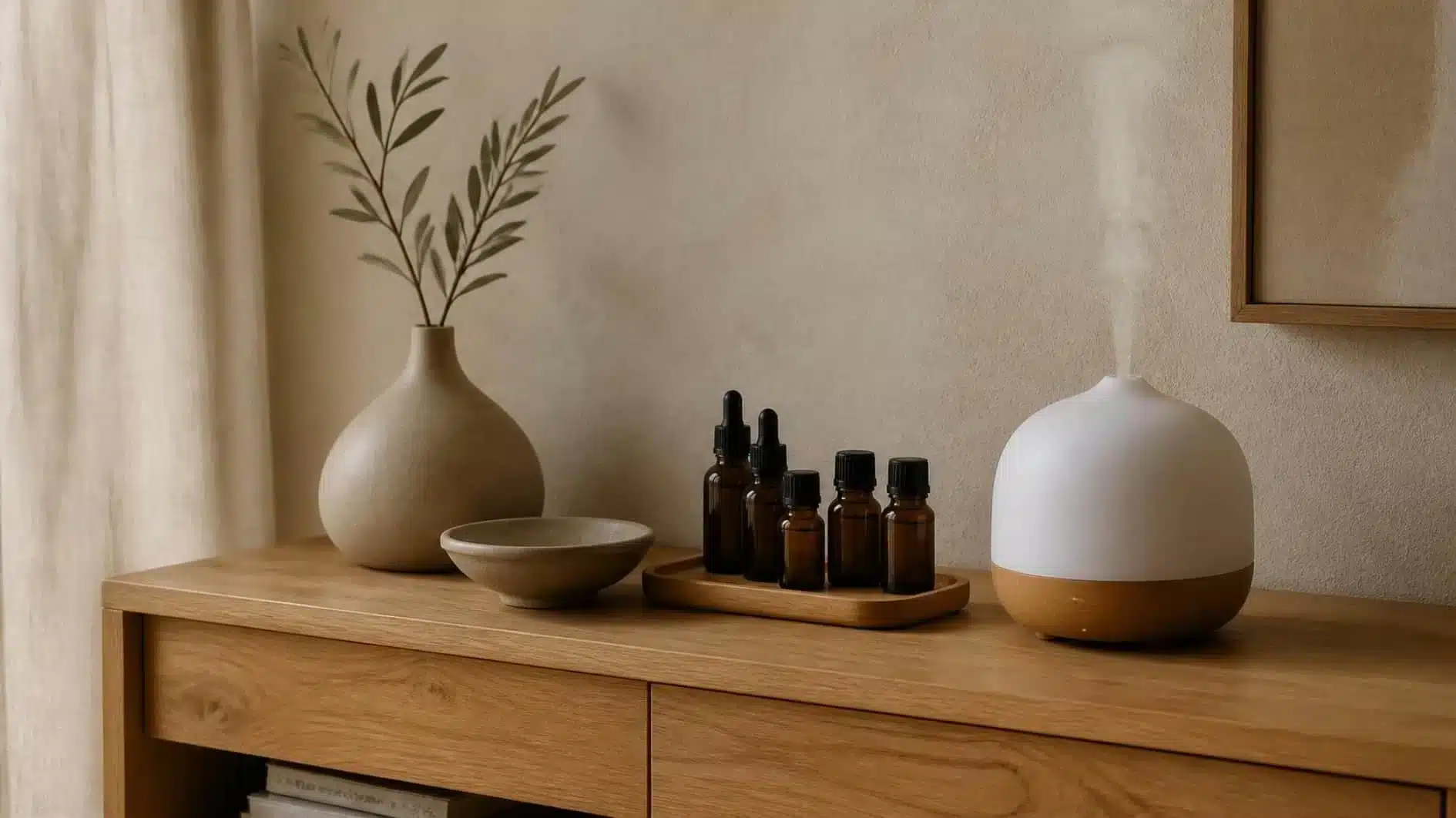
Different diffusers handle fragrance materials differently. A product suitable for one system may be unsuitable for another.
With an ultrasonic diffuser, fragrance is usually added to water in the reservoir, but the correct oil type and quantity depend on the manufacturer’s instructions. Some devices are designed for essential oils; others may specify different fragrance products.
Waterless and nebulising devices work differently, often using more concentrated fragrance delivery. Reed diffusers use a carrier base and reeds rather than a powered mist system. Oil burners introduce heat. Treat each as a separate product format rather than assuming one bottle belongs in all of them.
Control Fragrance Strength
More oil does not automatically create a better result. The useful target is a scent level that belongs to the room without becoming the first thing you notice.
Start with the lower end of the manufacturer’s recommended amount or output. Then assess the room after the fragrance has had time to disperse. If it feels weak, check the diffuser position, room size and airflow before increasing the amount.
A small bedroom, entrance hall and open-plan ground floor will not need the same output. Our room diffuser guide goes further into room-by-room strength, placement and continuity between adjoining spaces.
Think in Fragrance Families
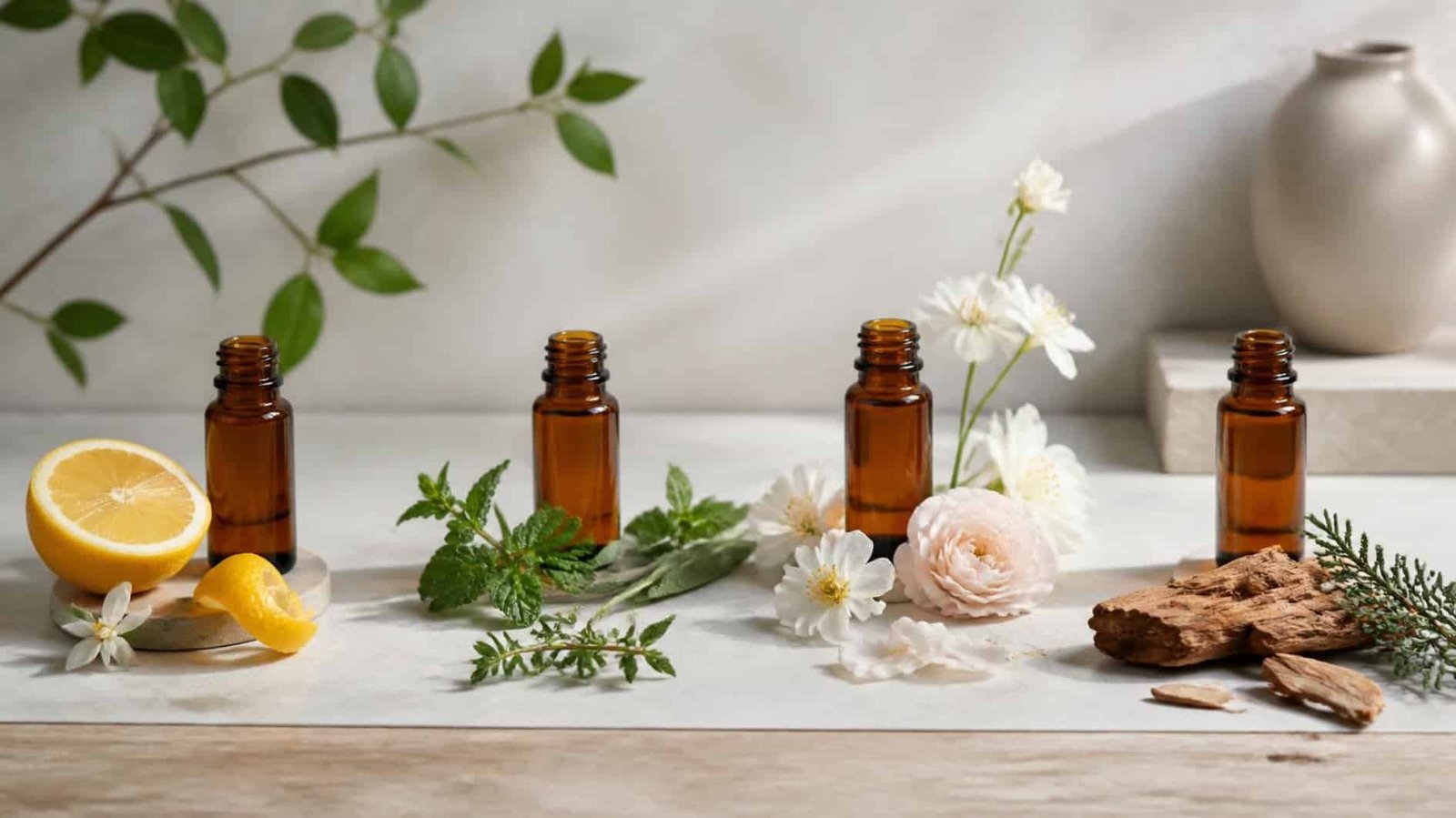
You do not need specialist perfumery vocabulary to choose oils more deliberately. A few broad fragrance families are enough to organise what you like.
- Citrus: bright, sharp or softly sweet profiles such as lemon, bergamot-style or orange notes.
- Green and herbal: leafy, aromatic, grassy or dry herbal character.
- Floral: from light petals to fuller, sweeter compositions.
- Woody: cedar-like, dry, resinous or polished timber impressions.
- Spice and resin: warmer, deeper notes that can add persistence and weight.
- Gourmand: vanilla-like, creamy or food-adjacent notes that need restraint near kitchens and dining areas.
Think of these as scent descriptions rather than promises about how the oil will make you feel.
Choose Oils by Room and Use
Start with what already happens in the room. A living room may contain timber, books, coffee, candles and upholstered furniture. A kitchen has food aromas. A hallway is experienced briefly. A bedroom is occupied for long periods.
That means the same oil can feel balanced in one space and intrusive in another. Lighter citrus, green or airy floral profiles can work where you want a clearer impression; woody and resinous notes can give more depth where the room itself has heavier materials. These are design choices, not fixed rules.
In adjacent rooms, try repeating one shared note rather than using unrelated fragrances everywhere. That gives the home continuity without making every room smell identical.
Single Oils or Blends?
A single oil gives you a clear reference point. That makes it useful when you are learning what you actually enjoy. A blend can feel more complete because several notes create contrast, depth and persistence.
If you are new to home fragrance, start with a small number of clearly different profiles rather than buying many similar bottles. Learn one citrus or fresh profile, one green or herbal profile and one deeper woody or resinous profile before building more complex combinations.
When you begin blending oils yourself, change one variable at a time and keep notes. A dedicated guide to balanced essential-oil combinations will cover that process in more detail.
Carrier Oils and Ready-to-Use Products
Carrier oils are non-volatile oils used to dilute concentrated aromatic materials in some applications. They are not automatically suitable for powered diffusers. Putting a heavy carrier oil into a device designed for water and a small amount of fragrance can interfere with performance or cleaning.
Likewise, a ready-to-use reed diffuser refill is formulated for reeds and evaporation, not necessarily for an ultrasonic reservoir. Keep products in the format they were designed for unless the manufacturer explicitly states otherwise.
What to Look for When Buying
Price alone does not tell you whether an oil will suit your home. Look for useful, specific information.
- a clear ingredient or composition description where appropriate
- the intended product use
- instructions for quantity or dilution where relevant
- storage and safety information
- a fragrance description detailed enough to understand the main notes
- packaging that protects the product and closes securely
Be cautious with vague products that promise many unrelated benefits while giving very little information about composition, intended use or handling.
Store Oils Carefully

Keep bottles tightly closed and follow the storage instructions on the product. Heat, direct sunlight and repeated exposure to air can change aromatic materials over time.
A simple approach is to keep oils upright in a cool, dry cupboard away from strong light and away from places where bottles can be knocked over. Keep labels legible so you do not lose the product directions or warnings.
Shared Spaces, Children and Pets
Home fragrance is shared environmental exposure, so the preferences and needs of other occupants matter. Keep concentrated oils and fragrance liquids out of children’s reach and prevent pets from licking, spilling or directly contacting them.
Do not assume that a material described as “natural” is universally suitable for every person, pet or situation. Follow product-specific warnings and use relevant professional advice when a household member has particular sensitivities or health considerations.
Common Aromatherapy Oil Mistakes
- Using the same oil in every fragrance device.
- Adding more oil before checking placement and airflow.
- Choosing by a therapeutic promise instead of scent and product compatibility.
- Assuming natural automatically means suitable for unrestricted use.
- Using carrier oils or reed-diffuser liquids in devices not designed for them.
- Buying several similar fragrances before learning what you actually notice and enjoy at home.
A Simple Method for Choosing Aromatherapy Oils
- Identify the fragrance format. Know which diffuser or scent product you are using.
- Check compatibility. Confirm the oil is intended for that format.
- Choose a fragrance family. Start broad before comparing individual notes.
- Start with a small amount. Use the product instructions and lower output where possible.
- Assess the room. Consider size, airflow, textiles and how long people stay there.
- Change one thing at a time. Adjust position, output or fragrance amount rather than all three together.
Frequently Asked Questions About Aromatherapy Oils
Are aromatherapy oils the same as essential oils?
Not always. “Aromatherapy oil” is often used broadly in retail. A product may be a pure essential oil, an essential-oil blend or a formulated fragrance product. Read the composition and intended-use information rather than relying on the category name alone.
Can I use any aromatherapy oil in an ultrasonic diffuser?
No. Use only oils or fragrance materials the device manufacturer says are compatible with that diffuser. The reservoir design, materials and cleaning requirements vary between products.
How many drops of aromatherapy oil should I use?
Follow the instructions for the specific oil and diffuser rather than using one universal number. Reservoir size, fragrance concentration and device output all affect the amount required.
Are fragrance oils worse than essential oils?
That is too simple a comparison for home fragrance. They are different product types. What matters is whether the product is appropriately formulated for its intended use, clearly labelled and used according to its instructions.
What aromatherapy oils are best for a living room?
There is no universal best fragrance. Choose a scent family that suits the room’s materials and normal use, then keep the output moderate. Woody, green, citrus and restrained floral profiles can all work well depending on the space.
Use Scent as Part of the Room
The most useful way to choose aromatherapy oils at home is to treat them as part of a fragrance system rather than as isolated bottles with broad promises attached.
Know what the product contains, match it to the correct diffuser or format, begin with restrained output and choose scent families that make sense for the room. Once those basics are in place, fragrance becomes easier to control, easier to repeat and easier to integrate with the rest of the home.

Leave a Reply