

MINDFUL ROUTINES · AROMATHERAPY & HOME FRAGRANCE
Beeswax Candles: A Practical Guide to Choosing, Using and Caring for Them
A considered guide to beeswax candle care: choosing shapes and finishes, preparing a wick, creating a safer place for candlelight and storing candles well between uses.
Beeswax candles bring the quiet warmth of a real flame together with the colour and texture of a familiar natural material. They can be simple table candles, substantial pillars or small sculptural objects. The best choice is not always the largest or most decorative one; it is the candle that fits its holder, surroundings and the way you plan to use it.
This guide focuses on choosing and caring for finished beeswax candles, rather than making them from scratch. If you are ready to browse, explore the Beeswax Candles collection, where Lumen Larch brings together hand-rolled, pillar, twisted and decorative designs.
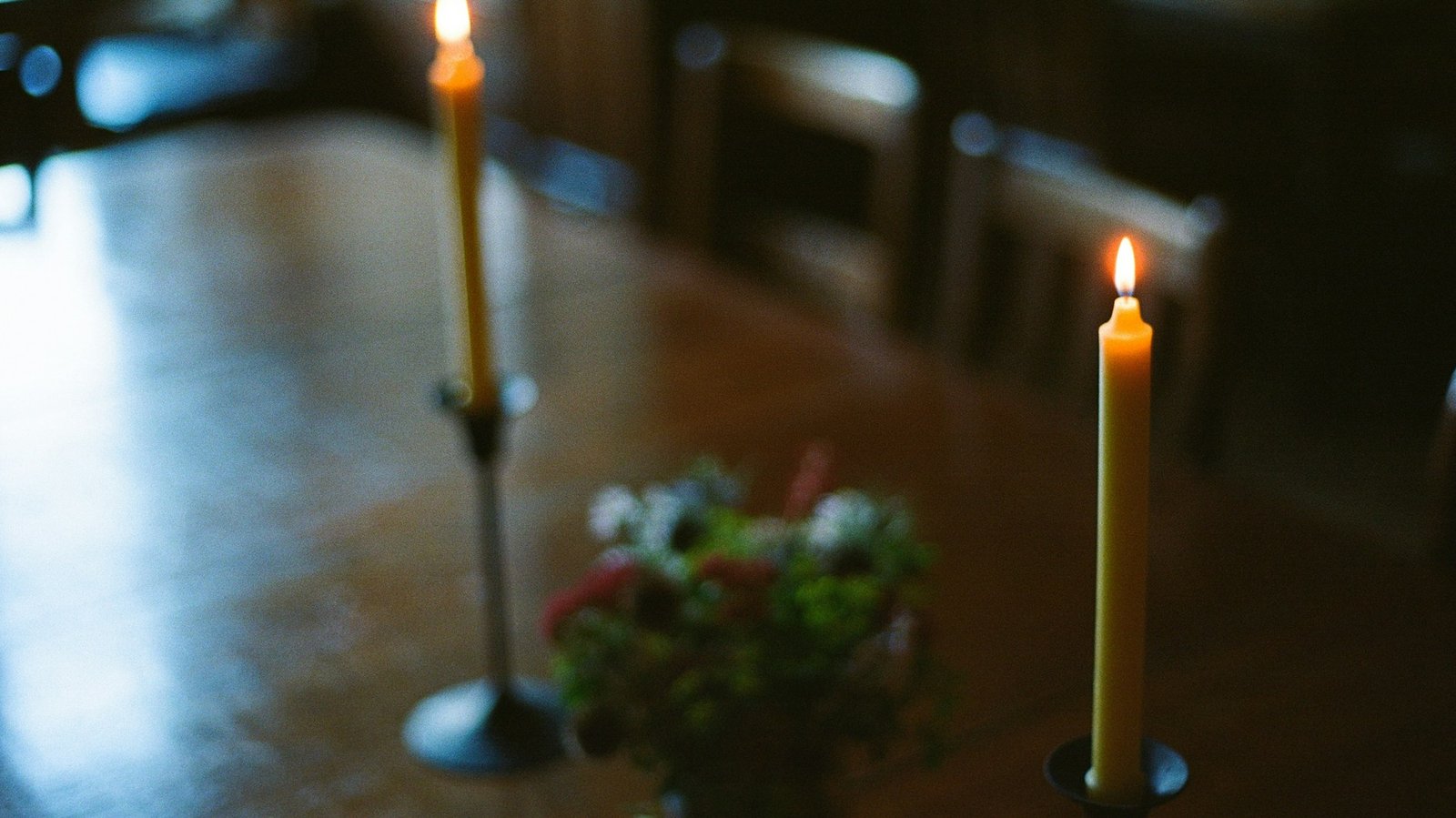
Photography: Hannah Smith / Unsplash. Editorial illustration.
What Is a Beeswax Candle?
Beeswax is a wax made by honeybees and collected as part of beekeeping. Once prepared for candlemaking, it can be shaped into rolled sheets, moulded forms or other finished candle designs. Different makers may filter, colour or blend their wax in different ways, so the name of a candle does not, by itself, establish its precise composition.
Beeswax is often associated with a golden colour, a subtle waxy aroma and a firm feel. Actual colour, scent and surface texture vary with the material and how the candle was made. Those variations are part of choosing a product thoughtfully, not a guarantee of quality or purity.
Choosing the Right Beeswax Candle Shape
Start with where the candle will stand and what kind of light you want. A practical dinner-table candle has different requirements from a decorative object on a mantelpiece.
Pillar and church-style candles
Pillars create a substantial point of light. They need a stable, heat-resistant base that can catch wax and support the candle as it becomes shorter. In the Lumen Larch range, the Small Beeswax Church Pillar Candle offers a straightforward example. Check the listed dimensions against your chosen holder before ordering.
Hand-rolled and honeycomb-textured candles
Rolled beeswax has a recognisable layered or honeycomb appearance. It brings texture even when unlit and works well where the material itself is part of the composition. Compare the Large Hand-Rolled Beeswax Candle with the Large Rolled Beeswax Comb Candle. Wicks and construction vary, so follow the instructions supplied with the particular candle.
Table candles and twisted pairs
Slender table candles introduce height and a more formal rhythm. A pair can look balanced without filling a dining table with objects. The Twisted Beeswax Table Candles are an example, but they should be used only in holders that keep them upright and secure.
Sculptural and decorative candles
Floral shapes, beehives and bubble forms make attractive objects on shelves and sideboards. If you intend to light a sculptural candle, remember that an irregular outline may melt differently from a conventional pillar. A suitable dish or holder should catch wax throughout the burn.
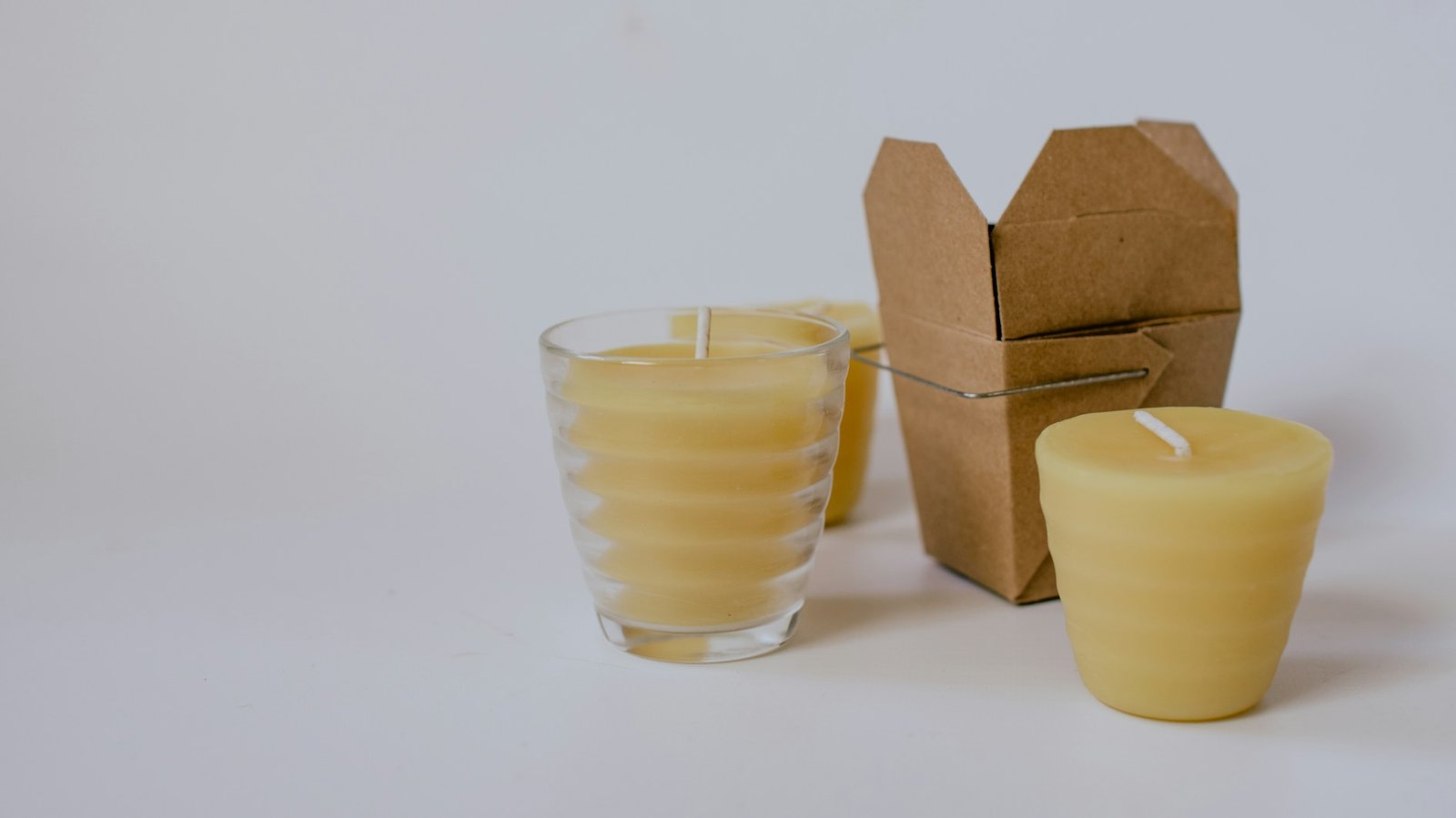
Photography: Kelly Sikkema / Unsplash. Editorial illustration.
What to Check Before Buying
- Dimensions: Check height and diameter, especially for narrow candle sockets and table holders.
- Wax description: Look for stated composition rather than assuming every beeswax-labelled candle is 100% beeswax.
- Fragrance: Read the listing to establish whether it is unscented, naturally scented or fragranced; do not assume.
- Intended use: Confirm whether the candle is designed to be burned or is primarily a decorative object.
- Wick and care guidance: Choose products with clear instructions about lighting, extinguishing and placement.
- Surface protection: Have a heat-resistant holder or plate ready before using a freestanding design.
A product photograph can be useful for colour and proportion, but the specification is the better place to confirm materials and dimensions. If an important detail is missing, ask before purchasing.
Beeswax Compared With Other Candle Waxes
Beeswax, soy wax and paraffin are different candle materials, and each can be used well or poorly. Beeswax is derived from honeybees, soy wax is usually made from processed soybean oil, and paraffin comes from petroleum refining. Performance depends not only on the wax but also on the wick, fragrance, shape and manufacturing process. For a fuller comparison of beeswax, soy, rapeseed and coconut wax, see our natural candles guide.
It is misleading to claim that every beeswax candle burns for longer than every soy candle, or that one wax automatically makes a candle safe or clean-burning. If burn duration matters, compare manufacturer-tested burn times for individual products, rather than broad claims about wax types.
For a wider range of candle styles and holders, browse Natural Candles. For a separate look at wax-and-fragrance compatibility when making your own products, read Aromatherapy Oils for Candle Making.
Colour, Scent and Natural Wax Texture
A beeswax candle may appear pale yellow, honey-coloured or deeper amber, with a smooth, folded or textured finish. Some surfaces develop a light bloom or haze during storage. This can be a normal surface characteristic of beeswax, although not every unusual patch or discolouration has the same cause.
A candle without added perfume may still have a gentle wax-like scent; fragrance strength varies. Avoid rubbing or heating a candle simply to force a particular appearance. If the maker gives polishing or cleaning instructions, follow those rather than experimenting with heat or solvents.
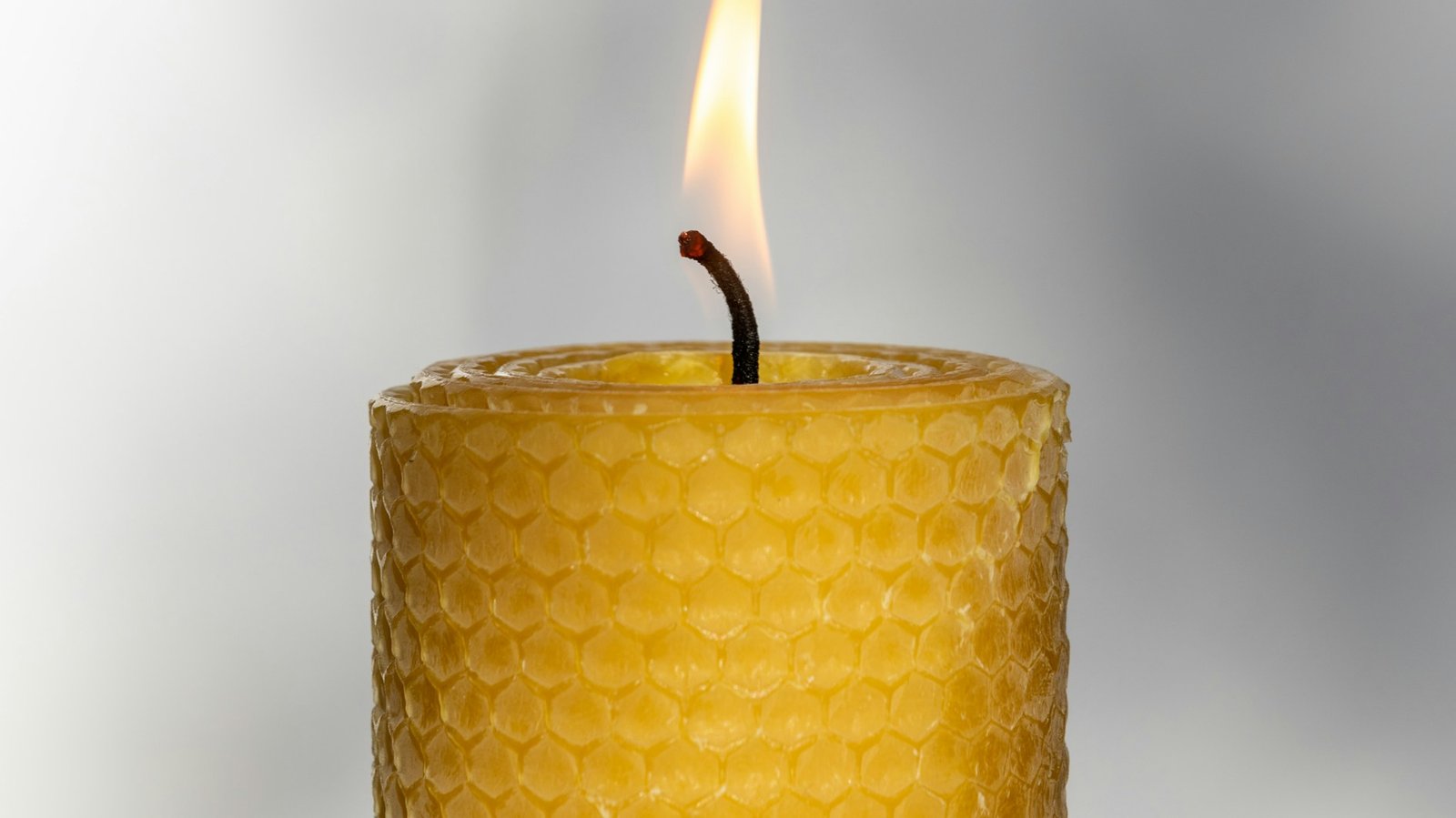
Photography: Andrew Dawes / Unsplash. Editorial illustration.
Preparing a Beeswax Candle for Its First Burn
Before lighting, remove all packaging and check that the wick and candle are undamaged. Place it on the holder it will be used with, then make sure that holder sits level and that the flame will remain clear of nearby fabrics, books and decorations.
If the wick is unusually long, consult the manufacturer’s trimming guidance. Some candles need a short exposed wick to help regulate the flame, but the right length depends on the product. Avoid applying a universal first-burn rule to every shape: a narrow table candle behaves differently from a jar candle, and a pillar should not be treated as though it has a container edge to melt towards.
Light the candle only when you can remain in the room and supervise it. If the flame becomes unexpectedly high, unstable or smoky, extinguish it safely and check the instructions before relighting.
How to Burn Beeswax Candles Safely
The most important rule is simple: never leave a burning candle unattended. The London Fire Brigade’s candle safety advice recommends stable, heat-resistant holders, clearance from flammable items, and extinguishing candles when leaving a room or going to bed.
- Use a secure, heat-resistant holder on a level, stable surface.
- Keep the flame well away from curtains, loose fabrics, books, plants, shelves and seasonal decorations.
- Keep candles and matches out of the reach of children and pets.
- Do not position a lit candle where someone must lean across it.
- Keep candles apart and away from draughts; follow any spacing specified by the manufacturer.
- Never carry a burning candle or leave it burning overnight.
- Extinguish fully before leaving; allow the candle and holder to cool before handling.
A candle should not be placed close to a diffuser, fragrance oil bottle or other combustible product. A flameless light is the better choice for a space where supervision is not practical.
Looking After the Wick and Wax
Good beeswax candle care is mostly about small, consistent checks. Keep the wick free from loose debris, avoid letting matches or wick trimmings collect in melted wax, and follow the product’s instructions for trimming and burn duration.
After extinguishing, let the wax harden before moving or storing the candle. Don’t pull at a warm wick or scrape the surface while the wax is soft. Remove cold dust gently using a clean, soft, dry cloth if the maker recommends it. Water and aggressive cleaners are usually unnecessary.
If a flame repeatedly smokes or the wick forms a large carbon cap, extinguish the candle, allow it to cool, and consult the manufacturer’s guidance before relighting. A damaged wick or unsuitable holder is a reason to stop using it rather than attempting an improvised repair.
Common Burning Problems and What They Mean
Why is my candle dripping?
Dripping can be influenced by draughts, uneven positioning, candle shape and the relationship between wick and wax. Move the unlit, cooled candle to a more sheltered, stable setting and use a holder that will catch wax. Some sculptural candles naturally release more wax than straight-sided designs.
Why does the candle smoke?
Smoke can result from an oversized or disturbed flame, debris in the wax or a wick that needs attention. Extinguish the flame and investigate when the candle is cool. No wax type guarantees a smoke-free burn.
Why does the wax melt unevenly?
An uneven melt may reflect the shape of the candle, a draught, an off-centre wick or a holder that is not level. Do not assume every candle should form a full-width liquid pool. Follow care instructions specific to its design.
What if the wax surface turns pale or cloudy?
A light surface bloom can occur on beeswax over time. If the candle is otherwise sound, check the maker’s guidance rather than treating the finish as a fault. Avoid using a hairdryer or open flame to change its appearance.

Photography: Alicia Christin Gerald / Unsplash. Editorial illustration.
Storing Beeswax Candles Between Uses
Store unlit candles in a cool, dry place away from prolonged direct sunlight, radiators and other sources of heat. High temperatures may soften or deform the wax; rough handling can damage textured or narrow forms.
Wrap individual candles carefully enough to prevent them rubbing against one another, particularly if they have decorative surfaces. Keep long table candles supported so that they don’t bend, and separate scented varieties if you want to avoid fragrance transfer.
Where Beeswax Candles Work at Home
For a dining table, a restrained pair of slender candles can create height without hiding the people opposite you. On a console, a single substantial pillar might provide enough visual weight. A sculptural candle can work as an unlit decorative object, especially beside ceramics or books, with a safer, separate lighting option for everyday use.
Think about the background as well as the candle: pale wax against a dark holder adds contrast, while textured wax beside timber, stone or linen emphasises material. Keep styling objects well away from the flame whenever candles are lit. If the available surface is crowded, leave the candle unlit.
Explore the Beeswax Candles collection for shapes that suit your room, or visit Diffusers if you prefer home fragrance without a flame.
Frequently Asked Questions
Are all beeswax candles made from 100% beeswax?
No. A beeswax-labelled candle may contain other waxes, colours or fragrances. Confirm the material composition in the individual product information if purity is important to you.
Do beeswax candles purify the air?
Claims that burning beeswax candles removes pollutants or purifies indoor air are not established by reliable evidence for normal home use. Like any real flame, a candle introduces combustion into the room; sensible ventilation and fire safety still matter.
Are beeswax candles suitable for vegans?
Beeswax is produced by honeybees, so it is generally not considered vegan. If this matters to your purchasing decision, check each product’s complete material list.
How long does a beeswax candle burn?
There is no useful single burn-time figure. Size, wax blend, wick and candle design all affect performance. Use the tested burn time provided by the manufacturer, where available, rather than relying on a general estimate.
Do beeswax candles need a holder?
Yes. Even a wide pillar candle needs a stable, heat-resistant surface or holder able to contain dripping wax, while table candles need a properly fitting socket. Never place a lit candle directly on an unprotected wooden surface.
Should I trim the wick before every burn?
Inspect it before each use and follow the maker’s wick-care instructions. Extinguish and cool the candle before trimming; never trim while the wick or wax is hot.
Can I use fragrance oil on a finished beeswax candle?
Do not add fragrance oils, essential oils or other substances to a finished candle unless its manufacturer explicitly specifies that use. Applying oils to wax or a burning wick can change how the candle behaves and introduces avoidable risk.
Choose the Candle for the Setting
A considered candle purchase starts with the practical details: where it will stand, how securely it can be supported, what materials it contains and how it should be cared for. Beeswax offers distinctive colour and texture, but thoughtful use matters more than any claim about the wax alone.
If you prefer the clean lines of a pillar, the tactile appearance of a hand-rolled design or the rhythm of a pair of table candles, browse Lumen Larch’s Beeswax Candles to compare the available options. Choose for the room, follow the care instructions and let the light remain a small, deliberate part of the evening. A well-fitting holder matters too; see our candle holder guide.

Leave a Reply