

NATURAL LIVING · INDOOR PLANTS & BIOPHILIC DESIGN
Biophilic Design: How to Bring Nature Into Your Interior
A practical guide to biophilic design at home—using plants, natural light, materials, views, texture and spatial rhythm to create interiors that feel more connected to nature.
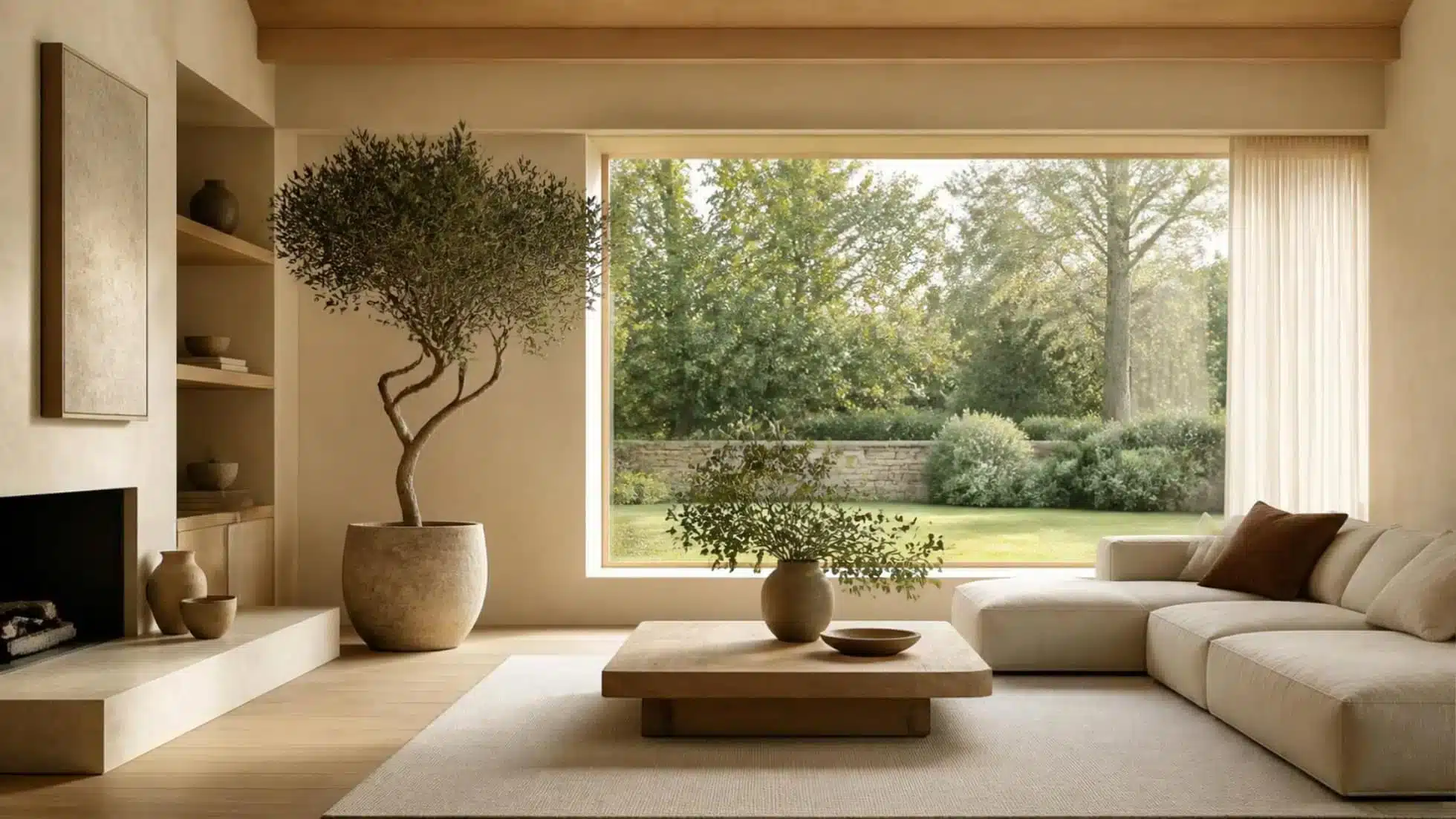
Biophilic design is often reduced to a simple instruction: add more plants. Plants can be important, but a convincing connection to nature is broader than greenery alone.
At home, biophilic interior design can also involve daylight, views, natural materials, organic form, airflow, seasonal change, texture and the way a room creates both openness and shelter.
The aim is not to decorate a room with a catalogue of “natural” objects. It is to make the interior feel more responsive to the qualities we associate with the natural world: variation, softness, rhythm, change and sensory depth.
If plants are part of that approach, start with the conditions rather than styling alone. Our indoor plants guide explains how light, humidity, temperature and room scale affect which plants are likely to thrive.
What Is Biophilic Design?
Biophilic design is an approach to the built environment that seeks to strengthen people’s connection with nature through the way spaces are planned, experienced and detailed.
A widely used framework is Terrapin Bright Green’s 14 Patterns of Biophilic Design. It groups design opportunities into direct experiences of nature, natural analogues and spatial qualities associated with natural environments.
For a home, that framework does not need to become a checklist. The more useful question is: what would make this room feel more connected to natural light, material, form, movement and living systems?
That shift matters because the strongest biophilic design often feels ordinary rather than theatrical. A timber table catching changing daylight, a view towards a garden, a plant with room to mature or a quiet alcove beside an open living space can all contribute.
Biophilia Is Broader Than Houseplants
Houseplants are one of the most immediate biophilic design elements because they introduce living form directly into an interior. They are not, however, the whole idea.
A room with dozens of plants but little daylight, synthetic finishes and no visual breathing space can feel less connected to nature than a restrained room with one healthy plant, tactile timber, linen, views outside and changing natural light.
This is useful for Lumen Larch interiors because it prevents biophilia becoming another decorative style. The objective is not an indoor jungle. It is a layered relationship between the room and natural systems.
Start With Direct Contact With Nature
Before buying anything, look at the direct natural features the home already has.
- daylight from windows and rooflights
- views of trees, sky, gardens or changing weather
- fresh air from opening windows or doors
- existing timber, stone, brick or clay
- plants that are already healthy in the room
- seasonal changes in light, temperature and outlook
Biophilic interior design becomes more convincing when these existing conditions are amplified rather than covered up. A good window view may matter more than another decorative object. A beautifully weathered timber surface may need less styling, not more.
Use Natural Light as a Design Material
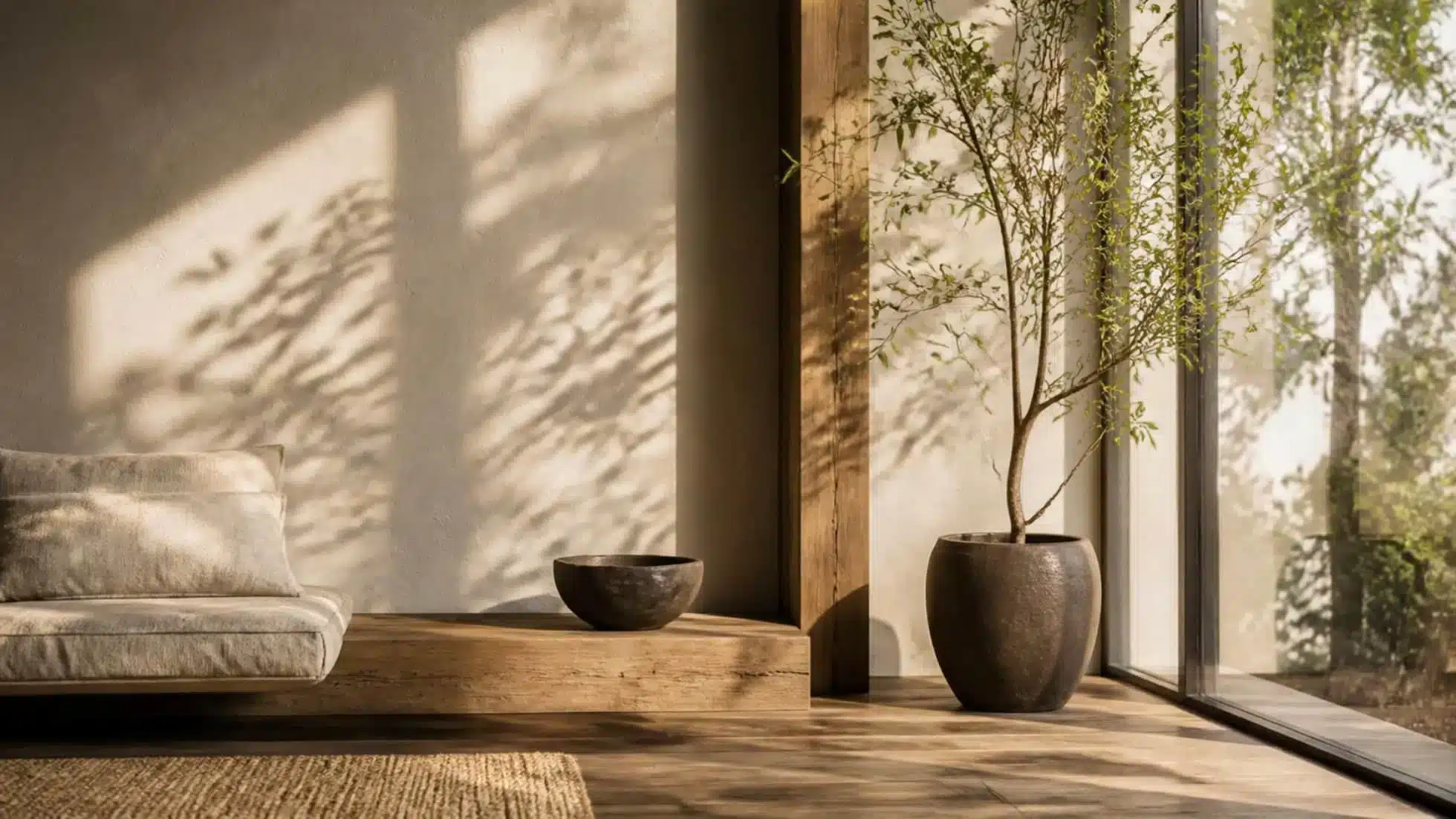
Natural light changes through the day and through the year. That variation is one of the simplest ways an interior can remain connected to the outside world.
Instead of treating daylight only as brightness, notice how it creates contrast, shadow, warmth and movement. Morning light may rake across textured plaster. Winter light may sit lower and deeper in the room. Leaves can cast moving shadows that artificial lighting does not reproduce in the same way.
Use curtains, blinds and furniture placement to control glare without flattening all variation. The goal is not maximum daylight at every moment; it is a room that responds gracefully as light changes.
Frame Views Before Adding Decoration
If a room has a useful view of greenery, sky or even a mature tree in the street, treat that view as part of the interior composition.
Keep tall furniture away from the clearest sightline. Avoid over-dressing the window. Position seating where the eye can travel outward rather than forcing every chair to face only a screen or internal wall.
Where the outside view is mostly urban, smaller interventions can still matter. A balcony planter, window box or carefully positioned indoor plant can create a closer layer of greenery in front of the distant view.
Choose Natural Materials for Sensory Depth
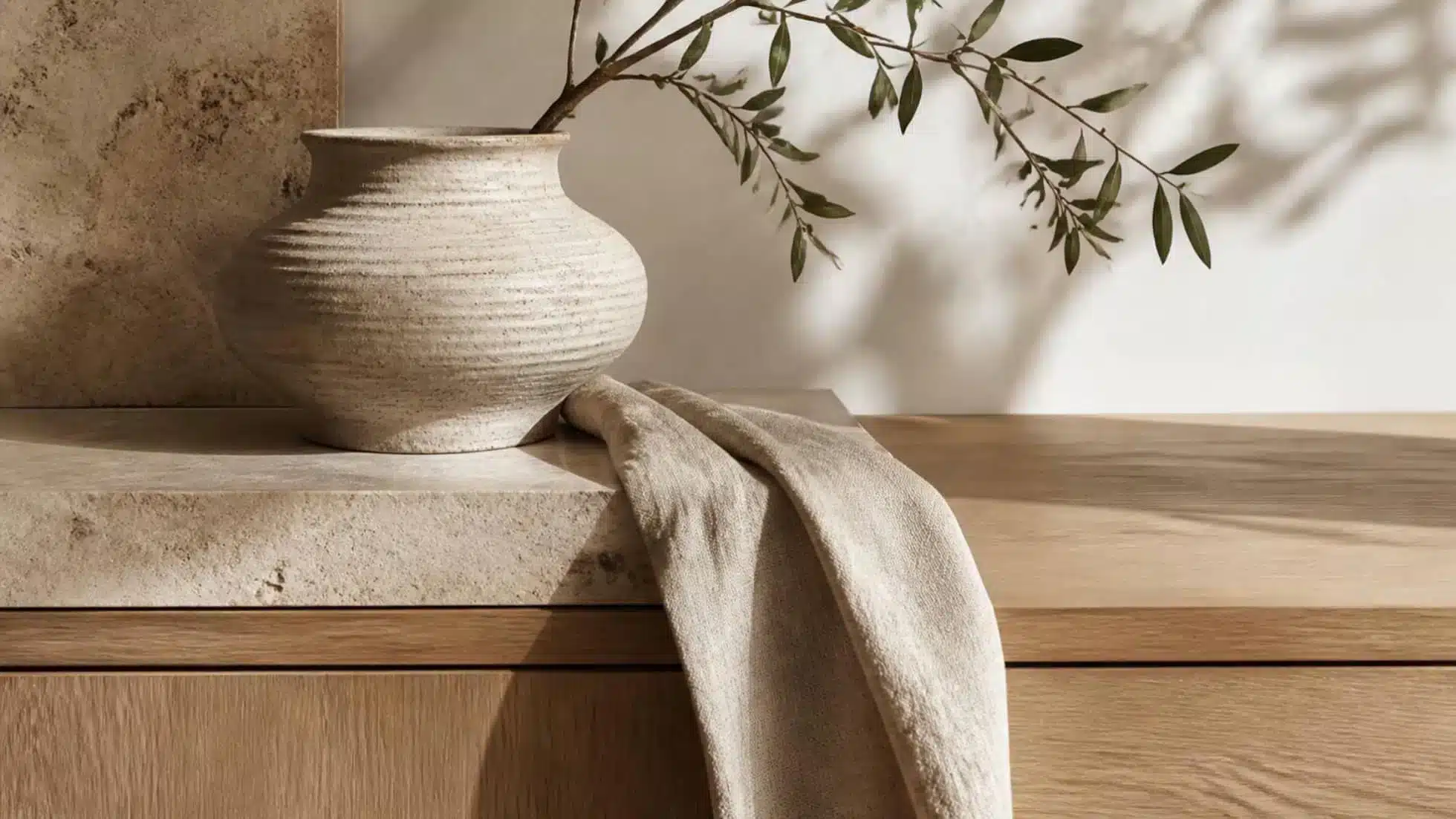
Natural materials bring variation that is difficult to reproduce perfectly with synthetic finishes. Grain, fibres, knots, patina and slight irregularities give the eye more to read.
- timber with visible grain rather than heavily plastic-coated surfaces
- linen, wool or cotton where touch matters
- ceramic, terracotta or stone for tactile weight
- woven fibres used selectively rather than as a decorative cliché
The point is not that every material must be natural. It is that the room should contain enough genuine texture and variation to avoid feeling visually sealed and overly uniform.
Use Organic Forms Without Turning Them Into a Theme
Biophilic design principles often include forms and patterns that echo nature. In a home, that can be as simple as choosing silhouettes with slight irregularity rather than filling the room with literal leaf motifs.
A curved ceramic vessel, branching plant form, softly irregular timber edge or rounded textile pattern can introduce organic geometry without making the room feel themed.
Restraint is important. When every cushion, wallpaper, lamp and accessory repeats botanical imagery, the connection to nature can become more graphic than experiential.
Balance Prospect and Refuge
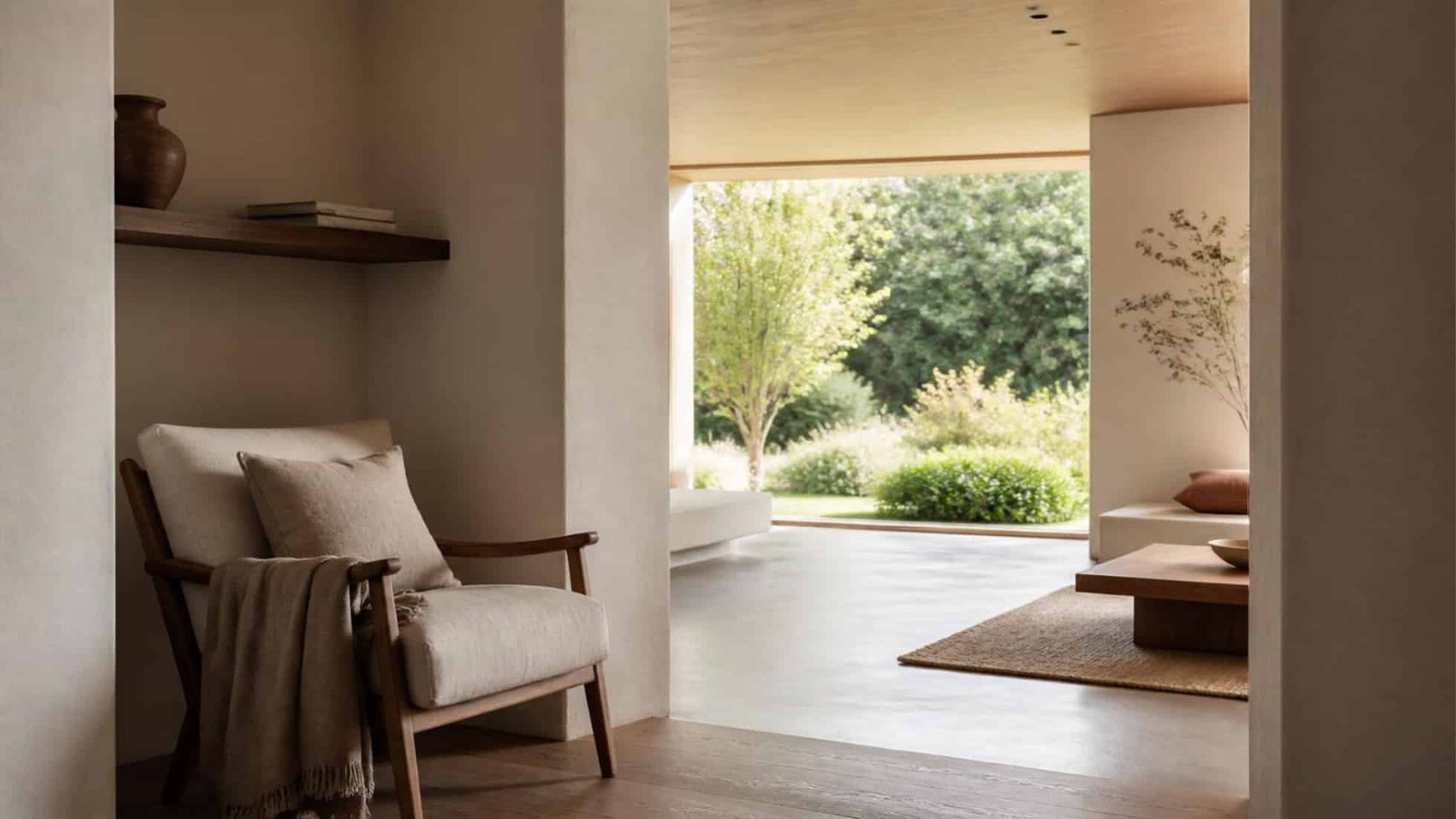
One of the more useful spatial ideas within biophilic design is the balance between prospect—a sense of outlook—and refuge—a sense of shelter.
At home, prospect might be a clear view across the living room towards a window or garden. Refuge might be a reading chair beside a wall, a bed positioned away from the main circulation route or a small dining nook with a lower pendant above it.
Rooms tend to feel calmer when they offer both: enough openness to understand the space, and enough enclosure to feel settled within it.
Make Space for Seasonal Change
A biophilic home should not look identical in January and July.
Seasonal change can appear through daylight, branches, foliage, flowers, textiles, table arrangements or the simple act of moving a chair closer to the window when winter light becomes more valuable.
This does not require constant redecoration. Small shifts are enough to remind the interior that it exists within a larger natural cycle.
Use Indoor Plants With Intention
Plants can strengthen biophilic design because they are living, changing elements rather than static representations of nature.
Research summarised by the Royal Horticultural Society suggests that people generally respond positively to healthy houseplants and that plant appearance, shape and condition influence how they are perceived. RHS
The practical lesson is simple: a few healthy plants placed where they can thrive are usually more convincing than a large number of struggling plants used only to fill visual gaps.
Use scale deliberately. A floor-standing specimen can act like furniture, while smaller plants work better as secondary layers. Our guide to large indoor plants explains how to judge mature size, visual weight and circulation before choosing a statement plant.
Biophilic Design in the Living Room
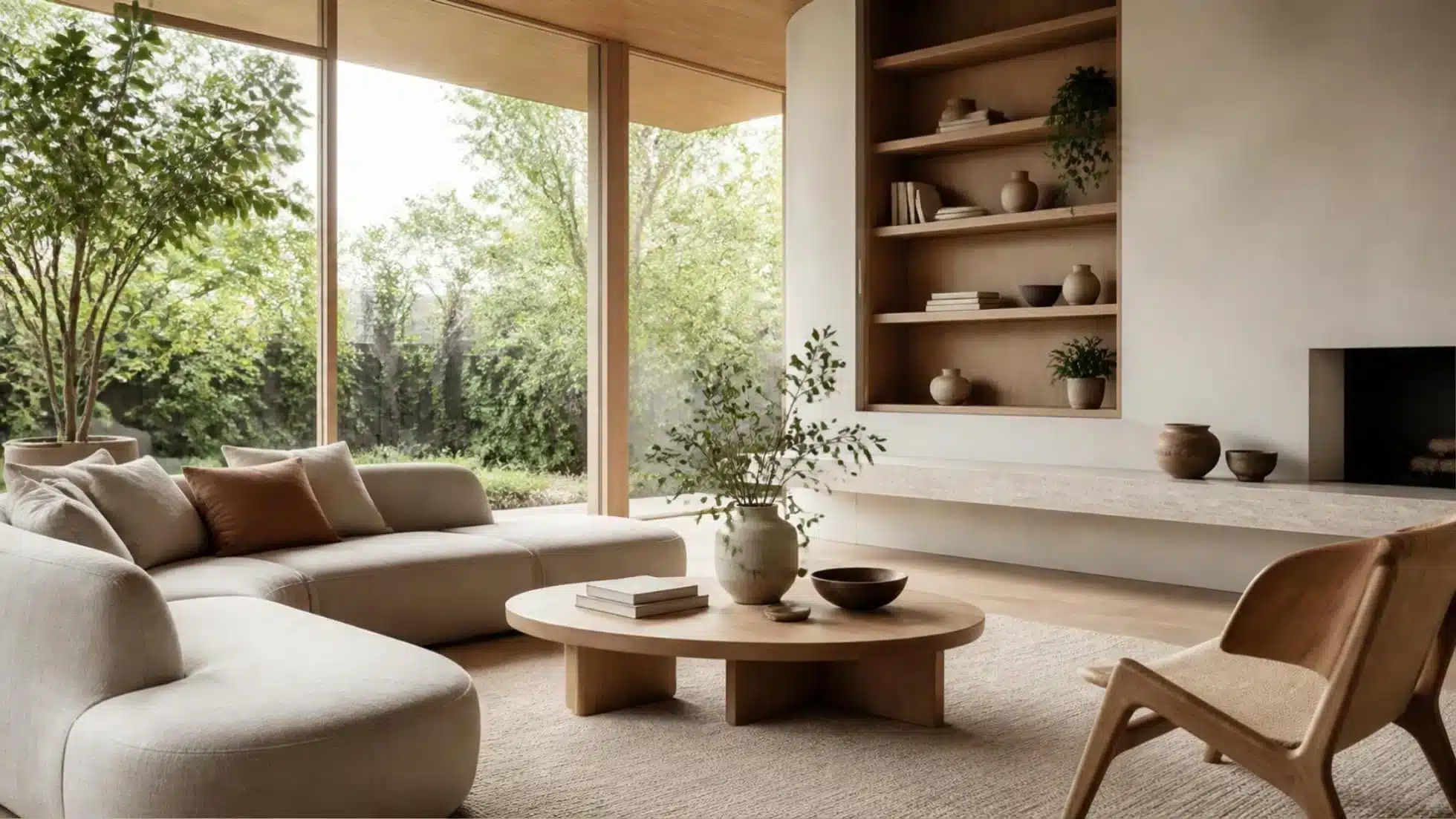
A biophilic design living room works best when nature is integrated into the room’s hierarchy rather than added at the end.
- Keep the strongest window view visually open.
- Use one or two meaningful natural materials rather than many competing textures.
- Place plants according to light and mature size.
- Use warm, layered artificial light after dark rather than relying on one bright ceiling source.
- Allow negative space around major plants and natural objects.
- Create at least one seating position with a sense of outlook and one with a sense of shelter.
The result can still be minimal. Biophilia does not require visual abundance; it requires meaningful connection.
Adapting the Approach by Room
Bedroom
Prioritise calm outlooks, soft natural materials and filtered morning light. Keep plant choice restrained and appropriate to the actual light available rather than filling every bedside surface.
Kitchen and dining area
Use natural materials where they can age well: timber boards, ceramic, linen and stone. Herbs can provide a direct living element where there is enough light, but function should remain clear around work surfaces.
Bathroom
Humidity can support some plants, but only if there is suitable light. Where the room is windowless, timber, stone, tactile textiles and organic form may provide a more honest biophilic response than repeatedly replacing plants that cannot thrive.
Common Biophilic Design Mistakes
- Equating biophilia with “more plants”. Plants are only one part of the relationship between nature and interior space.
- Using decorative nature motifs instead of real sensory qualities. A leaf-print cushion does not replace daylight, tactile materials or a living plant.
- Ignoring maintenance. Unhealthy plants, dusty leaves and water-damaged surfaces undermine the effect.
- Blocking the best view. Furniture and styling should support useful sightlines rather than compete with them.
- Making the room too literal. Biophilic interiors do not need to look rustic, tropical or overtly botanical.
- Forgetting negative space. Natural forms often need breathing room to remain legible.
A Simple Biophilic Design Framework
Before adding anything new, assess the room in this order:
- Light: Where does natural light enter and how does it change?
- View: What natural outlook can be preserved or strengthened?
- Living elements: Which plants can genuinely thrive here?
- Material: Where would timber, linen, clay, stone or other natural textures add depth?
- Form: Is the room entirely rectilinear, or is there some organic variation?
- Space: Does the layout offer both outlook and a sense of shelter?
- Change: Is there room for seasonal movement rather than a completely static scheme?
This sequence keeps biophilic design grounded in the room itself rather than in a shopping list.
Frequently Asked Questions About Biophilic Design
What is biophilic design in interior design?
It is an approach to interiors that strengthens connections with nature through living elements, natural light, views, materials, organic form, sensory variation and spatial qualities associated with natural environments.
Do I need lots of plants for biophilic design?
No. Plants can be useful, but daylight, views, natural materials, ventilation, texture and spatial composition can all contribute. One healthy plant in the right place may be more effective than many poorly placed plants.
Is biophilic design the same as sustainable design?
No. The ideas can overlap, but they are not identical. Biophilic design focuses on human connection with nature in the built environment. Sustainable design is broader and also addresses resource use, energy, materials, carbon, durability and environmental impact.
Can biophilic design work in a small flat?
Yes. A small home can still use daylight, a framed view, one well-scaled plant, natural materials and a calmer spatial hierarchy. The approach depends more on quality of connection than on quantity of greenery.
What are the easiest biophilic design elements to add first?
Start with what already exists: uncover useful daylight, improve the view from key seating positions, introduce one healthy plant where conditions suit it, and replace one visually dominant synthetic texture with a more tactile natural material when appropriate.
A More Natural Interior Without the Jungle Effect
Biophilic design is most useful when it changes how you evaluate a room rather than simply what you buy for it.
Look first at daylight, view, material, living elements and spatial balance. Preserve what already connects the room to nature, then add only what strengthens that relationship.
The result does not need to be lush or overtly botanical. A restrained interior can still feel deeply biophilic when natural light moves across tactile materials, plants are healthy and well placed, views are protected and the room offers both openness and shelter.

Leave a Reply