

Home / Journal / Natural Living / Natural Home / Linen Home Decor: How to Use Linen Throughout the Home
NATURAL LIVING · NATURAL HOME
Linen Home Decor: How to Use Linen Throughout the Home
From curtain drape to cushions, bedding and table settings: thoughtful linen choices that suit daily life.

Linen home decor can bring softly woven texture to a room through curtains, cushions, bedding and table textiles. But the best linen choices are not simply the ones that look relaxed in photographs; the fabric must suit the room and the tasks it will perform.
This guide explains how to assess fibre content, fabric weight, drape, light control, everyday wear and laundering before making a purchase. It also shows how linen works alongside timber, ceramics and the furniture you already own.
What Makes Linen Useful in Home Decor?
Linen is a textile made from flax fibres. Its visible weave, softly irregular surface and relaxed drape bring a distinctive texture to rooms with timber, ceramics, painted walls and other fabrics. It can work in traditional and contemporary interiors alike, without demanding an entirely neutral palette.
The right linen home decor depends on function. A curtain, cushion cover, tablecloth and upholstered seat face different wear, cleaning and performance requirements. Rather than buying by appearance, check how the textile will be used and maintained.
Our natural home decor guide covers how linen combines with wood, ceramic, light and greenery across the whole room.
Understand Linen, Linen Blends and Linen-Look Fabrics
A linen-look product may describe an appearance rather than a fibre. A textile could contain pure linen, linen mixed with cotton or other fibres, or no flax fibre at all. Read the composition instead of relying on the headline of a product listing.
Different fibre mixtures, finishes and weaves affect drape, creasing, strength, colour and laundering. A blend is not automatically inferior to a pure-linen fabric; it may be more appropriate for repeated use or the way you prefer a textile to feel.
Check seams, linings, trims and any special-care instructions. These details may determine whether a fabric is practical long after its first styling photograph.
Choose Fabric Weight and Weave for the Task
An open weave can look airy and softly filter daylight, but it will not necessarily provide the privacy of a lined curtain. A denser weave may hang with deeper folds, while a light cushion fabric may be unsuitable for heavy upholstery.
Choose according to where the textile will live. Assess curtain fullness and lining, cushion fabric strength, bedding comfort and washability, and table textiles’ exposure to food and stains.
Ask a retailer for useful specifications when they are missing. There is no single ideal linen weight for every application; the fabric must be judged against the task.
How Linen Drape and Texture Change a Room
The shape of a linen curtain or throw is part of its effect. Soft, irregular folds can reduce the visual hardness of windows and furniture, while a more structured fabric creates a different character. Light and colour further change how these surfaces appear.
Before buying, examine existing textiles and notice which parts of a room feel flat, overly textured or visually crowded. You may already have the right balance without adding another accessory.
Consider samples where possible. A fabric shown neatly pressed on a website may behave differently once hung, washed or used every day.
Linen Curtains: Light, Privacy and Proportion
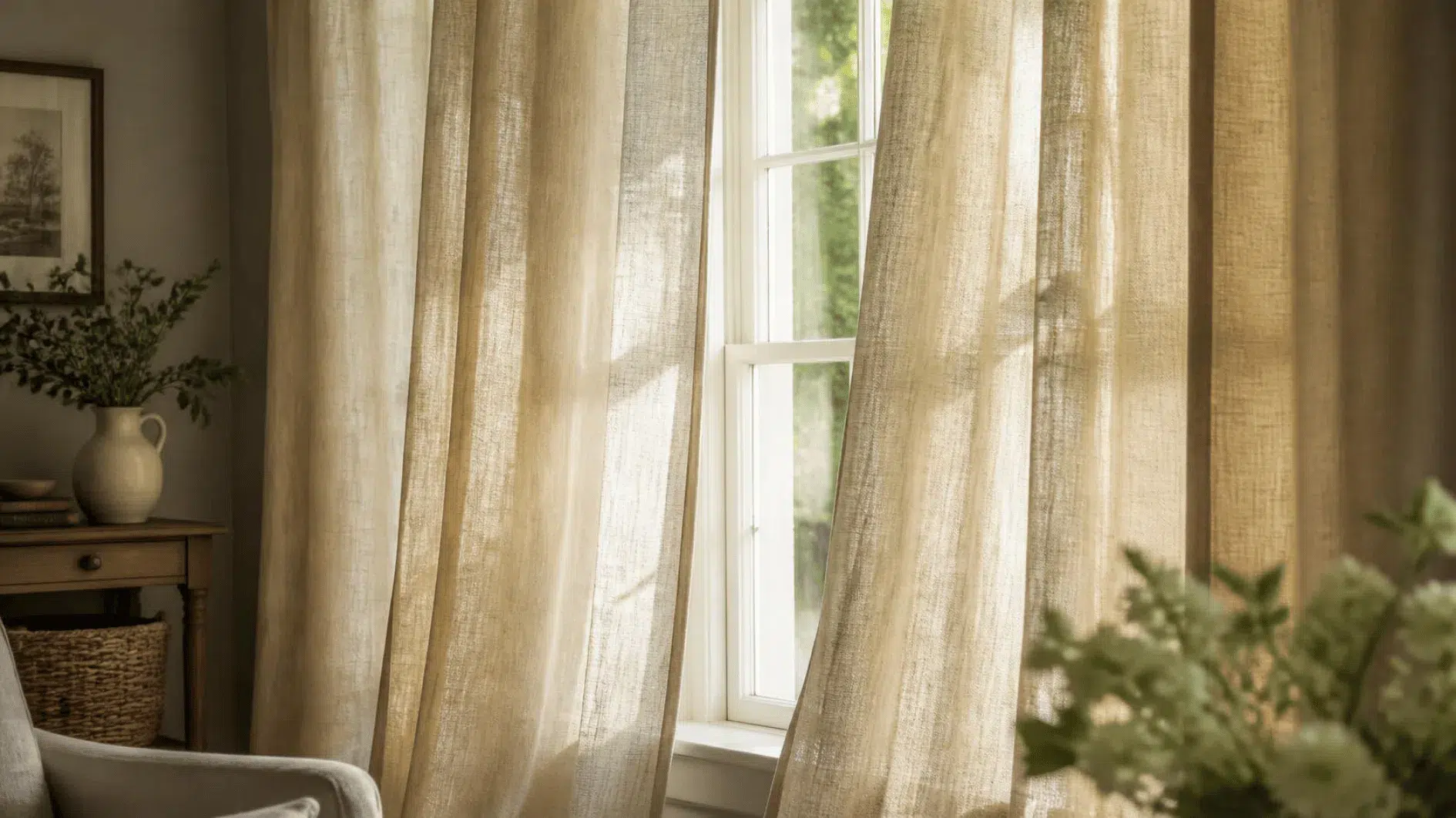
Start with the job your curtains must do. Is the priority privacy, filtering glare, insulation, blocking light, or simply softening the window? Linen fabric alone should not be assumed to deliver every one of these benefits.
A loose weave may admit daylight yet offer limited privacy at night when the interior is illuminated. A lining can change opacity, weight and drape. Check the specific product and the complete hanging system.
Measure the window and rail carefully. Curtain width, fullness, heading style and finished length influence both visual proportion and how easily they open and close.
Hang Curtains Without Compromising Daily Use
Place the curtain rail or track so the fabric can move freely and the window remains practical to operate. Check clearances around radiators, doors, furniture and walkways. The correct length is the one that suits the room and its maintenance needs.
Floor-length linen can be elegant, but deliberately pooled fabric may create difficulties with dust, pets or accessibility. A shorter length may be entirely appropriate.
Check that fittings are suitable for the wall or ceiling and the weight of the complete curtain. A visually light-looking fabric can still be heavy in generous widths or when lined.
Choose Linen Colours That Suit Existing Furniture
Natural flax, cream and stone are familiar linen colours, but muted green, terracotta, blue and deeper shades can also be effective. Begin with major furniture and surfaces you already own rather than buying everything again in one matching colour.
Look at fabric samples in daylight and under your evening lighting. The weave catches light differently from smooth paint or polished timber, and a shade that looks warm in one room may appear cooler in another.
Using fewer repeated tones can create coherence without making a room bland. Texture provides interest even where the colour palette is restrained.
Linen Cushions and Throws in the Living Room
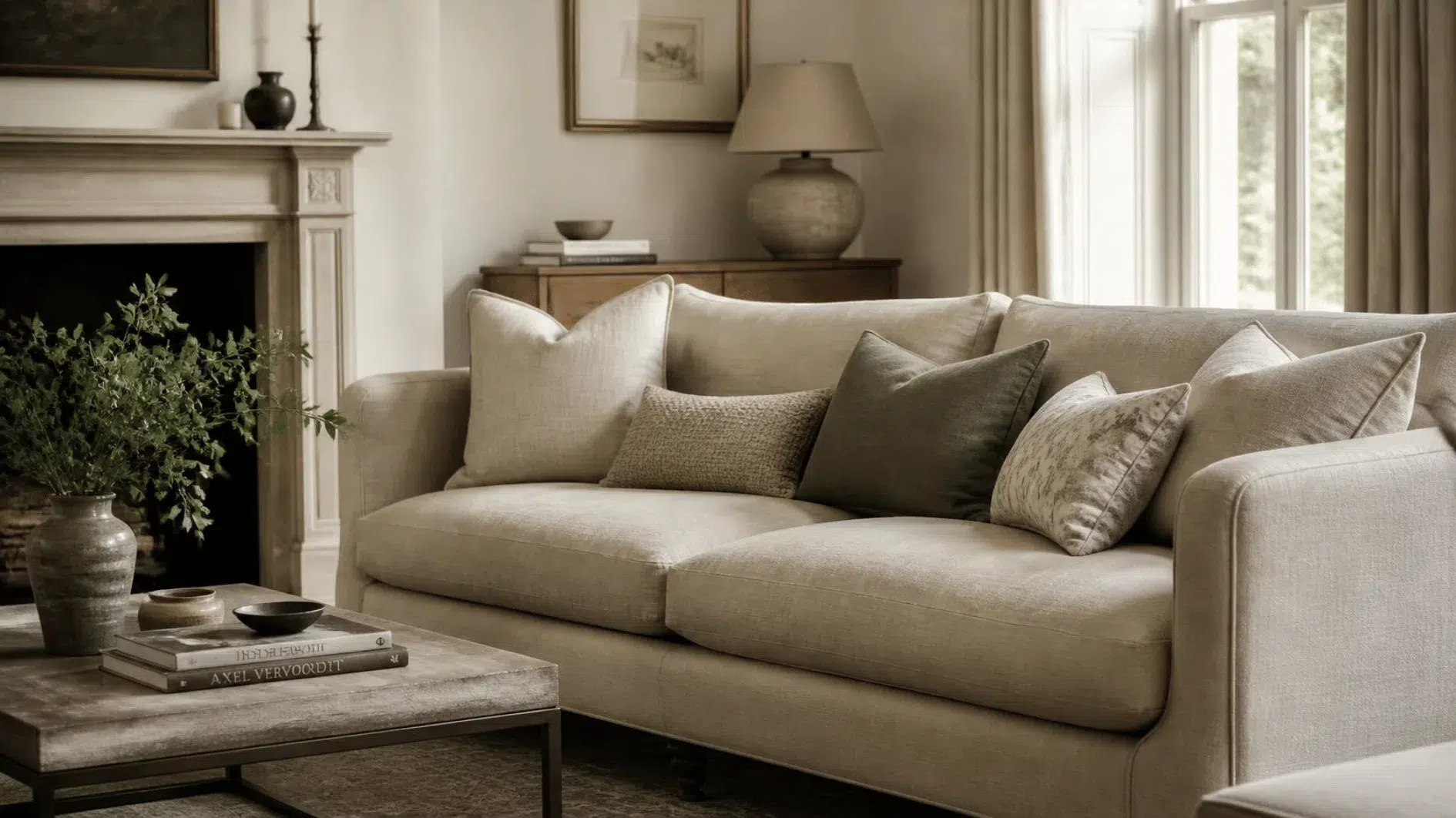
A linen cushion cover can add tactile contrast against smooth upholstery, leather or closely woven fabric. A useful cushion also needs comfortable proportions, a secure closure and a cover that suits the household’s cleaning routines.
Try one or two pieces before adding a larger collection. A sofa overcrowded with decorative cushions may be less comfortable and more difficult to reset than one with a few suitable supports.
Linen throws can introduce another layer, but check whether the textile is made for frequent handling and washing. An existing blanket or cushion may already do the job without a new purchase.
Balance Cushion Sizes, Inserts and Patterns
Select a cover that fits its insert rather than relying on a decorative photograph. Too large a cover may look shapeless; an unsuitable insert can distort seams or shorten the item’s usefulness.
Mixing a simple linen weave with a patterned rug, timber grain or a smoother cushion can create contrast. You do not need several types of texture in equal quantities.
The arrangement should allow people to sit comfortably without removing a stack of ornaments. Practical comfort is more important than perfect symmetry.
Linen Bedding and Soft Furnishings in the Bedroom
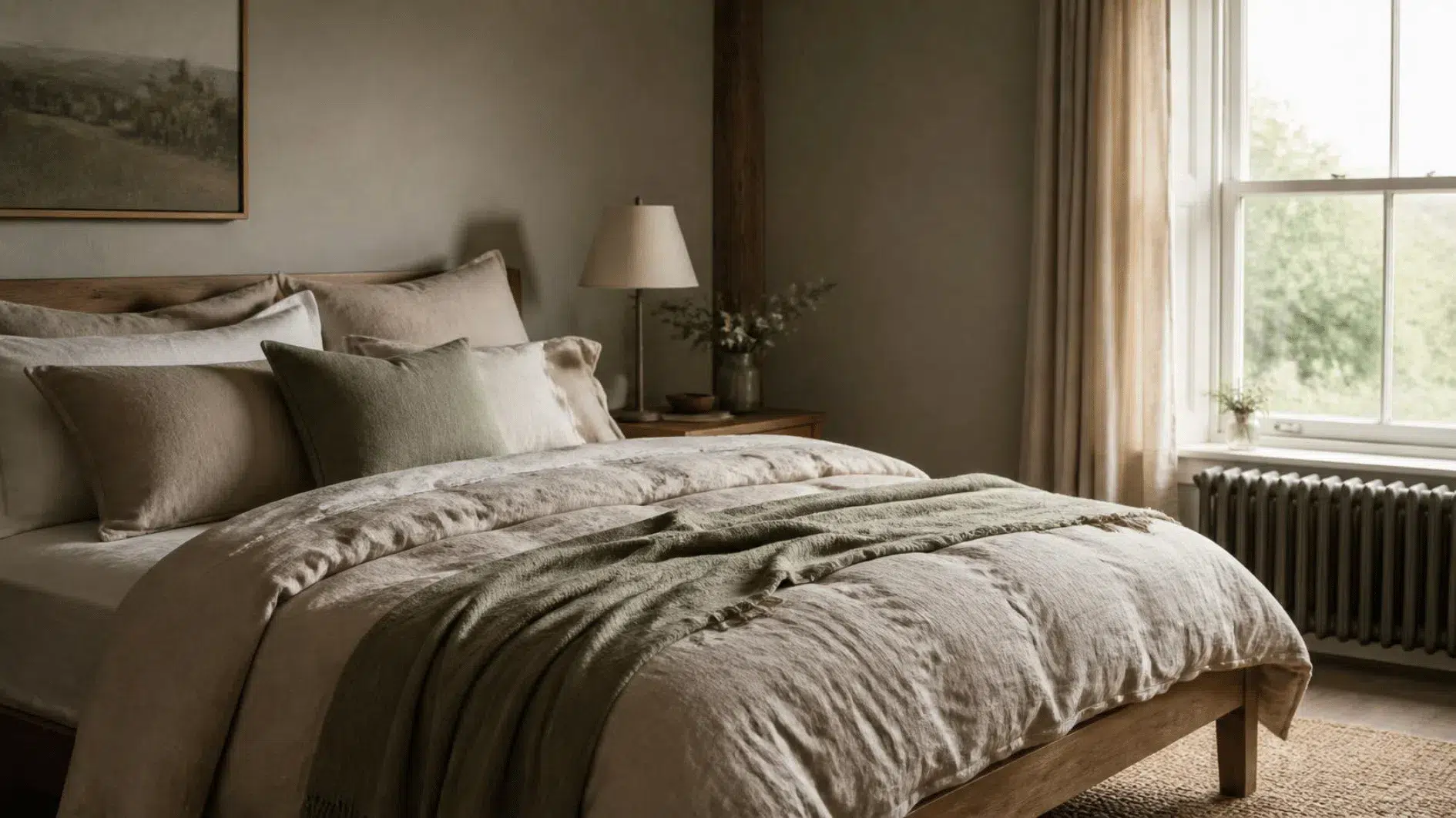
Linen bedding may suit people who enjoy its tactile quality and relaxed appearance, but comfort is individual. Evaluate the actual weave, finish and washing instructions alongside the product’s size and construction.
Check the dimensions of duvet covers, pillowcases and fitted sheets; sizing is not perfectly uniform between ranges. Consider whether the bedding will fit comfortably into your existing laundering routine.
Soft linen bedding can balance visible timber bedside furniture. Our wooden home decor guide
Layer Bedroom Textiles With Restraint
A considered bed does not need many pillows and throws. Start with bedding that is comfortable and straightforward to care for, then add only layers you use or particularly value.
An existing blanket may provide more than enough variation alongside a linen duvet cover or textured pillowcase. You can enjoy a slightly creased appearance without treating it as a requirement.
Look at the entire room: curtains, upholstered pieces, lighting and flooring contribute as much to texture as the bed itself. Keep bedside surfaces usable for everyday essentials.
Linen Tablecloths, Runners and Napkins
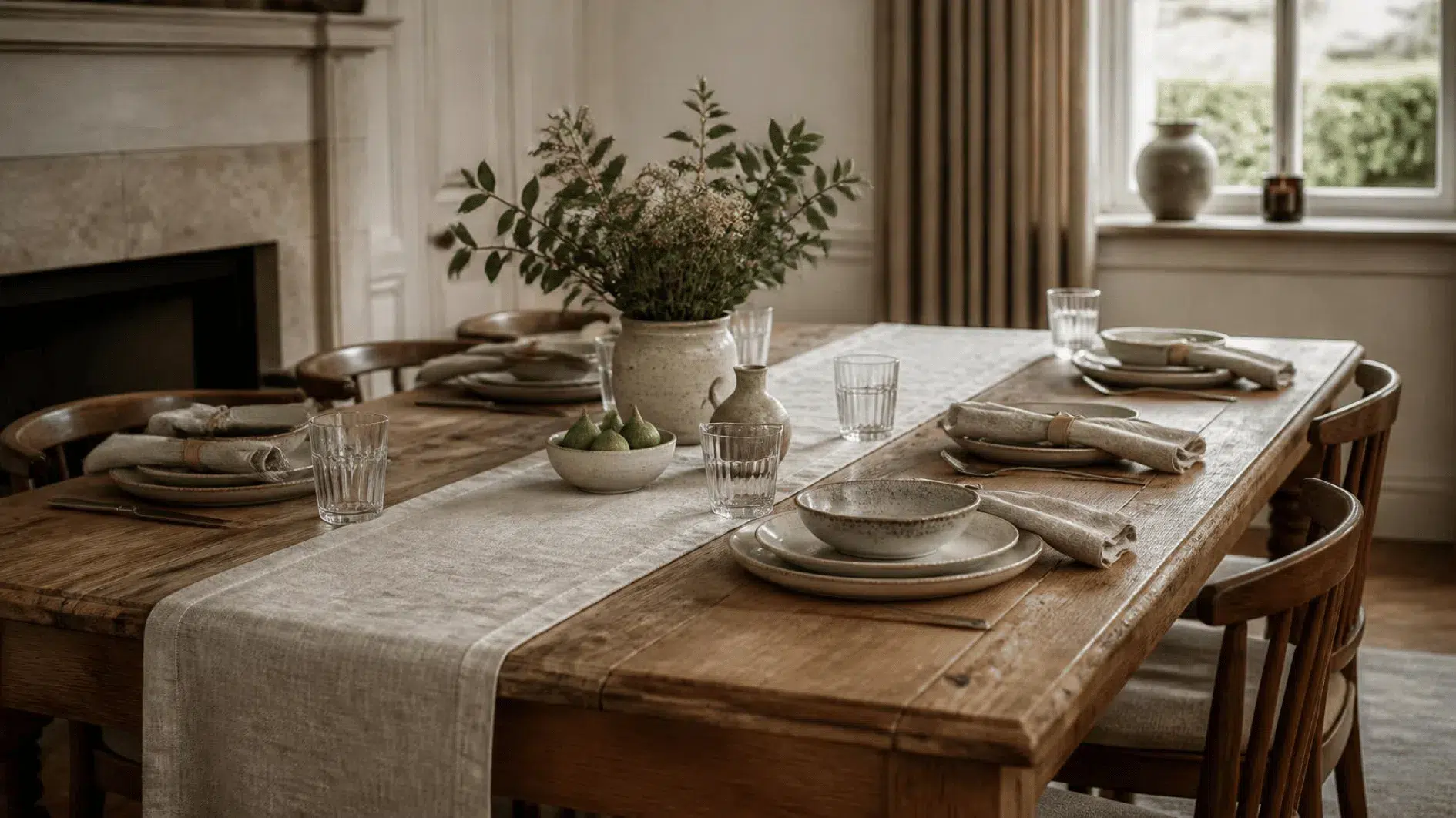
Table linen can bring softness to a timber dining table and contrast with glazed ceramics. A tablecloth, runner or a set of napkins may be enough; there is no need to make every meal feel like a formal display.
Choose dimensions suited to the table, and check laundering and stain-care instructions if the pieces will be used often. A delicate runner may be suitable for occasional dining but impractical for regular family meals.
Keep table arrangements low enough and sparse enough for conversation and serving. Functional ceramics, the table’s own grain and a simple textile can provide all the visual interest required.
Using Linen Tea Towels and Kitchen Textiles
Kitchen textiles should be chosen for the work they need to do. Consider absorbency, cleaning, durability and drying rather than treating a tea towel as a decorative accessory only.
Follow the manufacturer’s washing instructions and hygienic handling guidance. Keep textiles away from open flames, hot hobs and other heat sources. An attractive fabric is not necessarily appropriate as a potholder or heat-protective item.
Use as many serviceable cloths as daily routines require, without buying coordinated sets merely for the appearance of an orderly kitchen.
Can Linen Work in a Bathroom?
Bathrooms expose textiles to moisture, splashes and frequent cleaning. Before using linen accessories there, check whether the product is appropriate for damp conditions and can dry properly.
Decorative fabric baskets or liners should not remain against persistently wet surfaces, and linen does not replace moisture-resistant materials or ventilation. For towels and other everyday bath textiles, washability and practical performance should lead.
A bathroom can still have a natural-feeling palette through ceramics, lighting and suitable durable finishes without adding absorbent fabric where it is inconvenient.
Pair Linen With Timber, Ceramics and Metal
The contrast between linen weave and timber grain can feel warm and balanced. A softly draped curtain may complement a wooden sideboard, while a simple table runner provides a quiet surface beneath suitable serving ceramics.
Use material combinations intentionally rather than buying one of everything. A room with strongly patterned grain, a textured rug and decorative upholstery may need less fabric detail, not more.
Our natural home decor guide covers these broader relationships and links to further guides on wood and ceramic home objects.
See How Daylight Changes Linen’s Appearance
Linen’s weave and folds can look different across the day. Side light may emphasise creases, and artificial lighting can affect colour. Look at samples in the actual room whenever possible.
For window dressing, check the fabric in conditions that matter: direct daylight, shaded daylight and evening privacy with lamps on. No appearance-based description can replace a suitable opacity or lining specification.
Use adequate task lighting for reading, cooking and moving safely. Our lighting for a sitting room guide
Care for Linen Home Textiles Correctly
Laundering requirements differ with fibre blends, lining, dye, stitching and applied finishes. Follow the specific item’s care label rather than assuming all linen can be washed or dried in the same way.
Check whether covers detach from inserts, whether curtains are lined and whether decorative trims require special handling. Be mindful of label guidance on possible shrinkage and fabric distortion.
Some curtains, cushions or upholstery may be best cleaned professionally. Avoid aggressive stain treatments or high heat unless the manufacturer’s instructions permit them.
Work With Linen Creases Rather Than Against Them
Visible creasing is a familiar characteristic of many linen fabrics. You may appreciate its relaxed appearance or prefer more structured, pressed textiles. Both preferences are legitimate.
Product finishing and blends can alter the look considerably. Choose the finish that suits the way the piece will be used, rather than purchasing on the assumption that all linen behaves alike.
On an everyday dining table or bed, an easy-care textile that you are happy to use may serve you better than one you feel obliged to maintain at a perfect standard.
Assess Durability and Repairable Details
Construction plays a significant part in lifespan. Look at stitching, seam allowance, closures, hems and any lining on a fabric you intend to use regularly. A removable, serviceable cover may be easier to maintain than a fixed textile with delicate trims.
Do not assume a plant-derived fibre automatically performs well in high-wear upholstery. Check the product’s stated suitability for that task and weigh ease of cleaning against its appearance.
Retaining, maintaining and repairing good existing textiles can be more sensible than buying replacements solely to follow a trend.
Reuse Existing Linen and Consider Second-Hand Finds
An owned tablecloth might work as an occasional runner, or an existing cushion cover may make more sense in another room. Check the dimensions and condition before adapting textiles for a new role.
Second-hand curtains and table linens can be considered when their hygiene, condition and care needs are known. Look for stains, worn fibres, damaged hems and uneven fading.
A lightweight decorative fabric should not be repurposed into an application requiring greater strength or fire resistance without appropriate evidence of suitability.
Understand Environmental Claims About Linen
A description that calls linen natural, sustainable or low-impact is not sufficient evidence on its own. The environmental picture may depend on cultivation, fibre processing, dyeing, finishing, transport, washing and the length of useful life.
Ask for meaningful product information where it matters. Consider how long you expect to keep the textile and whether you can wash or repair it appropriately.
Our sustainable materials guide
Use Linen on a Budget Without Starting Over
Styling changes can begin with pieces already at home. Move an existing cushion, change the arrangement of a throw, hang curtains more appropriately or use a table textile you have stored away.
Before buying new linen, identify the gap it would fill and check measurements, fibre composition, weave, finish, care and returns information. A matching set may be less practical than a single well-chosen piece.
Focus spending on a real need such as suitable curtains for privacy or a replacement cover for a damaged cushion, not a complete room reset.
Common Linen Home Decor Mistakes
Common mistakes include assuming every linen-look fabric contains flax fibre, buying curtains without checking privacy or lining, filling seating with too many cushions and ignoring fabric-care instructions.
A fabric may look attractive yet be unsuitable for frequent cleaning, damp rooms or places near heat. Never assume natural textiles are universally durable or automatically the most sustainable choice.
Treat colour, weight, construction, care and intended use as a connected decision. A smaller number of useful, maintainable textiles often works better than a large matching collection.
Linen Home Decor Checklist
Identify the task each textile needs to perform, then check composition, weave, weight and finish. Measure curtains, bedding and cushion inserts before buying. Assess light, privacy and lining requirements where appropriate.
Match the colour and texture to existing furniture and lighting. Read laundering information, check seams and closures, and consider whether an existing or second-hand textile could meet the need.
Treat unqualified environmental claims with care, and avoid adding fabrics that make daily maintenance more difficult.
Frequently Asked Questions About Linen Home Decor
Is linen good for home decor? It can add visible texture and relaxed drape to curtains, cushions, bedding and table textiles. Whether it works well depends on the item’s weight, construction and use.
Can linen curtains provide privacy? Some can, particularly where the weave and lining are suitable. Sheer or open-weave fabrics may offer limited privacy at night.
Does linen always wrinkle? Creasing varies with the weave, finish and fibre blend, and not everyone wants the same appearance.
Can linen be used for sofas? Some suitable linen or linen-blend upholstery fabrics exist, but a decorative linen textile should not be assumed fit for seating.
Is linen always environmentally better? No universal conclusion follows from fibre type alone. Sourcing, production, care, useful life and other factors matter.
Let Linen Serve the Room
Thoughtful linen home decor starts with the everyday role of the fabric. Choose curtains for their actual light and privacy requirements, cushions for comfort and durability, bedding for personal preferences, and table textiles for manageable care.
Work with the timber, ceramics and fabrics you already own. A single suitable textile can add warmth and character without turning the room into a decorating project or a long maintenance list.

Leave a Reply