

SPACE & LIGHT · LIGHTING & AMBIENCE
Lighting for a Sitting Room: How to Layer Light for a Warmer Space
A practical guide to planning sitting-room lighting with ambient, task and accent layers using brightness, colour temperature, placement and controls to create a room that feels comfortable after dark.
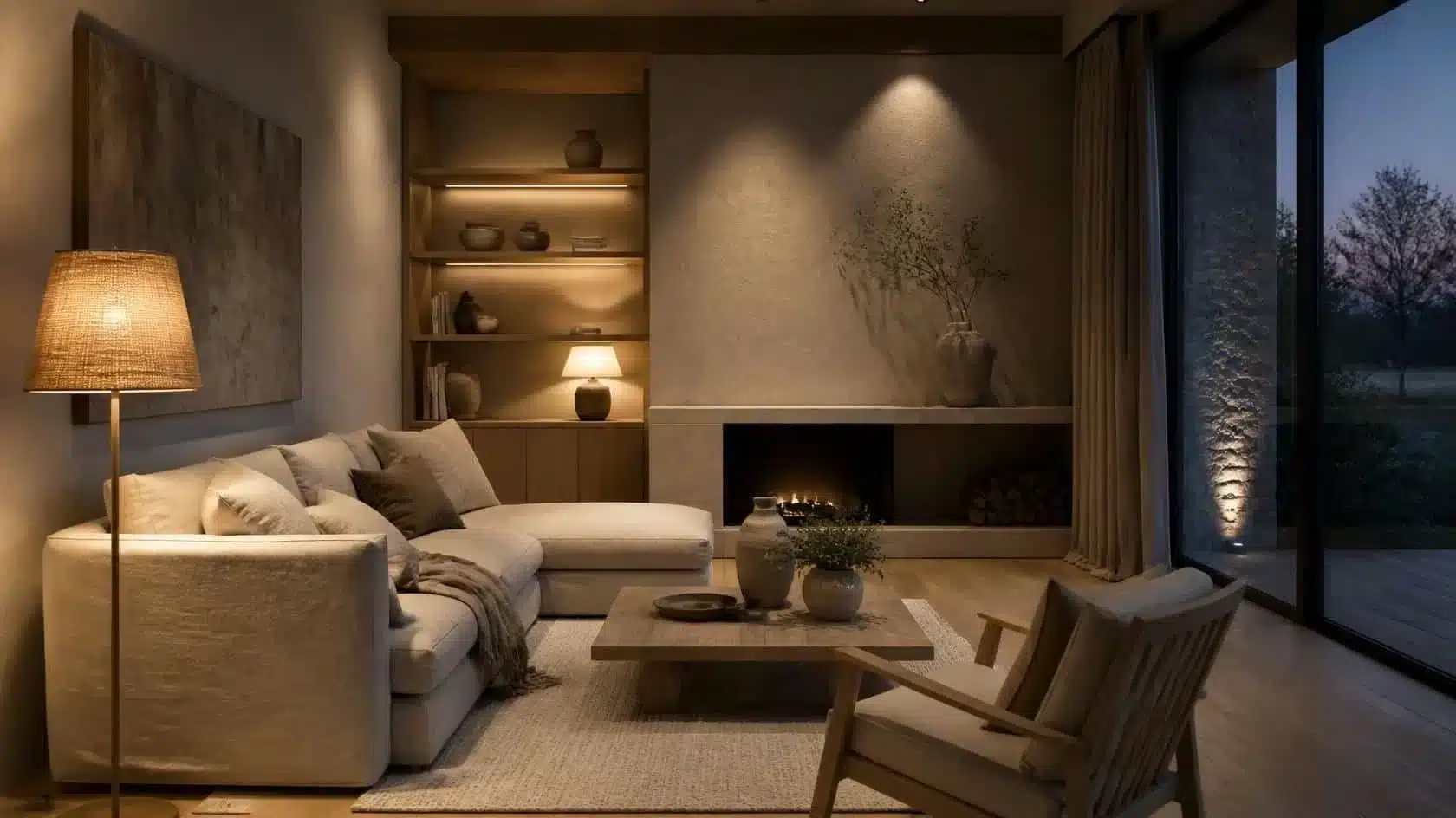
Good lighting for a sitting room is rarely about finding one perfect ceiling fitting. The room usually needs to support several activities at once: conversation, reading, television, quiet evenings and occasional brighter tasks. One source cannot do all of that gracefully.
The more useful approach is to build light in layers. A general layer helps you move around the room, task lighting supports reading or close work, and accent lighting adds depth by drawing attention to walls, objects, shelving or architectural details.
Once those layers are working together, the room can feel warm without becoming dim, and bright enough without feeling exposed.
Why Layering Matters in a Sitting Room
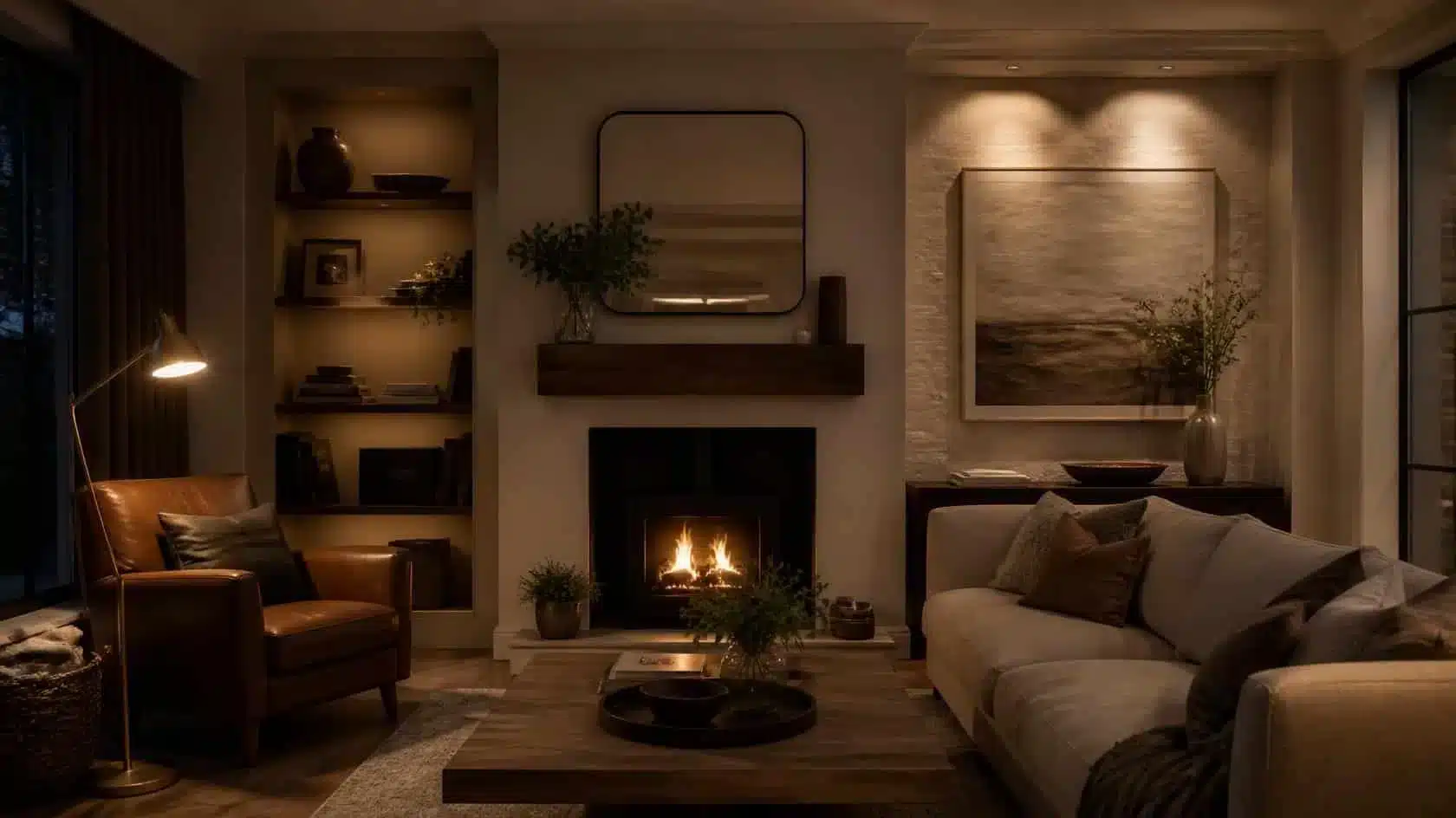
A sitting room is different from a corridor, utility space or kitchen worktop because there is no single visual task. The lighting needs to change with the time of day and with the way the room is being used.
Layering gives you that flexibility. Ambient, task and accent lighting can be switched independently, so the room does not need to operate at one fixed brightness. The Illuminating Engineering Society describes task-ambient lighting as a combination in which general illumination is lower and complementary to focused task light. That principle translates well to domestic rooms where one uniform level is rarely necessary.
Illuminating Engineering Society
Start With the Room, Not the Fitting
Before choosing pendants, lamps or wall lights, map what happens in the room. Note the main sofa, reading chair, television, artwork, shelving, fireplace, doorways and the routes people use to move through the space.
Then identify where light is actually needed. A reading chair needs a different kind of illumination from a wall behind the television. A sideboard may benefit from a pool of decorative light, while a circulation path may only need enough background light to remain comfortable and clear.
This prevents lighting from becoming a collection of fittings chosen in isolation.
Layer 1: Ambient Light and Ceiling Lights
Ambient light is the general background layer. It helps the room feel legible and comfortable without demanding attention.
A ceiling pendant, shaded ceiling light, indirect uplight or several lower-output sources can all contribute. The important point is that ambient light does not have to come from one bright source in the middle of the ceiling.
In many sitting rooms, a softer result comes from allowing several sources to share the work rather than expecting one fitting to illuminate every surface equally.
Layer 2: Task Light
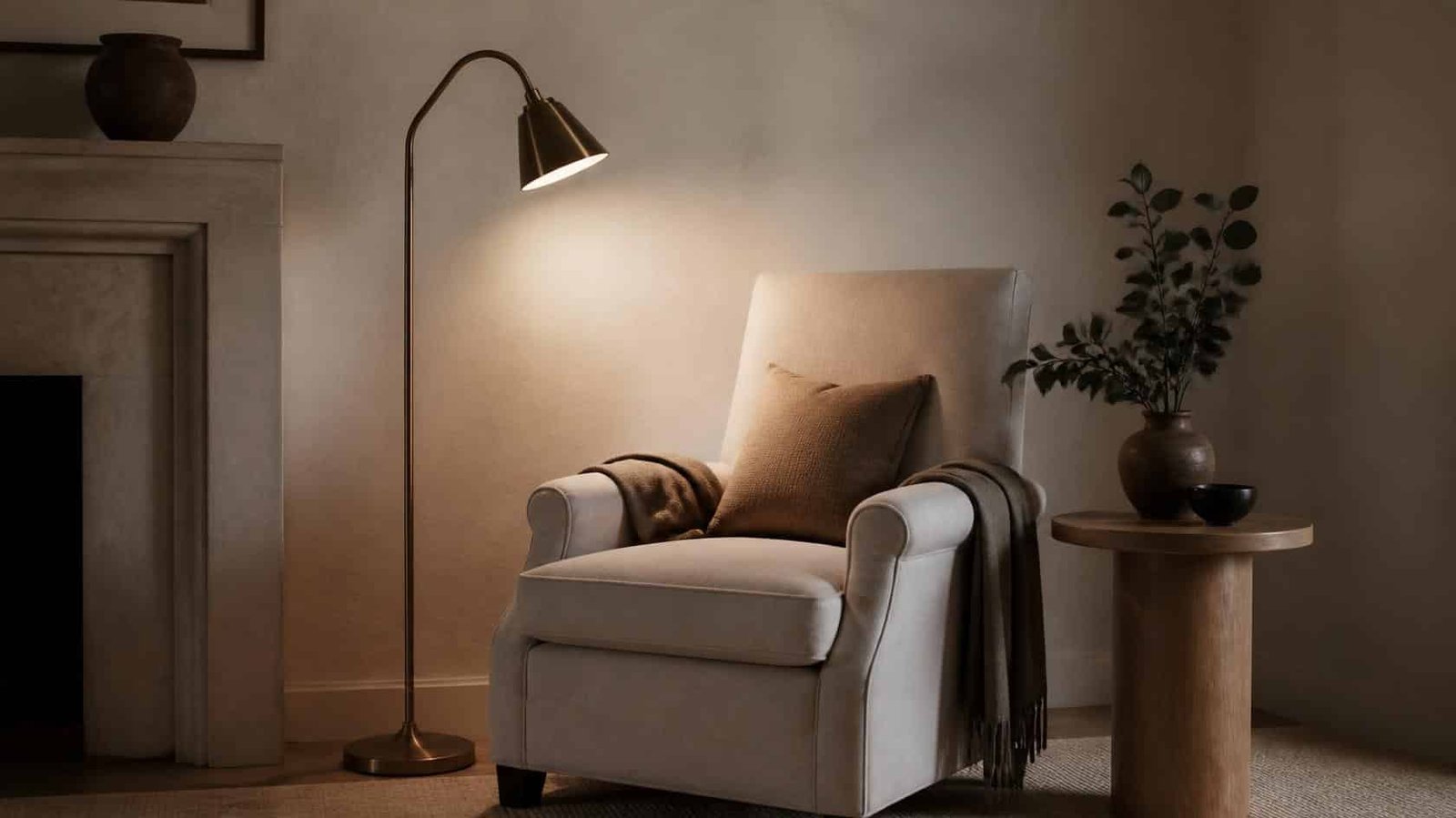
Task lighting gives more focused illumination where somebody actually needs to see detail.
- A floor lamp beside a reading chair.
- A table lamp beside a sofa used for reading.
- A directional wall lamp over a compact desk or reading position.
- A small lamp on a console when that surface is used practically as well as decoratively.
The benefit of task light is that you can keep the rest of the room relatively calm while increasing brightness exactly where it is useful.
Layer 3: Accent Light
Accent light creates hierarchy. It can bring out texture on a plaster wall, illuminate artwork, give depth to shelving or create a gentle glow behind furniture.
This layer is usually what stops a sitting room from feeling flat at night. Instead of illuminating everything evenly, it allows some areas to recede while others become focal points.
Concealed linear lighting, carefully positioned LED strips, picture lights and wall lights can all perform this role when the light source itself is controlled rather than left glaring into the room.
Why the Big Light Often Feels Too Harsh
A single bright ceiling source tends to illuminate the room from one direction and at one level. That can flatten texture, create hard shadows around faces and furniture, and make a relaxed seating area feel more exposed than it needs to.
The answer is not necessarily to remove the central light. Keep it useful for cleaning, finding something or brighter general use, but do not make it the only evening option.
Choose a Warmer Colour Temperature
Colour temperature describes whether white light appears warmer and more amber or cooler and more blue. It is measured in kelvin.
The Energy Saving Trust notes that very warm white light is often around 2700K and that warm white typically sits around 2700–3000K, a range it describes as well suited to living areas and general household lighting. It also notes that cooler white light around 4000–4500K can feel harsher in many rooms of the home. For linear accent lighting, our guide to warm white LED strip lighting compares 2700K and 3000K in more detail.
You do not have to use one identical colour temperature everywhere, but keeping adjacent evening-light sources reasonably coherent usually makes the room feel calmer.
Think in Lumens, Not Just Watts
Watts tell you how much power a lamp uses; lumens describe the amount of visible light it produces. With LEDs, wattage alone is therefore a poor guide to brightness.
The Energy Saving Trust recommends checking lumen output when replacing older bulbs because LEDs can produce comparable light while using much less power. In a layered sitting room, it is often more useful to distribute lumens between several fittings than to concentrate the whole output in one source.
Use Dimming and Separate Controls

A layered scheme becomes much more useful when the layers can be controlled separately. If you want to add scenes, schedules or wireless controls, our guide to smart lighting explains how to plan those layers, and our home light automation guide shows how to automate them without making the room harder to use.
A simple arrangement might allow the ceiling light, wall lights and portable lamps to operate independently. Dimming adds another level of flexibility, particularly for ambient and accent sources.
Not every LED is dimmable and not every existing dimmer is compatible with LED lamps. The Energy Saving Trust advises checking both the lamp and dimmer compatibility; electrical changes should be handled appropriately by a qualified electrician.
Light Walls and Vertical Surfaces
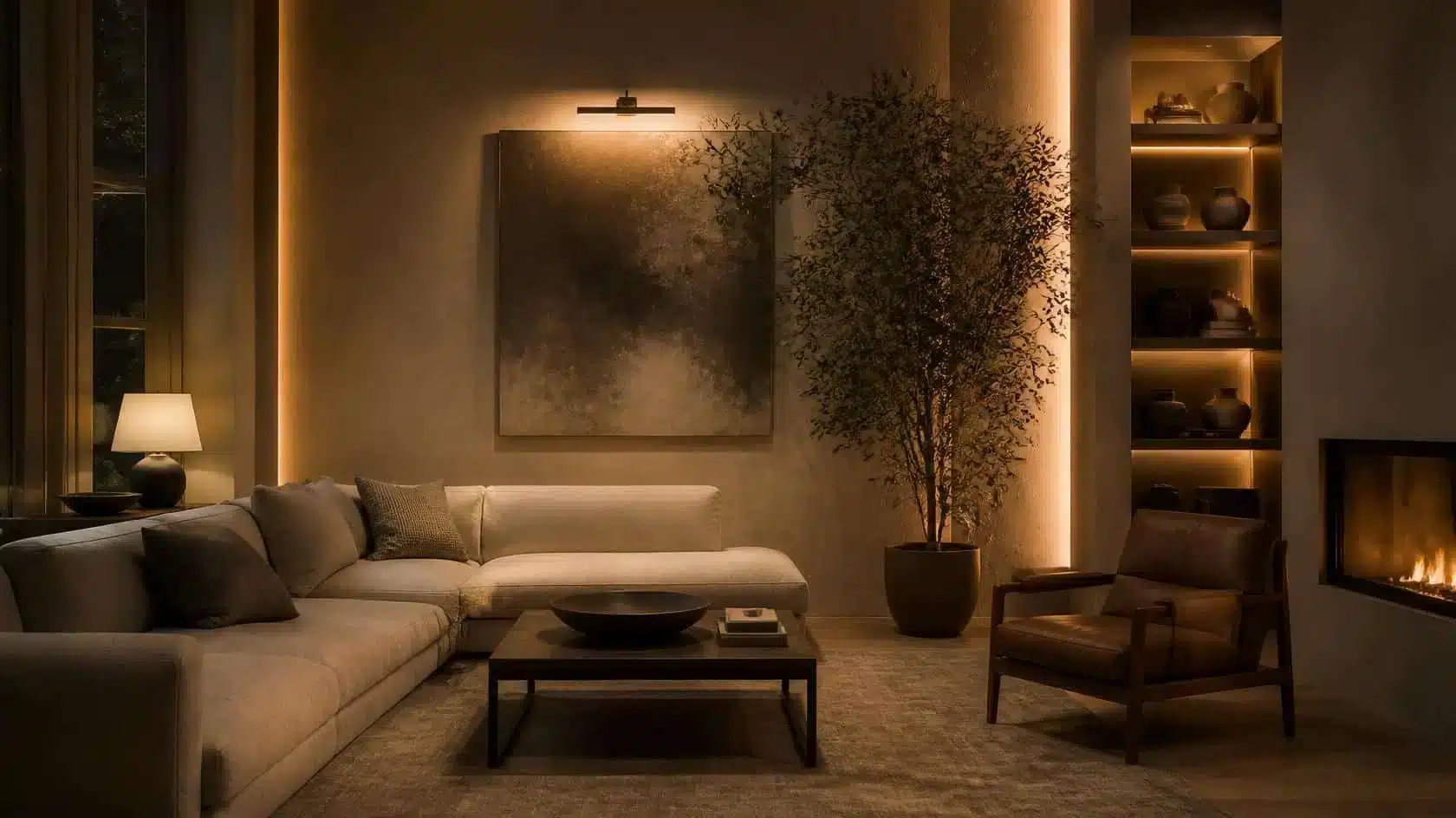
One reason some rooms feel gloomy despite having a bright ceiling lamp is that the walls remain visually dark.
Wall lights, picture lights, shaded lamps and concealed linear light can bring illumination onto vertical surfaces. That reflected light gives the room more depth and often makes the space feel more comfortably illuminated without simply increasing overhead brightness.
Living Room Lamps: Place Them Around the Seating Group
Portable lamps work best when they belong to the furniture arrangement rather than being dotted around empty edges of the room.
A floor lamp can finish one side of a sofa or reading chair. A table lamp can sit on a side table or console. If both are visible together, vary their heights enough to create rhythm without making the room look like a row of matching light sources. Where a socket is inconvenient, our guide to battery-operated light bulbs explains when cordless lighting is genuinely useful.
Plan Light Around Television and Screens
Watching a bright screen in an otherwise black room can feel visually tiring, while a lamp reflected directly in the screen is equally distracting.
Use low, indirect background light around the room while keeping bright exposed sources out of the main reflection angles. Light behind or beside furniture can help maintain a gentle background level without becoming a competing focal point.
Lighting a Small Sitting Room
A small room still benefits from layers, but it may need fewer fittings. One ambient source, one useful reading lamp and one softer accent source can be enough.
Wall-mounted fittings and discreet concealed light can preserve floor and table space. Avoid adding a lamp to every available surface simply because the room is small.
Lighting Larger and Open-Plan Rooms
In a larger room, lighting can help define zones without physical dividers. The sitting area might have warmer lamps and wall light, while an adjacent dining or working zone has its own more focused layer.
Repeat a few visual characteristics—such as finish, shade material or colour temperature—without making every fitting identical. The result should feel related rather than matched as a set.
Common Sitting-Room Lighting Mistakes
- Relying entirely on one central ceiling light.
- Choosing bulbs by wattage rather than lumen output.
- Mixing very different colour temperatures in the same view.
- Using exposed LED strips where the individual points of light are visible.
- Placing a reading lamp too far from the chair it serves.
- Ignoring glare and reflections around screens.
- Adding decorative fittings without deciding what each one should illuminate.
- Putting every source on one switch so the room has no evening flexibility.
A Simple Layered-Lighting Method
- Map the room. Mark seating, screens, artwork, storage and circulation.
- Choose the ambient layer. Decide how the room will receive comfortable general illumination.
- Add task light only where a real task happens.
- Add one or two accent moments. Light a wall, shelf, artwork or architectural feature.
- Check colour temperature. Keep the evening palette warm and coherent.
- Check glare. Sit in the normal viewing positions and look for exposed lamps or reflections.
- Separate the controls. Make sure you can use the layers independently.
- Stop before every surface is illuminated. Some contrast and shadow give the room depth.
Frequently Asked Questions About Sitting-Room Lighting
What is the best lighting for a sitting room?
The most flexible approach is usually a combination of ambient, task and accent lighting rather than one very bright source. The exact mix depends on the room, furniture layout and activities.
How do I make living room lighting feel warmer?
Use several lower and indirect sources, choose a warm colour temperature, reduce glare and avoid relying exclusively on a bright overhead fitting. Dimming can also help the same room adapt between daytime and evening use.
Is 2700K or 3000K better for a sitting room?
Both sit within the warm-white range commonly used in homes. Around 2700K appears warmer and more amber; 3000K is still warm but slightly cleaner. The better choice depends on the materials, colours and atmosphere you want.
Do I need a ceiling light in a sitting room?
Not necessarily as the dominant evening source. A ceiling light can still be useful for brighter general illumination, but lamps, wall lights and accent sources often create a more comfortable atmosphere after dark.
How many lamps should a living room have?
There is no fixed number. Start with the functions and zones rather than a lamp count. A smaller sitting room may work with two or three useful sources, while a larger room may need more layers spread across separate areas.
Build Warmth With More Than One Source
The most convincing lighting for a sitting room is rarely the brightest scheme. It is the one that gives you choices.
Use ambient light to make the room comfortable, task light where people actually need to see, and accent light to give walls and objects depth. Choose the brightness and colour of each source deliberately, and keep enough contrast for the room to retain shadow, texture and atmosphere. In open-plan homes, pair this with our kitchen lighting ideas so both zones feel connected.
LIGHTING & AMBIENCE
Explore Lighting & Ambience
LED strips
LED Strips: How to Use Them Without Making a Room Feel Harsh
Wall lighting
Wall Lamp for Living Room: Placement Ideas for Softer Evening Light
Warm strip lighting
Warm White LED Strip Lighting: How to Create a Softer Glow
Cordless lighting
Battery-Operated Light Bulbs: Where Cordless Lighting Is Most Useful

Leave a Reply