

SPACE & LIGHT · LIGHTING & AMBIENCE
Warm White LED Strip Lighting: How to Create a Softer Glow
A practical guide to choosing and using warm white LED strip lighting—covering colour temperature, brightness, dimming, placement and how to make a linear light source feel softer in a living space.
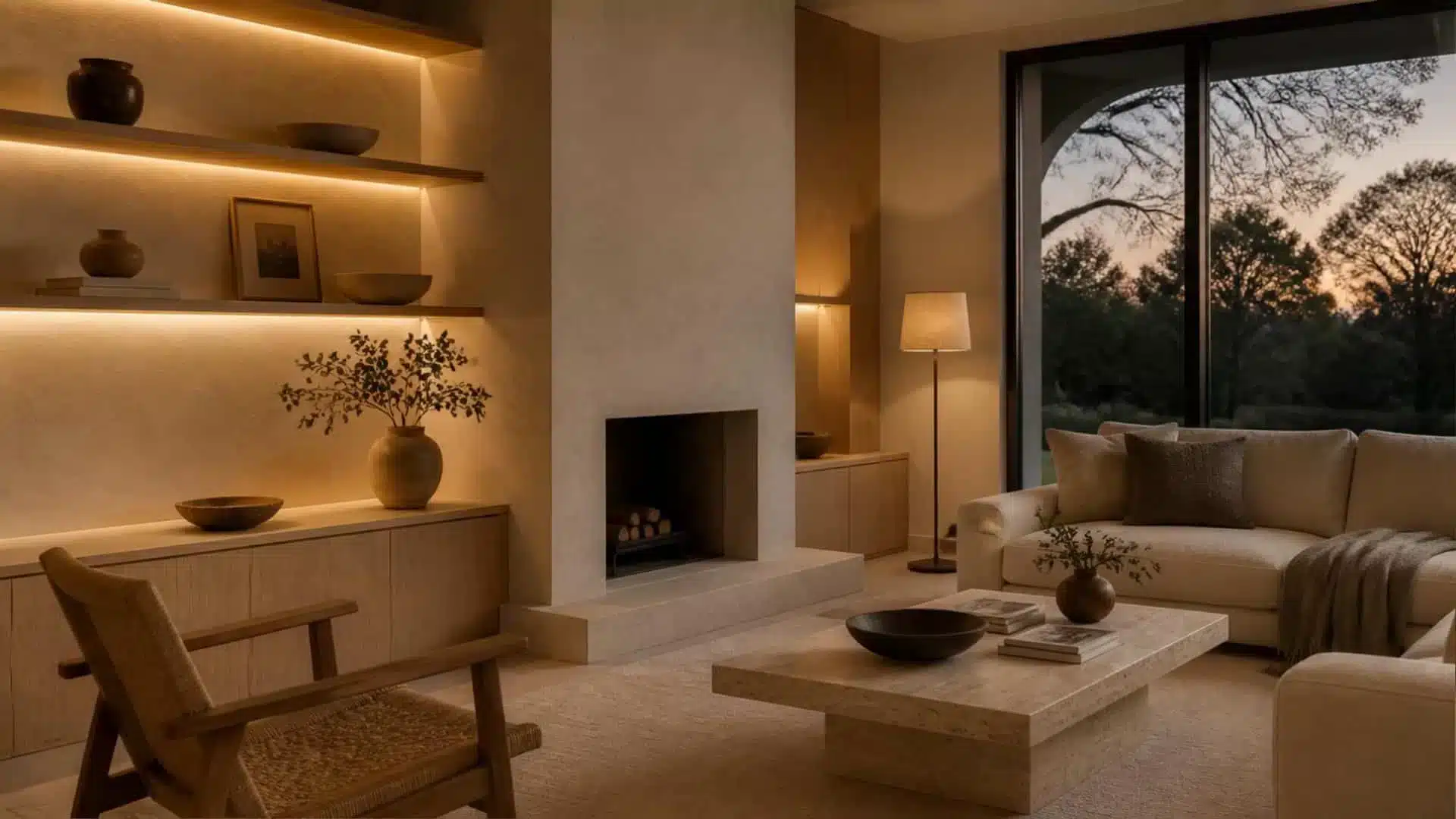
Warm white LED strip lighting is useful when you want the flexibility of a linear light source without the cold, clinical character that some LED installations create. The key is not simply choosing a product labelled “warm”. Colour temperature, brightness, placement and the surrounding materials all affect how the light feels once it is in the room.
People searching for a warm light strip light are usually trying to solve the same problem: how to add a glow under shelves, behind furniture or within architectural details without making the room feel stark. Warm white can help, but it still needs to be integrated carefully.
For the wider lighting scheme, start with our guide to lighting for a sitting room. For concealment, diffusers and general installation principles, see our LED strip guide. This article focuses specifically on the warm-white choice.
What Warm White Actually Means
Warm white describes the visual character of white light rather than the physical temperature of the strip. In domestic lighting, it generally means a white light with more amber warmth and less blue appearance than cooler white options.
The Energy Saving Trust describes very warm white light at around 2700K and warm white at roughly 2700–3000K, a range it identifies as well suited to living areas and general household lighting.
The number matters because two products both described as “warm white” can still look noticeably different if one sits nearer 2700K and the other nearer 3000K.
2700K or 3000K: Which Feels Softer?
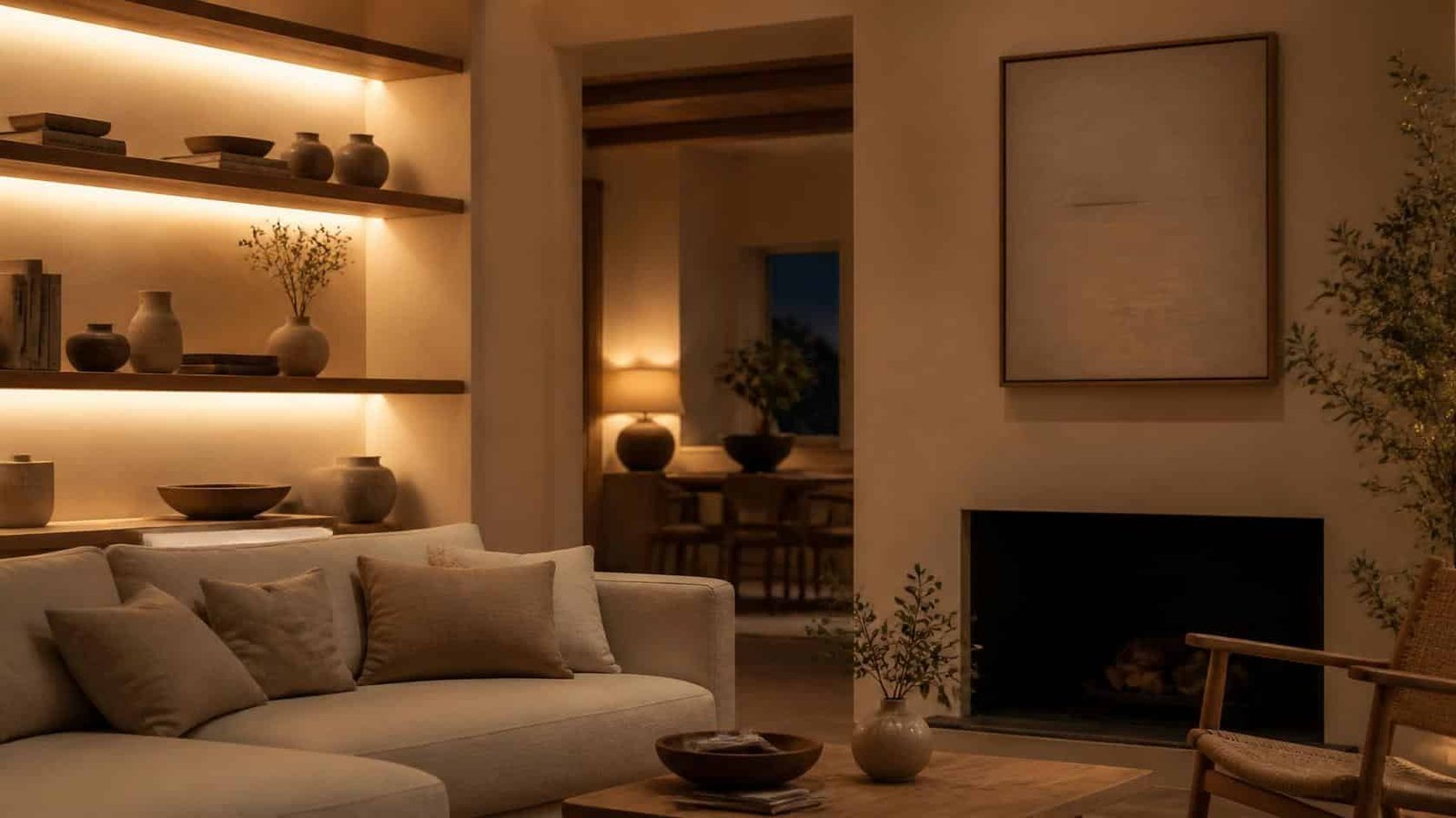
A 2700K strip generally appears warmer and slightly more amber. A 3000K strip is still warm but tends to look a little cleaner and less golden.
Neither is automatically better. In a sitting room with warm timber, linen, stone and low evening lamps, 2700K can reinforce a softer atmosphere. In a cleaner contemporary room, 3000K may sit more naturally while still avoiding a cool-white effect.
Whenever possible, compare the strip against the other lamps that will be switched on at the same time rather than judging it alone.
Match the Strip to the Other Evening Lights
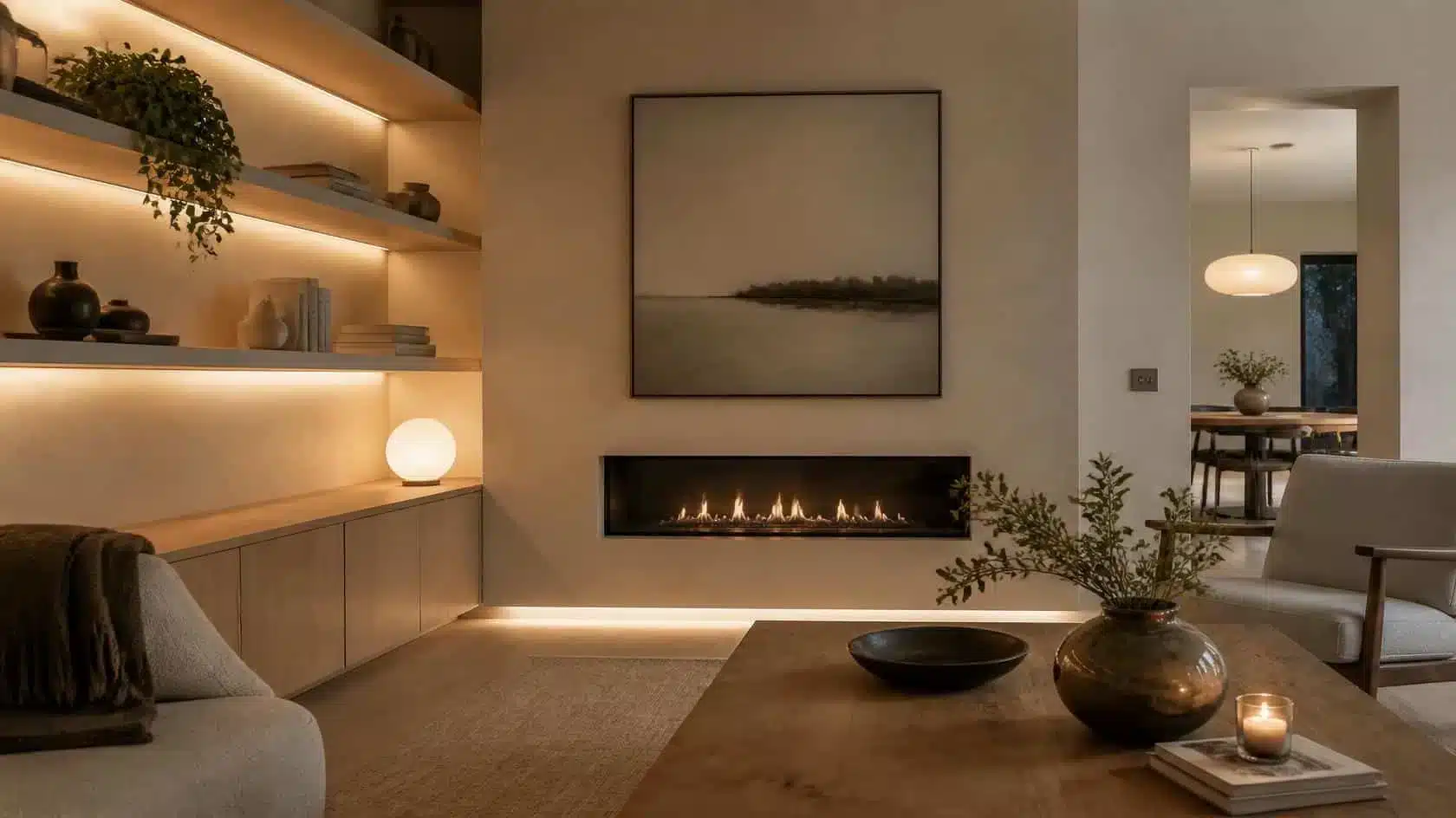
A warm white strip can still look wrong if it sits beside a visibly different light source.
If the table lamps and wall lights are very warm but the strip is noticeably cooler, the room can feel visually split. The reverse can happen when a very amber strip sits beside cleaner 3000K lamps.
You do not need laboratory-perfect matching. Aim for a family resemblance so adjacent sources feel intentional when viewed together.
Let Materials and Colours Influence the Choice
Light does not exist independently from the surfaces it illuminates. Warm timber, terracotta, natural stone and cream textiles can appear richer under warmer light, while very cool greys or crisp white finishes may make a heavily amber source look more pronounced.
Test the strip against the actual wall, shelf or cabinet rather than relying on the colour temperature printed on the box. Reflected light takes on something of the colour and texture of the surface it hits.
Brightness Matters as Much as Colour Temperature
A 2700K strip can still feel harsh if it is far too bright. Warm colour temperature does not cancel glare or excessive contrast.
For accent lighting, the strip usually needs less output than a task light. Under shelves, inside a cove or behind furniture, the goal is often a visible wash on a surface rather than a high level of direct illumination.
Choose brightness in relation to the surrounding room. A strip that looks subtle in daylight can become the brightest element after dark.
Why Dimming Helps Warm White Feel Better
Dimming gives you control over contrast. As the room becomes darker, the strip can be reduced so it continues to support the other lamps instead of overpowering them.
Check that the strip, driver or controller and dimming method are designed to work together. LED dimming problems such as flicker or limited range usually come from incompatible components rather than from the idea of dimming itself.
Keep the Strip Itself Out of Sight
Warm white looks softest when you see the glow rather than the individual LEDs. Our LED strips guide covers hiding the source, angles and mounting.
Use Diffusion for a More Continuous Glow
A diffuser cover or aluminium profile turns separate dots into a continuous line, which matters most when a strip is visible. See using a diffuser or profile for options.
Warm White Strips on Shelves
On shelves, a warmer white (around 2700K) usually suits timber, linen and ceramics. For placement and mounting, follow our guide to LED strips on shelves and cabinetry.
Behind Furniture and Media Units
Behind a television or sideboard, keep warm white dim and match it to the room’s other evening lights. Placement details are in our LED strips guide.
Warm White Cove and Ceiling Lighting
In coves and along ceilings, warm white reads as a soft wash rather than a line. For installation considerations, see coves, ceilings and architectural lines.
Open-Plan Kitchen and Living Spaces
Open-plan rooms often contain both task-focused kitchen lighting and softer living-area lighting. Warm white strip lighting can help connect the two zones, but only if the colour temperatures are chosen deliberately.
A strip under kitchen cabinetry may need useful task brightness, while a strip in living-room joinery may be purely atmospheric. They do not need identical output, but noticeably conflicting white tones can make one open room feel disjointed.
Fixed Warm White or Tunable White?
A fixed warm-white strip is simple: choose the colour temperature and keep it consistent. Tunable-white systems can shift between warmer and cooler white tones, which can be useful where one installation serves different functions through the day.
More control also means more components and setup. If the strip is only intended as an evening accent, a well-chosen fixed warm white may be the cleaner solution.
Common Warm-White Strip Lighting Mistakes
- Assuming every product labelled warm white will look the same.
- Choosing 2700K or 3000K without comparing nearby lamps.
- Using excessive brightness and expecting warm colour temperature to make it comfortable.
- Leaving the individual LEDs visible.
- Ignoring the colour of the wall or joinery the strip illuminates.
- Using several different warm-white tones in the same view without intention.
- Choosing a complex tunable system when a simple fixed warm white would do the job.
A Simple Warm-White Strip Selection Method
- Decide what the strip will illuminate.
- Check the nearby lamps and their colour temperature.
- Test 2700K and 3000K against the actual materials where possible.
- Choose brightness for the role: accent, ambient or task.
- Hide the strip or use a diffuser.
- Add dimming if the required brightness changes through the evening.
- Review the result with every evening light switched on together.
Frequently Asked Questions About Warm White LED Strip Lighting
Is 2700K or 3000K better for LED strip lighting?
Both are warm-white options. 2700K usually appears warmer and more amber; 3000K looks slightly cleaner. Choose the one that works best with the surrounding materials and the other lights in the room.
Can warm white LED strips still look harsh?
Yes. Excessive brightness, visible LED points and strong contrast can still create glare even when the colour temperature is warm. Concealment, diffusion and dimming matter as much as the white tone.
What colour temperature is warm white?
For household lighting, warm white is commonly around 2700–3000K. Product descriptions vary, so check the stated kelvin value rather than relying on the words “warm white” alone.
Should warm white LED strips match my lamps?
They do not need to be perfectly identical, but adjacent sources usually look calmer when their white tones are reasonably close rather than visibly conflicting.
Is tunable white worth it?
It can be useful where the same strip serves different daytime and evening functions. For a simple evening accent, a fixed warm-white strip is often easier and sufficient.
Choose the Glow in the Context of the Room
Warm white strip lighting is most successful when the colour temperature is chosen as part of a room rather than as an isolated specification.
Compare 2700K and 3000K with nearby lamps and materials, keep the output restrained, conceal the source and use diffusion where necessary. The softer effect comes from the combination of these choices—not from the words “warm white” on their own.

Leave a Reply