

SPACE & LIGHT · LIGHTING & AMBIENCE
Home Lighting Ideas: How to Light Every Room
A practical guide to lighting a home well—layering ambient, task and accent light, choosing lumens and warm white, placing lamps and adapting the approach room by room.
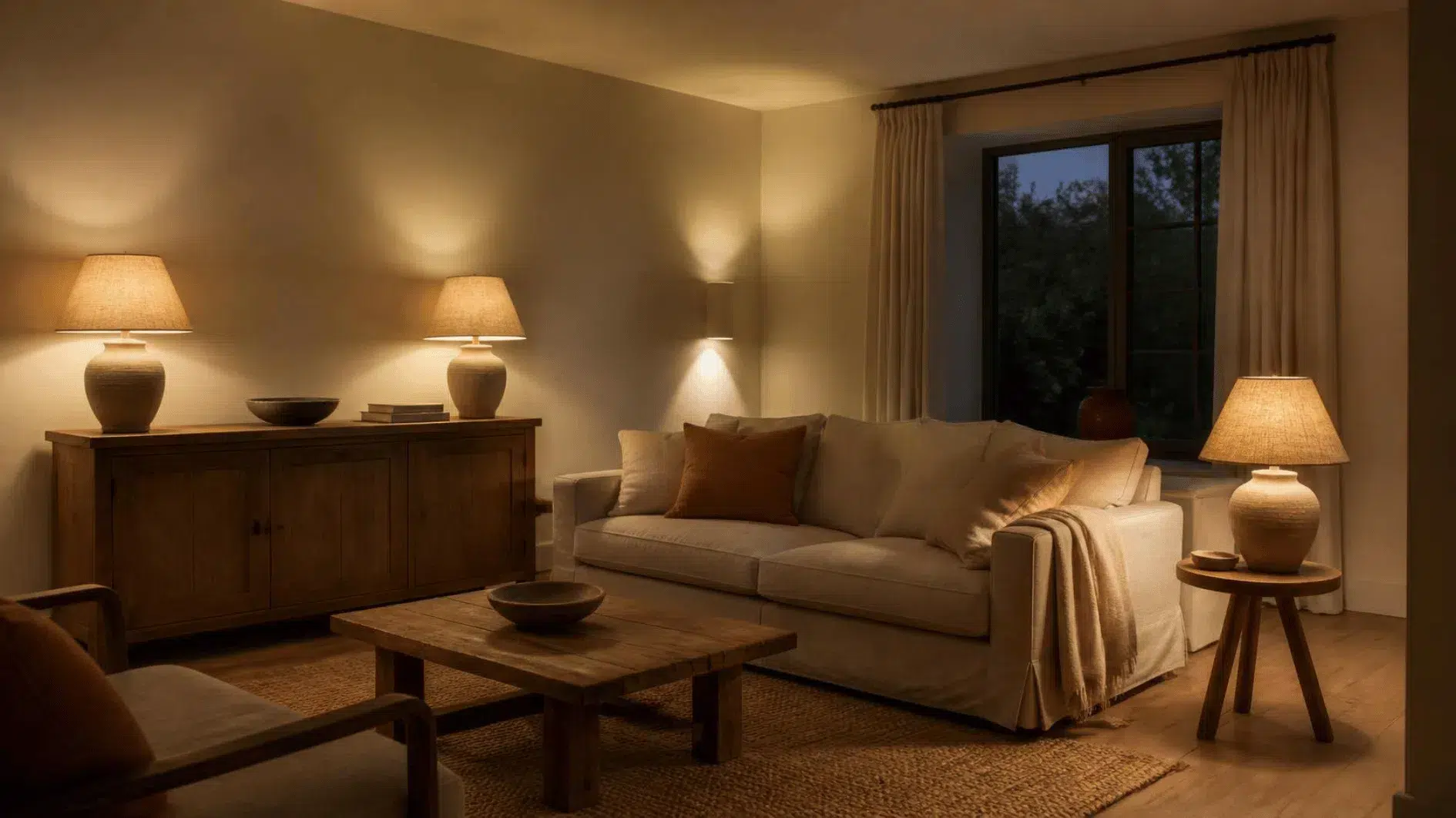
Lighting changes a room more than almost any piece of furniture. The same sitting room can feel flat and bright at nine in the evening, or calm and enclosing, depending only on where the light comes from and how warm it is.
Yet many homes still rely on a single ceiling light per room. It is practical, but it flattens textures, casts unflattering shadows and makes it hard for a room to change mood between day and evening.
This guide sets out a simple way to light any room well: understanding the three layers of light, choosing brightness and colour temperature, placing lamps around how you actually live, and adapting the approach to each room in the home. Where a topic deserves more detail, it links to our dedicated guides.
The Three Layers of Home Lighting
Good lighting is rarely one source. It is usually a combination of three layers that each do a different job.
AT A GLANCE
The three layers of light
Ambient light
Task light
Accent light
Ambient light
Ambient light is the general light that lets you move around a room comfortably. It often comes from ceiling lights, but it can also come from several lamps, wall lights or light bounced off walls and ceilings. In the evening, ambient light should usually be lower and softer than during the day.
Task light
Task light is brighter, focused light for specific activities: reading, cooking, working, applying make-up. It belongs where the task happens, such as a reading lamp beside a chair or lighting under kitchen wall cabinets, rather than spread across the whole room.
Accent light
Accent light adds depth and character by picking out surfaces and objects: a lamp on a sideboard, a wall light beside artwork, a soft glow along a shelf. It is often the layer that makes a room feel finished and warm.
Most rooms feel best with at least two layers, and living spaces often benefit from all three. Our guide to layering light in a sitting room works through this approach in detail for the room where it matters most.
Start With How You Use the Room
Before choosing fittings, note what happens in the room and when. A living room used for reading, television and conversation needs different light at different times; a hallway mainly needs safe, even light to move through.
- List the activities in each room and where they take place.
- Note the times of day the room is used, especially evenings in winter.
- Mark where sockets and switches are, since this shapes where lamps can go.
- Notice the dark corners and surfaces that would benefit from light.
- Look at what you already have before buying anything new; moving a lamp can change a room.
Brightness: Think in Lumens, Not Watts
Watts measure how much power a bulb uses, not how bright it is. With LED bulbs, which use far less power than older bulbs, lumens are the better guide to brightness. The Energy Saving Trust gives approximate LED equivalents for traditional bulbs:
| Traditional bulb | Approximate LED brightness |
|---|---|
| 40W | 470 lumens |
| 60W | 800 lumens |
| 75W | 1,050 lumens |
| 100W | 1,520 lumens |
Several lower-output lamps spread around a room usually feel softer than one very bright source. As a general approach, use brighter bulbs for task lighting and lower-output bulbs, or dimmers, for ambient and accent light in the evening.
Colour Temperature: Warm White or Cool White?
Colour temperature, measured in kelvin (K), describes how warm or cool light looks. Lower numbers look warmer and more golden; higher numbers look whiter and cooler. The Energy Saving Trust describes three broad bands:
| Description | Approximate range | Typical use |
|---|---|---|
| Very warm white | Around 2700K | Living rooms and bedrooms |
| Warm white | 2700K–3000K | Most general household lighting |
| Cool white | 4000K–4500K | Some kitchens and bathrooms; can feel harsh elsewhere |
For calm, welcoming rooms, warm white is usually the safer choice, and keeping colour temperature consistent within a room stops it looking patchy. Our warm white LED strip guide compares 2700K and 3000K in more detail.
Colour rendering
Colour rendering describes how naturally a light shows the colours of objects, skin and materials. The Energy Saving Trust suggests a colour rendering index (CRI) of 80 or more is good for most household tasks; a higher figure shows colours more accurately, which is noticeable on timber, textiles and food.
Placing Lamps and Light Sources
Where light comes from matters as much as how much there is.
Keep light low in the evening
Light at or below eye level, such as table lamps and floor-standing lamps, feels more relaxed in the evening than light from above. It is one reason a room lit by two or three lamps often feels cosier than the same room under a ceiling light.
Light the walls and corners
Lighting vertical surfaces, such as walls, shelves and artwork, makes a room feel larger and more even. Dark corners make a room feel smaller; a single lamp in a far corner can change that. Our wall lamp placement guide covers heights and spacing.
Avoid glare
Check light sources from where you actually sit or lie. A bare bulb visible from the sofa or bed is uncomfortable; shades, diffusers and careful positioning prevent it. Fabric and linen shades soften light and spread it more gently than exposed bulbs.
Use more than one switch
Separate controls, whether that means lamps on their own switches, dimmers or smart bulbs, let one room work for daytime, reading and evening without changing the fittings. Our smart lighting guide explains how to plan this without overcomplicating it.
Lighting Ideas Room by Room
Each room has its own balance of layers. These are starting points to adapt to your home.
Living room
Combine soft ambient light with lamps around the seating, a reading light where it is needed and one or two accent sources. Keep the ceiling light for daytime and cleaning. For a full method, see our sitting-room lighting guide.
Bedroom
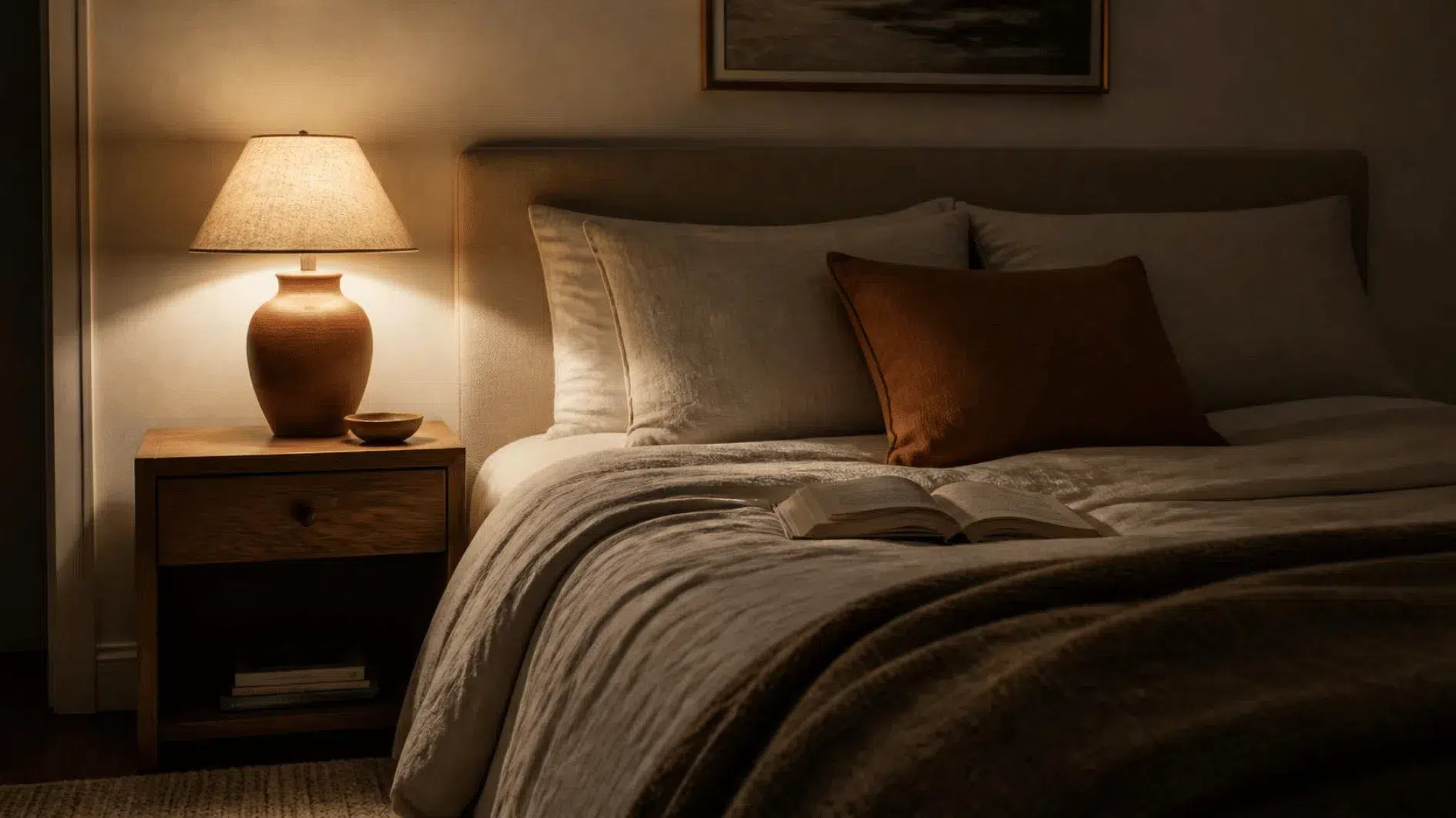
Prioritise low, warm light. Bedside lamps should light a book without lighting the whole room, and their switches should be reachable from bed. A soft ambient source helps for dressing, while bright overhead light is best reserved for practical tasks. Our cosy bedroom ideas include bedside lighting in context.
Kitchen
Kitchens need good task light on worktops, where overhead light alone can cast shadows from your own body. Lighting under wall cabinets helps, and a warmer, dimmable light over a dining area lets the room change mood after cooking.
Dining area
Light the table rather than the room: a pendant or lamps at a comfortable height, ideally dimmable, plus low accent light elsewhere. Candles add flicker and warmth; our natural candles guide explains how to use them safely.
Hallway and stairs
Prioritise safe, even light, especially on stairs, with switches at both ends where possible. A table lamp on a console or a wall light can make an entrance feel welcoming in the evening without needing bright overhead light.
Home office
Good task light on the desk, positioned to avoid glare on screens, matters most. Combine it with some ambient light so the contrast between a bright screen and a dark room is not too great.
Bathroom
Bathrooms need fittings rated for the zone they are installed in, and electrical work in bathrooms should be done by a qualified electrician. For atmosphere, warm, dimmable light or cordless lighting away from water can soften the room.
Choosing Table Lamps
Table lamps are the simplest way to add warm, low light to a room without electrical work. A few practical points make them easier to choose:
- Proportion: a lamp should suit the surface it sits on; a large lamp on a small side table can feel top-heavy.
- Height: beside a sofa or bed, a shade that sits roughly at eye level when seated helps hide the bulb.
- Shade: linen and fabric shades give a soft, diffused glow; darker or opaque shades direct light up and down.
- Base material: timber, ceramic and stone bases bring texture and weight, and suit natural interiors.
- Bulb: check the fitting and maximum wattage, and choose a warm white LED.
Browse our table and desk lamps, from wooden and ceramic bases to linen shades.
Cordless and Smart Lighting
Cordless lamps and battery bulbs are useful where there is no socket nearby, such as a shelf, a dining table or an alcove. Our guide to battery-operated light bulbs covers runtime and charging.
Smart bulbs and switches make it easier to set scenes for different times of day. The most useful approach is to plan the light first and add light automation only where it saves effort. See smart light bulbs for buying advice.
Lighting and Energy Use
The Energy Saving Trust recommends LED bulbs in almost every situation, noting they use about 80% less electricity than halogen bulbs for the same light and can last up to 20 times longer. Switching lights off in empty rooms, using lamps instead of lighting a whole room, and choosing dimmable LEDs all help keep evening lighting both comfortable and efficient.
Common Home Lighting Mistakes
- Relying on one ceiling light per room.
- Mixing very different colour temperatures in the same room.
- Choosing bulbs by watts rather than lumens.
- Leaving corners and walls in darkness.
- Placing lamps where the bare bulb is visible from seating.
- Having only one switch for all of a room’s lighting.
- Using cool white light in relaxing rooms.
- Buying fittings before deciding how the room will be used.
A Simple Home Lighting Checklist
- List how each room is used and when.
- Plan for at least two layers of light in living spaces.
- Choose warm white for living rooms and bedrooms.
- Check lumens, not watts, when buying bulbs.
- Add low lamps to light corners and walls.
- Shield bulbs from normal seating positions.
- Give each layer its own switch or dimmer where possible.
- Use a qualified electrician for any fixed wiring.
Frequently Asked Questions About Home Lighting
What are the three types of lighting in a home?
Ambient light for general visibility, task light for specific activities such as reading or cooking, and accent light that highlights surfaces and objects. Most rooms feel best with at least two of the three.
Is warm white or cool white better for the home?
Warm white, around 2700K to 3000K, suits most rooms, especially living rooms and bedrooms. Cool white can work for some kitchens and bathrooms but often feels harsh in relaxing spaces.
How many lumens do I need for a room?
It depends on the room, its colours and how it is used. Rather than one bright source, combine several lamps and use brighter bulbs only where you need task light. As a reference, a 60W traditional bulb is roughly equivalent to an 800-lumen LED.
How do I make my living room lighting cosier?
Turn off the ceiling light in the evening, use two or three warm white lamps at different heights, light at least one wall or corner, and add a dimmer or lower-output bulbs.
How many lamps should a living room have?
There is no fixed number, but many living rooms benefit from three or more light sources placed around the seating and in darker corners, rather than one central light.
Should bedside lamps be warm white?
Yes. Warm white, low-level light suits bedrooms best, with switches you can reach from bed.
Light the Room You Live In
A well-lit home is not necessarily a brighter one. It comes from layers of light that suit how each room is used, warm colour temperatures in relaxing spaces, lamps placed low and around the edges, and controls that let a room change from day to evening.
Start with the room you spend most evenings in: turn off the ceiling light, add one or two warm lamps and light a wall or corner. Then explore our lighting collection when you are ready.
LIGHTING & AMBIENCE
Explore Lighting & Ambience
Sitting room
Lighting for a Sitting Room: How to Layer Light for a Warmer Space
Wall lamps
Wall Lamp for Living Room: Placement Ideas for Softer Evening Light
Warm white
Warm White LED Strip Lighting: How to Create a Softer Glow
LED strips
LED Strips: How to Use Them Without Making a Room Feel Harsh
Cordless light
Battery-Operated Light Bulbs: Where Cordless Lighting Is Most Useful
Smart lighting
Smart Lighting: How to Plan a Flexible Lighting System at Home
Bedside lamps
Bedside Lamps: How to Choose the Right Lamp for Your Bedroom
Kitchen lighting
Kitchen Lighting Ideas: Task, Ambient and Evening Light
Bedroom lighting
Bedroom Lighting Ideas: Warm, Restful Light for Every Need

Leave a Reply