

SPACE & LIGHT · LIGHTING & AMBIENCE
Bedside Lamps: How to Choose the Right Lamp for Your Bedroom
How to choose a bedside lamp—size and height, shades, bulbs and warm white, switches and placement—for reading and restful evening light.
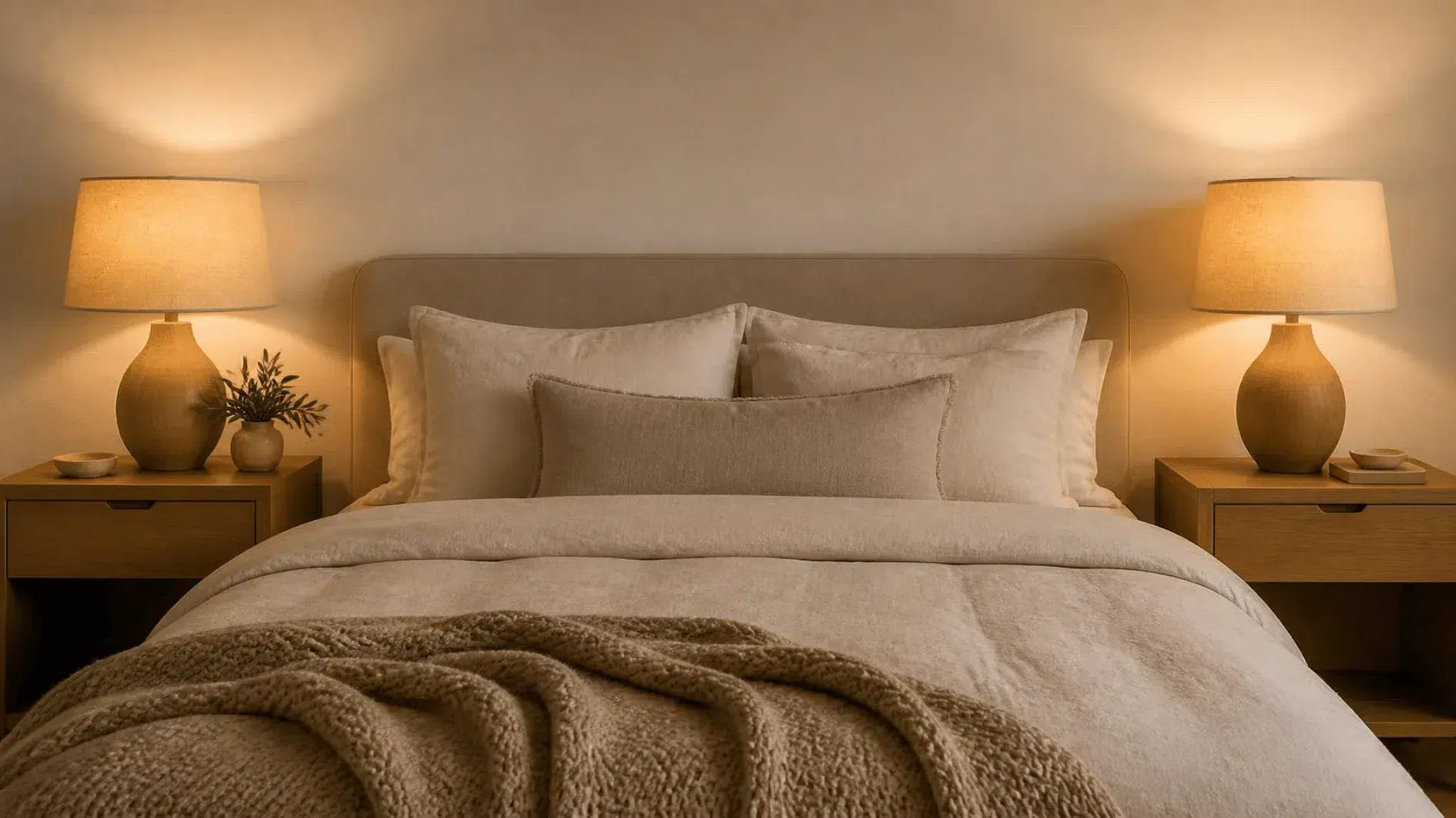
Bedside lamps are used more than almost any other light in the home. They are used for reading, winding down, finding your way at night, and for the first minutes of the morning. However, they are often chosen almost as an afterthought, by look alone.
This guide explains how to choose a bedside lamp that suits the bed, the table and the way you use the room: size and height, shades, bulbs and colour temperature, switches and placement. For lighting the rest of the room, see our home lighting ideas.
What a Bedside Lamp Needs to Do
A good bedside lamp does two jobs. It gives enough focused light to read comfortably, and it gives a low, warm glow that makes the bedroom feel restful without lighting the whole room.
It should also be easy to use from bed, stable enough not to be knocked over and proportioned so that the bulb is hidden from your eyes when you are lying or sitting up.
Size and Height
Proportion matters more than any single measurement. As a starting point:
- Shade height relative to your eyes: when you sit up in bed, the bottom of the shade should sit roughly at or slightly below eye level, so you see the glow rather than the bulb.
- Lamp to table: the base should sit comfortably on the bedside table with space left for a book, glass and phone.
- Lamp to bed: taller beds and headboards usually need taller lamps; low beds suit squat, wide lamps.
- Pairs: matching lamps on both sides create symmetry; in a shared room, lamps of similar height keep the bed balanced even if their designs differ.
If the bedside table is small, choose a lamp with a slim base and a shade that does not overhang the edge, or consider a wall light instead.
Choosing a Shade
The shade decides how light leaves the lamp.
| Shade type | Light it gives | Best for |
|---|---|---|
| Linen or fabric, light colour | Soft, diffused glow all around | Restful ambient light and gentle reading |
| Fabric, dark or opaque | Light directed up and down | Reading light without lighting the room |
| Pleated or textured fabric | Soft glow with surface texture | Decorative, cosy light |
| Glass or ceramic shade | Varies; can be brighter | Statement lamps; check for glare |
Linen and natural fabric shades suit calm, natural bedrooms particularly well: they soften the light and bring texture to the room even when the lamp is off.
Bases and Materials
For bedside lamps, timber, ceramic and stone bases add weight.
Moreover, this helps a lamp stay stable on a small table and brings natural texture to the bedroom.
Slim metal bases suit tight spaces.
Whatever the material, check the lamp feels steady.
When you reach for the switch in the dark, it should feel steady.
Browse our table lamps, including wooden and ceramic bases with linen shades.
Bulbs, Brightness and Colour Temperature
Choose a warm white LED for the bedroom. The Energy Saving Trust describes very warm white, around 2700K, as suited to living areas and bedrooms. Check the lamp’s fitting and maximum wattage before buying a bulb.
For brightness, think in lumens rather than watts. Reading needs more light than winding down, so a dimmable bulb, or a lamp with a dimmer, lets one lamp do both jobs. Our home lighting guide includes a lumens-to-watts table.
Switches and Controls
- Reachability: you should be able to switch the lamp off without getting out of bed.
- Switch type: cord switches and base switches are easier to find in the dark than switches high on the lamp.
- Dimming: a dimmer or dimmable smart bulb lets the lamp move from reading to night light.
- Cable route: keep cables behind the table, away from where feet and bedding move.
Smart bulbs can also fade lamps down gradually or switch them on gently in the morning; see our smart light bulbs guide, or our guide to automating home lighting for timed routines.
Placement Around the Bed
Place the lamp close enough to light a book, but far from the pillow so the shade is not knocked. If one person reads while the other sleeps, bedside lamps with a darker or directional shade keep light on page.
If there is no room for a table lamp, wall-mounted reading lights or plug-in wall lamps free up surface space. Our wall lamp placement guide covers heights and spacing.
Practical Safety
- Follow the maximum wattage marked on the lamp.
- Keep fabric shades clear of curtains, bedding and anything that could touch the bulb.
- Make sure the lamp is stable and the cable cannot be pulled.
- Choose LED bulbs, which run much cooler than older bulb types.
Common Bedside Lamp Mistakes
- Choosing a lamp so tall or short that the bulb shines in your eyes.
- Using cool white bulbs in the bedroom.
- A switch you cannot reach from bed.
- A lamp too large for the bedside table.
- Relying on the ceiling light instead of bedside lamps in the evening.
Frequently Asked Questions About Bedside Lamps
How tall should a bedside lamp be?
There is no single correct height. Aim for the bottom of the shade to sit roughly at eye level when you sit up in bed, adjusted for the height of the bed and table.
What bulb is best for a bedside lamp?
A warm white LED, around 2700K, ideally dimmable, suits most bedrooms.
Should bedside lamps match?
They do not have to. Matching lamps create symmetry, but two different lamps of similar height and scale can look just as balanced.
Are wall lights better than bedside lamps?
Wall lights are useful when bedside tables are small, but table lamps add warmth and texture and need no electrical work.
Choose a Bedside Reading Lamp That Also Suits Rest
The best bedside lamp is one you notice least: a warm, low light at the right height, a shade that hides the bulb and a switch within reach. Explore our table and bedside lamps to find one that suits your room.
LIGHTING & AMBIENCE
Explore Lighting & Ambience

Leave a Reply