

SPACE & LIGHT · LIGHTING & AMBIENCE
Wall Lamp for Living Room: Placement Ideas for Softer Evening Light
A practical guide to positioning living-room wall lights around sofas, artwork, reading areas and architectural features—so they add warmth and depth without glare or visual clutter.
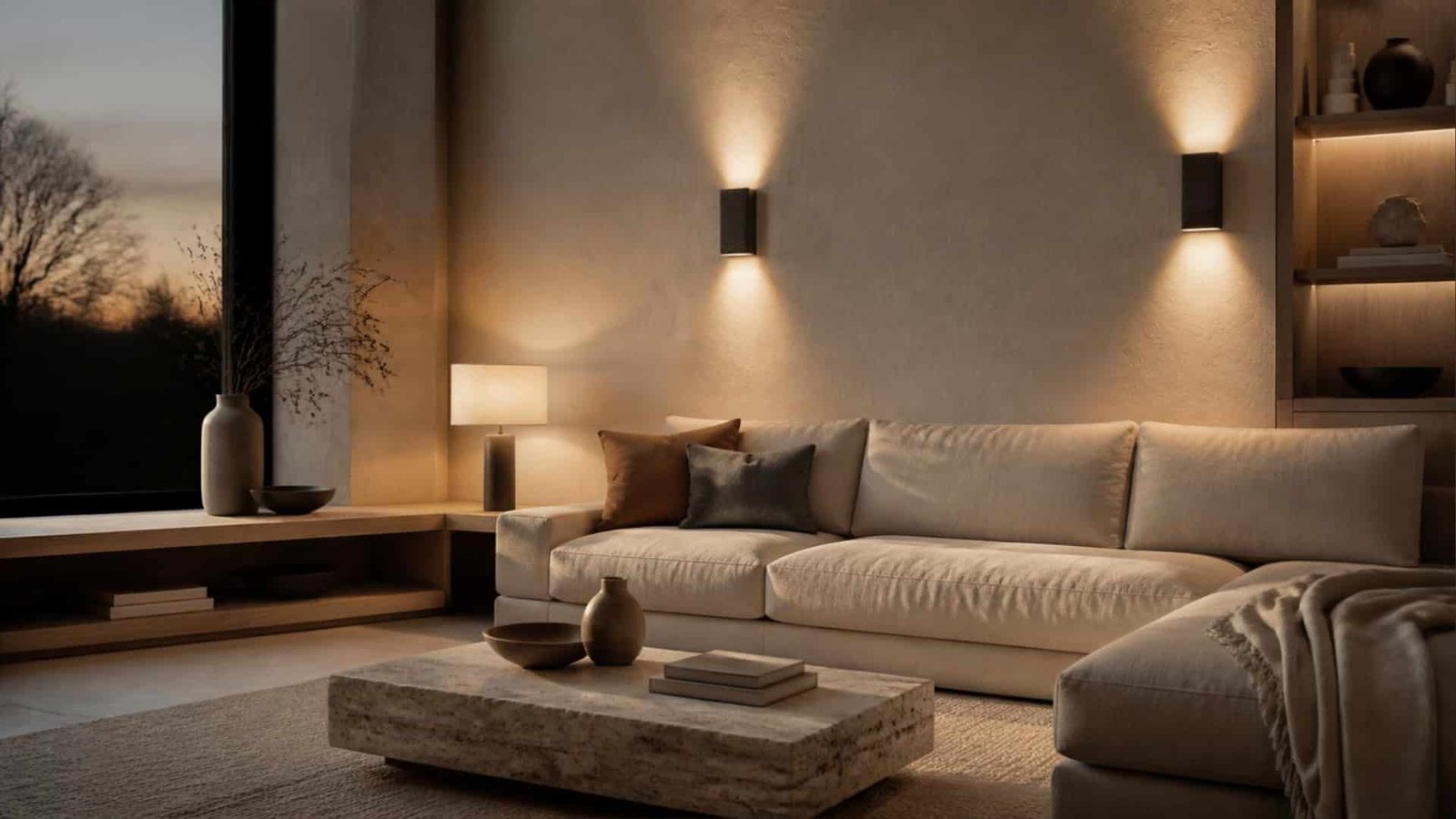
A wall lamp for living room use should do more than decorate an empty wall. Positioned well, wall lighting can soften the edge of a seating area, bring light onto a vertical surface, support reading or create an evening layer that feels gentler than a single bright ceiling source.
The most useful placements begin with what the wall light should illuminate. A fitting beside a sofa has a different role from one above a sideboard or beside artwork, and a decorative uplight should not be judged by the same rules as a directional reading lamp.
For the full room-level approach, including ambient, task and accent layers, see our guide to lighting for a sitting room. This article focuses specifically on wall-mounted light and placement.
What Wall Lights Do Best
Wall lights are particularly useful for adding illumination to vertical surfaces. That matters because a room can have plenty of light at ceiling level while its walls still feel visually dark.
A shaded wall lamp can create a pool of light around a seating group. An uplight can brighten the wall and ceiling above it. A directional fitting can support reading. A picture light can provide a more focused accent. The most successful scheme usually gives each fitting a clear job.
Start With Purpose Before Position
Do not begin with a universal mounting height. Begin by deciding what the fitting should do.
- Ambient: add a comfortable background layer to the room.
- Task: direct useful light towards reading or another close activity.
- Accent: illuminate artwork, texture, shelving or an architectural detail.
- Decorative: add a visible object whose shade or form contributes to the composition even when switched off.
Once the role is clear, position becomes easier to judge because you can test whether the light actually reaches the intended surface or activity.
Wall Lights Around a Sofa
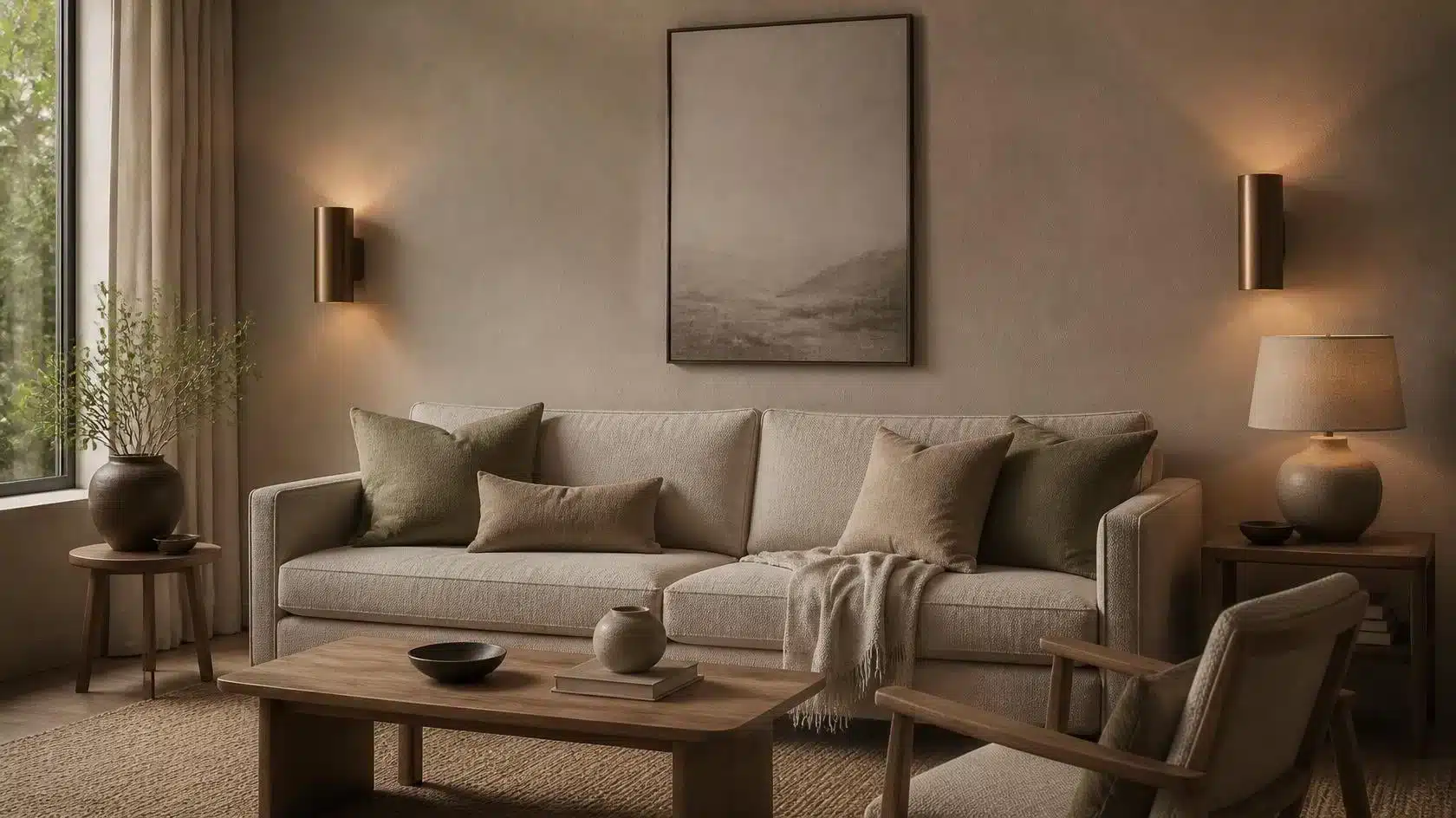
A pair of wall lights can frame a sofa, but perfect symmetry is not always necessary. If one side already has a floor lamp, tall plant or architectural feature, a single wall light may be enough to balance the composition.
Keep the fittings visually connected to the seating area rather than floating high above it. Check that shades do not intrude awkwardly over the sofa and that the light source is not directly visible at seated eye level.
If the wall light is intended primarily for atmosphere, favour a diffused or reflected glow. If somebody will actually read beneath it, use a fitting whose beam can reach the page without throwing strong light into the eyes of the person beside them.
Wall Lamps Beside a Reading Chair
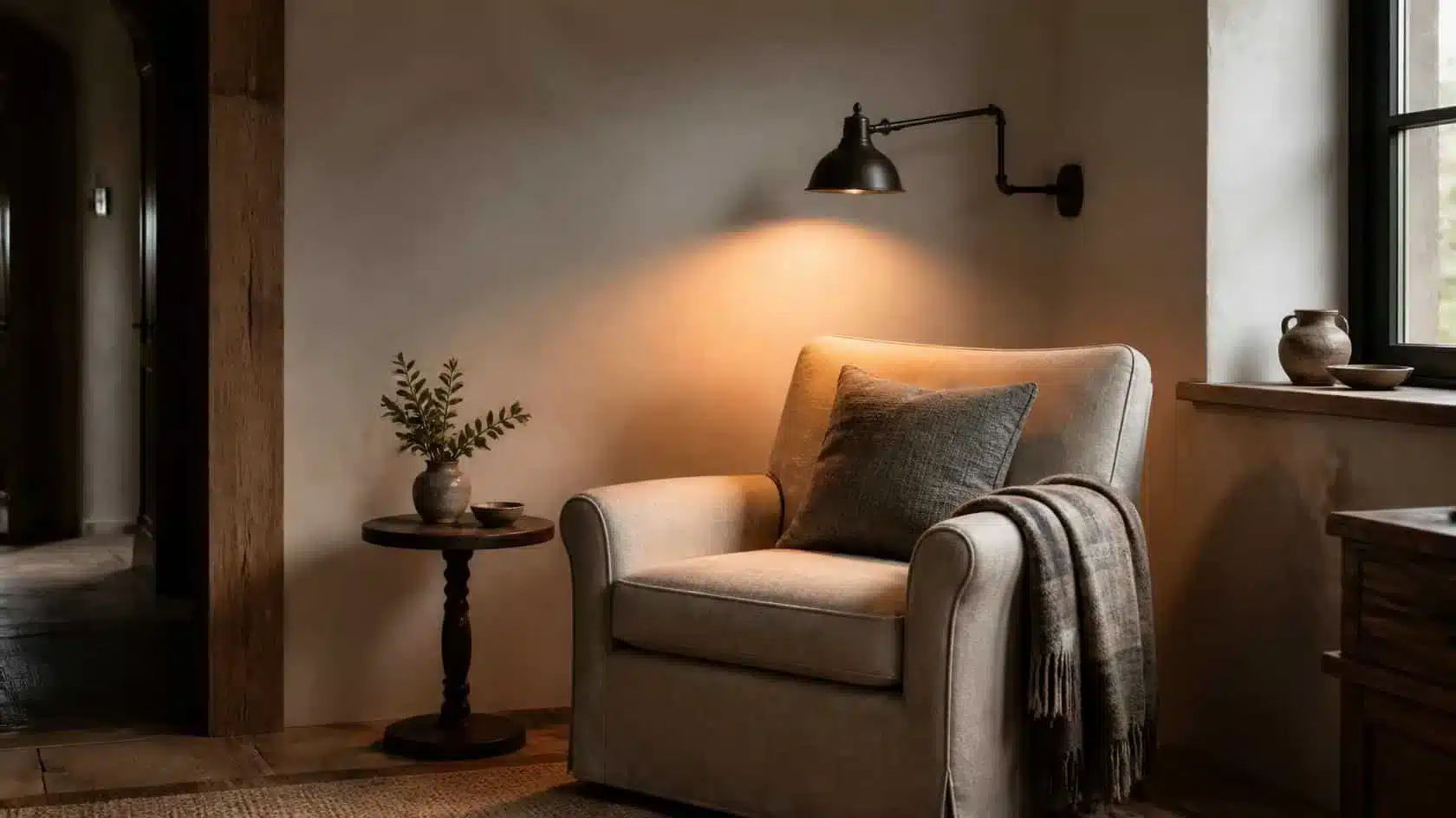
A directional wall lamp can save floor space beside a reading chair and keep the task light tied to the seating position.
The important dimension is not an abstract height from the floor; it is the relationship between the lamp, the reader and the page. Adjustable arms and directional shades make this easier because the beam can be positioned after installation.
Test the location from the actual chair before fixing a permanent fitting. The beam should reach the task comfortably while the lamp itself remains outside the direct line of sight.
Above a Sideboard or Console
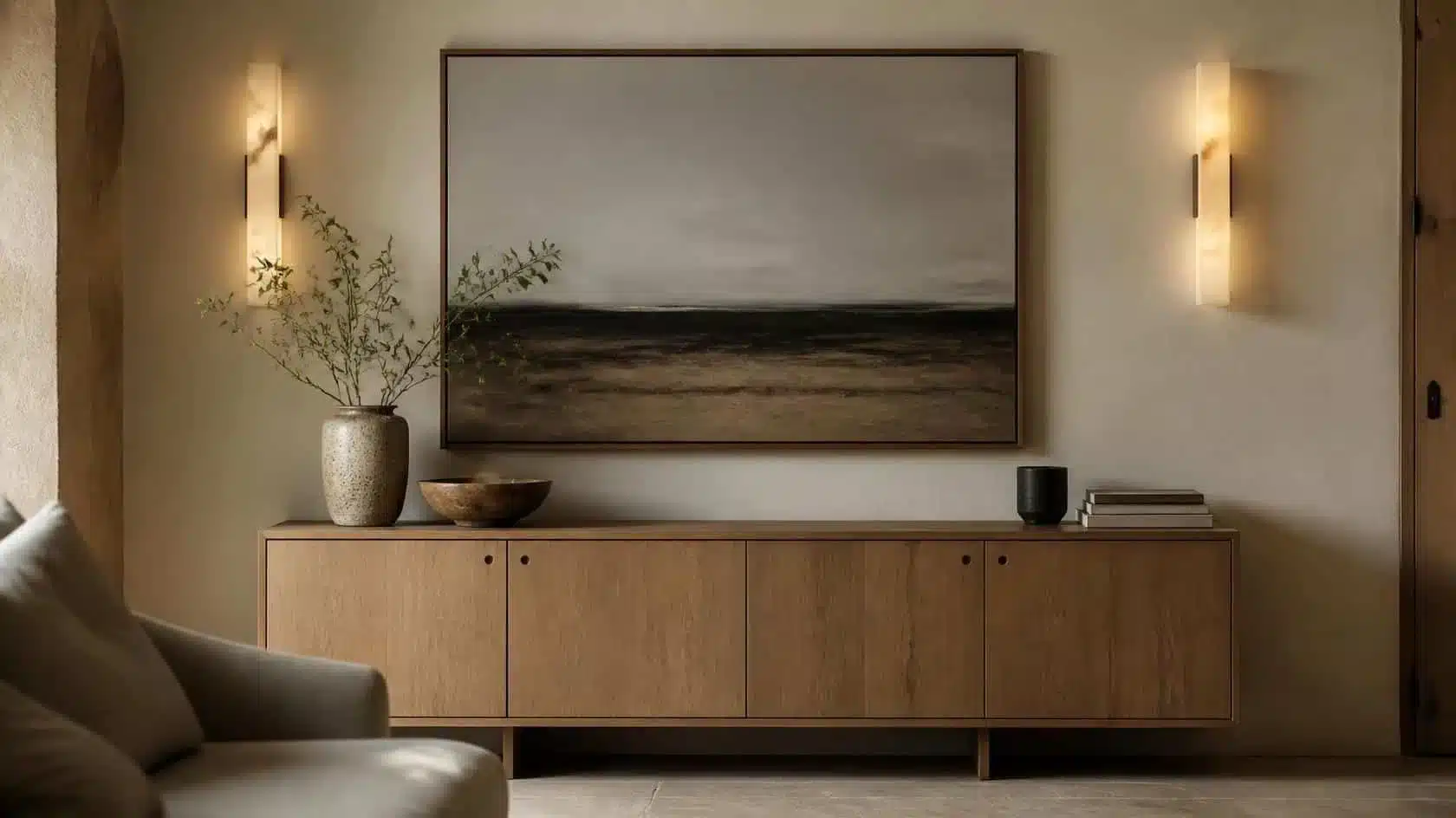
Wall lights above a sideboard can replace or complement a table lamp, leaving the furniture surface clearer.
Think of the light, sideboard and any artwork or mirror as one vertical composition. A fitting placed too high can feel disconnected; one placed too low can compete with objects on the furniture. Leave enough visual breathing space for each element.
Wall Lighting Near Artwork
Artwork does not always need a dedicated picture light. Sometimes a nearby wall lamp can create enough general illumination for the piece to remain visible while keeping the room softer.
If the intention is specifically to light artwork, choose a fitting and beam designed for that purpose and watch for reflections on glazed surfaces. The goal is to reveal the work rather than create a bright hotspot.
Around a Fireplace or Architectural Feature
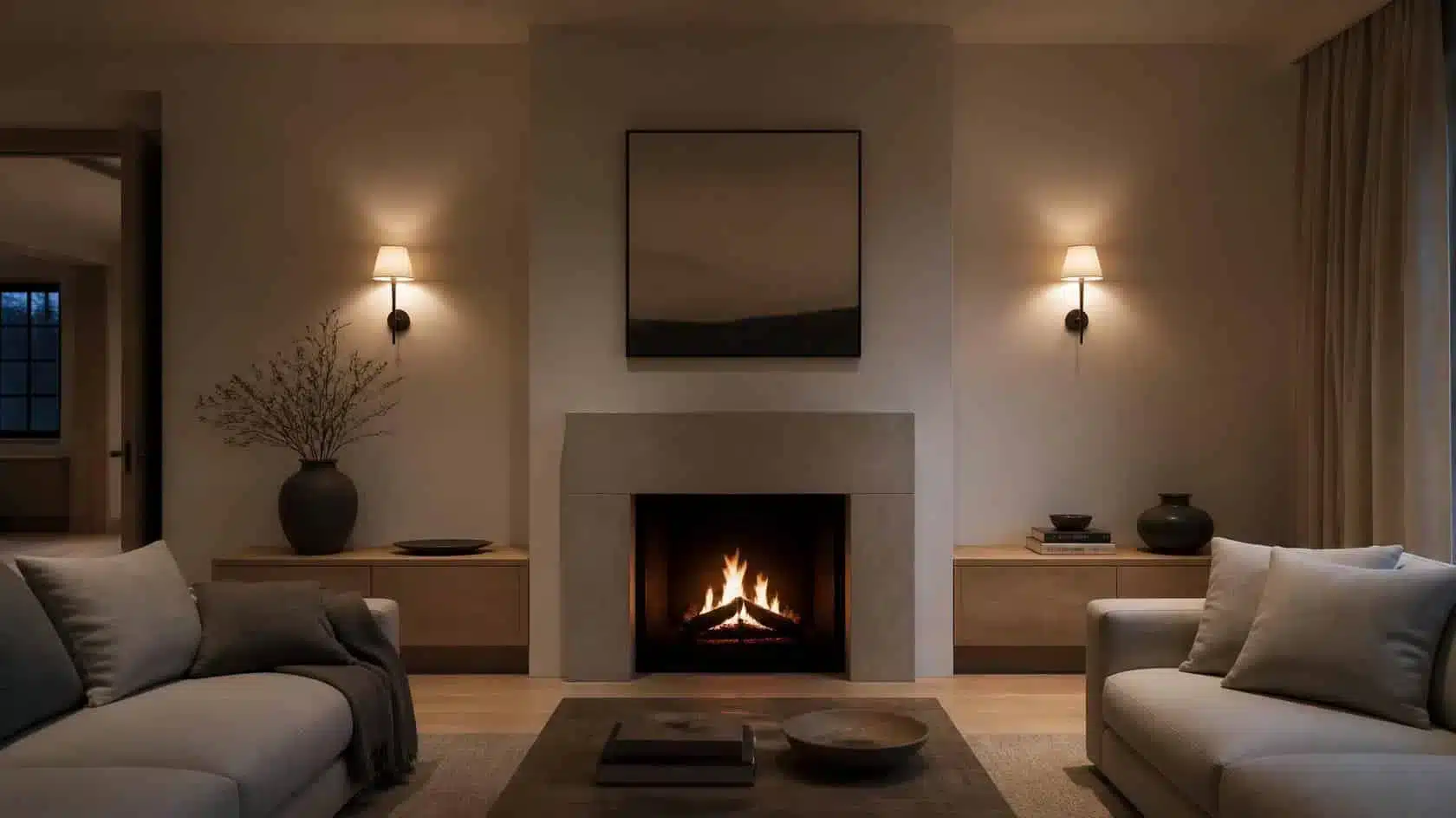
Wall lights can reinforce the vertical rhythm around a fireplace, chimney breast, alcove or panelled wall. They work best when they respect the architecture rather than simply filling whatever blank wall remains.
Use the feature’s centreline, edges and surrounding furniture as reference points. A pair may suit a symmetrical fireplace wall, while an irregular alcove composition may look better with one deliberately placed light.
How High Should a Living-Room Wall Light Be?
There is no single correct mounting height for every wall lamp for living room use. The fitting’s size, shade, beam direction, furniture and ceiling height all change the result.
A more reliable method is to mock up the fitting position with tape or cardboard, then sit in the normal seats. Check whether the lamp feels visually connected to the furniture, whether the bulb or LED source is visible, and whether the light reaches the intended surface.
How Far Apart Should Wall Lights Be?
Spacing should follow the room rather than a fixed formula. Two lights framing a sofa will be governed by the sofa width and nearby furniture; two lights along a long wall may need wider spacing to avoid looking crowded.
Use architectural features as anchors where possible. Doorways, alcoves, artwork and furniture edges often produce more convincing positions than equal mathematical spacing across an otherwise unrelated wall.
Control Glare From Normal Seating Positions
Wall fittings sit closer to eye level than ceiling lights, so glare deserves particular attention.
The Illuminating Engineering Society defines glare as excessive contrast or an inappropriate distribution of light that causes discomfort or reduces visibility. In a sitting room, this can happen when an exposed lamp or bright LED source is directly visible from a sofa or chair.
Illuminating Engineering Society
Shades, opal glass, diffusers and reflected light can all reduce direct brightness. Always check the fitting from seated positions, not only while standing in the centre of the room.
Choose Shade and Light Direction Carefully
The shape of the fitting determines where the light goes.
- Upward light can brighten the wall and ceiling and make the room feel more open.
- Downward light creates a more concentrated pool and can suit reading or artwork.
- Up-and-down fittings create a graphic architectural effect but can become repetitive if used everywhere.
- Fabric or opaque shades can soften direct glare and produce a more domestic character.
Keep the Colour Temperature Coherent
A warm wall light beside a much cooler floor lamp can make the room feel visually inconsistent.
The Energy Saving Trust describes warm white light around 2700–3000K as suitable for living areas and notes that cooler white light around 4000–4500K can feel harsher in many domestic spaces. Compare the wall lights with the other evening sources that will be visible at the same time.
Plan Switching and Dimming
Wall lights are most useful when they can operate independently from the main ceiling light. That lets them become the evening layer rather than simply adding more brightness to an already fully lit room.
Dimming can be valuable, especially for decorative or ambient wall fittings. Check that the lamps, drivers and dimmers are compatible rather than assuming every LED system will dim cleanly.
Plug-In, Hardwired and Cordless Wall Lamps
Hardwired wall lights create the cleanest permanent installation but require planning for cables, switches and electrical work. Plug-in wall lamps can provide much of the same visual effect without opening the wall, although the cable becomes part of the detail.
Cordless or rechargeable wall lamps are useful where wiring is impractical, but they introduce battery capacity, charging access and potentially lower light output. Choose them because the installation benefits from cordless operation, not simply because they avoid a cable.
Wall Lights in a Small Living Room
Wall lights can be particularly effective in smaller rooms because they keep tables and floors clearer.
Use restraint. One pair around a sofa or one directional light beside a reading chair may be enough. Too many fittings at eye level can make a compact room feel visually busy.
Common Wall-Light Placement Mistakes
- Choosing mounting height before deciding what the light should do.
- Placing an exposed bulb directly in seated sightlines.
- Mounting lights so high that they disconnect from the furniture below.
- Using symmetry automatically when the room itself is asymmetrical.
- Ignoring reflections in televisions, mirrors or glazed artwork.
- Mixing noticeably different colour temperatures in the same view.
- Putting every wall light and ceiling light on one control.
- Adding fittings to blank walls that do not need illumination.
Frequently Asked Questions About Living-Room Wall Lights
Where should wall lights be placed in a living room?
Place them where they support a real part of the room: beside or around seating, above a console, near artwork or around an architectural feature. The intended light effect should determine the exact position.
Should wall lights be centred over a sofa?
Not necessarily. A pair can frame a sofa, but the best position depends on other furniture, artwork, doors and the room’s overall balance. Visual alignment matters more than automatic symmetry.
Can wall lights replace table lamps?
They can replace some table lamps, particularly where surface space is limited. A directional wall lamp can also serve as reading light, while a shaded fitting can create a softer ambient layer.
Are plug-in wall lights a good option?
Yes when you want wall-mounted light without permanent wiring. Plan the cable route deliberately so the cord looks considered rather than accidental.
What colour temperature works well for living-room wall lights?
Warm white around 2700–3000K often suits evening living spaces, especially when nearby floor and table lamps are in a similar range.
Use Wall Light to Shape the Room
The best wall lights do not simply occupy wall space. They change how the room feels after dark.
Start with the purpose, then judge height, spacing, shade and beam direction from the actual seating positions. Keep glare low, make the colour temperature work with the rest of the room, and give the wall light its own role within the broader lighting scheme.
When those decisions are made deliberately, living room wall lights can add depth and warmth without adding clutter.

Leave a Reply