

SUSTAINABLE HOME · SUSTAINABLE DECOR
Sustainable Materials: A Practical Guide to Choosing Materials for the Home
A practical framework for comparing materials without relying on vague “eco” labels—looking instead at durability, repairability, sourcing, recycled or reclaimed content, finishes, certifications and how long a product is likely to stay useful.

“Sustainable materials” can sound like a simple shopping category: choose timber instead of plastic, natural instead of synthetic, recycled instead of virgin. In practice, those shortcuts are unreliable. A material only makes sense in the context of what it is being used for, how it was sourced and made, how long it will last, whether it can be maintained or repaired, and what happens when the product is no longer useful.
For a home, the strongest choices are often less dramatic than the marketing suggests. Keep durable things in use. Choose materials suited to the job. Prefer products that can be repaired rather than discarded. Look for credible sourcing or recycled-content evidence where it matters. And be cautious when broad claims such as “eco-friendly”, “green” or “natural” are not explained.
This guide provides a practical way to compare materials without pretending that one material is always sustainable in every application.
What “Sustainable Materials” Actually Means
There is no single material property called sustainability. A material can perform well in one area and poorly in another. Recycled content may reduce demand for virgin material, but the finished product could still be difficult to repair. A renewable material may come from a rapidly replenished source but use energy-intensive processing or adhesives. A durable synthetic material may remain useful for decades.
For household decisions, it is more useful to compare several factors together: resource source, manufacturing, durability, maintenance, repairability, likely lifespan, transport, end-of-life options and the quality of evidence behind any environmental claim.
Start With Function, Not the Material Label
The first question is not “What is the greenest material?” It is “What does this object need to do?” A bathroom surface must tolerate moisture. A dining table must survive repeated cleaning and impact. Upholstery needs to withstand abrasion. Outdoor furniture has different exposure from a bedside cabinet.
A material that fails early because it was chosen for its sustainability story rather than its suitability may lead to replacement sooner. Performance and environmental considerations need to work together.
Think About the Whole Useful Life
A useful comparison looks beyond the moment of purchase. Consider where the material came from, how the product is assembled, what maintenance it needs, whether components can be repaired, and whether you are likely to keep it long enough for durability to matter.
This is one reason our zero waste lifestyle guide puts prevention, reuse and repair before replacement. The material in a product you already own does not become environmentally preferable simply because a new alternative carries a stronger green claim.
Durability Is Part of Sustainability
Durability is not glamorous, but it matters. A product that lasts a long time can spread the impact of manufacturing across more years of use. That does not make every heavy or long-lasting material automatically sustainable, but lifespan should be part of the decision.
- Will the surface tolerate the room and cleaning routine?
- Will joints and fixings survive repeated use?
- Can scratches or wear be maintained rather than treated as failure?
- Is the style versatile enough that you are likely to keep it?
Repairability and Replaceable Parts Matter
A repairable product can stay useful after the first component fails. Look for mechanical fixings where appropriate, replaceable handles, removable covers, accessible hardware and parts that can be refinished independently.
Furniture that is permanently bonded or moulded into one inseparable unit may be harder to repair than a piece made from replaceable components. Our second hand furniture guide shows how construction affects repair decisions when buying an existing piece.
Reused, Reclaimed and Recycled Are Different
| Term | What it generally means | What to check |
|---|---|---|
| Reused | An existing product is used again with little or no material reprocessing. | Condition, safety, suitability and remaining useful life. |
| Reclaimed | Material is recovered from a previous use and made available for another application. | Source, condition, processing, contaminants and whether the claim is specific. |
| Recycled | Waste material is processed into material used in a new product. | Percentage recycled content, post-consumer vs pre-consumer where relevant, durability and recyclability of the finished product. |
These terms are not interchangeable, and none is a guarantee of overall sustainability. Evidence still matters.
Timber: Species, Sourcing and Construction
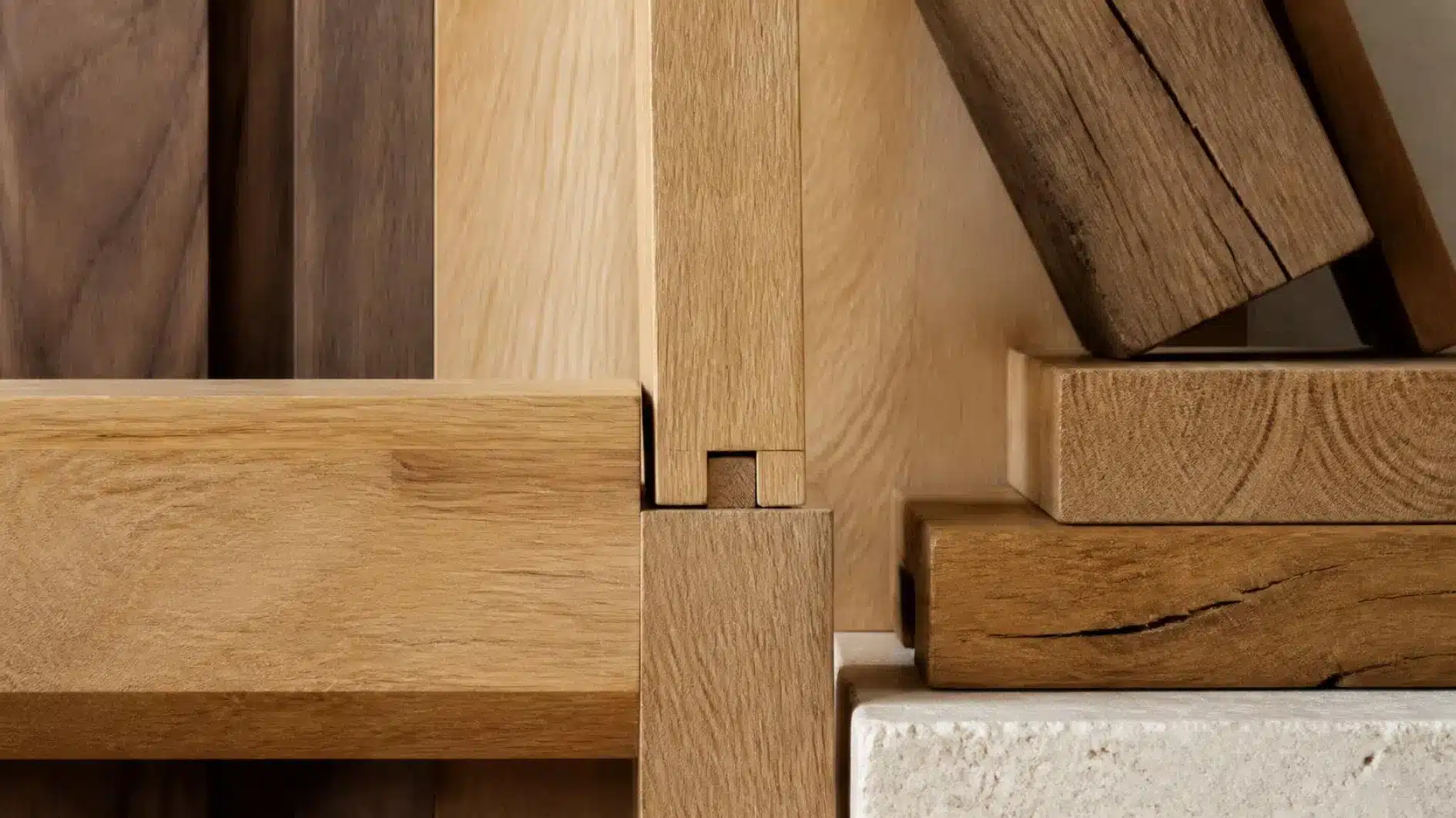
Timber is widely used because it can be strong, repairable, refinishable and visually adaptable. But “wood” by itself tells you very little about responsible sourcing.
- Ask what timber species is used.
- Look for credible forest-management or chain-of-custody certification where the seller makes sourcing claims.
- Check whether the construction is solid timber, plywood, veneer or composite board rather than assuming from appearance.
- Consider whether the finish allows future repair or refinishing.
A well-made veneered piece can be more material-efficient than using thick solid timber everywhere, while a poorly made solid-wood product can still fail early. Construction quality matters alongside material choice.
Reclaimed Wood: Useful, but Not Automatically Better
Reclaimed timber can keep existing material in circulation and bring character that new timber does not replicate. It can be an excellent material for furniture, shelving and decorative surfaces when its source and condition are understood.
But the word “reclaimed” does not answer every question. Check whether the wood has been heavily reprocessed, whether old coatings or contaminants have been managed, whether the construction is sound and whether the product has been designed to last.
Our Reclaimed Wood Furniture guide looks at provenance, previous coatings, timber stability and construction in more detail.
Bamboo and Other Fast-Growing Materials

Bamboo grows rapidly and can be used in flooring, furniture, storage and homeware. The environmental story, however, depends on more than growth rate. Processing, adhesives, finish, transport and product longevity all affect the finished result.
For furniture, inspect the construction in the same way you would inspect timber. Ask how laminated sections are bonded, how the finish is maintained and whether components can be repaired or replaced.
Cork: Light, Renewable and Application-Dependent
Cork can be useful for flooring, wall finishes, coasters, mats and other home products. It is lightweight, resilient and harvested from bark rather than by felling the tree when managed appropriately.
As with any material, the finished product matters. Check coatings, backing materials, adhesives and whether the specific product is designed for the moisture, traffic or heat it will experience.
Metals: Durable, Recyclable and Energy-Intensive to Produce

Steel, aluminium, brass and other metals can offer excellent durability and are widely recoverable through established recycling systems. Their production can also require significant energy and resource extraction.
For household products, look at whether the metal is used efficiently, whether recycled content is specified, how easily parts can be separated and whether the finish can be maintained. A robust metal frame that lasts for decades may be a better choice than a lighter construction that fails quickly.
Glass and Ceramic
Glass and ceramic are durable, inert in many household uses and capable of long service when cared for. They can also be heavy, fragile and energy-intensive to manufacture.
Choose them where their properties make sense: easy-to-clean vessels, lighting, tableware and durable decorative objects. Avoid treating “plastic-free” as sufficient evidence that a glass or ceramic replacement is automatically the better overall choice.
Linen, Wool, Cotton and Other Fibres
Natural fibres can bring texture, comfort and repairability to curtains, cushions, rugs and upholstery. Their impacts vary according to farming, processing, dyeing, finishing, transport and durability.
Look beyond fibre name alone. Fabric weight, weave, abrasion resistance, colourfastness, washability and whether covers can be removed may matter more to the useful lifespan of a household textile.
For a broader aesthetic and sensory perspective on timber, linen, wool and ceramic, our future Natural Materials coverage will sit separately under Natural Living; this cluster focuses specifically on sustainability evidence and product longevity.
Plastics and Recycled Plastics
Plastic should not be treated as a single material with a single environmental profile. Different polymers, additives and product designs behave differently.
A recycled-plastic claim can be useful when the percentage and scope are clear, but recycled content does not make a product automatically durable, recyclable again or appropriate for every use. Check what part of the product the claim applies to and whether the manufacturer explains the figure.
Finishes, Adhesives and Coatings
Materials rarely arrive in the home completely untreated. Paint, lacquer, oil, stain, adhesive, backing layers and protective coatings can affect maintenance, repairability and indoor use.
- Check whether a finish can be renewed or repaired locally.
- For indoor products, look for specific emissions or formulation information rather than relying on vague “non-toxic” wording.
- Consider whether bonded layers make future separation or recycling difficult.
- Use products according to manufacturer instructions, particularly for finishes and adhesives applied at home.
Certifications and Evidence
Certification can help when it covers a specific attribute and comes from a credible scheme, but a logo should not replace understanding the claim.
For timber, certification may relate to forest management or chain of custody. For textiles, schemes may address fibre sourcing, chemicals, labour practices or organic status. For products and buildings, environmental declarations may report quantified lifecycle information.
Always ask what exactly is certified: the whole product, one material, one factory, one percentage of content or one stage of production.
How to Read Environmental Claims
Broad claims should be specific enough to understand and verify. The UK Green Claims Code emphasises that environmental claims should be truthful, clear, unambiguous and not omit important information.
When a product is described as “sustainable”, “eco-friendly” or “planet friendly”, look for the detail behind it:
- Which material or stage is the claim about?
- Compared with what?
- What percentage is recycled or certified?
- Is there a recognised standard or independent verification?
- Does the claim ignore obvious trade-offs such as durability or replacement frequency?
Our Sustainable Interior Design guide shows how to apply these material choices across an entire room, while our Sustainable Furniture guide focuses on product-level buying decisions.
Sustainable Homeware: Choosing Materials Room by Room
| Room or use | Material priorities |
|---|---|
| Kitchen | Moisture resistance, cleanability, repairable hardware, heat tolerance and replaceable working parts. |
| Bathroom | Moisture compatibility, mould-resistant detailing, maintainable finishes and materials suited to repeated cleaning. |
| Living room | Durable upholstery, repairable frames, replaceable covers, timeless finishes and flexible use. |
| Bedroom | Stable furniture, maintainable surfaces, washable textiles and materials that suit lower-wear use. |
| Dining area | Hard-wearing tabletops, stable joints, repairable finishes and dimensions suited to long-term use. |
There is no need to force the same material philosophy into every room. Suitability is part of responsible specification.
A Practical Product-Comparison Method
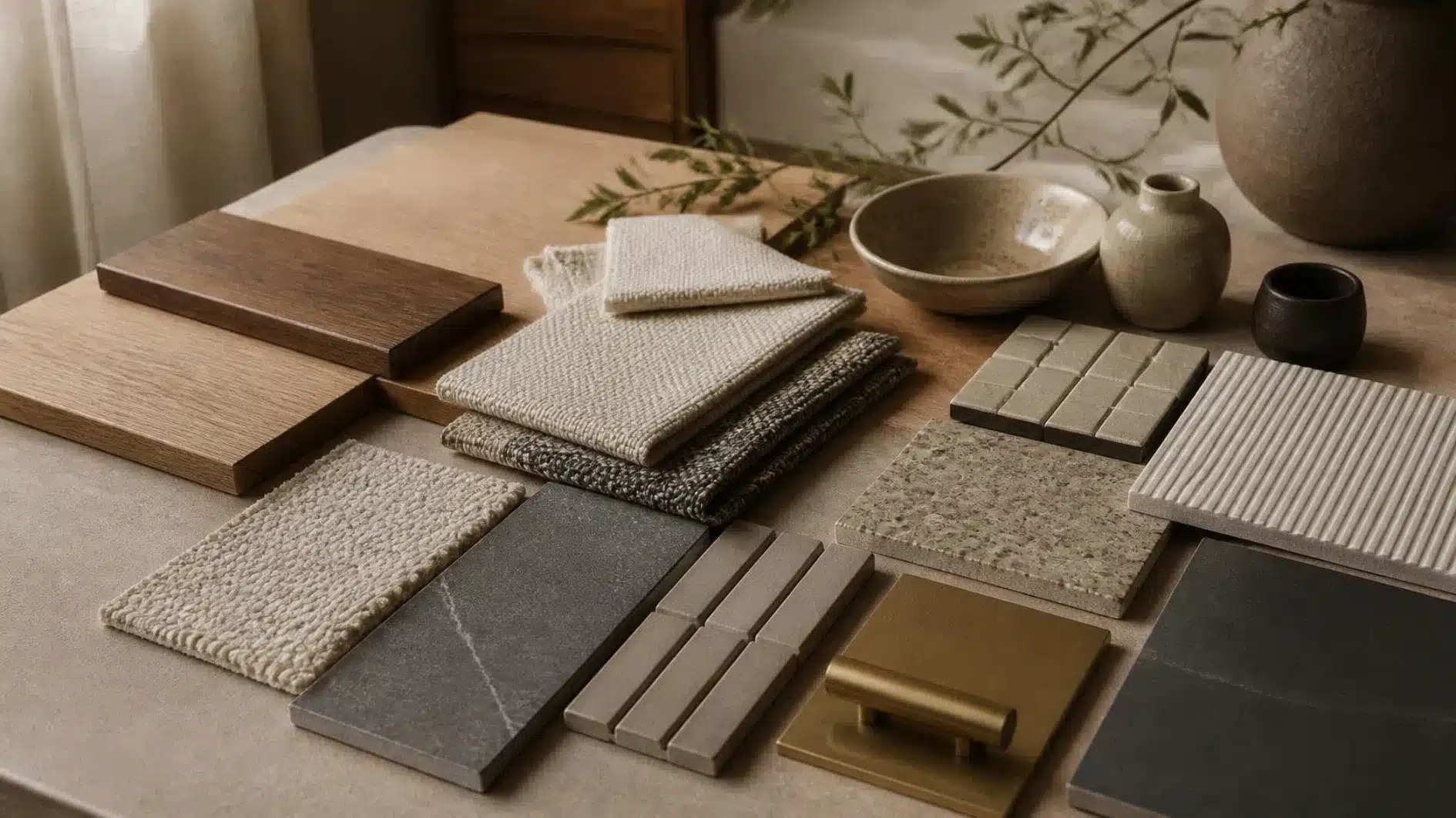
- Define the job. What performance does the object or surface need?
- Check lifespan. What normally fails first?
- Check construction. Can parts be maintained, repaired or replaced?
- Check material evidence. Is recycled, reclaimed or certified content quantified?
- Check finishes. Will the surface tolerate the room and can it be renewed?
- Check the claim. Is “sustainable” explained clearly enough to evaluate?
- Check alternatives. Could an existing or second-hand product do the same job?
- Buy for long use. Choose the option you are realistically prepared to maintain and keep.
Common Material-Selection Mistakes
- Assuming natural means sustainable. Natural materials can still have significant sourcing, processing or durability issues.
- Assuming recycled means recyclable. Recycled content and end-of-life recyclability are different claims.
- Replacing durable products too early. A new “green” purchase can still be unnecessary.
- Ignoring finishes and adhesives. The visible material may be only one part of the product.
- Choosing appearance over suitability. Premature failure creates another replacement decision.
- Treating certification as a universal guarantee. Check what attribute and scope it actually covers.
- Buying a material story rather than a durable product.
Sustainable Materials Checklist
- Start with the function and room conditions.
- Check expected durability and common failure points.
- Look for repairable construction and replaceable components.
- Distinguish reused, reclaimed and recycled claims.
- Ask for sourcing evidence where material origin matters.
- Check what finishes, adhesives and backing materials are used.
- Understand exactly what a certification covers.
- Compare broad green claims with specific evidence.
- Consider existing and second-hand options before replacing.
- Choose the product you are most likely to maintain and keep in service.
Frequently Asked Questions About Sustainable Materials
What are sustainable materials?
The term generally refers to materials selected or produced with environmental impacts in mind, but there is no single property that makes a material sustainable. Source, manufacturing, durability, repairability, use and end-of-life all matter.
Are natural materials always more sustainable?
No. A natural material can involve intensive farming, processing, transport or short product life. Natural origin is one characteristic, not a complete environmental assessment.
Is recycled material always better than virgin material?
Recycled content can reduce demand for virgin resources, but the full product still needs to be durable and suitable. The percentage, quality and scope of recycled content should be clear rather than assumed.
Is reclaimed wood sustainable?
Reclaimed wood can keep existing material in use and reduce demand for newly processed timber, but source, contaminants, processing, transport and the durability of the finished product still matter.
What should I look for in sustainable furniture?
Look beyond the material name. Check construction quality, repairability, replaceable parts, source information, finish, warranty where relevant and whether the design is likely to stay useful for a long time.
Does buying local automatically reduce environmental impact?
No. Shorter transport can be relevant, but manufacturing method, material source, durability and product lifespan can matter as well. “Local” should be treated as one factor rather than a complete sustainability claim.
Choose Materials for a Long Useful Life
The most useful way to think about sustainable materials is not to search for one perfect substance. Start with the job the product needs to do. Compare source and construction. Look for durability, maintainability and repair. Ask for evidence behind recycled, reclaimed or certified claims. Then choose something you are willing to keep in service.
That approach is quieter than a list of “greenest materials”, but it is more useful for a real home: fewer replacements, better-informed purchases and materials chosen for how they actually perform over time.
SUSTAINABLE MATERIALS · HOME DESIGN
Explore Sustainable Materials & Home Design

Leave a Reply