

SUSTAINABLE HOME · SUSTAINABLE DECOR
Sustainable Interior Design: How to Make Better Material Choices at Home
A practical approach to sustainable interior design that starts with what you already have, then considers durability, repairability, sourcing, finishes and long-term use before adding anything new.
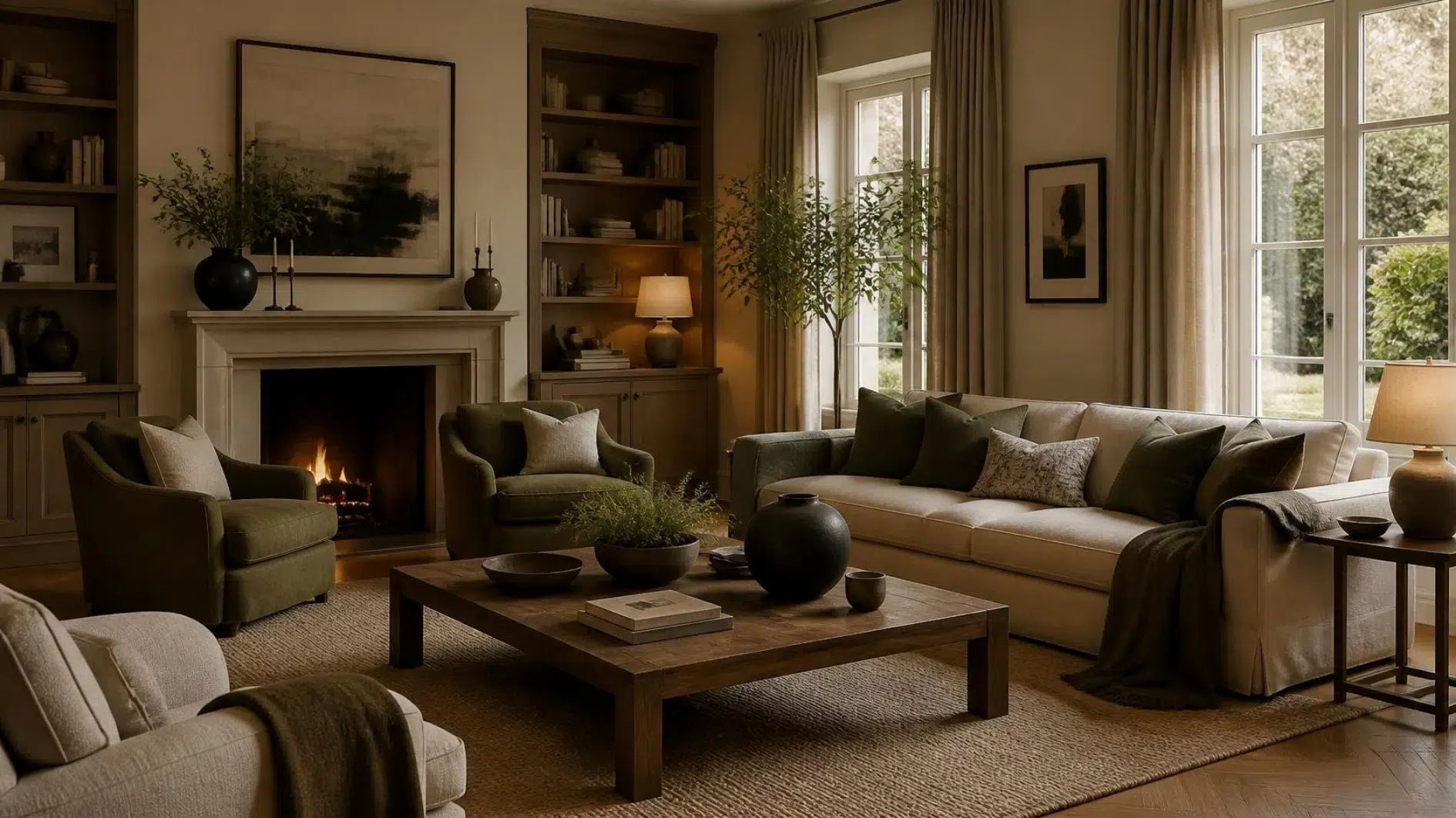
Sustainable interior design is often reduced to a shopping list of natural fabrics, recycled products and low-energy lighting. Those things can matter, but the more useful starting point is simpler: design the room so that fewer things need to be replaced.
That means keeping serviceable materials where possible, choosing finishes suited to the room, specifying furniture that can be repaired, avoiding short-lived trends when they create unnecessary replacement, and checking the evidence behind environmental claims before paying a premium for them.
Our sustainable materials guide explains how to compare individual materials. This article applies that framework to a whole interior, where materials, layout, furniture, lighting and maintenance all need to work together.
What Sustainable Interior Design Means
Sustainable interior design is not a single visual style. A room does not become sustainable because it uses beige linen, pale timber or a few products labelled “eco”. The useful question is whether the design reduces unnecessary material use and supports a long, adaptable life for the room and the things in it.
That can involve reuse, repairable construction, durable finishes, appropriate materials, efficient lighting, lower-impact sourcing and better maintenance. It can also mean doing less: retaining a sound floor, repainting rather than replacing cabinetry, or using existing furniture in a new layout.
Start With What Already Exists
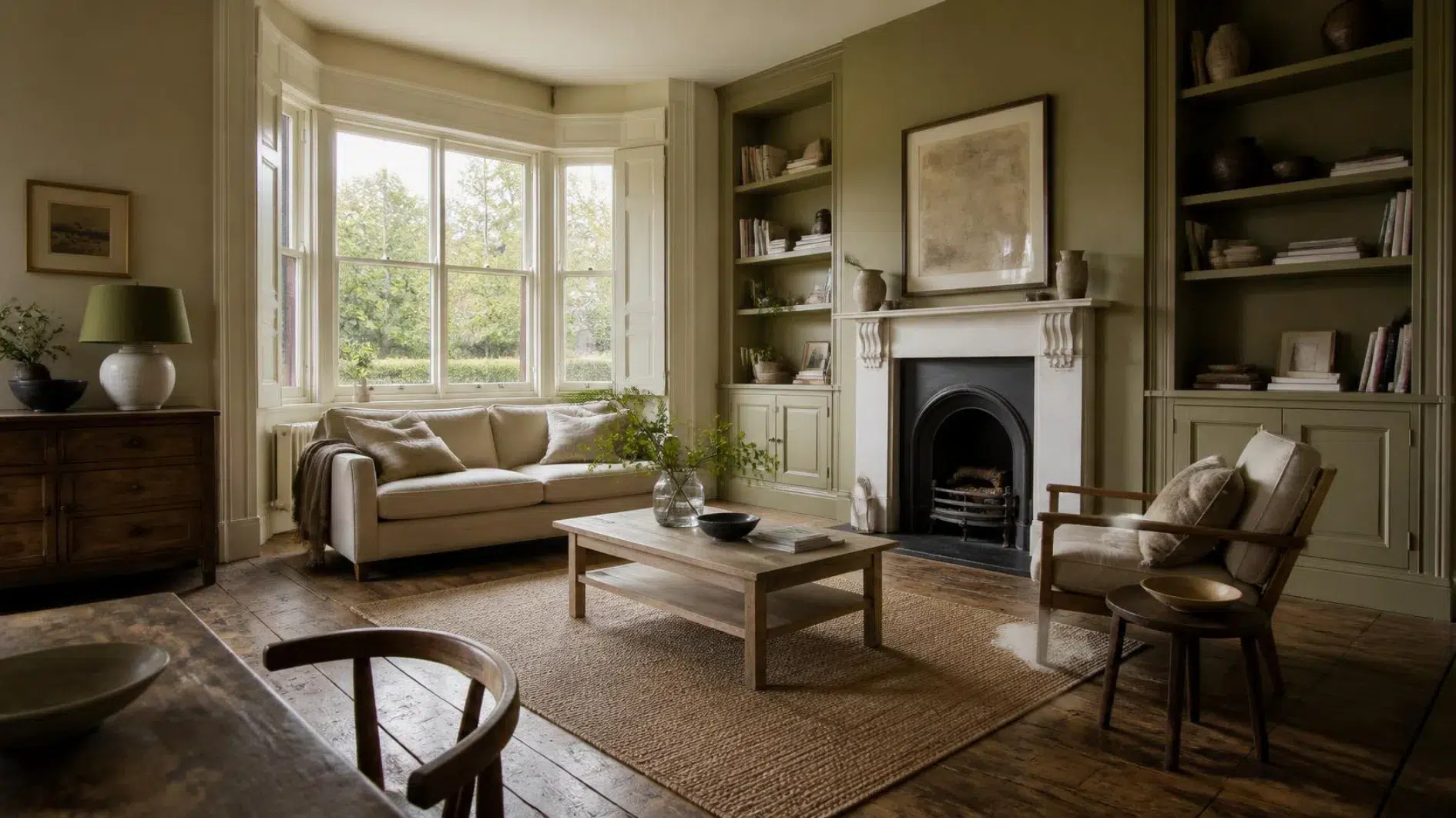
Before specifying new materials, assess the room as it is. Existing flooring, joinery, furniture, curtains, lighting and storage may already contain useful material value.
- Can the floor be cleaned, repaired or refinished?
- Can cabinets be repainted or fitted with new handles rather than replaced?
- Can curtains be shortened, relined or moved to another room?
- Can a table, chair or sideboard be repaired or bought second hand?
- Can a layout change solve the problem before new storage is purchased?
This reuse-first approach aligns with the broader principles in our zero waste lifestyle guide: prevent unnecessary replacement before looking for a new material solution.
Write the Room Brief Before Choosing Materials
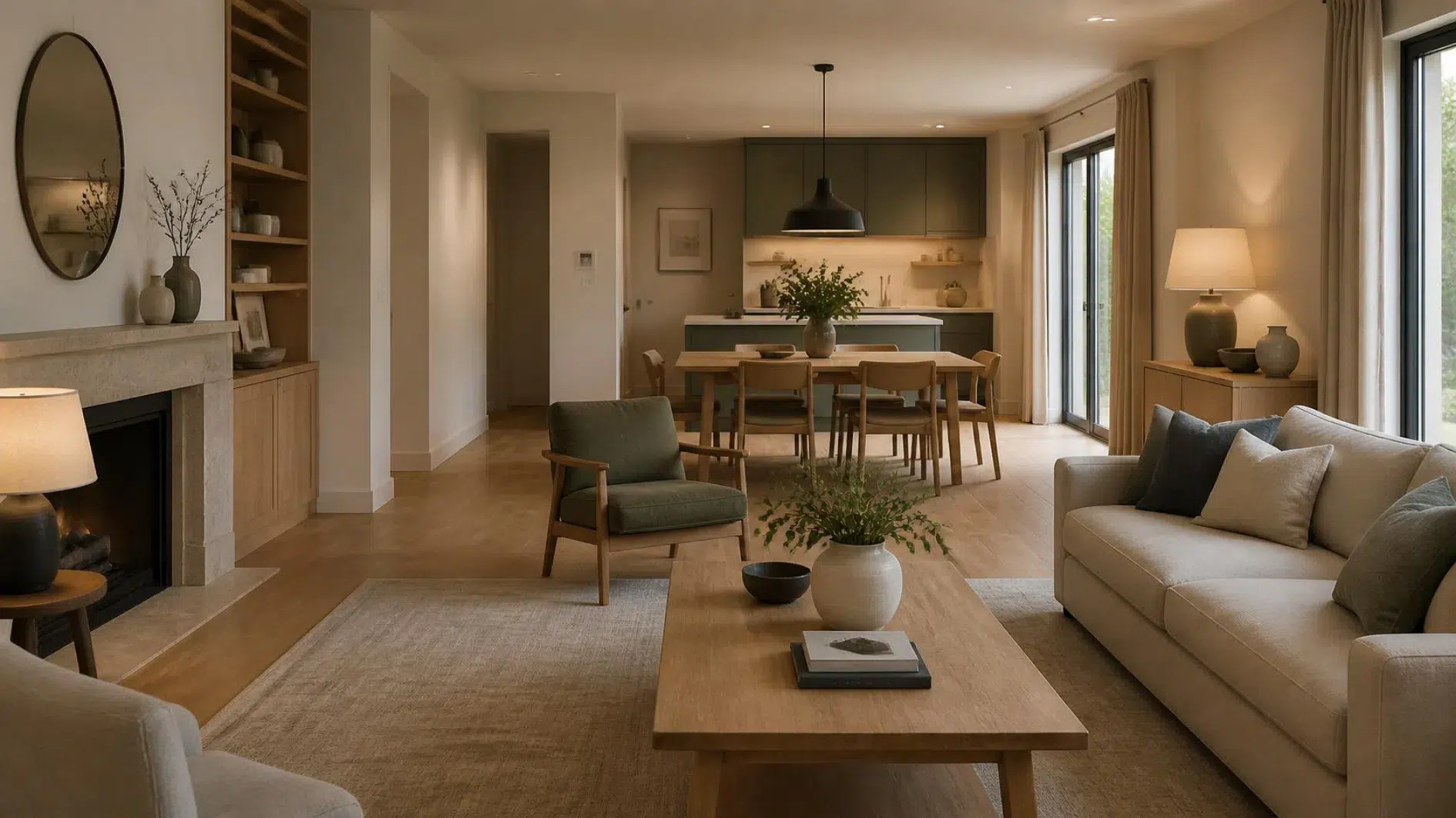
Material decisions become easier when the room has a clear brief. Define what the space needs to tolerate, who uses it and what tends to fail.
| Question | Why it matters |
|---|---|
| Is the room wet, humid or dry? | Changes what finishes, boards, textiles and metals are suitable. |
| How much foot traffic does it receive? | Influences flooring and rug durability. |
| Are children or pets using it? | Changes cleanability, scratch resistance and safety priorities. |
| How often will the layout change? | Favors flexible furniture over highly fixed solutions. |
| What is likely to wear first? | Helps you choose replaceable or repairable components. |
Design for Durability
Durability does not mean making every surface industrial. It means matching the material to the level of use. A delicate finish may be perfectly suitable on a low-touch bedroom cabinet but frustrating on a family dining table.
Think about abrasion, moisture, sunlight, cleaning and impact. A material that performs well in the actual room can avoid premature replacement even if another option sounds more environmentally impressive on paper.
Design for Repair and Replacement
Rooms age in parts. Handles loosen, chair covers wear, lampshades fade and drawer runners fail. Good design allows those smaller components to be repaired or replaced without discarding the whole product.
- Prefer removable upholstery covers where practical.
- Use replaceable bulbs and standard fittings.
- Choose accessible hardware rather than permanently sealed assemblies.
- Keep spare tiles or finish information for local repairs.
- Choose furniture surfaces that can tolerate maintenance or refinishing.
Choose Materials for the Job
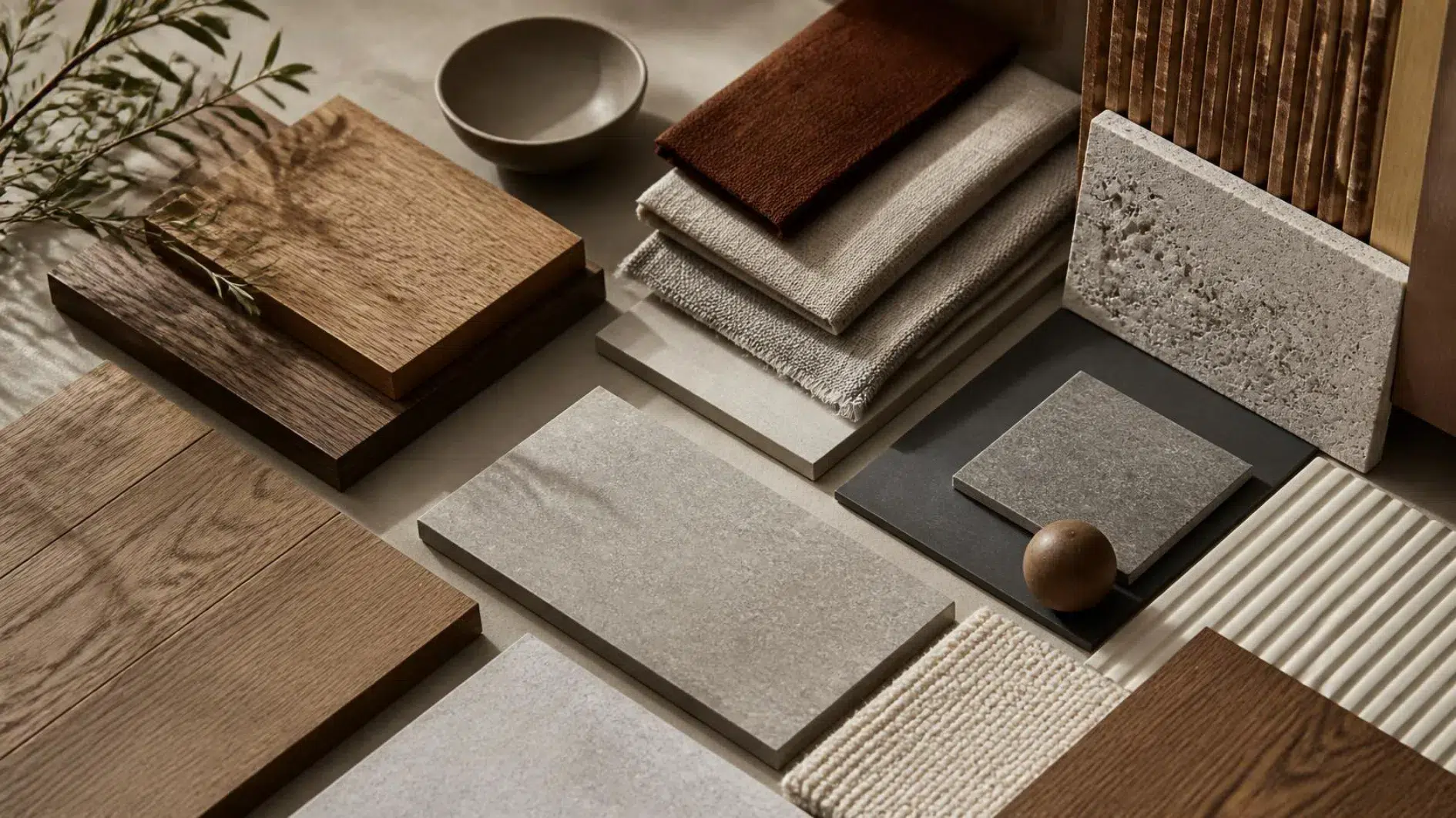
There is no universal material hierarchy for interiors. Timber, metal, glass, ceramic, natural fibres, recycled plastics and composite products can all have a place when they are suited to the use and made into durable products.
Our sustainable materials guide covers the trade-offs in more detail. At room level, focus on performance first, then compare sourcing, recycled content, repairability, finish and end-of-life information between products that can actually do the job.
Timber and Wood-Based Products
Timber is useful across flooring, furniture, shelving and joinery because it can be durable and repairable. But “wood” is too broad to be a sustainability claim on its own.
Check species, sourcing, construction and finish. A well-made plywood or veneered component can use timber efficiently. Solid timber can offer excellent repairability. Reclaimed timber can keep existing material in use. The best option depends on the application and the evidence available.
Textiles, Upholstery and Curtains
For textiles, fibre type matters less than many buying guides imply. Also consider weave, fabric weight, abrasion resistance, colourfastness, washability and whether covers can be removed or repaired.
Linen, wool and cotton can all work well in interiors, but natural origin does not erase farming, dyeing, processing or transport impacts. A durable textile that survives years of use can be more useful than a delicate fabric selected mainly for its material story.
Flooring
Flooring is one of the larger material decisions in a room, so avoid replacing it casually. If an existing timber floor can be refinished, or a tile floor is sound but visually dated, retaining it may be more resource-conscious than a full replacement.
When new flooring is necessary, compare durability, repair methods, moisture compatibility, installation system, underlay, finish and whether damaged sections can be replaced locally. A floor that cannot tolerate the room will not be a sustainable choice simply because the raw material is renewable.
Paints, Finishes and Adhesives
Finishes influence how materials perform and how easily they can be maintained. Paint, oils, lacquers, adhesives and sealers can affect emissions, cleanability, repairability and eventual separation of materials.
Look for specific product information rather than broad “non-toxic” claims. Follow manufacturer instructions for ventilation, application, curing and compatible substrates. For furniture and joinery, consider whether a finish can be touched up rather than requiring full replacement when it wears.
Furniture: Buy Less, Buy Better
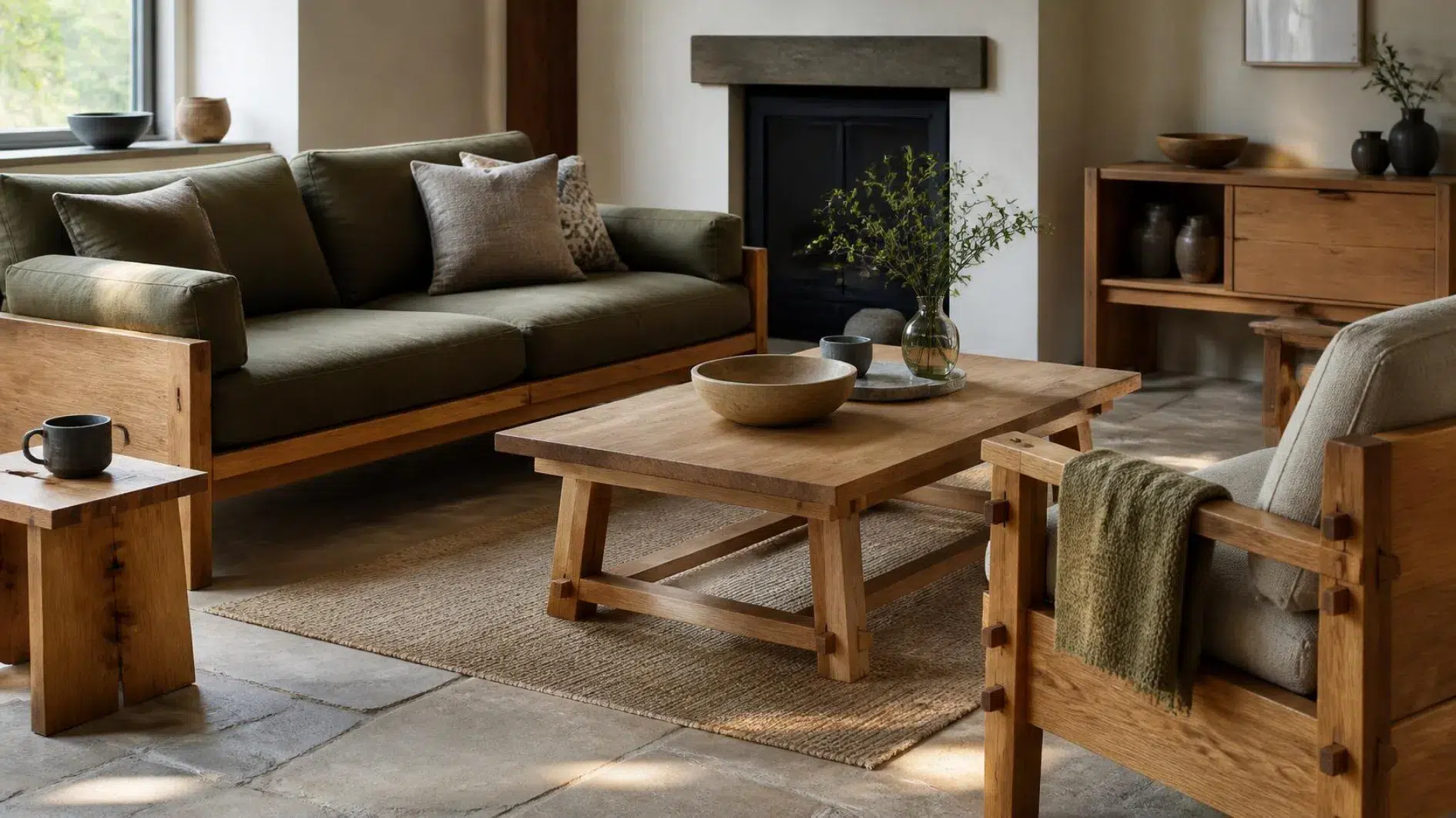
Furniture is where sustainable interior design can easily turn into more consumption. Before buying a new piece, ask whether the room needs it, whether an existing object can be moved or repurposed, and whether the new piece solves a long-term problem.
For new furniture, examine construction, material source, replaceable parts, finish, warranty and likely lifespan rather than relying on a single “sustainable furniture” label. Our Sustainable Furniture guide provides a dedicated buying framework.
Use Second Hand Where It Makes Sense
Second-hand furniture can keep existing products in circulation and is particularly practical for tables, cabinets, mirrors, bedside furniture and other pieces that are easy to inspect.
Condition still matters. Reuse is not useful when a piece is structurally weak, unsuitable for the room or expensive to restore beyond reason. Our second hand furniture guide covers those checks in detail.
Lighting and Energy Use
Lighting is part of sustainable interior design because it affects energy use and how flexible the room feels. Good daylight use, efficient lamps and controls can reduce unnecessary lighting while keeping the room comfortable.
Prioritise useful layers—ambient, task and accent light—rather than adding fittings without a clear purpose. Replaceable LED lamps can offer flexibility where integrated fittings would make the entire fixture dependent on one component.
Design for Flexibility
A room that can adapt may need fewer future interventions. Freestanding storage, movable lamps, modular shelving and furniture with more than one practical use can help a space evolve without repeated renovation.
This does not mean every object needs to be modular. It means avoiding unnecessary permanence where your needs are likely to change.
Local Is a Factor, Not a Guarantee
Locally made products can support shorter supply chains and easier repair relationships, but “local” alone does not describe material sourcing, manufacturing impact or durability.
Use local manufacture as one data point. Ask where the materials come from, how the product is made and whether replacement parts or repairs are realistically available.
Check Sustainability Claims
Interior products are full of environmental language: eco-friendly, conscious, natural, recycled, responsibly sourced, low impact. Those claims should be specific enough to understand.
The UK Green Claims Code provides a useful principle: environmental claims should be truthful, clear and not omit important information. Ask what part of the product the claim covers, what percentage is recycled or certified, and whether the evidence applies to the whole product or only one component.
Room-by-Room Priorities
| Room | Priorities |
|---|---|
| Living room | Durable upholstery, repairable furniture frames, flexible lighting and finishes that tolerate everyday use. |
| Bedroom | Stable furniture, washable or maintainable textiles, good task lighting and lower-wear finishes. |
| Kitchen | Moisture and heat resistance, replaceable hardware, cleanable surfaces and repairable working components. |
| Bathroom | Moisture compatibility, ventilation, maintainable sealants and materials suited to repeated cleaning. |
| Dining area | Stable furniture, hard-wearing table finishes, cleanability and enough flexibility for changing seating needs. |
Where to Spend and Where to Simplify
A sustainable design budget should prioritise the parts that are difficult to replace and receive the most use. Spend where durability, repairability and correct installation materially affect lifespan.
- Spend on sound flooring when replacement would be disruptive.
- Choose robust hardware for frequently used doors and drawers.
- Invest in furniture frames that can survive reupholstery or refinishing.
- Simplify decorative accessories that can be changed without remodelling the room.
- Keep existing materials when they are serviceable, even if they are not the fashionable “sustainable” option.
Common Sustainable Design Mistakes
- Replacing everything to create a sustainable look. The replacement itself uses resources.
- Assuming natural means lower impact. Source, processing and lifespan still matter.
- Choosing materials that cannot tolerate the room.
- Ignoring repairability. Small failures should not force total replacement.
- Buying trend-led “eco” furniture that may be discarded quickly.
- Using recycled content as the only decision criterion.
- Overlooking adhesives, coatings and backing materials.
- Accepting vague green claims without asking what they mean.
Sustainable Interior Design Checklist
- Audit what can stay, be repaired or be reused.
- Define the room’s moisture, wear and maintenance requirements.
- Choose materials that can perform the required job.
- Prioritise durability for high-use surfaces and furniture.
- Look for replaceable or repairable components.
- Check sourcing, recycled content or certification claims specifically.
- Review finishes, adhesives and coatings alongside the visible material.
- Consider second-hand before buying new where inspection is practical.
- Design enough flexibility for future changes in use.
- Choose products you are realistically willing to maintain and keep.
Frequently Asked Questions About Sustainable Interior Design
What is sustainable interior design?
It is an approach to designing interiors that considers resource use, material suitability, durability, repairability, energy use and long-term adaptability rather than focusing only on appearance or individual “eco” products.
What is the most sustainable material for interiors?
There is no single best material. The more useful choice is the material that performs well in its application, lasts, can be maintained or repaired, and has credible sourcing or impact information.
Is second-hand furniture part of sustainable interior design?
Yes, when the piece is suitable and in usable condition. Reusing existing furniture can extend product life, but condition, safety, repair needs and transport still need to be considered.
Do sustainable interiors have to use only natural materials?
No. Natural origin is only one characteristic. Metals, glass, recycled plastics and composite products may all be appropriate when they are durable, suitable, repairable and used efficiently.
How can I make an existing room more sustainable without renovating?
Start by keeping serviceable furniture and finishes, repairing what is failing, improving lighting efficiency, reducing unnecessary purchases and buying second hand or repairable replacements only when a real need appears.
Design for Use, Not Performance
Sustainable interior design works best when it stops trying to look sustainable. Keep good materials in place. Choose new ones for the job they need to do. Prioritise durability and repair. Use second hand where condition is right. Read environmental claims carefully. And design enough flexibility that the room can change without being rebuilt.
The result may not be a room filled with obvious “eco” products. It is more likely to be a room that works well, ages sensibly and asks for fewer unnecessary replacements over time.

Leave a Reply