

MINDFUL ROUTINES · AROMATHERAPY & HOME FRAGRANCE
Reed Diffusers: How to Use, Place and Refresh Them
How reed diffusers work, how many reeds to use, where to place them, how often to flip the reeds and how to make the scent last.
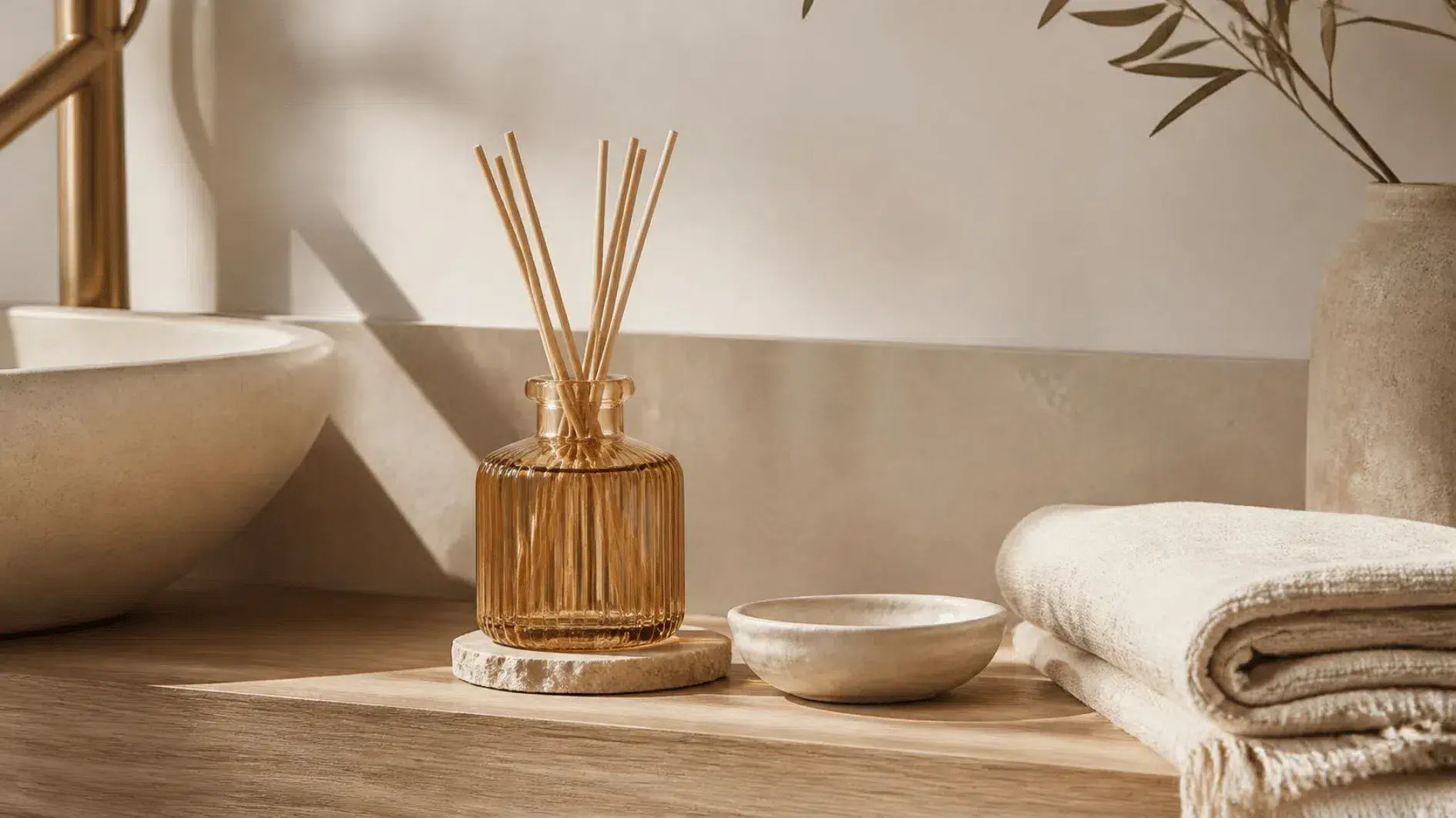
A reed diffuser is one of the simplest ways to scent a room. There is no flame, no power and no timer: just a vessel of scented liquid and a bundle of reeds that slowly draw it up and release fragrance into the air.
That simplicity makes reed diffusers popular for hallways, bathrooms and cloakrooms, but it also means small details, such as how many reeds you use, where you place the bottle and how often you turn the reeds, make a noticeable difference.
This guide explains how reed diffusers work, how to get the strength right, where to place them and how to look after them. For comparing reed diffusers with candles, electric diffusers and room mists, see our home fragrance guide.
How a Reed Diffuser Works
Reed diffusers rely on capillary action. The reeds are porous, so the scented liquid travels up through tiny channels inside them. When it reaches the exposed ends, it evaporates and releases fragrance into the room.
Because nothing is heated, the scent is gentle and continuous, strongest close to the bottle and fading with distance. That makes reed diffusers well suited to small or medium rooms and to spaces you pass through, rather than large open-plan areas.
How to Make a Reed Diffuser Smell Stronger or Softer
- Number of reeds: more reeds release more fragrance; fewer reeds give a lighter scent and make the liquid last longer.
- Turning the reeds: flipping them refreshes the scent, but each turn uses more liquid.
- Room size: a small cloakroom may need only a few reeds; a larger hallway may need the full set.
- Airflow: gentle air movement spreads fragrance; strong draughts make it fade faster.
Start with fewer reeds than you think you need, wait a day and add more if the scent is too faint. Your nose adapts to constant scent, so judge strength when you walk into the room rather than after sitting in it.
Where to Place a Reed Diffuser
| Room | Why it works | Notes |
|---|---|---|
| Hallway or entrance | First impression of the home; steady low scent | Place near, but not in, the path of the front door |
| Bathroom or cloakroom | Small room; no switch to remember | Keep away from the edge of basins and baths |
| Bedroom | Quiet, flame-free scent | Use fewer reeds for a very light scent |
| Landing | Connects upstairs rooms | Choose a scent from the same family as downstairs |
- Place on a stable, level surface where the bottle cannot be knocked.
- Keep it out of direct sunlight and away from radiators, which speed up evaporation.
- Keep it out of reach of children and pets.
- Stand it on a coaster or tray, as drips from reeds can mark wood, paint and some plastics.
How to Turn Reed Diffuser Sticks
Lift the reeds out over a sink or tray, turn them over so the soaked ends are at the top, and place them back in the bottle. Wipe drips from the outside of the bottle and the surface underneath. Once a week is often enough; turning more often gives a stronger burst but empties the bottle faster.
How Long Does a Reed Diffuser Last?
It depends on the size of the bottle, the number of reeds, the room temperature and how often the reeds are turned. Warm, dry rooms and frequent turning shorten its life; fewer reeds and a cooler spot extend it. Follow the manufacturer’s guidance for your diffuser.
Refilling Reed Diffuser Oil and Replacing Reeds
Over time, reeds can become clogged with dust and fragrance residue, and the scent fades even when liquid remains. Replacing the reeds usually restores it. If you refill a vessel, use the refill made for it and fit fresh reeds, rather than mixing a new scent into old ones.
Choosing a Reed Diffuser Scent
Choose a scent from the same fragrance family as the other scents in your home so rooms feel connected. Fresh citrus and green scents suit hallways and bathrooms; soft florals and light woods suit bedrooms and landings. Our home fragrance guide explains fragrance families in more detail.
When to Choose Something Else
Reed diffusers are quiet and low-maintenance, but they cannot be switched off and their reach is limited. For large or open-plan rooms, or when you want scent only at certain times, an electric diffuser with a timer gives more control; see our waterless diffuser guide and ultrasonic diffuser guide, and browse our diffusers.
Common Reed Diffuser Mistakes
- Using every reed in a small room.
- Turning reeds every day and wondering why the bottle empties.
- Placing the bottle in direct sun or on a radiator shelf.
- Standing it directly on wood or painted surfaces.
- Reusing clogged reeds with a fresh refill.
Frequently Asked Questions About Reed Diffusers
How many reeds should I use?
Start with a few and add more over a day or two until the scent is noticeable when you walk into the room. Smaller rooms need fewer reeds.
Why can I no longer smell my reed diffuser?
Your nose adapts to a constant scent, the reeds may need turning or replacing, or the liquid may be low. Step out of the room before judging it.
How often should I flip reed diffuser sticks?
About once a week suits most rooms. Turning more often strengthens the scent but uses the liquid faster.
Are reed diffusers safe?
They have no flame or heat, but the liquid should be kept away from children, pets and delicate surfaces. Follow the product label.
A Quiet Layer of Scent
A reed diffuser works best as a steady background scent in the smaller rooms you pass through: the right number of reeds, a sheltered spot and an occasional turn. For other ways to scent your home, explore our home fragrance guide.
AROMATHERAPY & HOME FRAGRANCE
Explore Home Fragrance
Fragrance guide
Home Fragrance Guide: Diffusers, Candles and Mists by Room
Room by room
Room Diffuser Guide: Choosing Fragrance for Different Spaces
Oil blends
Essential Oil Blends: How to Build Balanced Home-Fragrance Combinations
Waterless diffusers
Waterless Diffusers: How They Work and How to Use Them

Leave a Reply