

SUSTAINABLE HOME · CONSCIOUS CONSUMPTION
Second Hand Bedside Tables: A Practical Buying Guide
A practical guide to buying second hand bedside tables—how to check height, proportions, storage, drawers, stability, water damage, veneer, hardware and the real cost of buying a pair.

Second hand bedside tables are often easier to buy well than larger furniture. They are compact, relatively simple to inspect and frequently available as solid timber, veneered pieces or well-made vintage cabinets that still have plenty of useful life left.
The difficulty is that bedside furniture is used at close range every day. Height, drawer movement, surface condition and storage matter more than they may appear to in a listing photograph. A beautiful pair can still be frustrating if the tops sit too low, the drawers stick or the finish has been damaged by repeated water exposure.
For broader advice on construction, repairs, seller questions and transport, see our second hand furniture guide. For the wider reuse-first approach behind this cluster, see our zero waste lifestyle guide.
Start With Bed Height
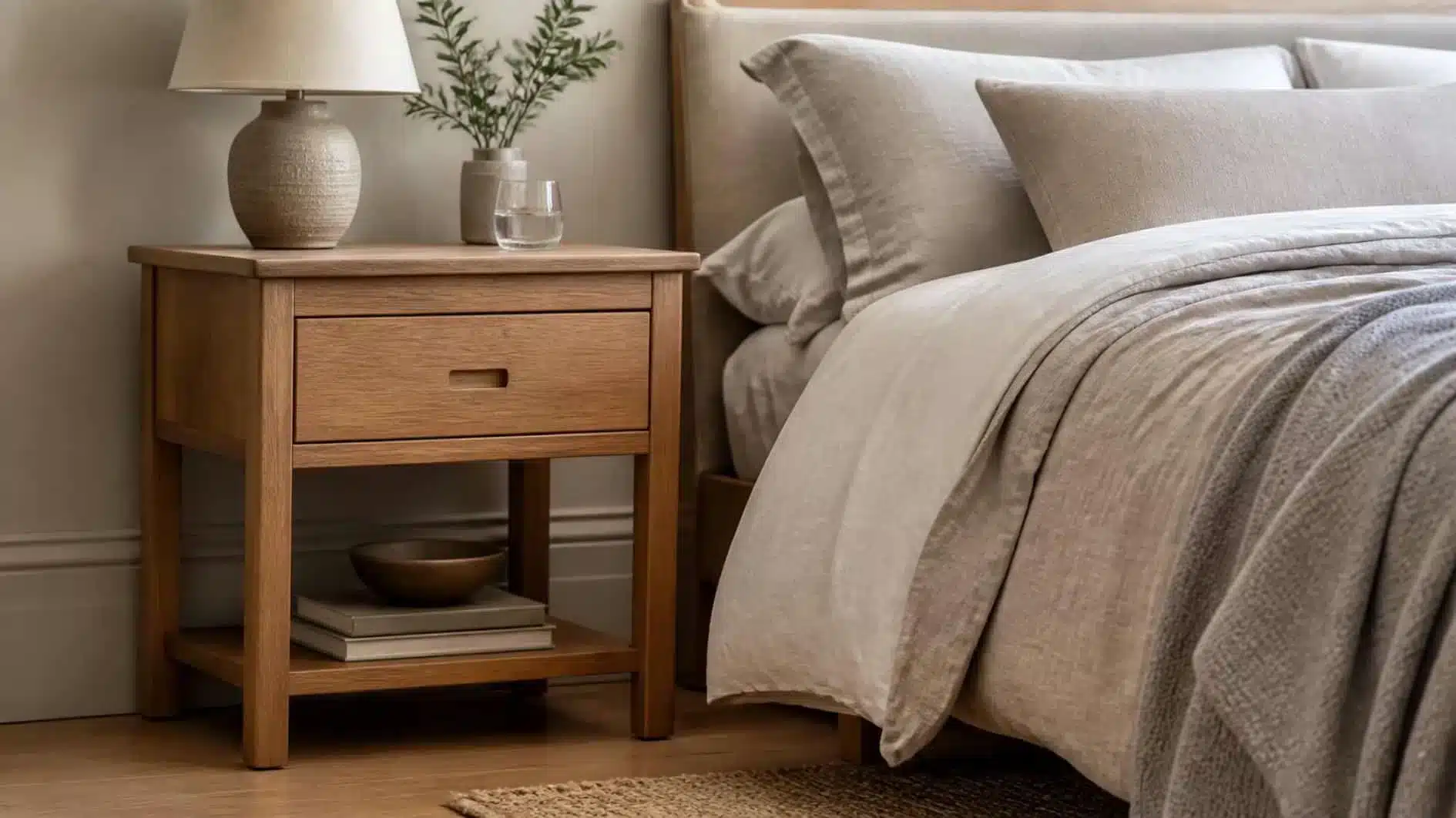
Bedside-table height has a direct effect on how comfortable the piece is to use. Measure from the floor to the top of the mattress with the bed made as it normally is.
A top that sits around mattress height is often convenient because a glass, book or lamp can be reached without stretching significantly up or down. The exact choice is personal, but knowing the mattress height before browsing prevents a common mismatch.
Check Width, Depth and Circulation
Measure the space between the bed and wall, wardrobe, radiator or door. Bedside tables need enough room for drawers or doors to open without blocking circulation.
- Measure the maximum width beside the bed.
- Check depth so the piece does not project awkwardly into a walkway.
- Allow clearance for plugs, sockets and skirting boards.
- Check that drawers can open fully without hitting the bed frame.
Decide Whether You Need One or a Pair
A matching pair can create visual balance, but it is not essential. If only one side of the bed is regularly used, buying a single table may be more practical than purchasing two for symmetry alone.
Mismatched bedside tables can also work well when their heights and visual weight are compatible. Buying two different second-hand pieces may give you better quality than waiting for a perfect matching pair.
Identify the Material and Construction
Ask whether the bedside table is solid timber, veneer, plywood, MDF, metal or a combination. Material affects how the piece handles moisture, how it can be repaired and whether refinishing is realistic.
Solid timber can often be repaired and refinished repeatedly. Veneer can be durable and attractive but requires gentler restoration. Manufactured board is perfectly usable when intact, but swelling from water damage is difficult to reverse.
Check Stability and the Base
Place the table on a level surface if possible and test it gently. Small bedside pieces can hide loose legs or a twisted frame because they are light enough to feel stable until a drawer is opened or weight is placed on top.
- Check each leg for movement or splits.
- Inspect the base and lower rails for cracks.
- Look underneath for improvised repairs or missing fixings.
- Open drawers while watching for the cabinet rocking forward.
Test Every Drawer
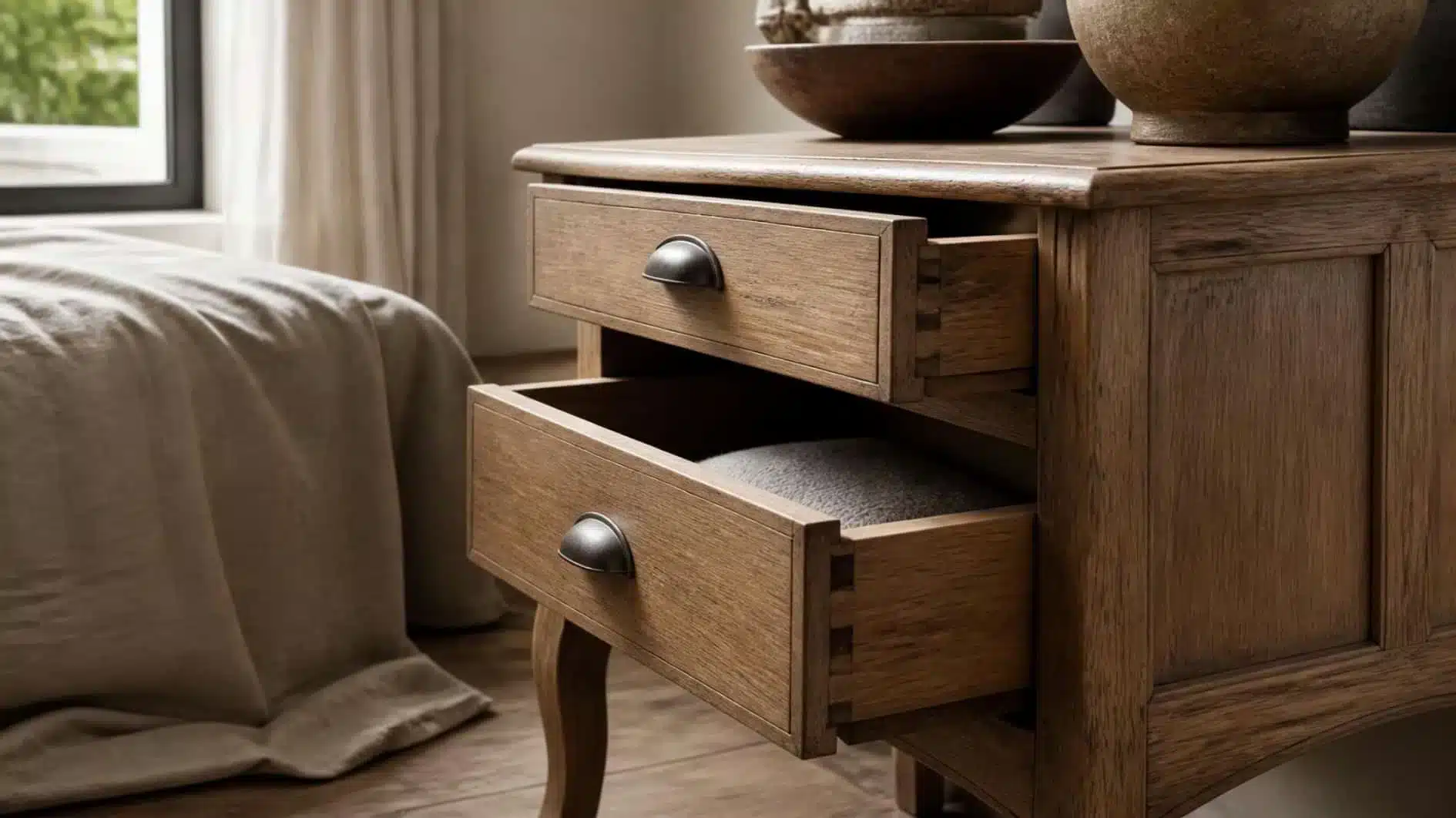
Drawers are one of the most important checks because bedside tables are often used for small items every day. Open and close each drawer several times rather than testing only the top one.
- Check whether the drawer runs smoothly without excessive force.
- Look for sagging or split drawer bottoms.
- Inspect runners for wear, missing stops or replacement screws.
- Check dovetails or other joints for looseness.
- Make sure handles are secure enough for daily use.
Check Doors, Shelves and Interior Storage
If the bedside table has a cupboard, check hinges, catches and shelf supports. Doors should close without needing to be lifted into position, and removable shelves should have all their supports.
Look inside for water staining, old adhesive, damaged lining or signs that liquids have leaked into the cabinet. Internal condition can reveal more about use than the polished exterior.
Inspect the Top for Water and Heat Damage
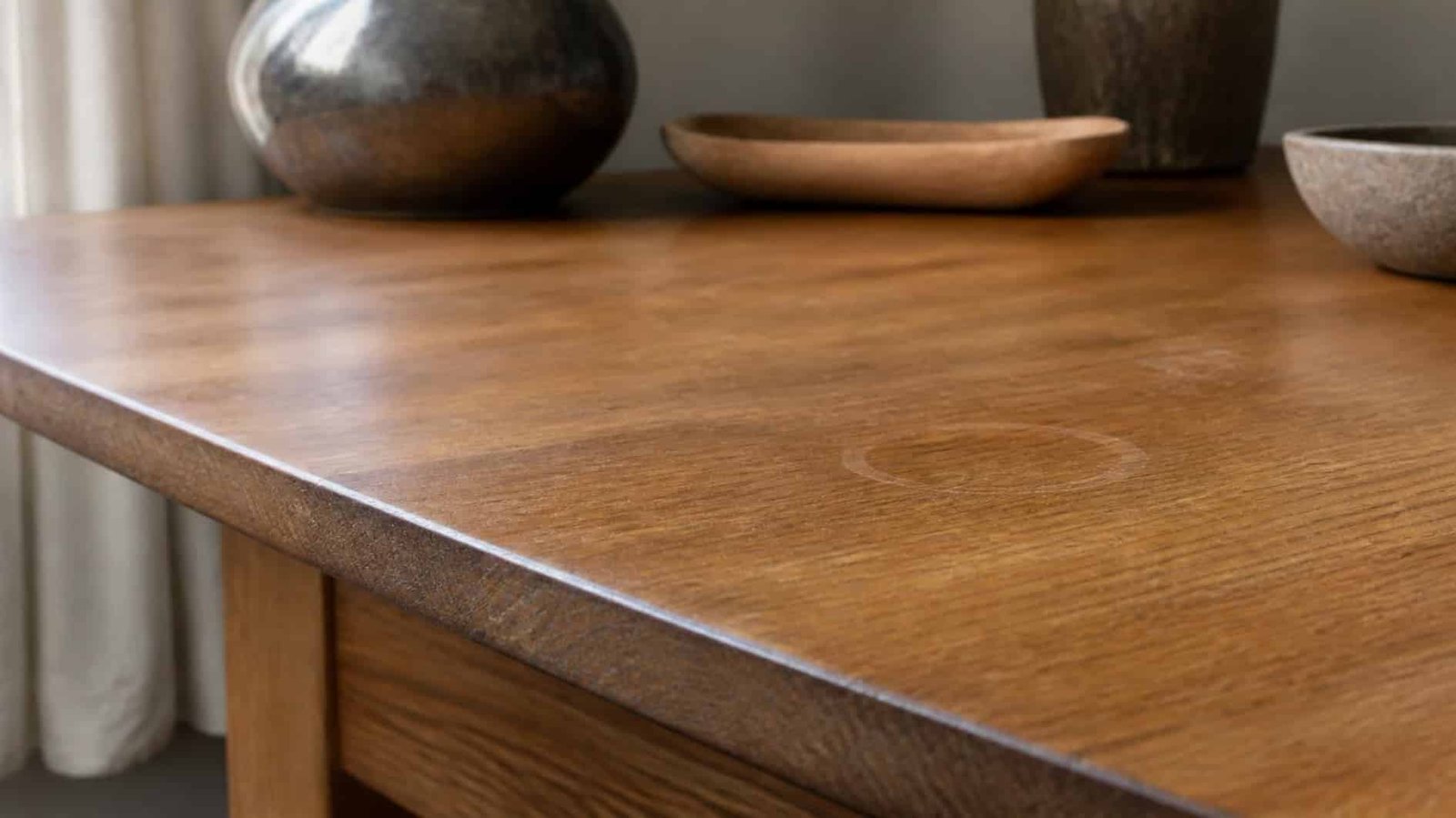
Bedside tops commonly show rings from drinks, marks from plant pots, spilled water, candle heat or repeated cleaning. Some of this is harmless cosmetic wear; some can indicate deeper damage.
Look for swollen edges, lifting veneer, dark moisture stains, cracked lacquer and areas that feel soft or uneven. A small ring can be acceptable if you like the character. Swollen board or widespread delamination is more difficult to repair neatly.
Be Careful With Veneer
Many attractive vintage bedside tables use veneer, and that is not a defect. The important question is whether the veneer remains well bonded.
Check edges and corners for lifting, bubbles and missing sections. If you plan to refinish the piece, remember that the veneer may be thin enough to sand through quickly. A lighter-touch restoration may preserve it better.
Inspect Handles, Knobs and Fixings
Original hardware can add character, but replacement parts are not always easy to match. Check whether both handles in a pair are present and whether fixing holes have been enlarged or damaged.
If a handle is missing, measure the distance between fixing holes before buying a replacement. Old fittings can use unusual spacing that limits easy substitutions.
Check That a Pair Really Matches

Listings described as a pair can still contain small differences in colour, height, hardware or construction. Place the pieces side by side where possible.
- Compare overall height and width.
- Check whether drawer fronts align at the same height.
- Look for different replacement handles.
- Compare fading if one piece has been exposed to more sunlight.
- Check whether one has more water or heat damage than the other.
Stone, Marble and Glass Tops
Stone, marble and glass-topped bedside tables can work beautifully second hand, but inspect them differently from timber.
Check stone for cracks, chips and old repairs, especially near corners and fixing points. Inspect glass from several angles for edge chips, deep scratches or cracks. Confirm how the top is secured and whether it can be transported separately.
Painted and Refinished Bedside Tables
A painted bedside table can be a good buy if the finish is sound, but do not assume paint hides only cosmetic wear. Check underneath and inside drawers for the original construction and any structural repairs.
Older furniture may have an unknown coating history. If you intend to strip or sand it, use suitable precautions and seek specialist advice where the finish is uncertain rather than creating dust from unknown old coatings casually.
Check Odours, Damp and Pests
Open drawers and cupboards and smell the interior. Persistent mustiness, smoke or perfume can be difficult to remove from porous timber and linings.
Look around joints, drawer corners and the underside for unexplained debris, active holes or evidence of infestation. Do not bring a questionable piece into the bedroom simply because it is inexpensive.
Estimate Repair and Refinishing Costs
Small bedside tables can make appealing restoration projects, but the numbers still matter. Two pieces mean twice the hardware, twice the drawer work and potentially twice the refinishing time.
- Simple: cleaning, tightening hardware, waxing or replacing a standard knob.
- Moderate: regluing a loose joint, repairing a drawer runner or touching up a small veneer defect.
- More involved: widespread veneer loss, severe water damage, professional refinishing or rebuilding damaged drawers.
Choose Storage for How You Actually Live
Do not buy three drawers simply because a piece looks more substantial. Think about what you keep beside the bed: a book, glasses, medication, chargers, hand cream or larger items that need closed storage.
If you prefer a visually quiet bedroom, one drawer and a cupboard may work better than an open shelf. If you use the top for a lamp, make sure enough surface remains for everyday essentials without becoming cluttered.
Plan Collection and Transport
Bedside tables are easier to move than dining tables, but corners, stone tops and old joints still need protection. Remove loose drawers before carrying the cabinet and transport stone or glass tops separately where appropriate.
Bring blankets or padding so two matching pieces do not rub against each other in the vehicle. If the finish is delicate, do not rely on loose plastic bags as the only protection.
Questions to Ask the Seller
- What are the exact height, width and depth?
- Are the pieces solid timber, veneer or manufactured board?
- Do all drawers and doors open properly?
- Is there any water damage, swelling, odour or damp?
- Have they been repainted, repaired or refinished?
- If sold as a pair, are both pieces the same dimensions?
- Are all original handles and fittings present?
Common Buying Mistakes
- Ignoring mattress height.
- Buying a pair without checking both pieces individually.
- Assuming water rings are purely cosmetic.
- Planning aggressive sanding without checking for veneer.
- Accepting sticky drawers because the cabinet looks attractive.
- Buying more storage than you actually need.
- Ignoring odours inside drawers.
- Underestimating the cost of restoring two matching pieces.
Second Hand Bedside Table Checklist
- Measure mattress height and available bedside space.
- Check width, depth and drawer clearance.
- Confirm the material and construction.
- Test wobble, legs and base.
- Open every drawer and door.
- Inspect the top for water, heat and veneer damage.
- Check handles, fixings and drawer runners.
- Inspect inside for odour, damp or pests.
- Compare both pieces carefully if buying a pair.
- Add repair and refinishing costs before deciding on value.
Frequently Asked Questions About Second Hand Bedside Tables
What height should a bedside table be?
A bedside table that sits around the height of the top of the mattress is often convenient, but personal preference, bed-frame design and storage needs matter. Measure your actual mattress height before buying.
Should bedside tables match?
No. Matching pairs create symmetry, but different bedside tables can work well if their height, scale and visual weight are compatible with the bed and room.
Are water rings a problem on second hand bedside tables?
Light rings may be cosmetic. More significant moisture damage can cause swelling, lifting veneer or dark staining, so inspect the surface and edges closely rather than judging from the mark alone.
Is veneer suitable for a bedside table?
Yes. Veneer can be durable and attractive when it is well bonded and dry. Check for lifting edges, bubbles and water damage, and use a cautious refinishing approach.
Is it better to buy a pair of second hand bedside tables?
Only if you need two and both pieces are in good condition. Do not buy a pair purely for symmetry if one side of the bed would be better served by more space or a different piece.
Choose for Daily Use, Not Just Appearance
The best second hand bedside tables are easy to live with every day. They sit at a useful height, fit the available space, open smoothly, remain stable and have surface wear you can either accept or repair realistically.
Inspect both the visible top and the less glamorous details inside drawers, underneath the cabinet and around the base. A well-chosen pair—or a well-chosen single table—can stay useful for years without needing to look newly manufactured.

Leave a Reply