

SUSTAINABLE HOME · DECLUTTERING & SIMPLIFYING
Decluttering Checklist: What to Keep, Donate, Sell or Recycle
A clear, practical set of decisions for making space without unnecessary waste—what to keep, repair, donate, sell or recycle, and how to finish the job room by room.
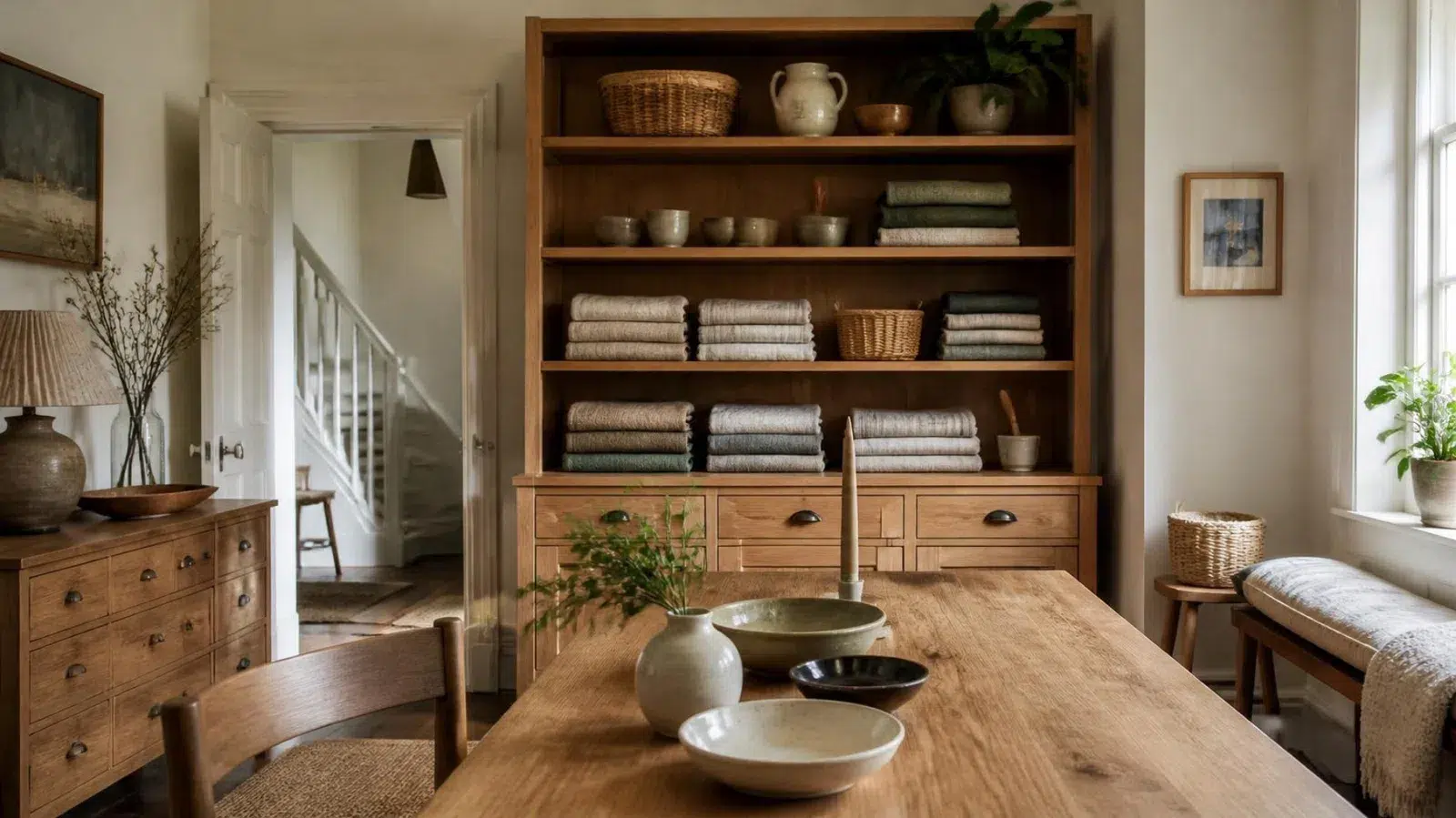
A decluttering checklist should help you finish a useful task, not create more pressure or more waste. It should make decisions clearer: what belongs in your home, what needs attention and what can responsibly move on.
This guide offers five realistic choices and a room-by-room checklist, without requiring you to empty every cupboard, discard sentimental possessions or buy new organisers first. For the broader approach, read our practical guide to decluttering your home.
How to Use This Decluttering Checklist
Use this checklist for one defined area at a time, rather than as an instruction to empty your entire home. Choose a surface, drawer, cupboard or category you can finish in one session. Make the decisions, put kept items away and arrange the next step for outgoing belongings before moving on.
- Define the area: for example, the bathroom cabinet, not the entire upstairs floor.
- Keep an empty surface or clear working area available for sorting.
- Use five decisions: keep, repair or decide later, donate or gift, sell, and recycle or dispose safely.
- Give every item a destination; avoid leaving open-ended piles.
- Tick off the tasks you have genuinely completed rather than those you intend to do.
Before You Start: Five-Minute Preparation
A little preparation prevents a manageable task from becoming a mess. Arrange a small number of containers or clearly marked spaces for your decisions. You do not need to buy dedicated storage boxes.
- Choose a single area and a realistic finishing point.
- Have a bag or box for suitable donations, and another for items that belong in a different room.
- Check whether your local council has a specific collection route for electricals, batteries or textiles.
- Keep documents containing personal information out of ordinary recycling until safely disposed of.
- Leave clear circulation space and avoid blocking doorways with sorting piles.
The Five-Decision Sorting Method
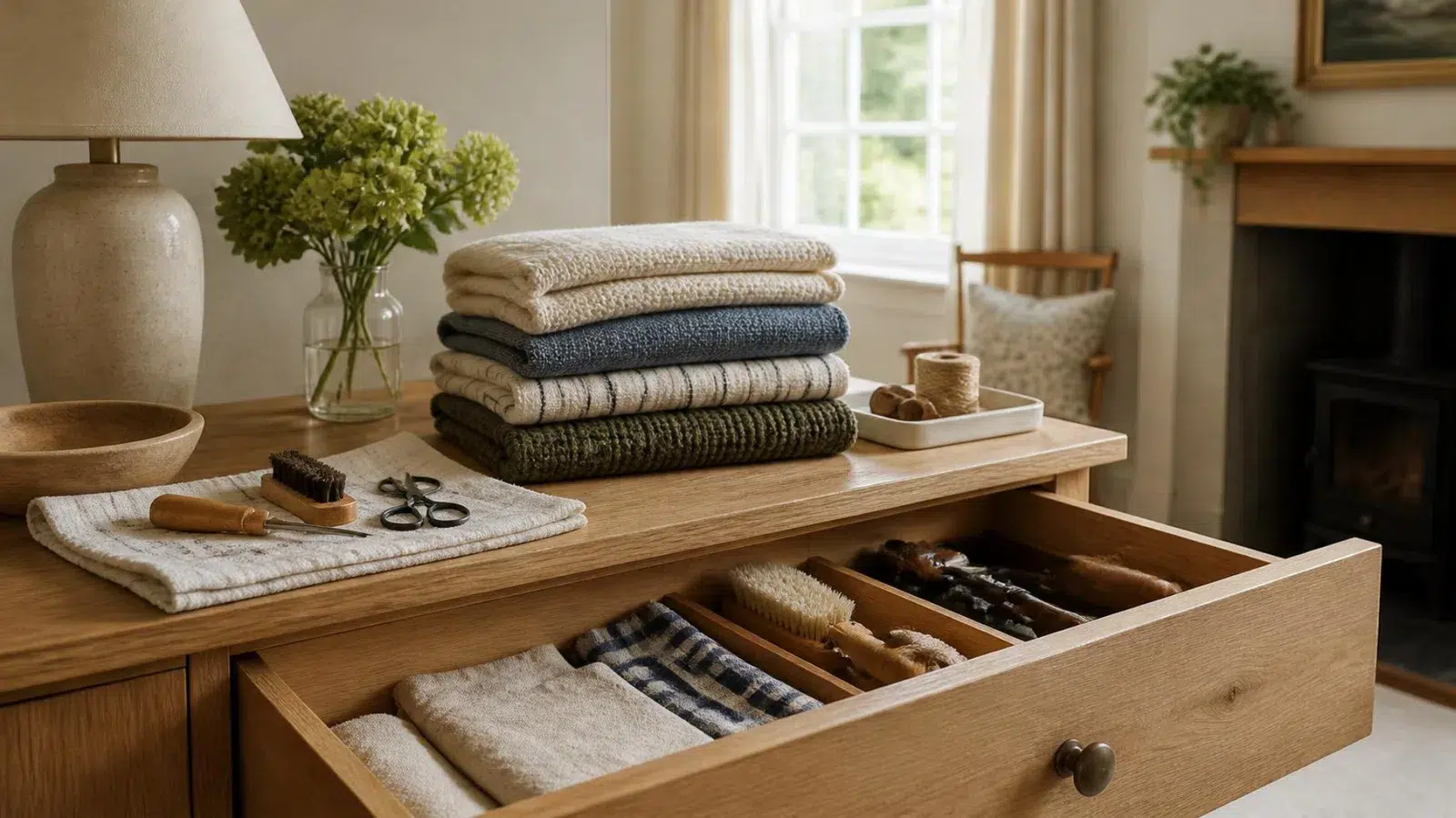
| Decision | Keep in mind | Practical next step |
|---|---|---|
| Keep | Useful, valued, safe, needed, or difficult to replace | Give it an accessible and realistic home. |
| Repair or review | Useful but needs work, or genuinely uncertain | Identify the repair and set a specific review date. |
| Donate or gift | Clean, safe, functional and appropriate for another user | Check that the recipient or organisation will accept it. |
| Sell | Good condition and worth the time, fees and collection arrangements | Photograph honestly, describe condition and set a realistic deadline. |
| Recycle or dispose | Cannot sensibly be reused or repaired | Use the correct local or specialist route. |
If a possession creates uncertainty, you do not have to discard it immediately. A small, defined review box can help—but it should be a temporary decision tool, not permanent overflow storage.
Keep: Questions Worth Asking
Keeping an item is an active decision. It may be practical, sentimental, seasonal or essential even if you do not use it every week. Avoid arbitrary rules such as removing anything untouched for a fixed number of months.
- Does this item serve a genuine purpose or carry value I want to retain?
- Is it in a condition I can use safely?
- Do I already own something that performs the same job?
- Would I choose to keep it if I had to give it a proper place?
- Is it a shared item that requires someone else’s agreement?
Keep seasonal equipment, important records and meaningful objects when they earn their place. The goal is a home you can manage, not the smallest possible inventory.
Repair or Review: Avoid an Endless Maybe Pile
Some objects warrant repair: furniture with a loose fitting, a garment with a torn seam or a lamp that needs a standard replaceable component. Others may cost more to repair than they are worth to you.
- Write down the specific repair required.
- Consider materials, labour, safe use and realistic time.
- Check if a local repair service is available.
- Give uncertain items a defined place and a date to reassess.
- Avoid undertaking electrical or other safety-critical repairs unless appropriately competent.
Our sustainable furniture guide explains the significance of replaceable parts and repairability when assessing furniture for long service.
Donate or Gift: Pass On Only Suitable Items
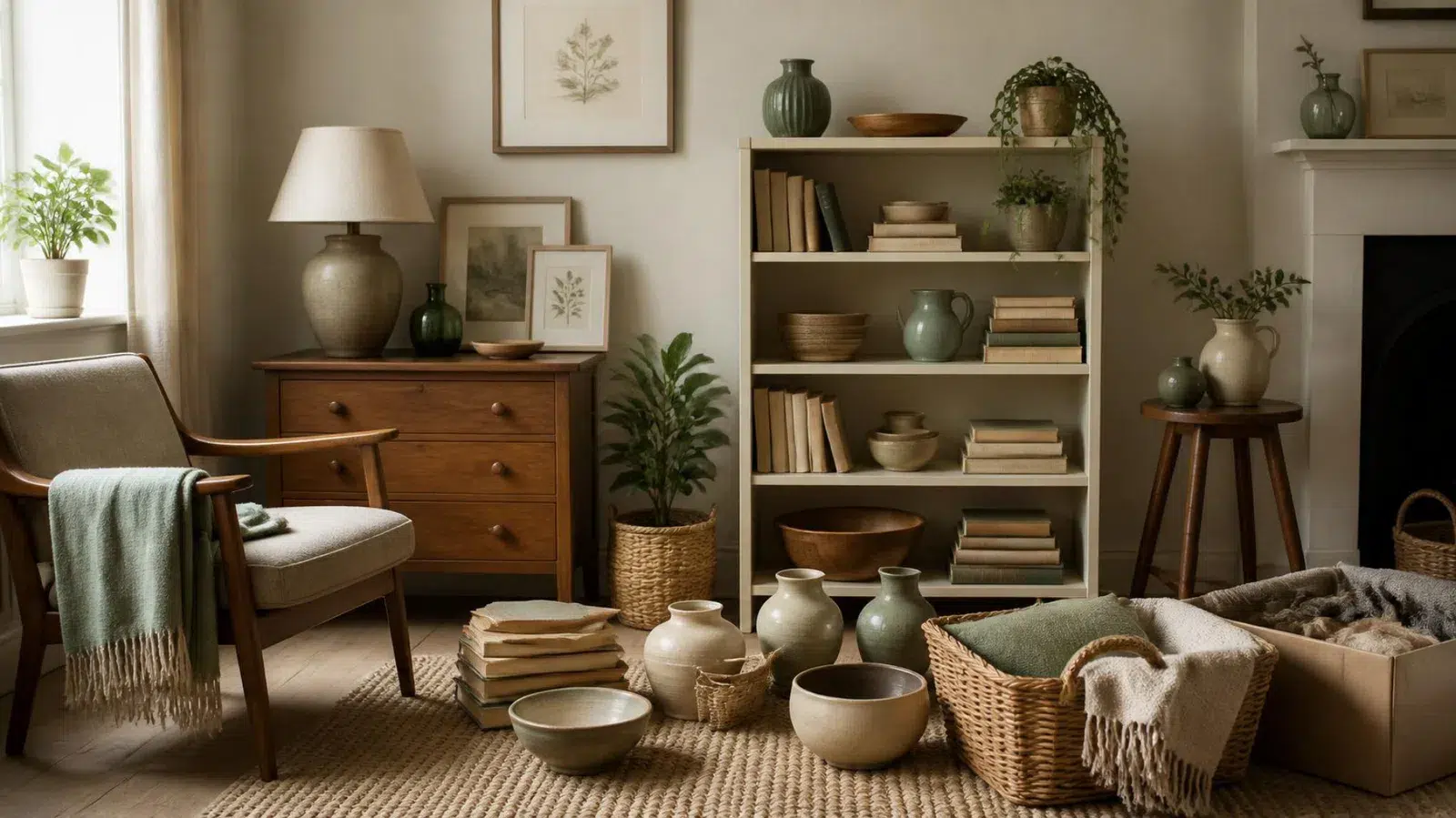
Donating should help a new user, not transfer a disposal problem to a charity or community group. Different organisations accept different types and conditions of goods, particularly for furniture, electricals, soft furnishings and children’s items.
- Check that items are clean, complete, working and safe.
- Confirm acceptance rules before delivering bulky or specialised items.
- Keep components, manuals and relevant accessories together where possible.
- Do not leave goods outside closed charity shops or donation points.
- Consider gifting locally if the object is useful but unlikely to sell.
Sell: Know When It Is Worthwhile
Selling makes sense when an item has realistic resale value and you can manage photographs, messages, collection and any platform fees. It may not be the best route for every small household object.
- Take clear photographs showing the actual condition.
- Disclose damage, repairs, dimensions and missing parts.
- Choose a realistic price and collection arrangement.
- Keep personal data and household access details private.
- Set a sensible deadline, then reconsider donation or another route if it does not sell.
If you are selling tables or storage furniture, the condition checks in our second hand furniture guide can help you prepare an accurate listing.
Recycle or Dispose: Check the Correct Route
Recycling rules vary by local authority and material. General household recycling may not accept items such as batteries, electrical equipment, some plastics, paint, medicines or certain textiles.
In the UK, the GOV.UK recycling collections service helps identify local council arrangements. The Recycle Now locator can help you find material-specific options.
- Check local rules for packaging and containers rather than assuming a recycling logo guarantees kerbside acceptance.
- Use appropriate routes for batteries and electricals.
- Seek pharmacy or other authorised routes for medicines and sharps.
- Dispose securely of sensitive documents and electronic devices after addressing personal data.
- Do not donate broken or unsafe goods simply to avoid disposal.
Kitchen Decluttering Checklist
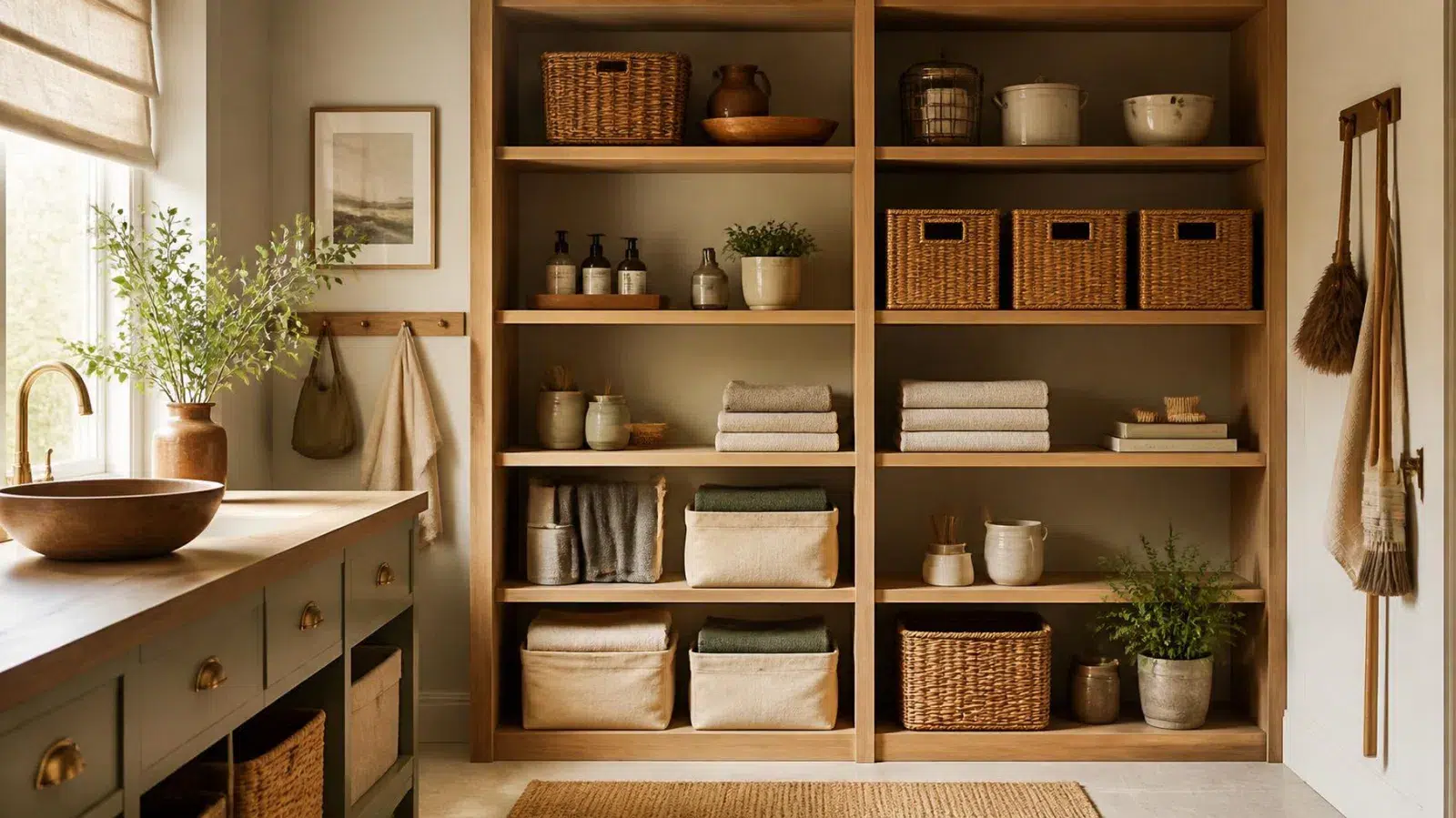
- Clear one worktop area and return only everyday equipment.
- Group cooking tools and assess genuine duplicates.
- Match food-storage containers with their lids.
- Check pantry supplies before buying replacements.
- Keep frequently used utensils close to their tasks.
- Review worn or unsafe kitchen equipment.
- Set aside usable surplus items for appropriate gifting.
- Reorganise shelves only after deciding what remains.
Do not discard safe food just to create visual space. Review storage, date information and food-safety requirements individually.
Living Room Decluttering Checklist
- Clear side tables and decide which objects genuinely belong there.
- Sort books, magazines and paper into meaningful categories.
- Review decorative objects without requiring empty shelves.
- Check whether media accessories and cables still have a purpose.
- Put away items that belong in another room.
- Assess repairable furniture before considering replacements.
- Leave sensible access and circulation space.
Bedroom Decluttering Checklist
- Keep everyday bedside essentials accessible.
- Remove items that have gathered around the bed without a purpose.
- Review clothing one category at a time.
- Separate garments needing simple repairs.
- Sort out damaged linens and check textile collection options.
- Keep important or sentimental possessions deliberately.
- Check under-bed storage for forgotten duplicates.
- Avoid buying extra bedside storage before reviewing belongings.
A bedside table that fits the room and opens properly may be enough without additional storage. If it genuinely needs replacing, see our second hand bedside tables guide.
Bathroom Decluttering Checklist
- Group daily toiletries by use.
- Review duplicate unopened supplies.
- Check expiry and condition where relevant.
- Remove empty packaging and clean shelf surfaces.
- Keep medications safe and use an appropriate disposal route for unwanted medicines.
- Check whether storage containers tolerate bathroom humidity.
- Make everyday items accessible without overcrowding the sink.
Hallway and Entryway Checklist
- Return coats and shoes not needed for the current season.
- Give keys, bags and post a practical place.
- Remove empty packaging and objects waiting indefinitely to be moved.
- Keep safe access to doors, stairs and walkways.
- Arrange outgoing donation or collection bags promptly.
- Check whether existing hooks or shelving are enough before buying new storage.
Paperwork and Home Office Checklist
- Group documents requiring action.
- Identify records that must be kept.
- Check retention requirements before destroying important documents.
- Shred or securely destroy confidential paper.
- Review old charging cables and accessories by device.
- Keep working supplies near where they are used.
- Give occasional-use equipment an accessible home.
Do not discard shared paperwork, legal records or another person’s belongings without proper authorisation.
Sentimental Objects: A Gentler Checklist
Sentimental possessions are often best left until the practical categories are under control. Taking more time is reasonable, particularly when items relate to family history, loss or important experiences.
- Identify why the object matters to you.
- Decide whether you want to display, protect or store it.
- Check whether physical preservation is important; a photograph is not always a substitute.
- Consider passing an item to a specific person who wants it.
- Avoid making rushed decisions under pressure from a deadline or another household member.
Shared Homes: Agree Before Removing Things
In shared homes, one person’s unused object can still have value to someone else. Agree on how common spaces should function, then ask the owner about personal belongings before making decisions.
- Clarify which items are shared and which belong to individuals.
- Agree on practical storage for everyday shared belongings.
- Let other people make choices about their possessions.
- Design systems that are easy for the household to maintain.
- Allow for accessibility, mobility and different routines.
How to Finish the Outgoing Items
A tidy room can still be undermined by a hallway filled with donation bags. Treat the outgoing stage as part of the task, not something to address indefinitely later.
- Book or schedule suitable collections where needed.
- Check opening times and donation rules before travelling.
- Prepare honest listings if selling.
- Keep specialist waste separate from general rubbish.
- Complete transfers and remove outgoing items from active living areas.
- Review the amount remaining before considering extra furniture.
Keep the Space Clear Without Repeating the Whole Job

Once a room works, maintenance should be light. A brief reset can return daily items to their places; seasonal reviews catch things that gradually become irrelevant.
- Return items to their homes at a convenient daily or weekly point.
- Check duplicates before restocking supplies.
- Revisit the spaces where objects repeatedly accumulate.
- Keep the route for donations and recycling straightforward.
- Change a storage system if people consistently struggle to use it.
For a full room-by-room process, start with our how to declutter your home guide. This checklist is designed to support decisions and finishing the task, not to impose perfection.
Frequently Asked Questions
What belongs on a decluttering checklist?
A useful checklist covers where to start, how to choose what to keep, how to handle repairs and outgoing items, and what to do in each room. It should end with assigning homes to kept belongings and actually removing items that are leaving.
Should I donate or sell my unwanted belongings?
Sell when condition and value make the effort worthwhile. Donate or gift safe, usable belongings when a suitable recipient can genuinely use them. Neither option is appropriate for unsafe or unusable goods.
How do I declutter without creating waste?
Prioritise keeping useful things in service, making sensible repairs and passing suitable items on. For anything that cannot be reused, follow the relevant local or specialist disposal route.
Do I need special storage boxes?
No. Review belongings first and use existing drawers, shelves and cupboards if they work. Only buy additional storage when there is a defined practical need.
Is it better to declutter by room or category?
Either can work. If time and space are limited, start with one defined part of a room. A category-based review can help spot duplicates once you have enough capacity to bring the relevant items together.
The Best Checklist Ends With an Action
A useful decluttering checklist makes room for considered decisions rather than rushed disposal. Keep what you need and value, plan realistic repairs, pass suitable things on, recycle correctly and finish the area you started.
The goal is not a photograph-ready empty space. It is a home where the things you keep are easier to find, use and maintain—and where unwanted possessions genuinely move on rather than changing rooms. For the things you do keep, our everyday essentials are chosen to be used, not stored.

Leave a Reply