

SUSTAINABLE HOME · DECLUTTERING & SIMPLIFYING
How to Declutter Your Home: A Practical Room-by-Room Guide
Clearer spaces without an overwhelming clear-out: decide what to keep, work room by room, avoid unnecessary purchases and find sensible next uses for unwanted belongings.
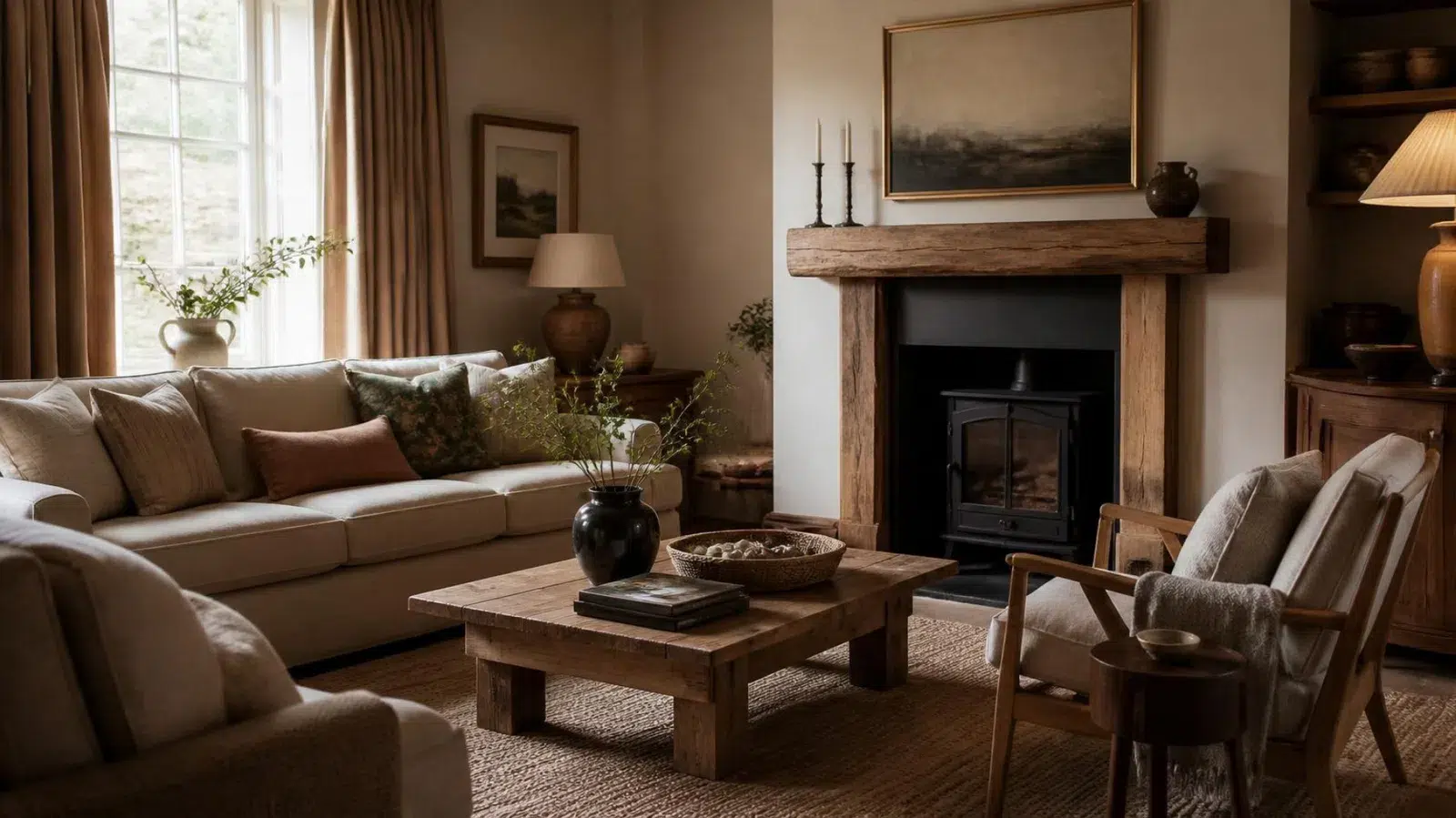
Learning how to declutter your home does not require an empty room, a strict item count or a weekend spent pulling everything out of cupboards. It begins with deciding what you use, value and need, and arranging those belongings so your home works more easily.
This guide offers a room-by-room approach without an all-or-nothing reset. It brings together practical decisions, responsible ways to pass things on and simple maintenance habits that can prevent clutter returning.
The underlying principle is the same as in our sustainable materials guide: use what already works, repair when sensible and make new purchases only when there is a clear need.
What Decluttering Your Home Really Means
Decluttering is the process of deciding what belongs in your home, what still earns space and where possessions should live. It is not the same as organising: putting unused objects into matching boxes can make a room look tidier while leaving the underlying problem untouched.
The aim is not to count how many things you remove. A useful outcome is a room that is easier to clean, navigate and maintain, with the belongings you use and care about accessible rather than buried. A full house can still be considered; a sparsely furnished one can still be impractical.
Start Small Enough to Finish

Choose an area you can complete in one sitting: a bedside drawer, the bathroom shelf, a kitchen worktop or one section of a bookcase. Starting with a manageable area lets you make decisions, put items away and remove outgoing belongings without leaving the room in pieces.
Set a realistic boundary before beginning. Fifteen or twenty minutes can be sufficient for a defined task. If you have the energy and space to continue, move to another area—but only after the first is properly finished.
- class=”wp-block-list”
- Pick one surface or container, not a whole room.
- Keep a temporary place for items that belong elsewhere.
- Do not empty several cupboards at once.
- Finish by returning the items you are keeping and dealing with the outgoing pile.
Use Four Clear Decisions
A simple decision method prevents everything from becoming an indefinite “maybe”. Give each object one of four outcomes: keep and assign a home, repair or decide by a specific date, pass on responsibly, or dispose of safely when it has no useful next life.
The key is that each category leads to an action. An endless donation bag or repair box can create another area of clutter if it never leaves the hallway.
| Decision | Next action |
|---|---|
| Keep | Give the item an accessible and realistic place to live. |
| Repair or decide | Note what is needed, the likely cost and a review date. |
| Pass on | Donate, gift or sell only if the item is appropriate for another person. |
| Dispose safely | Follow the correct local recycling or waste route for the specific material. |
How to Decide What to Keep
Ask whether an object is useful, loved, needed for an identifiable purpose or genuinely difficult to replace. Frequency of use matters, but it is not the only test. Seasonal items, documents and specialist equipment can be worth keeping even when they are rarely touched.
Avoid rules that reduce every decision to a rigid time limit. Instead, check whether there is a clear role for the object and a sensible place for it. If an item is valuable or sentimental, consider it deliberately rather than forcing a fast decision.
Reduce What Comes Into the Home
Decluttering is easier to maintain when the incoming flow slows down. Before buying another organiser, decoration or duplicate kitchen tool, ask what problem it solves and whether something you already own does the job.
This is closely related to our zero waste lifestyle guide: avoiding unnecessary purchases and keeping useful objects in circulation are often more practical than replacing everything with products advertised as sustainable.
- class=”wp-block-list”
- Pause before buying storage for belongings you may not want to keep.
- Check cupboards before buying household supplies and cleaning products.
- Repair useful possessions when the effort and cost make sense.
- Choose versatile pieces that can adapt as your needs change.
Declutter the Kitchen

Begin with an area you use every day, such as the worktop or a single utensil drawer. Keep cooking equipment accessible according to how often you actually use it, rather than where it looks best in a photograph.
Group similar utensils, pans and food-storage containers so duplicates become obvious. Check food dates and storage conditions carefully; do not dispose of safe, usable food merely because you are clearing a shelf.
- class=”wp-block-list”
- Match food-storage lids to containers and assess whether incomplete sets remain useful.
- Move rarely used appliances out of daily worktop space when storage allows.
- Store everyday utensils near where they are used.
- Check pantry categories before buying duplicate ingredients.
Declutter the Living Room
Look at how the space is used for sitting, reading, conversation, entertainment and everyday family life. Start with the surfaces that gather objects without a clear home: side tables, shelves, media units and windowsills.
Keep the objects that add meaning or support the room’s activities. Relocate items that belong elsewhere. A quiet room does not require empty shelves; it requires a sensible balance between furniture, open space and the things you actually enjoy.
Before replacing storage furniture, measure what needs to be housed. A smaller number of useful items may fit in a cabinet you already own.
Declutter the Bedroom

Begin with the bedside area, then move to clothing storage and surfaces. Keep the objects you reach for when going to bed or waking up, and give occasional-use belongings a place away from the immediate bedside.
Check whether your bedside table, wardrobe and drawers are being asked to hold more than they can accommodate. If the furniture itself is unsuitable, a sound second-hand replacement may be worth considering—but avoid treating new furniture as the first step.
Our second hand bedside tables guide explains how to assess practical dimensions, drawers and condition when an existing piece genuinely needs replacing.
Simplify Clothes and Textiles
Work one clothing category at a time rather than emptying your entire wardrobe. Consider fit, comfort, current condition, weather and what you actually wear. Special-occasion and seasonal clothing deserve different treatment from everyday items.
Repair loose buttons, minor seams or small damage when it is practical. Pass on wearable items through suitable reuse channels and check what local textile collections accept for items that cannot be reused. Do not assume every charity shop can take damaged clothing.
- class=”wp-block-list”
- Keep clothes that fit your present needs, not just a hypothetical future routine.
- Check whether similar pieces have distinct uses.
- Separate repairs from items ready to wear.
- Fold or hang clothing so you can see what is available.
Declutter Bathroom Storage
Bathroom cupboards often contain expired toiletries, duplicate products and half-finished bottles. Group everyday essentials together, then assess unopened reserves and items that no longer suit your routine.
Read disposal advice for medicines and potentially hazardous products rather than pouring everything down the sink or putting all packaging into one recycling bin. Medicines and sharps require appropriate local disposal routes, often via pharmacies or dedicated services.
Keep frequently used items where they remain dry and safe. Choose storage suited to a humid room rather than adding baskets and boxes that quickly deteriorate.
Simplify Hallways and Entryways
Hallways work best when they support arriving and leaving. Assess shoes, coats, bags, keys, post and accessories against available space and the way your household actually enters the home.
Keep current-season items within easy reach and move the rest to suitable storage. A tray for keys or a defined place for post can help, but only if it is easy for everyone who shares the space to use.
Avoid crowding walkways with temporary donation boxes, footwear or furniture. Clear circulation has a practical value beyond appearance.
Declutter Paperwork and Home Workspaces
Sort paper into action required, records to retain and material that can be securely discarded. Keep essential documents accessible but protected, and avoid discarding financial, legal or medical records without checking relevant retention needs.
Use secure shredding or a trusted confidential-waste route when disposing of sensitive paper. For digital files, clearer names and a small number of meaningful folders are often more useful than downloading another organisation app.
Keep the physical desk focused on equipment used for current work; store supplies by task rather than spreading them across multiple drawers.
Decluttering in a Shared Home
Shared space requires shared decisions. Do not donate, discard or reorganise someone else’s belongings without their agreement, even when an item appears unused. A more effective approach is to agree on the function of common spaces, accessible storage and a simple reset routine.
For children’s belongings, involve the appropriate adults and, when suitable, the children themselves. Focus on making toys and supplies easy to find and put away rather than imposing an arbitrary quantity target.
Handle Sentimental Objects Without Rushing
Photographs, inherited furniture, children’s work and travel keepsakes carry a different kind of value. If decisions feel difficult, set them aside until the more straightforward areas are finished. The point is to reduce friction, not to discard meaningful history.
You might keep a curated set, improve storage, display a particularly valued object or pass something to a person who will appreciate it. Avoid replacing a physical memory with a photograph unless that genuinely feels right for you.
Donate, Sell or Gift Responsibly
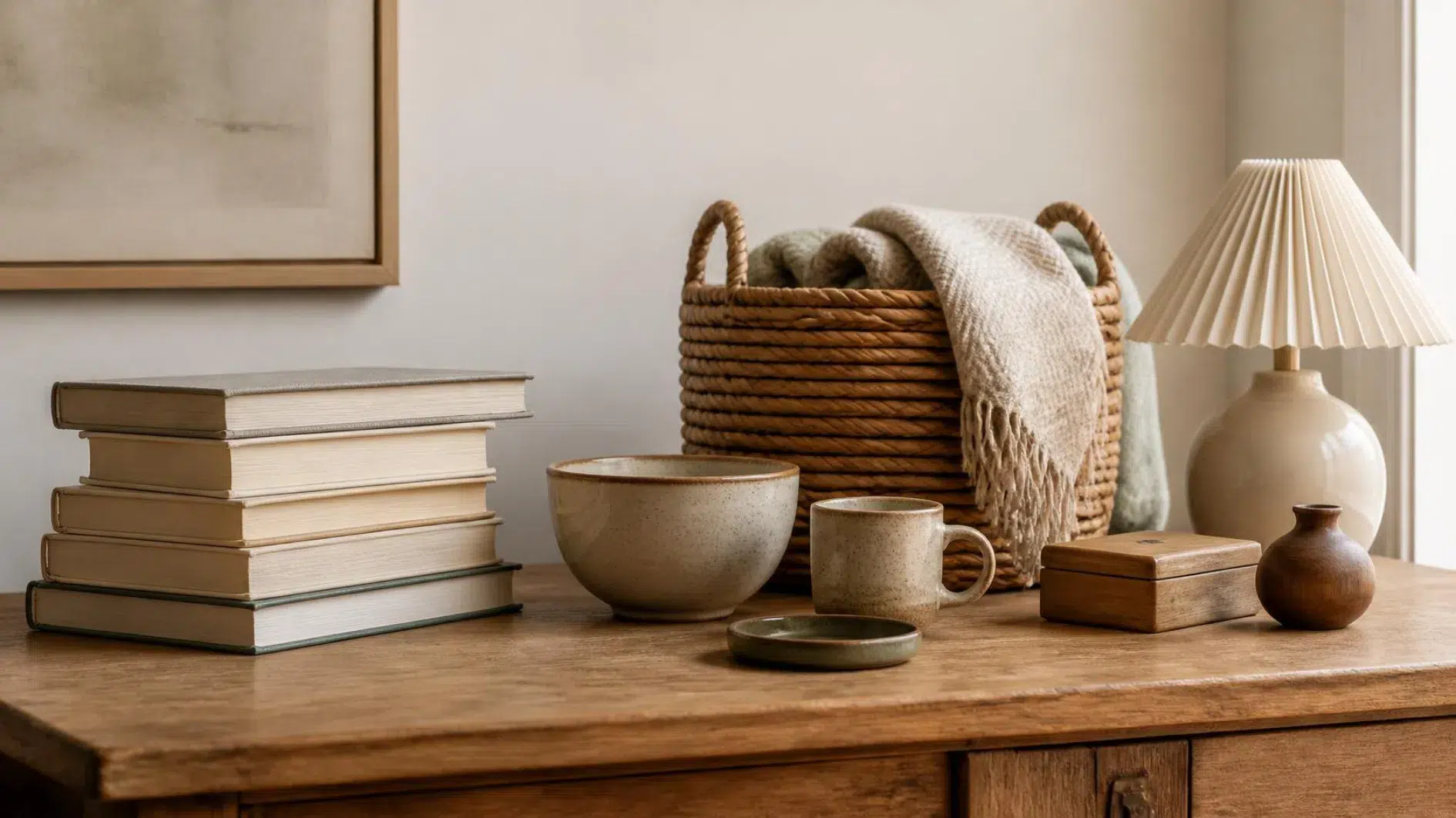
Passing an object on is useful only when it has a realistic next user. Donation centres and charities have acceptance rules, collection limits and safety requirements. Contact them before leaving large furniture or bags of unsuitable goods.
Selling can be worthwhile for items in good condition, but factor in photographs, messages, packaging and collection. If it will sit for months waiting for an uncertain sale, gifting it locally may better suit the original goal.
For larger pieces, inspect condition and assess safe collection. Our second hand furniture guide helps buyers understand what matters, which can also help you describe items accurately when passing them on.
Recycle What Cannot Be Reused—Correctly
Local collection rules differ. For items that cannot be kept, repaired or passed on, check the relevant council collection and specialist recycling routes rather than placing everything in household recycling.
For England and Wales, GOV.UK’s recycling collections service helps residents identify their local authority. The Recycle Now locator explains which materials may be collected locally and where other recycling facilities can be found.
Electricals, batteries, textiles, paint, medicines and bulky furniture can require different arrangements. Emptying the home should not mean sending reusable objects or specialist waste into an unsuitable bin.
Avoid Moving Clutter Into Another Room
A common problem is finishing one room by piling everything into a hallway, garage or spare bedroom. That can make the first space look better without reducing the amount that needs attention.
Use a limited transfer box for items with a known destination. At the end of each session, take them to their intended places. If an object has no sensible home, revisit whether keeping it is still the right decision.
Choose Storage After Decluttering
Storage is a tool, not the main objective. Once you know what remains, measure the possessions and the space before buying boxes, shelves or furniture. Clear containers can help with infrequently used supplies; drawers and cupboards can keep daily rooms visually quieter.
Keep heavier items lower down, place frequently used belongings at accessible heights and avoid stacking containers so deeply that the contents cannot be reached. If you need new furniture, the criteria in our sustainable furniture guide can help you assess longevity and repairability.
Our Home Organisation Ideas guide focuses on accessible storage zones and everyday routines without unnecessary purchases.
Build a Light Maintenance Routine
A decluttered room does not need to stay pristine to remain functional. Design a small reset around the places where belongings collect: kitchen worktop, bedside area, entrance and shared living spaces.
A few minutes to return objects to their homes can prevent the next major sort-out. Review seasonal items when the seasons change and reconsider duplicate supplies before restocking.
If the arrangement is consistently difficult to maintain, the system may need to change. Ease of putting things away matters more than how neat it looks immediately after a clear-out.
A Room-by-Room Decluttering Checklist
Use this as a sequence rather than trying to tackle every room in one day. For a more detailed keep, repair, pass-on and disposal framework, use our Decluttering Checklist.
- Choose one manageable area. Define where the task begins and ends.
- Identify essentials. Keep what is useful, valued or needed for a clear purpose.
- Check duplicates. Keep the quantity that fits real use and available space.
- Assess condition. Repair where sensible; do not donate unsafe or unusable goods.
- Assign a home. Store frequently used items accessibly.
- Arrange outgoing items. Book a collection, make a donation or prepare an accurate listing.
- Verify recycling routes. Follow council or specialist guidance for each material.
- Complete the area. Remove rubbish and return misplaced items before moving on.
- Review the system. Adjust storage or habits when clutter repeatedly returns.
Common Decluttering Mistakes
- class=”wp-block-list”
- Emptying every cupboard at once. The mess becomes too difficult to finish.
- Buying organisers before deciding what to keep. Storage can conceal excess rather than resolve it.
- Using strict disposal rules for meaningful objects. Sentimental possessions deserve individual judgement.
- Making decisions for other people. Shared belongings need agreement.
- Creating an outgoing pile without an exit plan. The clutter simply moves location.
- Donating damaged or unsafe goods. Donations need to be suitable for the recipient.
- Treating recycling as the first option. Prevention, repair and reuse may keep more value in circulation.
- Expecting a one-time transformation. Everyday habits are what maintain the result.
Frequently Asked Questions About Decluttering Your Home
Where should I start decluttering my home?
Start with one small, low-emotion area you use regularly, such as a kitchen drawer or a bedside surface. Finish it completely before choosing a larger project.
How do I declutter without getting overwhelmed?
Limit the task by area or time, use clear keep/repair/pass-on/disposal decisions, and avoid opening several storage spaces at once. Build momentum through completed small tasks.
Should I buy storage boxes before decluttering?
Usually not. Decide what remains first. Then measure the items and choose storage only if existing cupboards, shelves and drawers are insufficient.
How do I declutter sustainably?
Avoid unnecessary new purchases, repair useful objects, pass on safe and usable belongings appropriately, and check council or specialist recycling rules for items without a suitable next use.
What if I regret getting rid of something?
For uncertain, sentimental or difficult-to-replace possessions, slow the decision down. Keep a small, time-limited review area rather than forcing an immediate disposal decision.
How often should I declutter?
There is no fixed schedule. A brief daily or weekly reset and occasional review of seasonal or duplicate items may be enough when everything has a practical home.
A Simpler Home Is One You Can Maintain
Decluttering works best when it is treated as a set of practical decisions, not a race to own less. Start small, finish each area, keep what earns its place and move unwanted objects on through responsible routes.
The result should serve everyday life: clearer surfaces where you need them, accessible essentials, room for the things you value and fewer unnecessary replacements. A simpler home does not have to look empty—it needs to work for the people who live there.
For a different starting point, our Minimalist Home guide explores how to simplify the visual and functional experience of a space without clearing it completely.
DECLUTTERING · SIMPLIFYING
Explore a Simpler Home

Leave a Reply