

SUSTAINABLE HOME · DECLUTTERING & SIMPLIFYING
Home Organisation Ideas: Simple Systems That Actually Last
Practical storage systems that earn their place—organise belongings around everyday activities, use what you already have and make it easier to put things away.
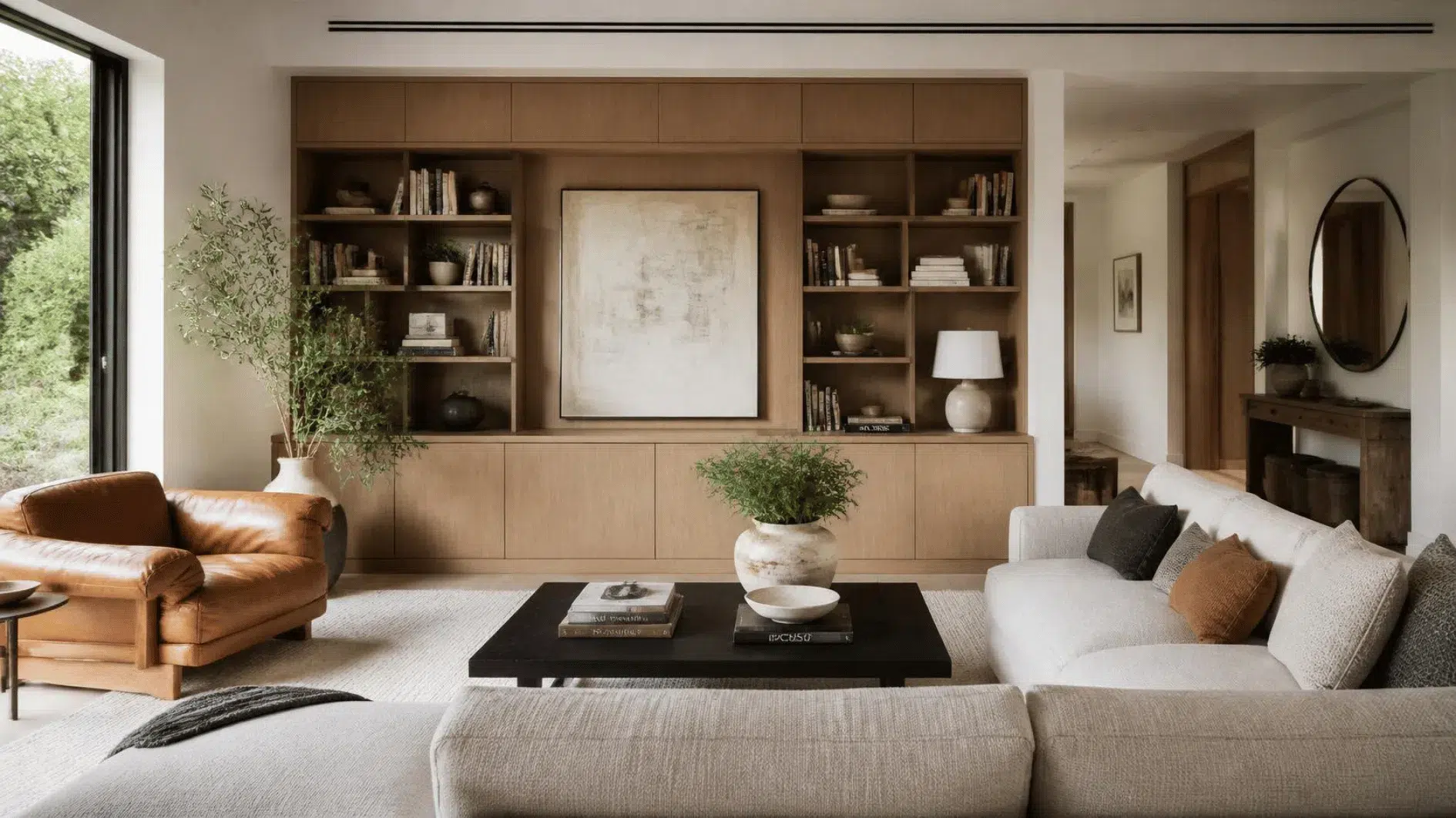
Good home organisation ideas are not about matching baskets, colour-coded cupboards or creating a space that stays picture-perfect. They are about finding the simplest place for belongings so people can use them and put them away with little effort.
In practical terms, that means organising around activities rather than appearances, keeping everyday items accessible, using existing storage first and choosing containers only when they solve a real problem.
The goal is a home that supports daily life without repeated clear-outs or purchases. This guide walks through kitchens, living spaces, bedrooms, hallways and smaller homes with that principle in mind.
Home Organisation Starts After Decluttering
Decluttering and organisation solve different problems. Decluttering helps you decide what should remain in your home; organisation gives those belongings sensible places and makes everyday routines easier.
If cupboards are packed with things you no longer use, adding organisers may only hide the crowding. Start with our how to declutter your home guide if the main challenge is deciding what to keep. If the decisions are already made but objects still gather in inconvenient places, this guide is the next step.
A good organisation system is not a perfectly arranged shelf. It is a system that still works on a busy Wednesday evening, when no one feels like putting things away.
Define What Each Space Needs to Do
Rather than beginning with containers or furniture, start with the purpose of the space. A kitchen should help you prepare, cook and clean up. An entrance should make keys, shoes and coats easy to find. A bedroom needs to support sleep, dressing and the essentials you reach for daily.
Write down the two or three activities that matter most in each area. Then ask which belongings support them, what must be close at hand and what can be stored farther away.
Organise by Activity Zones
Zones group items according to the action they support. A coffee or tea area might include mugs, kettle, tea or coffee and cleaning access. A reading corner might need a comfortable chair, lamp and a small place for the current book.
- Group objects by the job they help you do, not only by material or size.
- Put everyday items at their point of use.
- Keep occasional items farther away but still retrievable.
- Avoid splitting one category across several unlabelled cupboards unless there is a good reason.
- Revisit a zone if several people routinely leave its items somewhere else.
Make Everyday Storage Easy to Reach
An organisation system fails when returning an object is more difficult than leaving it on the nearest surface. Store frequently used belongings between comfortable reach heights where possible, and avoid deep stacks that require several items to be removed first.
Heavy objects should be kept in stable, appropriate locations rather than high shelves. Accessibility, mobility, household height differences and safe use matter more than symmetry. Where children use shared supplies, make the storage suitable for their age and supervision needs.
Measure Storage Before Buying
Shopping for containers first is one of the easiest ways to accumulate new clutter. Measure the shelf, drawer or cupboard—width, depth, height and any obstruction—then measure the objects that need to fit.
Leave enough space to open drawers and remove containers easily. For deep cupboards, shallow trays or pull-out arrangements may be more useful than stacking several decorative baskets.
Where you need new furniture, our sustainable furniture guide explains what to check for sound construction, durability and repairability.
Use the Storage You Already Have
You may already own suitable trays, boxes, bowls, hooks and furniture. Repurposing them is often simpler than buying a matching collection of organisers. A drawer divider need only keep objects separated and accessible; it does not have to be a purpose-made product.
Check whether a cupboard shelf could be adjusted, a small cabinet moved to another room or an unused tray given a new role. Make reversible changes first; avoid permanent alterations until you know a layout genuinely works.
Kitchen Organisation Ideas That Support Cooking
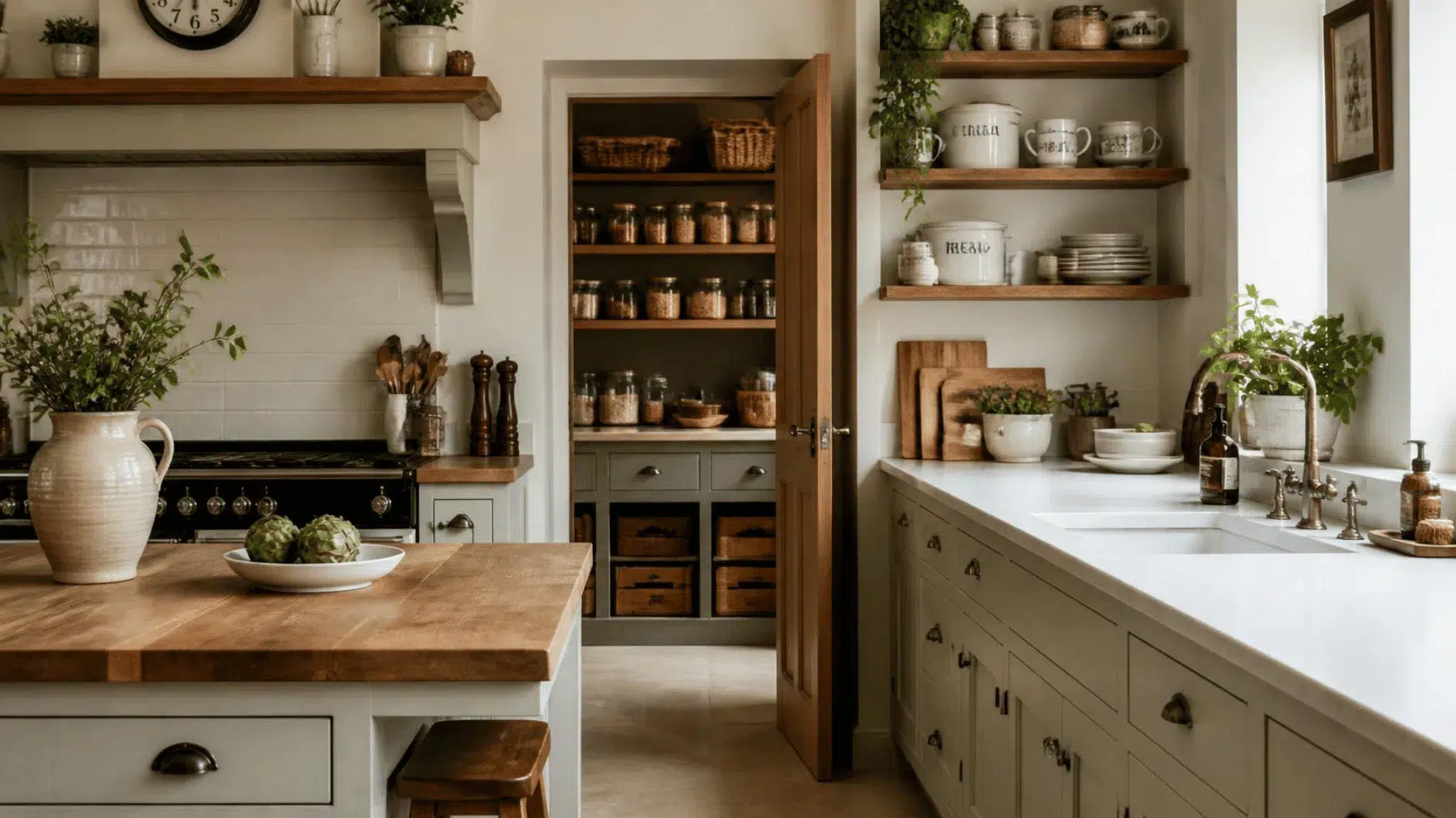
Kitchen organisation works best when storage follows the order of daily activities. Keep preparation tools near a suitable work surface, everyday crockery where it is easy to unload and cooking utensils within safe reach of where they are used.
- Group baking, cooking and serving equipment by function.
- Keep frequently used pans and utensils in accessible places.
- Store food in a way that lets you see what you have before shopping.
- Match reusable containers and lids rather than letting them drift into separate piles.
- Leave enough clear worktop space for actual food preparation.
- Avoid placing flammable textiles or storage next to sources of heat.
A drawer that opens and closes smoothly is often more useful than a photographically perfect drawer filled to the brim.
Pantry and Food Storage Without Excess Containers
An organised pantry makes ingredients visible and reduces the chance of purchasing duplicates. Group products in ways that match how you cook: grains, baking, breakfast, tins, snacks or other relevant categories.
Use airtight containers only where suitable for the food and your storage conditions. Keep food labels, expiry information and allergen details accessible when transferring ingredients; do not decant everything simply for visual uniformity.
Rotate supplies so older usable stock is easy to find, and check dates and storage requirements rather than disposing of food based on appearance alone.
Living Room Organisation Ideas for Shared Use
In the living room, the goal is to support reading, relaxing, conversation and entertainment without turning every surface into overflow storage. Give remotes, current books, charging cables and regularly used accessories a known place.
A cabinet, shelf or tray can work if it is near where items are used. Avoid adding furniture to house possessions you do not need. Keep circulation space clear and allow the room to remain lived-in rather than insisting on bare surfaces.
If the room needs a fresh layout, our sustainable interior design guide explains how to make practical changes without replacing serviceable pieces.
Bedroom Organisation: Keep the Bedside Simple
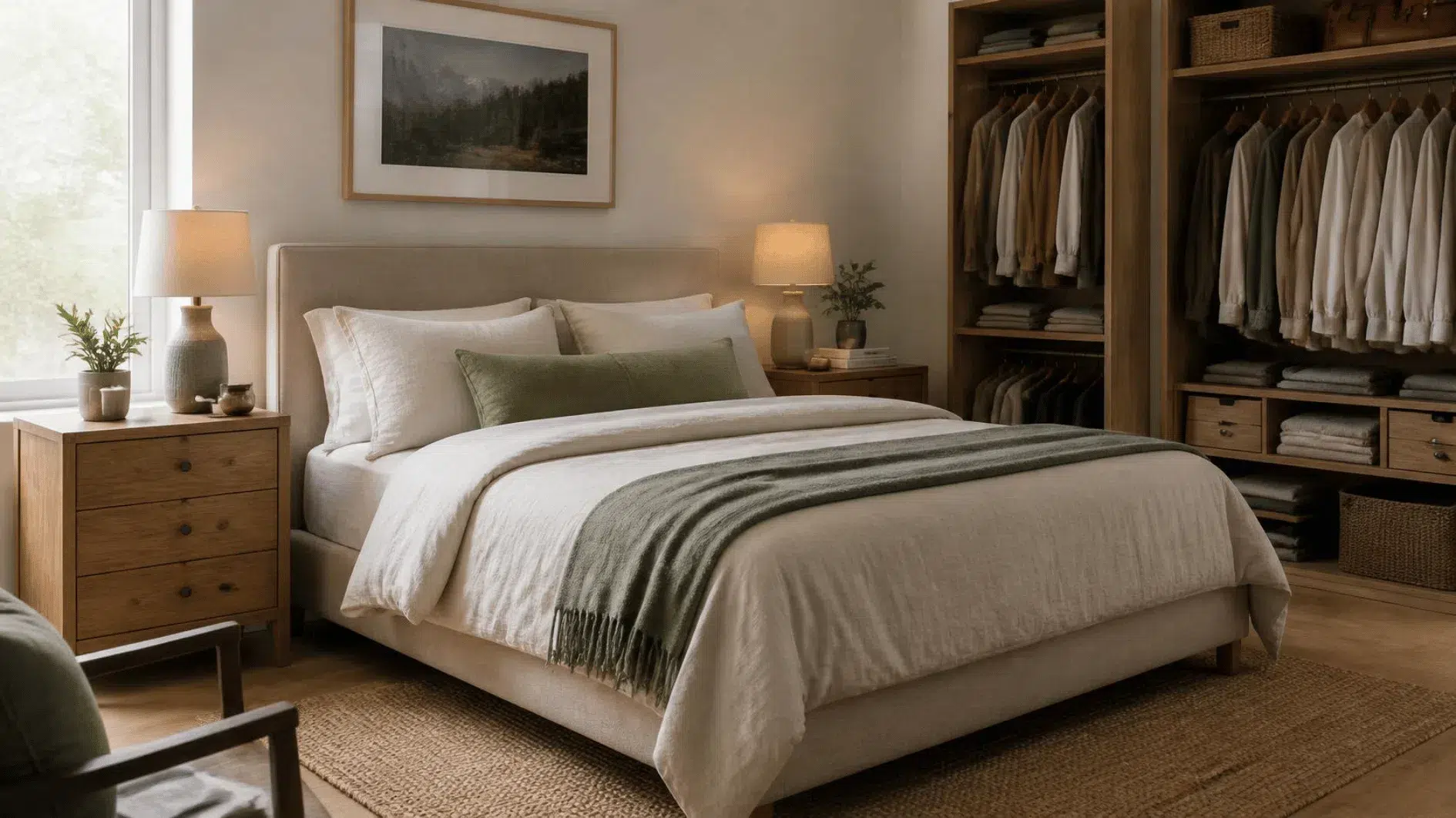
Bedside storage should serve the bedtime and morning routine. Leave room for a lamp, water where practical and a small number of essentials; relocate unrelated belongings to an appropriate drawer or cupboard.
Use drawers for personal items that need to stay close but do not need to remain visible. Consider what is easier to maintain: an open shelf, a closed drawer or a small tray. Different households will need different arrangements.
If the furniture is too tall, too small or structurally unsuitable, our second hand bedside tables guide offers a practical checklist before buying a replacement.
Wardrobe Organisation That Makes Clothes Visible
Keep everyday clothing where it is easy to reach and see, with occasional or seasonal items stored safely elsewhere when space permits. Choose folding, hanging or compartment methods based on the fabric, garment and available storage.
- Group clothes into categories you actually use.
- Keep frequently worn outfits accessible.
- Avoid stacking so high that removing one item disturbs the rest.
- Use the available rail and drawer space before buying inserts.
- Leave a practical place for garments waiting to be repaired or laundered.
- Review systems when the season or your routine changes.
The right arrangement lets you find clothes without repeated searching; it does not need to resemble a shop display.
Bathroom Organisation for Everyday Essentials
Bathrooms often have limited space and higher humidity. Keep daily products readily available and use cupboards or shelves for safe reserves. Moisture-compatible materials and accessible cleaning are more useful than decorative containers that trap dampness.
Keep medicines stored according to their instructions and away from children where necessary. Do not leave potentially hazardous or sensitive items on open shelves simply because the packaging looks attractive.
If several people share the room, consider distinct spaces for personal essentials without adding an excessive number of containers.
Hallway and Entryway Organisation
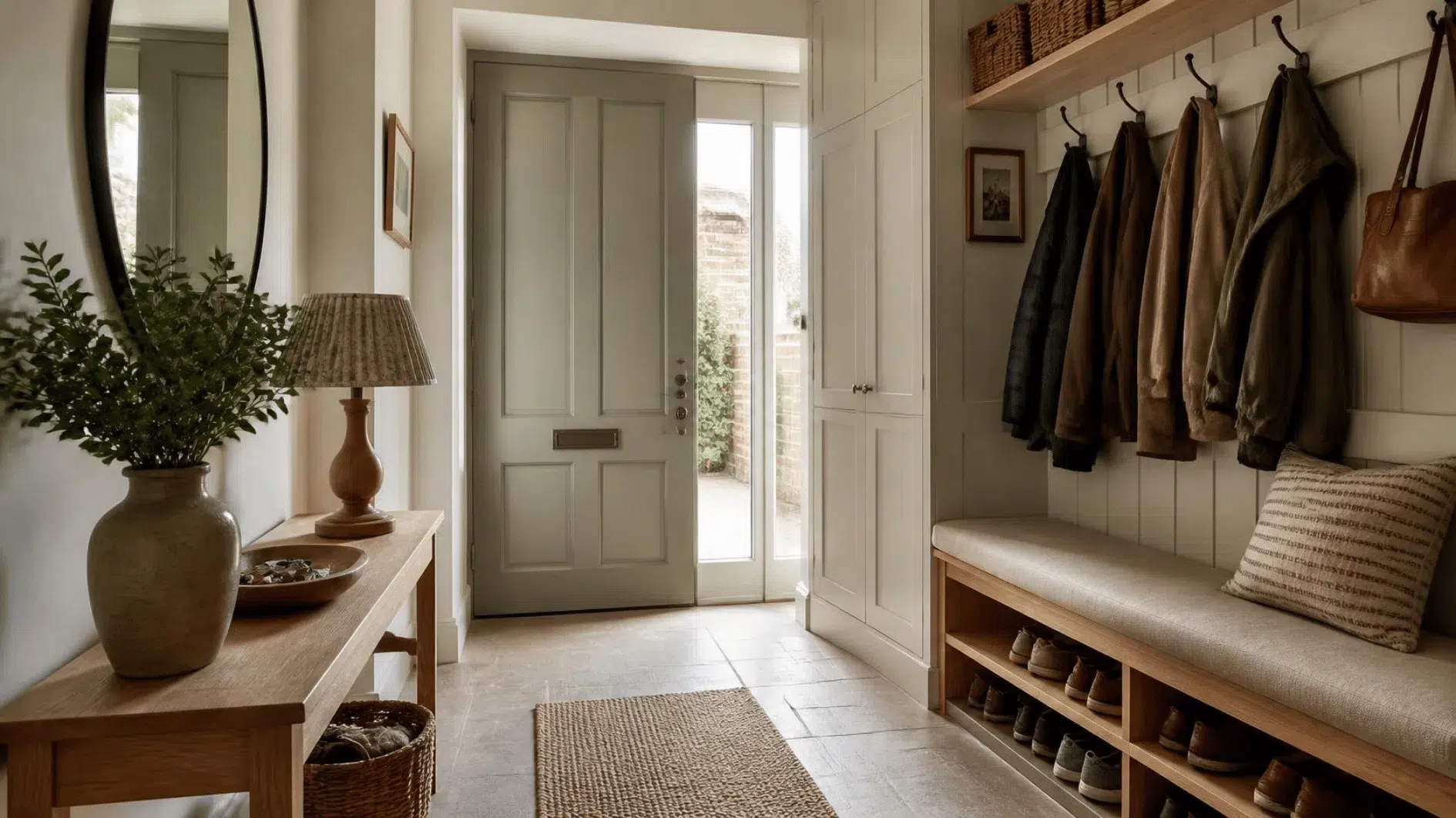
An entryway should help people come and go without searching for coats, keys, shoes, bags or post. Give high-frequency items fixed places near the door where practical.
- Use existing hooks and cupboards before purchasing more.
- Keep current-season outerwear closest to hand.
- Create one defined destination for post that needs action.
- Keep footwear from blocking walkways and doorways.
- Allow an easy route for carrying bags and other items through the space.
If the hallway is narrow, wall-mounted or vertical storage may help, but fixings must be suitable for the wall, load and intended use.
Storage Ideas for Small Homes: Use Space, Not Every Surface
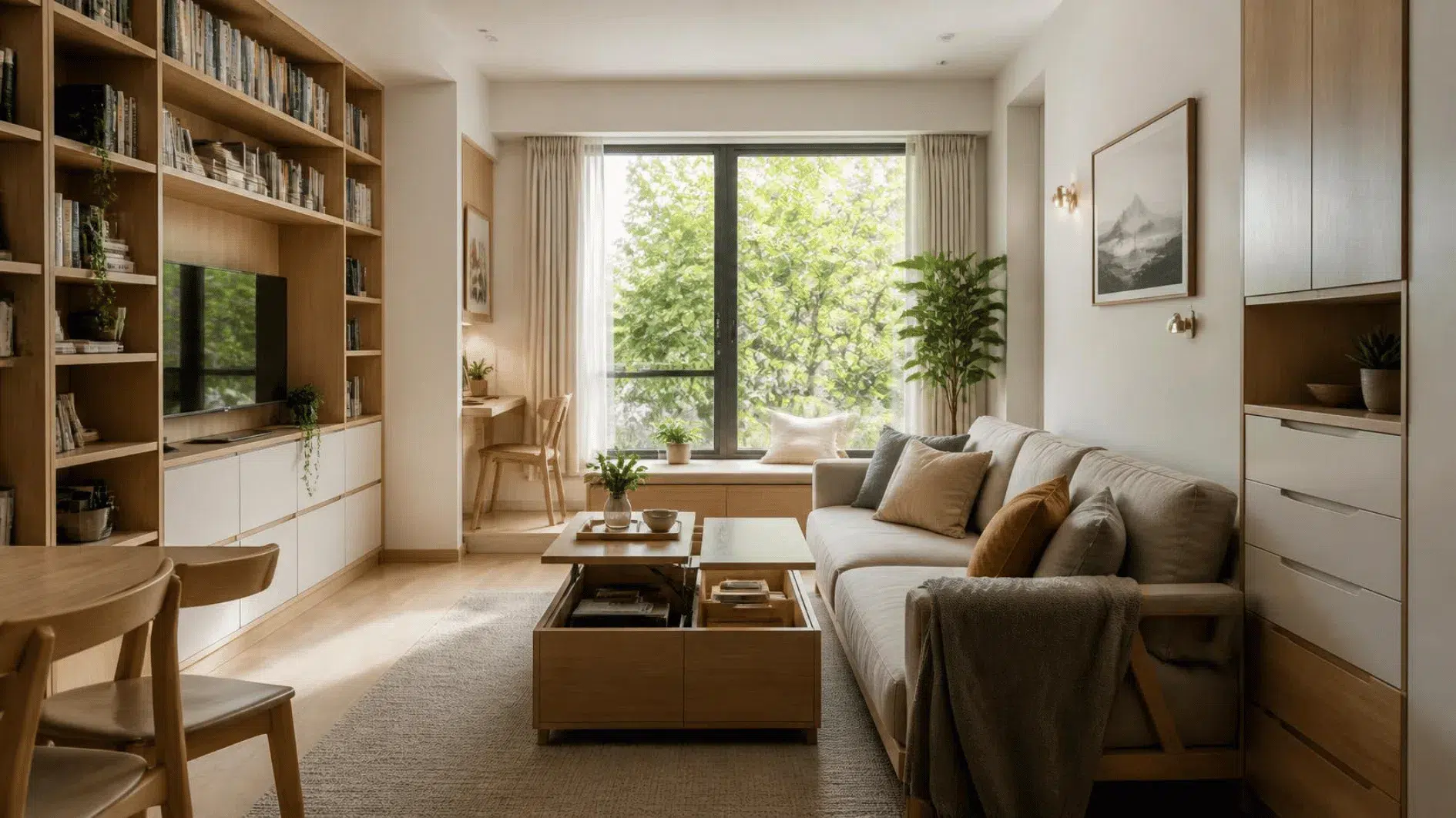
A smaller home benefits from flexible storage, but filling every wall and corner can make it feel harder to use. Aim for storage that makes possessions reachable while preserving light, circulation and room for movement.
Use existing furniture with useful enclosed storage, consider shelves where they are safely installed, and keep occasional items in clearly defined places. Avoid stacking objects to the point where retrieving anything becomes a project.
Multi-purpose furniture can help when it genuinely serves several needs, but a single durable piece is not useful if it is cumbersome or compromises the room’s everyday function.
Vertical Storage and Safe Wall Space
Wall shelves, hooks and tall storage can make use of otherwise unused space. The goal is to move appropriate objects into accessible places, not to hide dangerous loads overhead.
Check whether the wall, fixings and furniture anchoring are suitable. Tall or heavy furniture may need to be secured against tipping; follow manufacturer instructions and seek competent assistance when required.
Store heavy or fragile items lower down, leaving upper shelves for lightweight belongings that are safe to retrieve.
Home Office and Paperwork Organisation
Group paper by what needs action, what must be retained and what can be disposed of securely. A small active-paper tray or folder is often more useful than a large filing system that no one maintains.
- Keep current working documents separate from archives.
- Choose a logical home for cables and accessories by device.
- Avoid keeping duplicate supplies without a practical need.
- Name digital documents consistently enough that you can find them later.
- Protect sensitive records and dispose of personal data securely.
Your workspace should make current tasks easier. The best system is one you can reset when the working day ends.
Organisation Systems for Shared Homes
A system needs to make sense to the people who use it. Ask where others naturally put shared objects, which items they need quickly and what is awkward about the present arrangement.
Use a few visible categories or clearly defined locations rather than complex rules that only one person remembers. Avoid changing the storage of someone else’s belongings without permission.
Where household members have different accessibility needs or abilities, prioritise safe reach and ease of use over uniform appearances.
When Labels and Clear Containers Help
Labels can be useful for containers that are not opened often, shared supplies or places where categories are not immediately obvious. They are less helpful when an object is visible and already has an obvious home.
Clear containers may improve visibility in some cupboards, but they are not always the best choice for privacy, appearance or light-sensitive products. Do not remove safety instructions or food information merely to achieve a matching look.
Choose the least elaborate method that reliably helps the household find and return belongings.
Avoid Buying More Storage Than You Need
Storage purchases can be appealing because they promise instant order. Before buying, check whether the problem is lack of space, an unsuitable location, poor accessibility or simply too many things.
Our decluttering checklist can help with keep, repair, donate, sell and disposal decisions. A smaller amount of well-chosen storage may then be sufficient.
If a new piece is still needed, choose dimensions and materials that suit your home and can be maintained over time. Decorative baskets and shelves are not inherently wasteful; unnecessary replacements are the risk.
Build a Five-Minute Home Reset
An organisation system is successful when ordinary resets are easy. A short daily or weekly routine can return items to their places before surfaces become permanent holding areas.
- Put daily essentials back at their points of use.
- Deal with post and loose papers before they build into piles.
- Return things to the correct room rather than relocating them to a temporary box.
- Check whether storage is still appropriate as habits change.
- Review duplicates and incoming purchases occasionally instead of waiting for another whole-home clear-out.
If the same things keep gathering in one place, treat that as information. Their intended home may be too far away, too full or awkward to access.
Common Home Organisation Mistakes
- Organising before deciding what stays. Containers can conceal excess rather than solve it.
- Separating items from where they are used. Long trips to put things away make habits harder.
- Overfilling cupboards. A storage system must leave room to retrieve what is inside.
- Using too many categories. Complexity reduces the chance everyone will maintain it.
- Buying matching containers without measuring. They may waste space or block access.
- Ignoring safety and accessibility. Reaching high loads or blocking walkways creates unnecessary risks.
- Expecting a fixed system to last forever. Rooms and routines change; storage should be adjustable.
Home Organisation Checklist
- Identify the main task each space needs to support.
- Remove or rehome items that do not belong there.
- Group belongings by how they are used.
- Keep daily essentials within safe, comfortable reach.
- Measure available storage before buying anything.
- Reuse existing drawers, shelves, trays and hooks where possible.
- Leave walkways and working surfaces functional.
- Make shared systems understandable to everyone involved.
- Choose easy return paths for everyday objects.
- Review what repeatedly ends up out of place and adjust the system.
Frequently Asked Questions About Home Organisation
What is the best way to organise your home?
Start with how each room is used. Group objects by activity, give frequently used items accessible homes and simplify the number of storage decisions required to put them away.
Should I declutter before organising?
Usually, yes. Deciding what you need and value gives you a realistic sense of how much storage is required. Organising unneeded possessions can simply conceal them.
How can I organise a small home without buying furniture?
Use existing drawers, cupboards, hooks and shelving more deliberately. Store items near their point of use, group small objects and avoid overfilling the available space.
How do I keep my home organised with a busy routine?
Choose systems that are easy to return items to, rather than elaborate arrangements that need frequent reworking. A short regular reset can help maintain a practical baseline.
Are storage baskets and labels worth using?
They can help when a defined group of belongings needs a container or the location is otherwise unclear. Buy only what solves a specific problem; do not assume matching accessories are necessary.
Organise for Real Life, Not a Photograph
The best home organisation ideas make everyday life easier. Put objects where they are used, keep storage accessible, choose practical zones and avoid buying more containers than the room actually needs.
A home should be able to change with the people in it. If the system can be understood, maintained and adjusted without much effort, it is doing its job—even when the room looks lived-in.

Leave a Reply