

SUSTAINABLE HOME · DECLUTTERING & SIMPLIFYING
Minimalist Home: How to Simplify Without Starting Over
You do not need a blank room or matching furniture. A more intentional home begins with useful layouts, familiar objects, considerate light and changes you can live with for years.
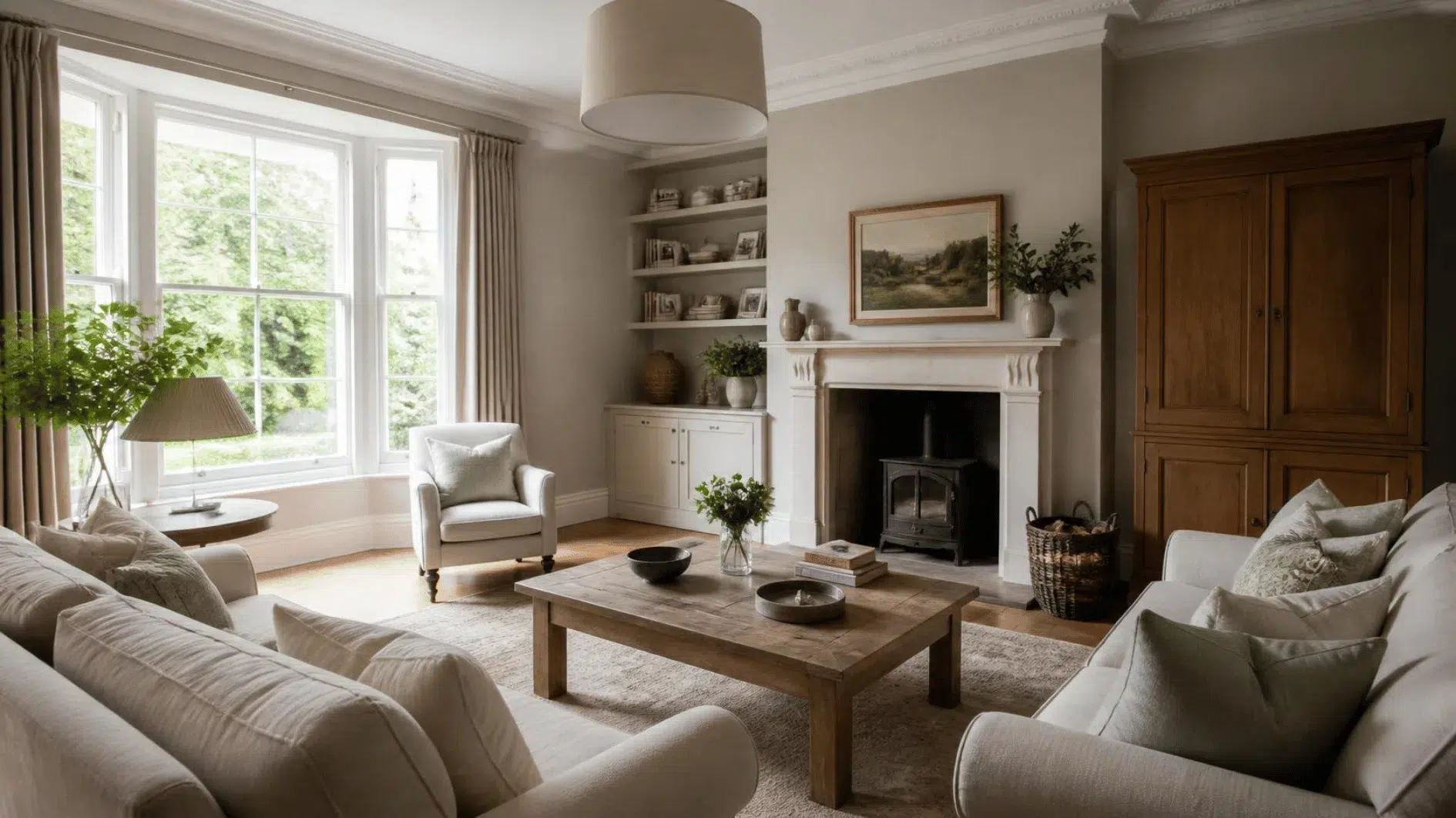
The idea of a minimalist home can suggest empty shelves, matching pale furniture and a long list of possessions to remove. But a more useful version of minimalism is about intention: knowing what each room needs to do and allowing the things you value to have space without making the home harder to live in.
You can create a simpler space with furniture you already own, a more practical layout, good light and less visual competition. You do not need to redecorate every room or replace serviceable objects to achieve it.
This guide looks at minimalism as an approach to the way a home functions and feels. For decisions about surplus belongings, begin with our decluttering checklist; for storage systems, use our home organisation ideas guide.
What a Minimalist Home Actually Means
A minimalist home is not defined by a fixed number of possessions or a particular shade of white. At its most useful, it is an approach to making rooms understandable, practical and visually considered. The objects you keep have clear roles, circulation is comfortable and the space is not continually competing for your attention.
Minimalism can look different in a family home, a compact flat or a house with collections and inherited furniture. You can enjoy books, art, colour and texture while creating an intentional arrangement. The purpose is not to remove personality; it is to make everyday use and personal meaning easier to see.
Minimalism Is Not the Same as Decluttering
Decluttering focuses on deciding what you keep and what leaves. Minimalist design looks at how the remaining objects, furniture, colour, light and space work together. A room can be organised but visually busy; it can also be sparsely furnished but frustrating to use.
If cupboards are overflowing, begin with our guide to decluttering your home. Once the belongings have clear places, you can make decisions about visual balance and layout without buying an entirely new interior.
This distinction matters because the goal is not to declutter, replace everything with fashionable minimal furniture and then repeat the cycle. Retaining durable things is often the more practical route.
Start Without Replacing Everything
You do not need a blank room to make meaningful changes. Start by seeing the space as it is: what works, where movement is awkward, which surfaces collect objects and where furniture no longer matches the way you live.
- Keep what works. A sturdy table or comfortable chair can stay, whatever its age or style.
- Move things before buying things. Sometimes an arrangement—not a product—is the problem.
- Repair small issues. Worn handles, loose fixings and faded fabric may be manageable.
- Work in stages. Change one area, use it for a while and assess whether it feels more practical.
- Resist the matching-set impulse. Thoughtful variation often looks better than wholesale replacement.
The sustainable interior design guide expands this reuse-first principle across materials, flooring, lighting and furniture.
Define What a Simpler Room Should Do
Before moving furniture, write a brief in everyday language. Perhaps you want a living room where people can talk without stepping around tables, a bedroom with less visual distraction or a hallway where getting out of the door is straightforward.
Choose two or three improvements that would materially change how you use the space. This is more useful than collecting photographs of rooms that may not fit your dimensions or household needs.
- What should be easiest to do in this room?
- Which items must remain within easy reach?
- Where do people naturally move and pause?
- Which parts of the room feel crowded, awkward or underused?
Simplify Layout Before Styling
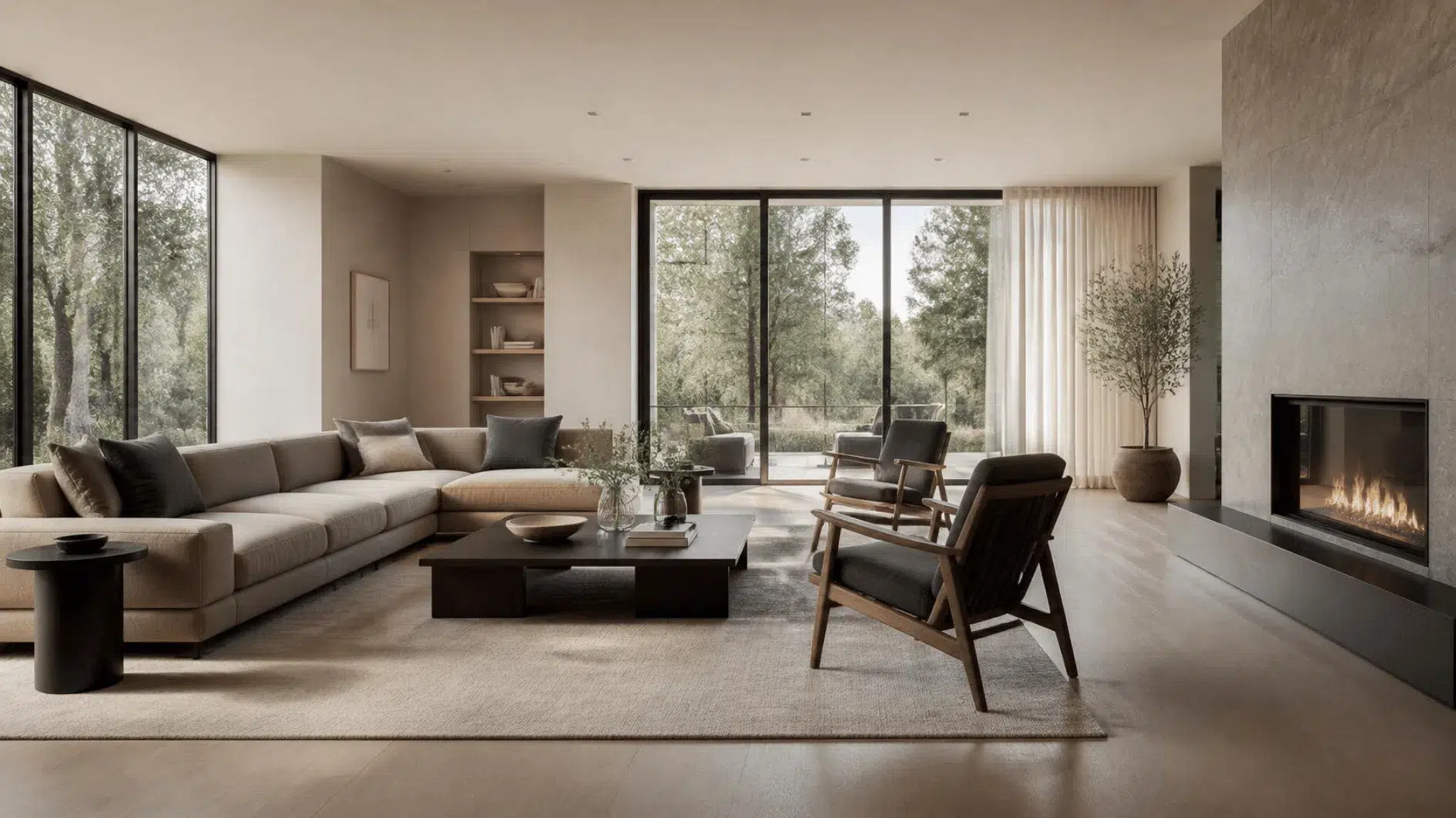
Furniture placement often changes a room more than accessories. First look for a clear path between doors, windows, seating and storage. Check that drawers and doors can open fully and that people can use seats without moving several things out of the way.
Avoid pushing everything against walls by default if it makes conversation or access worse. Try a small number of arrangements using existing furniture. The aim is adequate circulation and a layout that supports the room, not empty floor area for its own sake.
In a narrow or compact room, a correctly sized piece may matter more than the number of pieces. Measure before replacing, and consider whether an existing object can serve more than one function.
Give Objects Room to Be Seen
A visually quieter room usually has variation between full and open areas. Instead of treating every surface as a place to display something, allow some space around lamps, art, ceramics or books.
A sideboard can hold a few valued objects without needing a complete arrangement across its entire width. A shelf can carry useful books and leave visible space between groups. These are choices about proportion rather than rules about how much you are allowed to own.
Do not remove useful belongings to create an empty photograph. If you need the item every day, the design should make a sensible place for it.
Choose a Calm, Flexible Colour Palette
A consistent colour story can help separate a considered room from one with many competing finishes. That does not require white walls or pale furniture. Warm neutrals, deeper timber tones, earthy reds, soft greens or more saturated colours can all work when they are used with intention.
Start with colours already present in the biggest elements: flooring, sofa, cabinets and curtains. Choose additional tones that relate to them instead of replacing everything to achieve a perfect match.
Repeat a limited number of colours across textiles and smaller objects where useful. Texture, natural light and contrast can keep a restrained palette from feeling flat.
Use Fewer, Better-Considered Material Combinations
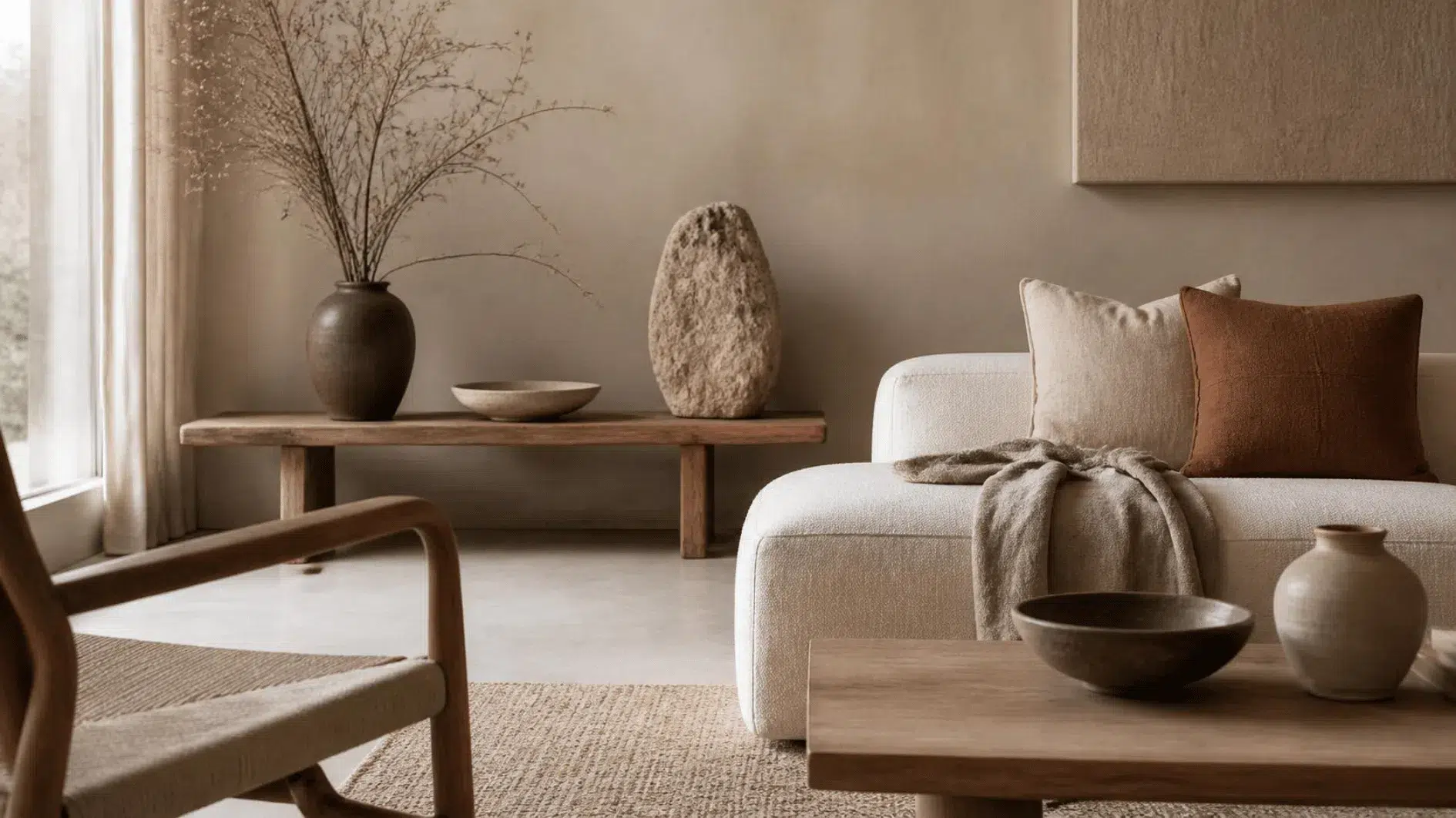
A room does not need to be made entirely of one material. Timber, linen, wool, ceramic, metal and glass can sit comfortably together when the balance feels deliberate and each product suits its use.
Consider the behaviour and maintenance of the material—not only its appearance. A tabletop should tolerate daily activity; upholstery should suit the household; finishes should be possible to clean or repair.
Our sustainable materials guide looks at durability, sourcing, recycled content and the evidence behind broad environmental claims. “Natural” alone is not a guarantee of environmental performance.
Choose Furniture for Purpose and Proportion
Minimalist interiors are often pictured with very little furniture. In real life, the question is whether each piece serves an identifiable purpose and fits the room. One substantial, comfortable sofa may work better than a collection of small occasional chairs—or the reverse, depending on the household.
- Measure the room and the object before moving or purchasing it.
- Check whether the height and depth suit how people will use it.
- Prefer sturdy construction and maintainable finishes where possible.
- Choose furniture with storage only when it solves a genuine need.
- Avoid replacing durable pieces simply because they do not match a new trend.
For buying decisions, read our sustainable furniture checklist. A useful, well-made piece is not less appropriate because it is second hand or has visible character.
Hide Visual Noise Without Hiding the Problem
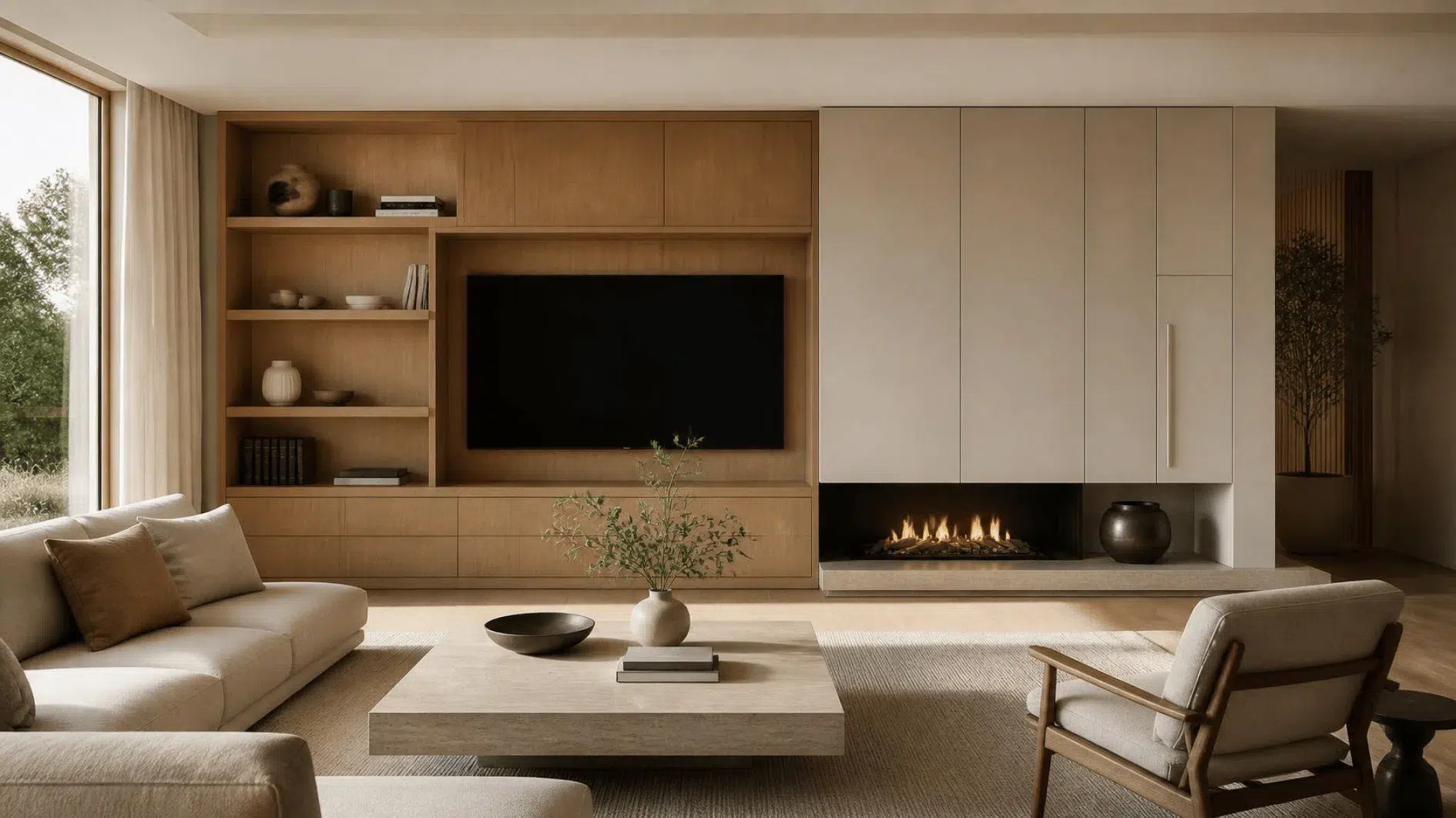
Closed storage can reduce visual competition, particularly for stationery, cables, small household supplies and items with irregular shapes. Open shelving can work well for books or objects you genuinely enjoy seeing. The right choice depends on what the storage contains and how often you need to reach it.
Do not respond to overcrowding by buying containers first. Sort the contents, check existing drawers and cupboards, then add storage only when the practical need is clear.
For layouts built around everyday use, see our home organisation ideas guide. Storage should be easy to use and easy to return items to, rather than requiring an elaborate routine.
Use Lighting to Shape the Atmosphere
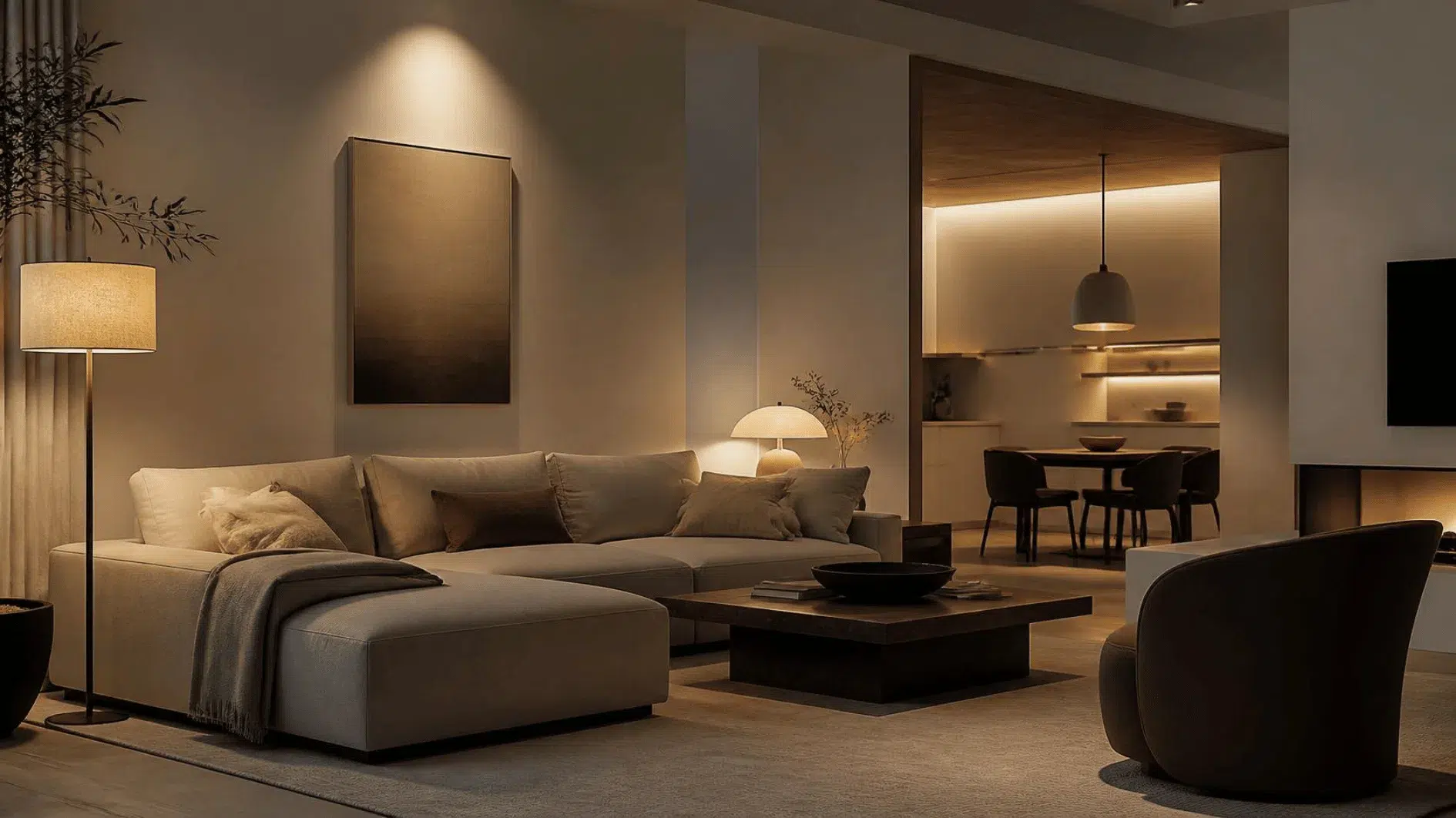
Lighting can change the perceived weight and comfort of a room without changing its furniture. Work with daylight first, then consider ambient light, task lighting and smaller accents where needed.
A useful reading lamp and softly lit evening area may work better than relying on a single bright overhead source. Avoid overly complicated lighting schemes or adding lamps merely for display.
See our lighting for a sitting room guide for practical layering ideas. Choose efficient lamps, safe fittings and lighting that matches how the space is actually used.
Keep Warmth Through Texture
A minimalist home need not feel hard or clinical. Tactile fabrics, timber grain, ceramics and modest surface variation can add warmth even when the overall palette is restrained.
Rather than adding many decorative objects, look at the materials already performing a function: a linen curtain, wool throw, textured rug or thoughtfully chosen ceramic lamp.
Mixing every texture in equal amounts can feel busy. A few contrasting surfaces—smooth timber beside soft upholstery, for instance—may be more legible.
Minimalist Home Decor: Make Room for Personal Objects
A home that has no visible evidence of its occupants can feel impersonal. Minimalism does not require throwing away inherited furniture, treasured books, family photographs or meaningful art.
Give valued things suitable places and, if you wish, group related pieces rather than spreading them across every available surface. You can rotate a collection if that makes it easier to enjoy without displaying everything at once.
If you find it difficult to decide what to keep, use the practical questions in our decluttering checklist. Sentimental possessions often deserve a slower process than everyday duplicates.
Use Plants Thoughtfully, Not as Filler
Plants can bring colour, form and seasonal change to a restrained room, but only when the light and care requirements suit the location. A plant should not be treated as a universal decorative solution for an otherwise awkward space.
Choose a suitable size for the room, make sure it has appropriate light and allow access for watering and maintenance. Our indoor plants guide helps match the plant to the conditions you actually have.
One well-placed plant may have a clearer visual role than several struggling specimens crowded onto a windowsill.
A Minimalist Living Room That Still Works
Start by deciding how people use the living room. Is it for conversation, watching films, reading, playing, or all of these? Keep seating comfortable, leave a usable place for lighting and refreshments and give everyday accessories simple homes.
- Check whether the furniture layout allows easy movement.
- Keep surfaces free enough to use, not necessarily empty.
- Group books and media accessories near the places they are needed.
- Reduce unnecessary decorative duplication before buying new furniture.
- Choose lighting that supports both practical tasks and evening comfort.
The result may include colour, children’s belongings or well-loved second-hand furniture. Minimalism is the clarity of the arrangement, not a ban on daily life.
A Minimalist Bedroom Without Bare Surfaces Everywhere
A simpler bedroom starts with an easy route around the bed, sensible clothes storage and a small number of essentials within reach. Remove objects that have no role in the room, then reconsider whether existing bedside furniture and lighting are fit for purpose.
Keep clothing systems easy to see and maintain. If the bedside area is overcrowded, check whether an accessible drawer or cupboard could hold less frequently used items.
A visually calm bedroom still needs practical space for books, glasses, medication where relevant and other personal essentials. The goal is straightforward use, not deprivation.
A Minimalist Kitchen Based on Daily Routines
Clear working surfaces are most useful when they provide enough space for food preparation. Rather than removing every appliance, keep equipment based on frequency of use, available cupboards and whether moving it daily is sensible.
Group utensils, pans and ingredients near the tasks they support. Let durable, functional objects remain visible when that genuinely helps the kitchen work.
Avoid buying matching containers simply to hide packaging. Keep food identification, allergen and storage information available if transferring ingredients into another container.
A Minimalist Hallway That Makes Leaving Easier
A hallway has a practical job: make arrival and departure straightforward. Keep current-season outerwear, shoes, keys and bags within sensible reach, and give incoming post a defined destination.
If coats or shoes accumulate, decide whether the problem is excess quantity, inconvenient hooks or insufficient accessible storage. Clearing the walkway is more important than purchasing a decorative storage solution.
Where wall-mounted storage is used, check that fixings are appropriate and furniture does not obstruct movement or create safety risks.
Minimalism in a Small Flat or Compact Room
Small rooms need to earn their space, but forcing every item to have multiple functions can be inconvenient. Look for furniture that fits the dimensions, storage that remains accessible and enough open floor area to move comfortably.
Do not crowd the walls with shelves if the result feels oppressive or makes access difficult. One useful cabinet may be preferable to several shallow units that store less than expected.
Flexible furniture can be helpful when you genuinely change how the room is used. A fold-out desk, movable lamp or table that doubles as a work area can make sense if its mechanism is durable and everyday operation is simple.
A Minimalist Home With Children or Other People
In a shared home, visual preferences need to accommodate other people’s possessions and routines. Do not remove belongings without agreement or design a system that works only for the person who arranged it.
Agree on a few practical shared spaces and accessible storage places. In family rooms, provide places for toys, games, school items or other activities rather than expecting these objects to be invisible at all times.
The home can still be thoughtful and restrained without demanding everyone live by identical rules.
Simplify on a Budget
Many effective changes are free: move furniture, remove items that do not belong in the room, rehang an existing picture or adjust which objects sit together.
If you need to spend, prioritise problems that affect everyday use—uncomfortable furniture, inadequate task lighting or storage that prevents access. Compare repair and second-hand options with buying new.
| No-cost changes | When spending may help |
|---|---|
| Move or remove an unnecessary occasional table | A correctly sized replacement where the existing piece blocks access |
| Rearrange books, art and ceramics | Repairing a damaged frame or replacing a failed fitting |
| Use existing trays, drawers and cabinets | A durable drawer organiser when measurements show a genuine need |
| Change lamp positions and use daylight better | An efficient task light where current lighting is inadequate |
Common Minimalist Home Mistakes
- Buying a whole new look. Replacing serviceable furniture defeats the aim of a more considered home.
- Removing practical objects to create empty surfaces. The room becomes harder to use.
- Choosing appearance over proportion. A beautiful piece can still block movement or be uncomfortable.
- Using storage as a hiding place for clutter. The underlying excess remains.
- Confusing minimalism with coldness. Texture, colour and cherished objects still have a place.
- Copying an image rather than assessing your room. Lighting, dimensions and household routines differ.
- Imposing one person’s aesthetic on shared spaces. Durable systems need cooperation.
Minimalist Home Checklist
- Identify the main purpose of each room.
- Keep working furniture and materials before considering replacements.
- Clear awkward paths and access to storage.
- Give daily-use possessions suitable and accessible places.
- Reduce visual repetition where it does not contribute meaning.
- Use a considered colour and material palette that relates to existing pieces.
- Keep cherished objects and meaningful personal touches.
- Make lighting support both tasks and atmosphere.
- Choose repairs or second-hand options when they fit.
- Live with each change before making the next purchase.
Frequently Asked Questions About a Minimalist Home
What makes a home minimalist?
A minimalist home uses space, furniture and objects deliberately. It is typically easier to navigate and maintain, but it does not need to be empty, white or limited to a specific number of belongings.
Can I create a minimalist home without buying anything?
Yes. Moving furniture, simplifying arrangements, rehoming excess items and making more intentional use of what you own can change a room significantly.
Does a minimalist home have to look modern?
No. Traditional furniture, vintage pieces, timber, colour and personal collections can all belong when they work together and serve the room.
How do I make a minimalist home feel warm?
Use appropriate lighting, tactile materials, considered contrasts and meaningful objects. A restrained room can still include linen, timber, wool, ceramics and photographs.
Is minimalism the same as sustainable living?
Not necessarily. A minimalist look can involve unnecessary purchases. Sustainability is better assessed through reuse, material suitability, durability, repairability and reduced replacement.
How do I keep a minimalist home practical for a family?
Prioritise accessible everyday storage, shared decisions and realistic room functions. A practical home should support children’s activities and other household needs, not require everything to be hidden all the time.
A Simpler Home Can Still Be Yours
The most durable kind of minimalism starts with how a home is lived in. Arrange furniture to make movement easier, keep objects that serve real purposes or personal meaning, give essentials sensible places and resist replacing things merely to match a style.
There is no need to start over. A few well-chosen changes to light, layout, storage and visual balance can create a room that feels more considered—and remains useful long after the first photograph. Before buying anything new, work through our questions to ask before buying for the home.

Leave a Reply