

MINDFUL ROUTINES · INTENTIONAL LIVING
Intentional Shopping for the Home: Questions Before Buying
Choose furniture and homeware with more confidence by checking real needs, measurements, materials, maintenance and total costs before you buy.
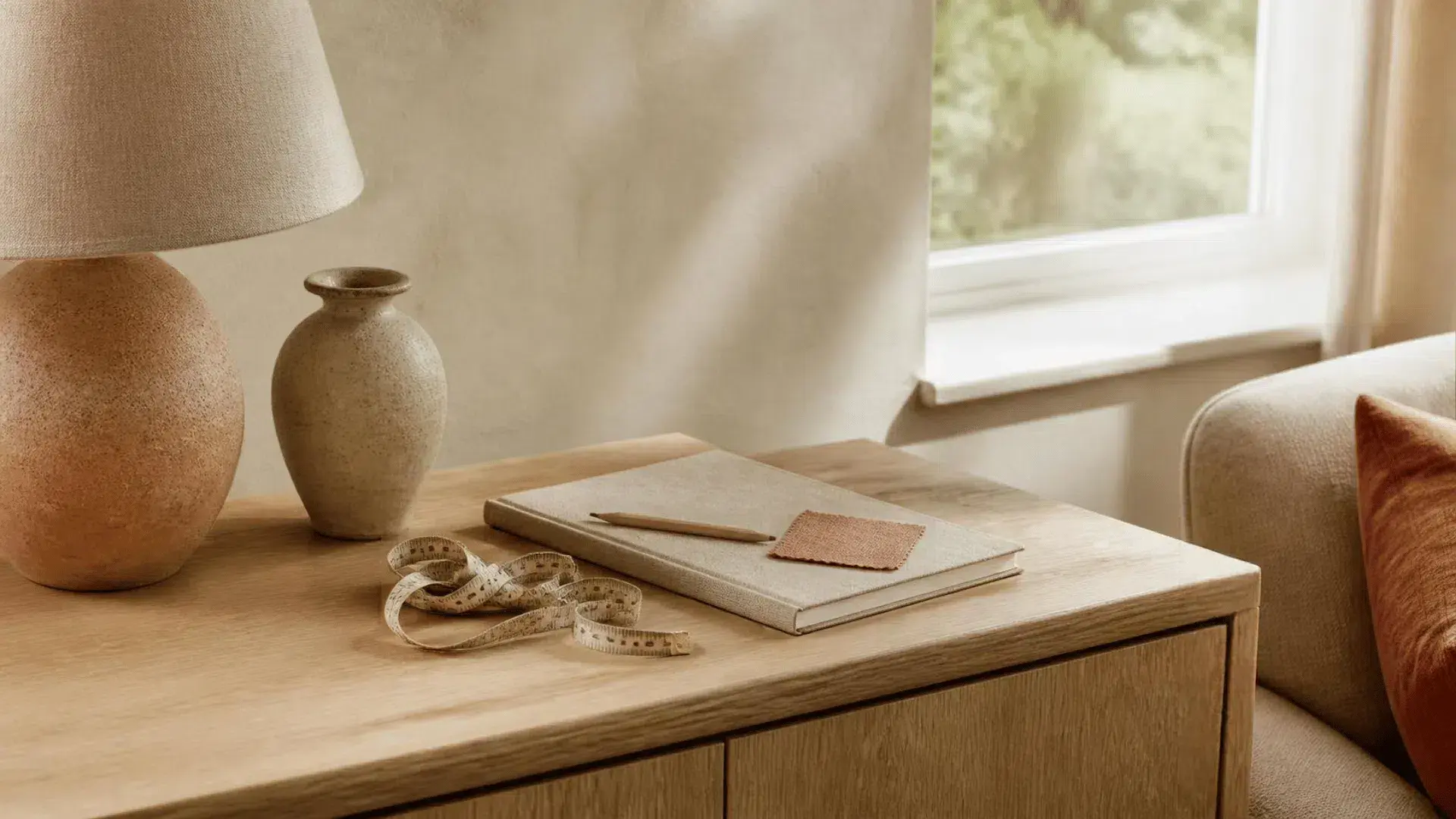
Buying thoughtfully for your home is not about owning the fewest things or choosing only expensive, sustainable-looking objects. It means considering how a purchase will be used, whether it fits the room and budget, and whether it is the best way to solve the need you have identified.
From lamps and rugs to storage and furniture, the questions are often similar: what exactly is missing, what do you already own, how will the item be maintained, and will the full cost be worthwhile? A clear process helps you avoid mistakes without denying the pleasure of creating a home you enjoy.
For the wider picture, start with our intentional living at home guide; this one focuses on the buying decisions. For specialist advice, see our guides to sustainable materials and second-hand furniture, or read how Lumen Larch approaches sustainability.
What Is Intentional Shopping for the Home?
Intentional shopping means choosing something because it serves a real purpose, gives lasting enjoyment or makes an activity easier, rather than buying only because an offer, trend or photograph caught your attention. It is a way of asking better questions, not a requirement to spend as little as possible.
A purchase can be practical, decorative or both. A handmade ceramic bowl may be worth owning because it is useful and pleasing; a replacement lamp may matter because the current reading area is underlit. The reasoning should fit the household rather than an arbitrary list of approved products.
Our intentional living at home guide covers how to set household priorities; the questions below help you act on them when buying.
Start With the Need, Not the Product
Before opening a shop or product page, describe what you are trying to improve. Is a table too small for meals, a bedside lamp difficult to use, a shelf unsafe, or a counter crowded with objects that have no clear home? A defined problem helps you choose sensible alternatives.
Separate the outcome from the item you first imagined. If the goal is to read comfortably in the evening, repositioning an existing lamp might solve it without buying a new chair or a large lighting system.
Write down what would be different if the problem were solved. If you cannot name a specific improvement or a source of enjoyment, consider leaving the purchase for later.
Do You Actually Need to Buy Something Now?
Some purchases cannot reasonably wait: replacing a dangerous fitting through the appropriate professional, buying necessary accessibility equipment or providing essential household items. A decorative refresh or a second vase can usually be considered on a different timetable.
Ask what happens if you wait a week or a month. If daily life continues comfortably and safely, the choice may be less urgent than a product listing suggests. Avoid arbitrary delay when an item is genuinely necessary.
Time pressure created by advertising is not the same as time pressure created by your household needs. Make the distinction before spending.
Could Something You Already Own Do the Job?
Look around the home for a suitable existing object. A tray in one room might organise keys elsewhere; an adjustable lamp may work better beside another chair; a shelf may simply need a clearer purpose.
Reuse is sensible when the object is safe, suitable and does not create another inconvenience. Moving a lamp from a working area that still needs light is not a genuine solution; you have merely shifted the problem.
Test the alternative during normal use before deciding to purchase. The goal is an effective arrangement, not refusing to buy anything.
Is Repairing or Maintaining the Current Item Sensible?
A wobbly chair, a poorly closing drawer or a tired finish may need suitable maintenance rather than replacement. Check the manufacturer’s instructions, whether parts are available, and whether the repair makes the item safe and functional.
Electrical, gas, fire-safety and structural work should be handled by suitably qualified people. Some pieces are not worth or safe to repair, and replacing them can be the responsible choice.
Compare repair cost, remaining service life, inconvenience and safety rather than assuming that either repair or replacement is always preferable.
Use a Practical Decision Pause
For a nonessential item, step away from the product page long enough to review its purpose, measurements and costs. A short pause can reduce the influence of appealing styling or promotional wording.
There is no universal waiting period. A necessary item may need prompt purchase, while a purely decorative object can wait until you know where it will go and what you are comfortable spending.
If the purchase still meets your requirements after consideration, it can be an intentional choice without feeling guilty about enjoying your home.
Measure the Space Before Ordering Furniture
Measure the actual width, depth and height available, including skirting boards, nearby radiators, window sills, sockets and door swings. Check whether the furniture can be used comfortably after it has been placed, not merely whether it will fit within a wall-to-wall measurement.
Allow space to pull out dining chairs, open drawers, move mobility equipment where applicable and reach essential areas. A cabinet that fits perfectly into a gap may still be awkward if its doors cannot open.
Compare the product’s complete measurements with your own, and note whether quoted dimensions include handles, feet or other protruding details.
Measure the Delivery Route Too
A sofa can fit in the intended room and still fail to pass through a narrow entrance or around a staircase. Consider door widths, hallway corners, lifts, access restrictions and whether the product arrives assembled.
Ask the seller for packaged dimensions, assembly requirements and any delivery limitations. Do not assume that a large item can be manoeuvred safely simply because the finished dimensions fit.
Plan suitable help for heavy items and follow safe handling guidance. A delivery problem can add significant cost and disruption to an otherwise attractive purchase.
Check How the Product Will Be Used
Consider who will use the item and how often. A dining chair needs stability and appropriate proportions; a bedside table should be reachable; a basket should hold the specific objects it is intended for.
Look beyond the product photograph to the user’s daily activity. An elegant stool may be unsuitable for extended work, while a beautifully styled open shelf may create more dusting than the household wants.
Where possible, assess furniture in person or review dimensions, specifications and credible information about use and maintenance.
Understand What the Product Is Made From
Descriptions such as wood, linen blend, ceramic or natural fibre may cover substantial differences in construction and care. Check the stated materials, finishes and relevant components rather than relying on broad adjectives.
Solid timber, veneers, engineered boards and different textile blends can all be appropriate choices for different budgets and environments. The useful question is how the actual product is constructed and whether it suits the intended activity.
Our natural materials for the home guide explains practical trade-offs across commonly used materials.
What Does Durable Mean for Your Household?
Durability is not only a manufacturer’s marketing word. Think about repeated cleaning, movement, exposure to sunlight, spills, children, pets and the maintenance you can reasonably manage.
A washable cover may be more useful than delicate upholstery in one household, while another may value a material that can be repaired or refinished. The choice depends on real conditions, not a universal ranking of finishes.
Check product instructions, construction details and any available guarantees, bearing in mind that a guarantee is not proof of unlimited lifespan.
Check Cleaning and Care Before You Buy
Care instructions are part of the cost of an item. Some rugs require specialist cleaning, upholstery may need particular treatments, and porous finishes can be sensitive to moisture or household cleaning products.
Ask whether you have the time, tools and suitable conditions to maintain the piece. A low initial price can be a poor match if the item quickly becomes difficult to use or care for.
Do not apply a cleaning method based solely on material appearance. Follow the actual manufacturer’s recommendations.
Put Product and Household Safety First
Safety matters more than visual style. Consider furniture stability, tip-over risk, electrical compatibility, heat clearances, choking hazards, sharp edges and suitability for the people who live in the home.
Secure tall furniture according to the manufacturer’s instructions and check whether a product meets relevant requirements for its intended use. Do not assume that an item labelled decorative is safe as a toy, food container or electrical accessory.
When uncertain about a regulated or safety-critical product, seek appropriate professional or manufacturer guidance before buying or installing it.
Consider Proportion as Well as Measurements
A large bookcase may fit along a wall but dominate the useful area of a small room. Several little storage units may create more obstacles than one appropriately sized piece. Assess how the room looks and functions together.
Photograph or sketch the space and mark potential dimensions with removable tape where safe. Check sightlines, daylight, ventilation and the distance needed for chairs or doors to move.
Comfort Is Specific to the Person
Seat height, firmness, upholstery texture, support and access can matter differently to different people. A statement chair that photographs well may not be comfortable for the person who needs it.
Try a piece in person where practical, check dimensions, and discuss individual preferences rather than treating softness or minimalism as a universal measure of quality.
Accessibility equipment or specialist seating may require qualified input. Decorative product descriptions should not be taken as clinical or ergonomic assessments.
See Colour and Finish in Your Actual Space
Online photographs can make colours appear different from how they look beside existing paint, flooring and daylight. Gloss, texture and undertones can also change the perception of a material.
Where possible, request a sample and view it in the intended room at different times of day. Check how it works with current furnishings instead of assuming that every neutral tone will match.
For colour decisions, see our warm neutral colours guide. Testing is usually cheaper than correcting a large unsuitable purchase.
Buy for Personal Enjoyment Without Chasing Every Trend
A piece can be worth buying simply because you genuinely enjoy it and have a suitable place for it. Intentional shopping does not forbid decorations or require each object to perform several tasks.
Consider whether the object works with the home over time and whether its care and storage fit ordinary life. Trends can offer inspiration, but changing an entire room to copy a photograph is rarely the only option.
Personal collections, colour and expressive interiors can all be intentional when their owners want and use them.
Work Out the Total Cost
Look beyond the advertised product price. Delivery, assembly, accessories, specialist fitting, maintenance and the removal of an old item can alter the overall amount you spend.
Set a realistic limit in advance, including the cost of any necessary safety work. If a purchase requires finance or other ongoing payments, understand the complete terms before deciding.
An inexpensive item is not automatically good value, and a costly one is not automatically better. Consider utility, lifespan, repairability and what else the budget needs to cover.
Compare Sellers, Specifications and Evidence
Compare products using measurements, construction, care information and terms, not only star ratings or brand claims. Check whether specifications are complete and whether product images show details that actually matter.
Reviews may provide useful experience, but individual accounts can be unrepresentative and may refer to earlier product versions. Prefer clear manufacturer information and credible independent evidence when performance is important.
Verify seller identity and contact details, especially for high-value or unfamiliar online retailers, before sharing payment information.
Understand Returns, Delivery and Installation Terms
Before ordering, check delivery estimates, fees, assembly responsibilities and the stated returns process. Bespoke and made-to-order goods may have different conditions from standard products, so read the seller’s terms carefully.
UK consumer rights may apply separately from a retailer’s voluntary policy; the applicable position depends on the purchase and circumstances. Avoid assuming that every purchase can be returned for the same reason or within the same period.
Keep order details and product information, and arrange an appropriate inspection when an item arrives. For expensive or complicated pieces, clarify responsibility for moving and installing them.
Could a Second-Hand Item Be a Better Fit?
Buying pre-owned can be useful when the item is suitable, accurately described and in safe condition. It may also provide access to older styles or materials that you prefer without automatically purchasing new.
Inspect structural stability, wear, dimensions, odour, repairs, missing parts and any relevant safety information. A low price is not good value if restoration or delivery becomes impractical.
Our second-hand furniture buying guidereclaimed wood furniture.
Assess Environmental Claims With Care
Claims such as eco-friendly, natural, responsibly sourced or sustainable can be vague unless a seller explains exactly what they mean and provides credible evidence.
Look at actual materials, provenance information, product life, repair options, packaging and what happens at the end of use. No single label or material makes every product the best environmental choice in every setting.
The sustainable furniture guide and sustainable materials explain how to assess specific claims without relying on greenwashing.
Check Whether the Item Can Be Maintained or Repaired
A product with replaceable components, accessible care information or widely available compatible parts may be easier to maintain over time. Check what the manufacturer actually supports before assuming a repair will be possible.
Some repairs require specialists or must not be attempted by an unqualified owner. A product’s repairability should be assessed alongside safety, expected use and likely costs.
An item that cannot be repaired easily is not automatically unsuitable, but that limitation deserves consideration before purchasing a high-use piece.
Recognise Common Impulse-Buying Triggers
Limited-time promotions, styled interiors and suggestions that one item will transform a room can create excitement without showing whether the product suits your actual needs.
Check the measurements, existing alternatives and total cost away from the promotional page. If the purchase is optional, consider returning to the decision when you have reviewed it calmly.
Do not turn this into a rule that every enjoyable spontaneous purchase is wrong. The aim is to avoid preventable regret on items that are expensive, cumbersome or unsuitable.
Questions to Ask Before Ordering Homeware Online
Can you verify dimensions and construction? Are the colour and finish clear? Does the retailer explain delivery restrictions, who assembles the item, and how returns or damage claims are handled?
Save the product specification and check practical details such as plug type for electrical products, safe installation requirements and whether any parts are sold separately.
If a crucial detail is missing, contact the seller rather than guessing from the photograph.
Buying Lighting With Purpose
Start with the activity: reading, moving safely, preparing food or producing ambient light. Then look at dimensions, beam or shade design, appropriate brightness and the location of a socket or suitable fitting.
Electrical compatibility, installation and heat safety take priority over appearance. Do not alter wiring or install unsuitable equipment to recreate a styled photograph.
For planning a specific room, our lighting for a sitting room guide covers task and ambient layers.
Buying Rugs, Curtains and Soft Furnishings
Measure the position and think about cleaning, suitability for the floor, curtain fittings and how fabrics feel to household members. A rug can be lovely but inconvenient when it moves or curls in a walkway.
Check laundering and specialist-cleaning requirements before purchase. Avoid placing textiles near heat sources or fitting heavy coverings to inadequate fixings.
Our wool home decor and jute rugs guides cover material care and practical use.
When Does Buying Storage Actually Help?
Buying organisers can be useful once you know what needs to be stored, where items are used and who must reach them. Without that information, attractive baskets and boxes may just add another layer of complexity.
Measure the available shelf, drawer or floor area and consider whether the proposed system will be easy to maintain. Avoid stacking heavy containers insecurely or hiding essential items someone needs to see.
See home organisation ideas for simple systems designed around real habits.
Make Buying Decisions Together in Shared Homes
One person’s purchase can affect someone else’s movement, work, care responsibilities or favourite seat. Before buying large furniture or changing shared storage, discuss the practical impact with the people who will use it.
Consider accessibility, children’s needs, pets and differences in sensory preferences. A shared decision does not require identical taste, but it should preserve useful access and safe routines.
Where preferences differ, reversible solutions and separate task areas may work better than one imposed room-wide arrangement.
Intentional Shopping for a Rented Home
Rented homes may limit drilling, permanent electrical changes and alterations to doors or windows. Movable furnishings can offer a useful improvement while preserving flexibility when moving.
Check tenancy conditions and the suitability of any proposed fixings, especially for heavy storage, window coverings or electrical fittings. Do not compromise fire-safety doors or required ventilation.
Consider how difficult and costly an item will be to dismantle or transport if the tenancy changes.
Choose the Most Useful Purchase First
If there are several items on the list, rank them by safety, essential function, repeated inconvenience, cost and the number of people affected. A broken essential light may deserve attention before optional decorative accessories.
Think about dependency: a desk may be of limited use without suitable seating, and a new cupboard may not solve a problem until its contents are sorted. Priorities need not be fixed forever.
Our forthcoming Home Improvement Priorities guide will explore how to sequence spending and projects.
Ten Questions to Ask Before Buying
A short checklist can help when a product seems appealing. Ask about function, existing alternatives, dimensions, safety, the people who use it, care, materials, full cost, delivery and the likely value of waiting.
These questions are prompts rather than barriers. Some purchases are made for joy and beauty, which can also be a good reason when they fit your budget, space and preferences.
- What specific use, comfort or enjoyment will this purchase provide?
- Can an item we own already meet the need?
- Where exactly will it fit, and have I measured?
- Can everyone use it safely and conveniently?
- Are the materials and construction suitable for the setting?
- What cleaning, maintenance and repairs might it require?
- What is the full delivered and installed cost?
- Are the seller’s descriptions and claims supported by credible information?
- Do I understand delivery, returns and any installation requirements?
- Would waiting or choosing a different item better serve the household?
A Practical Comparison of Homeware Choices
When comparing several options, avoid reducing the decision to the lowest displayed price. Consider function, fit, maintenance and limitations that could affect everyday use.
A well-made second-hand piece may be the better fit in one situation, while a straightforward new item is more reliable in another. Record the evidence and trade-offs before making a large purchase.
| Option | What may make it suitable | What still needs checking |
|---|---|---|
| Repair existing item | Keeps a familiar functional piece in use | Safety, specialist work and repair cost |
| Reuse an existing object | No additional item required | Whether moving it creates another problem |
| Buy a new piece | Known specifications and potentially available support | Dimensions, construction, full costs and terms |
| Choose second-hand | May offer good material and design value | Condition, safety, delivery and hidden repairs |
| Delay a nonessential purchase | More time to assess priorities | Whether delay causes avoidable inconvenience |
Common Intentional Shopping Mistakes
Buying organisers before understanding the clutter, ordering large furniture without measuring the route in, and trusting vague environmental claims are all avoidable errors. Choosing materials based only on their appearance can also create upkeep problems.
Other mistakes include ignoring returns terms, making decisions for shared rooms alone, and treating deliberate shopping as a demand to spend nothing. Choose carefully without turning the process into another source of pressure.
Frequently Asked Questions About Intentional Shopping
Intentional shopping is not the same as buying only necessities. It allows meaningful decorative purchases and sensible replacements, provided they suit the home and the owner’s resources.
It is also not a guarantee of savings or sustainability. It is a practical decision process that considers function, evidence, cost and whether an item will work where it is actually used.
Does intentional shopping mean never buying anything new?
No. New products can be sensible when they serve a genuine need, fit your space and budget, and suit the required use.
How can I shop more intentionally on a budget?
Define the need, compare total costs and check existing or second-hand options where appropriate. Prioritise urgent functional issues before optional upgrades.
Should every purchase be practical?
No. You may choose an object for enjoyment or beauty. The key is to make that choice deliberately and understand its place and cost.
Is the most expensive item always the most durable?
No. Price alone is not evidence of construction or lifespan. Look for specific materials, care guidance, build quality and credible information.
How do I avoid buying storage I do not need?
Observe where items collect, check what must remain accessible, and trial existing storage before purchasing additional organisers.
Are natural materials always more sustainable?
No. Environmental performance depends on sourcing, processing, longevity, use and end-of-life factors. Require evidence for broad claims.
Choose What Adds Genuine Value to Your Home
Intentional shopping begins before a product enters the basket. Identify the use, check fit and safety, understand what the item is made from and consider the complete cost of owning it.
Sometimes the best choice is to keep, repair or move what you already have. At other times a carefully chosen purchase will make daily life easier or bring lasting personal enjoyment. Both decisions can be intentional. When you are ready, browse our lighting and full collection with these questions in mind.

Leave a Reply