

NATURAL LIVING · NATURAL MATERIALS
Natural Materials for the Home: Choosing Wool, Rattan, Jute and More
Understand the fibres, finishes and construction behind natural home furnishings so you can choose useful pieces with greater care and confidence.
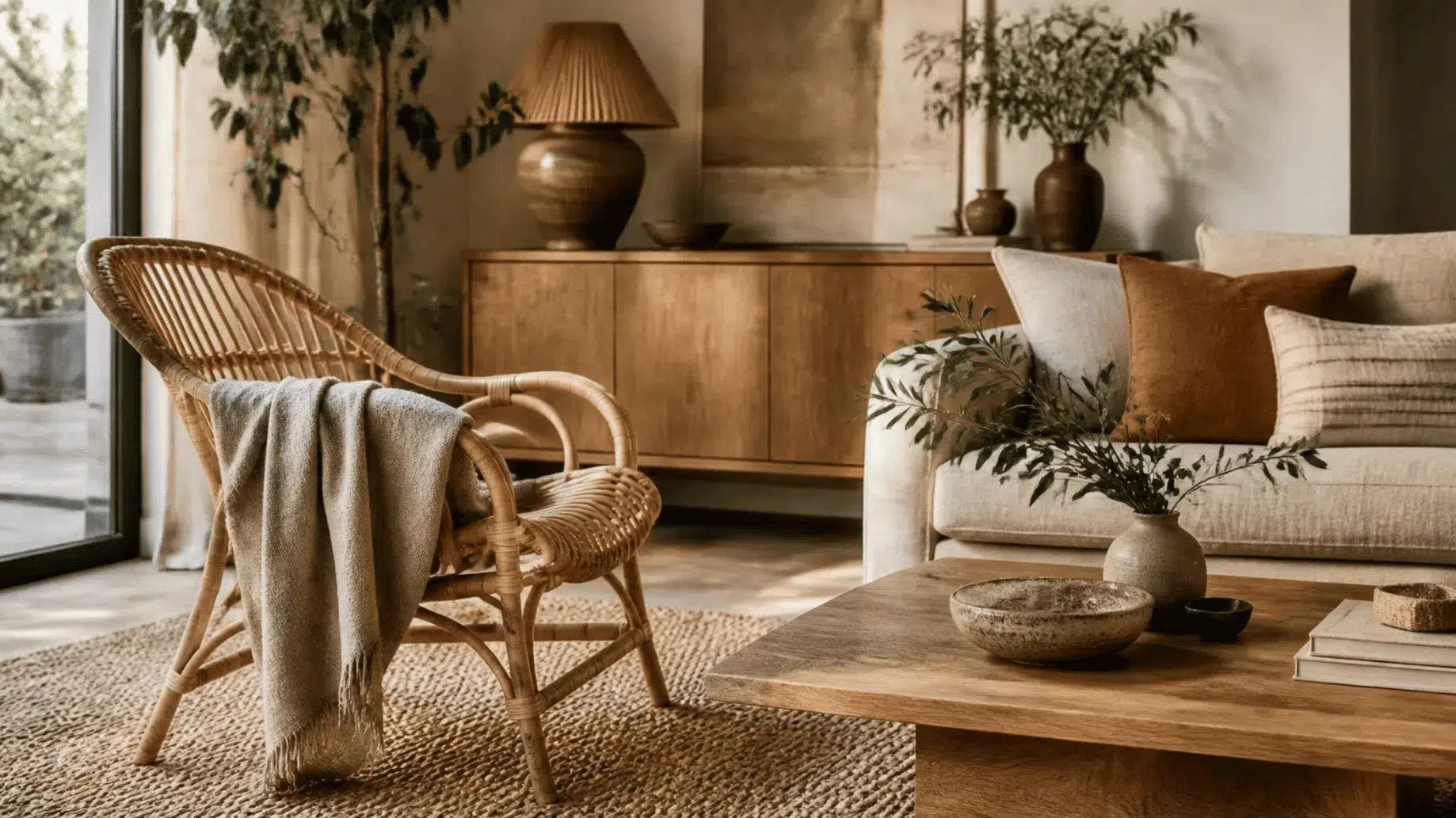
Natural materials for the home can bring visible grain, varied texture and familiar tactile qualities to everyday spaces. But a natural origin is not a guarantee of durability, easy care or environmental benefit. Choosing well means understanding how a material is used in a finished item and what owning it will involve.
This guide focuses on practical material decisions: wool for textiles, rattan for woven furniture, jute for rugs, and the differences between those fibres and familiar options such as linen, cotton, timber and ceramics. It examines construction, product labels, placement, maintenance and buying second-hand without suggesting you need to replace the furnishings you already own.
If you want ideas for arranging materials visually, start with our natural home decor guide. For evidence around sourcing and environmental claims, see sustainable materials. This guide helps connect those ideas to individual purchasing and care decisions.
What Counts as a Natural Material in the Home?
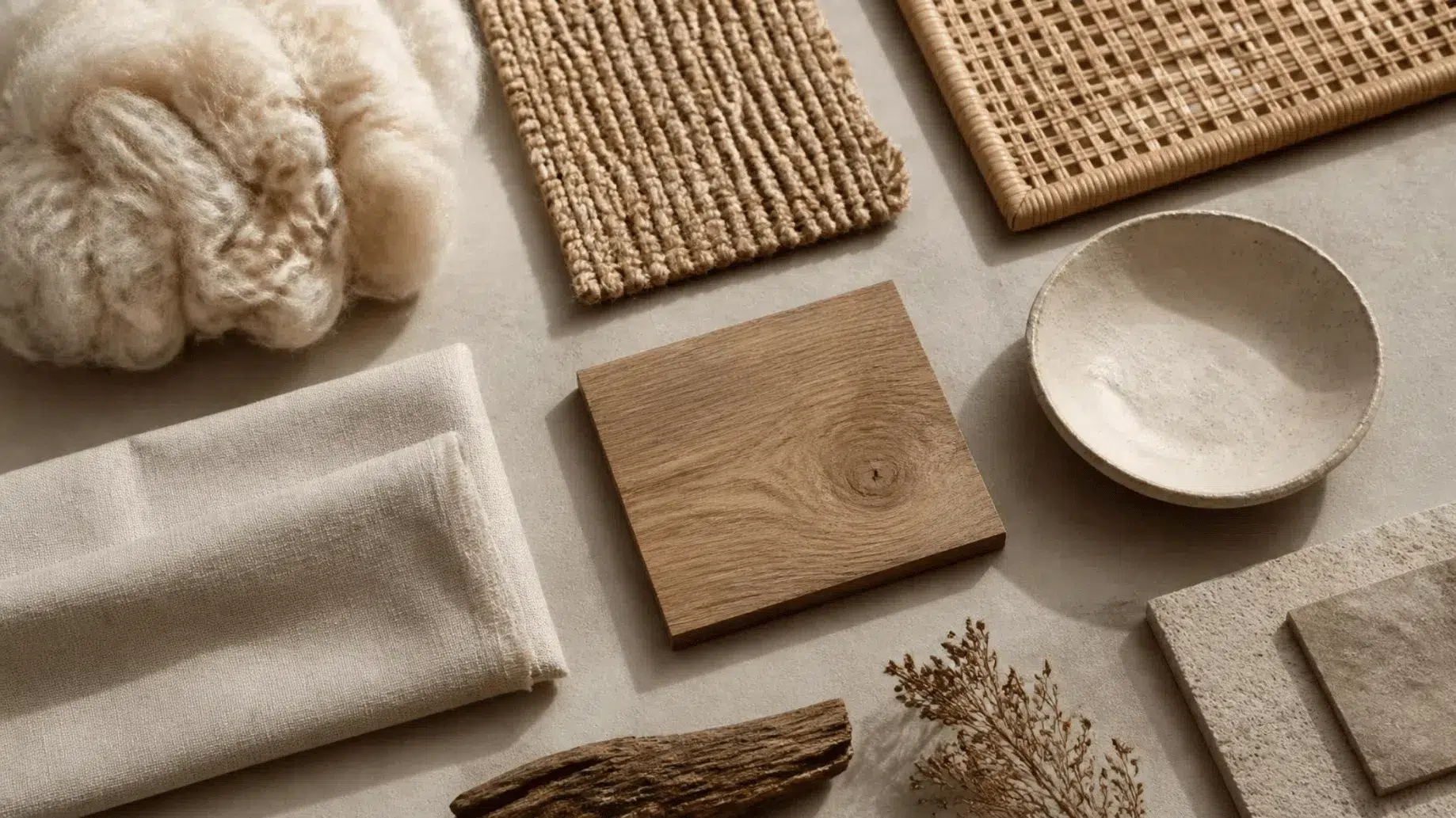
Natural materials originate from biological or mineral sources rather than being wholly manufactured from synthetic polymers. Common examples include wool, cotton, linen, jute, rattan, timber, stone and clay. Their raw origins help describe a product, but they do not tell you everything about its quality, composition or environmental impact.
A finished piece of furniture may combine natural fibres with adhesives, finishes, metal fixings or synthetic linings. A rug described as natural might contain a cotton backing or another material; a woven chair may have a timber or metal frame beneath its surface.
For a useful purchase decision, look past the broad label and examine the actual construction, dimensions, care requirements and suitability for the room.
Separate Material Appearance From Everyday Performance
Texture and appearance influence the character of a room, but they are not reliable measures of durability. A wool throw can feel substantial yet require specialist washing. A rattan chair may look lightweight while still depending on the strength and condition of its frame.
Start by identifying the role of the item. Will it be walked on, sat on, washed frequently, exposed to moisture or handled by children? Materials behave differently under those conditions.
If your priority is the visual arrangement of wood, linen and ceramics, our natural home decor guide
How to Read Product Descriptions and Material Labels
Descriptions such as natural, handcrafted, eco or organic may tell you relatively little unless the seller provides details. Look for fibre composition, frame material, construction method, finish, dimensions and manufacturer care instructions.
- Check whether the product is fully made from the named material or uses a blend.
- Identify the backing, lining, filling and frame, where relevant.
- Ask how the surface is finished, treated or protected.
- Confirm size, weight, suitability and any stated use restrictions.
- Read realistic cleaning and maintenance instructions.
- Keep the supplier’s product-specific care guidance for reference.
Terms such as solid wood, wood veneer and wood-effect describe different constructions. Similarly, woven-look, synthetic rattan and natural rattan are not interchangeable descriptions.
Wool: Texture, Warmth and Practical Textile Choices
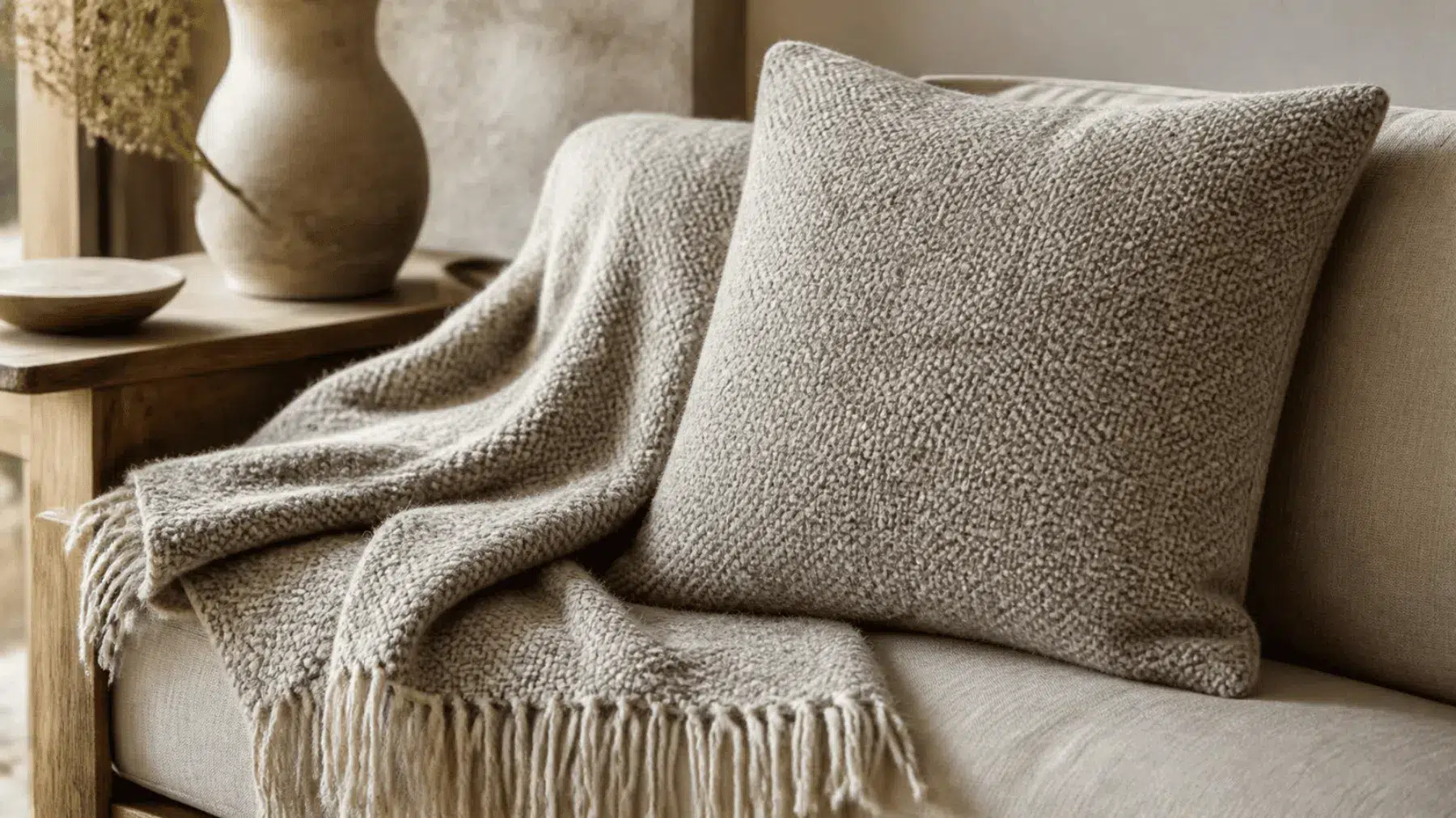
Wool is an animal fibre used in throws, blankets, upholstery, cushion covers and rugs. The texture and feel vary with the type of wool, yarn, weave, finishing and any other fibres in the product.
A substantial wool blanket may be pleasant for occasional use, whereas a wool rug must also withstand the traffic and cleaning conditions of its position. Some wool textiles shed initially or require careful maintenance.
Do not assume every wool product is machine washable, hypoallergenic or inherently suitable for every household. Always check the actual care label, fibre blend and use requirements.
Where Wool Throws and Cushions Work Well
A wool throw can introduce a tactile contrast against smooth timber or straightforward upholstery. It should also be comfortable against the user’s skin and practical to fold, store and clean.
Consider size and weight before buying. A large, heavy throw may be less useful than a smaller, washable alternative for a busy family room. Cushion covers should suit the filling and the household’s expected wear.
Caring for Wool Without Guessing at Washing Instructions
Wool care depends on the finished fabric. Follow the maker’s instructions for washing, drying, spot cleaning and storage; treatments and blends can substantially change what is safe.
Where a product requires specialist cleaning, factor that expense and inconvenience into the purchase. Store clean textiles in suitable conditions and check them periodically for signs of damage or pests, including clothes moths.
Do not rub, soak or machine-wash an item simply because a different wool product tolerated that method. Test only as the product’s guidance permits.
Rattan: A Natural Material for Furniture and Woven Details
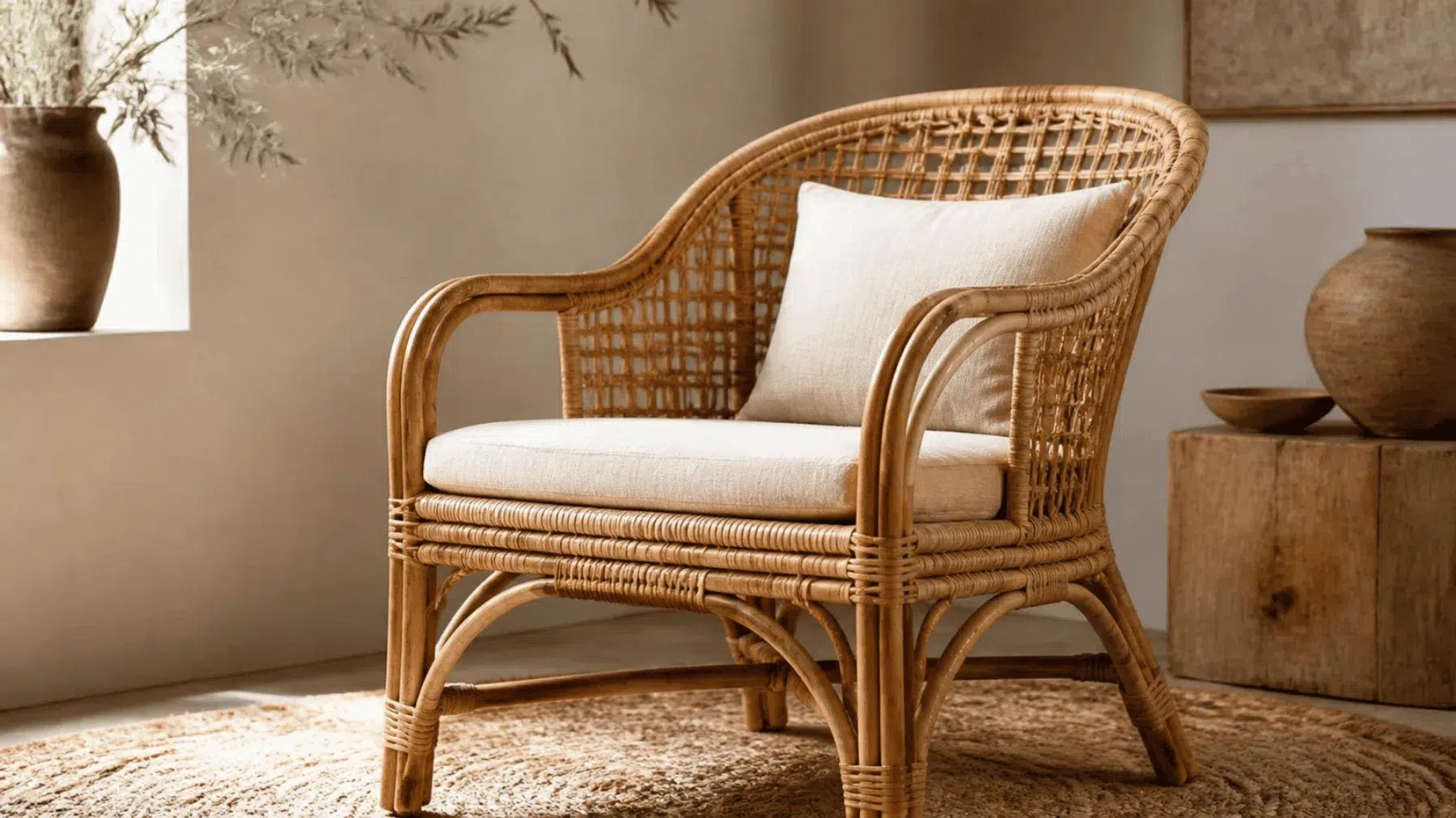
Natural rattan comes from climbing palms and is used for furniture structures and woven components. It can bring visible pattern and texture to chairs, shelving, tables and storage. Product strength, however, depends on the individual piece’s design and construction.
Woven or cane details may be decorative panels rather than load-bearing elements. Check the frame, joints and manufacturer’s guidance before assuming a lightweight-looking item can support a particular use.
Natural rattan is not the same as synthetic outdoor rattan. Confirm whether a listing refers to the actual fibre, a woven style or a polymer imitation.
Rattan, Cane and Wicker: Understand the Terms
Rattan describes a plant-derived material. Cane often refers to strips or the outer skin of rattan used in woven panels. Wicker describes a weaving technique rather than one specific raw material.
Wicker-style furniture may be made with natural rattan, willow, paper cord or synthetic materials. The name alone does not establish the composition or cleaning requirements.
Our Rattan Furniture guide examines frames, woven seats, cane panels, indoor placement and practical checks before buying.
Where to Use Natural Rattan and How to Care for It
Natural rattan furniture is generally best assessed for the conditions in which it will live. Exposure to persistent damp, strong heat or direct weathering can be unsuitable for many indoor-finished pieces.
Dusting and cleaning should follow the maker’s guidance, particularly where woven intersections can trap debris. Avoid soaking, excessive force or chemical treatments without instructions.
If choosing a used chair, inspect the frame, joints, seat panels and signs of broken or loosened strands. Visible style is not a substitute for structural condition.
Jute: A Distinctive Fibre for Rugs and Accessories
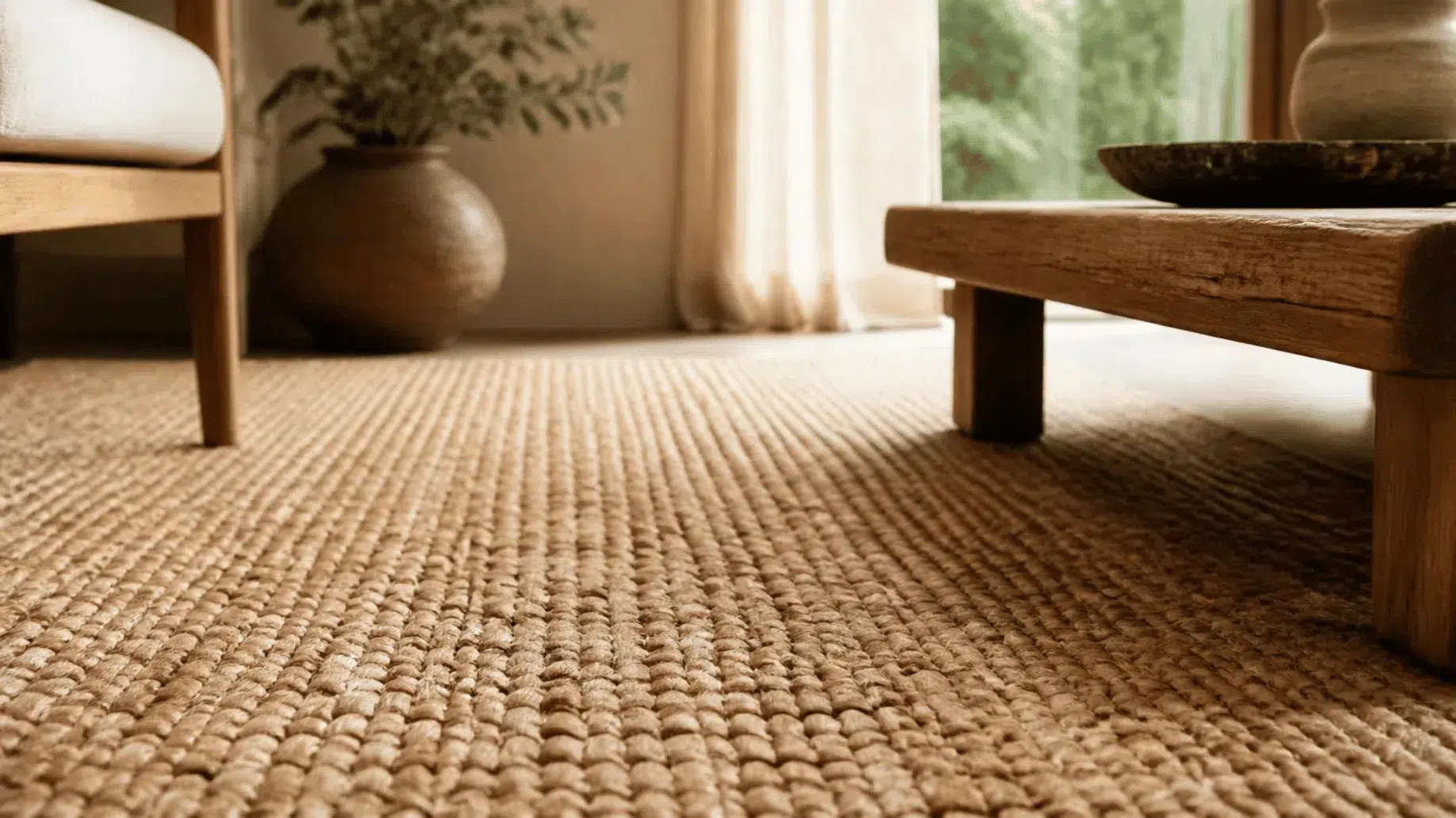
Jute is a plant-derived bast fibre commonly used in woven rugs, baskets and other home accessories. Its appearance often includes visible variation in fibre, tone and texture.
A jute rug may offer a dry, pronounced texture underfoot and a visually grounded surface, but the weave, backing and finishing influence its actual feel. It may not suit everyone who prefers a very soft floor covering.
Compare the rug’s construction and use restrictions with the specific room. Our Jute Rugs guide covers weave types, placement, sizing and care in greater detail.
Jute Rugs, Moisture and Everyday Spills
Jute products can be sensitive to moisture, so a spill-prone space or persistently damp area may present practical problems. Follow supplier guidance on blotting, cleaning, drying and professional care rather than treating every woven rug like a washable mat.
A high-traffic entrance, pet feeding area or frequently wet bathroom may call for another material. Consider practical cleanability before selecting a rug for colour alone.
Appropriate rug underlays and safe placement can help with movement, but always choose a solution compatible with the floor, rug and any manufacturer instructions.
Cotton: Familiar, Flexible and Worth Checking Closely
Cotton appears in throws, rugs, cushion covers, upholstery and household textiles. The fibre may be spun and woven in many ways, so the feel, thickness and care of one cotton item should not be assumed for another.
Check whether covers are removable, whether shrinkage allowances matter and whether the product can actually be washed under your conditions.
Cotton is a useful comparison point for wool and linen, but a natural origin does not by itself establish longevity or a lower environmental footprint.
Linen: A Plant Fibre With a Particular Texture
Linen is made from flax fibres and is used for curtains, cushions, bedding and other textiles. Its drape, creasing, weave and suitability depend on how the fabric is made and finished.
When comparing linen with cotton or wool, think about what the fabric needs to do: filter daylight, cover a cushion, endure frequent laundering or feel comfortable against the skin.
Timber: Grain, Finish and Structural Construction
Timber is used in furniture, shelving, flooring and small household objects. Solid timber, veneers and engineered cores behave and age differently, and the visible grain does not reveal every construction detail.
Ask whether the piece is solid wood, veneered or another composite, how its joints work and what finish protects the surface. Follow the maker’s maintenance recommendations.
See our wooden home decor guide for timber accents and finishes, and reclaimed wood furniture guide for checks specific to reused timber.
Ceramics and Stone: Natural Origins, Different Properties
Clay-based ceramics and natural stone are often grouped with natural materials in interiors, but their properties differ considerably from plant fibres and wood. Glazes, sealants, firing and manufacturing methods influence the finished product.
A ceramic object may be decorative, food-safe, watertight or heat-resistant only to the extent stated by its maker. Do not assume that a natural-looking surface can safely hold food, water or hot objects.
Compare Natural Materials by Intended Use
| Material | Common home uses | What to check before buying |
|---|---|---|
| Wool | Throws, cushions, rugs | Blend, comfort, cleaning instructions and storage |
| Rattan | Chairs, panels, storage | Actual material, frame strength, joints and indoor conditions |
| Jute | Rugs, baskets, woven accents | Texture, moisture sensitivity, backing and safe placement |
| Cotton | Covers, throws, household textiles | Construction, washing requirements and dimensional stability |
| Linen | Curtains, cushions, bedding | Weave, drape, fit and care label |
| Timber | Furniture, shelving, accents | Construction, joints, finish and maintenance |
| Ceramics and stone | Vases, dishes, surfaces | Intended use, finish, sealants and manufacturer restrictions |
This table summarises practical questions, not guaranteed performance. Construction quality and the supplier’s specifications matter as much as the material name.
Choose Materials Around the Room’s Real Demands
A living room may need comfortable seating and manageable textiles, while a dining area prioritises stable surfaces and cleaning. Bedrooms may invite softer coverings; bathrooms and entrances raise different moisture and wear concerns.
Work from the room’s daily activities, not a rule that every interior needs every natural material. A well-chosen rug or practical piece of furniture may do more than a collection of decorative additions.
Keep the biggest existing items in view when considering colour and texture, and avoid replacing serviceable pieces simply to create a matching material palette.
Natural Materials in Living Rooms
In a sitting room, consider the practical relationship between an upholstered sofa, a rug, side tables and household textiles. Wool or cotton throws can provide texture; a rattan storage piece may introduce a woven pattern if its strength and maintenance suit the use.
If the floor covering will experience heavy foot traffic or spills, judge its cleanability before choosing jute or another absorbent textile. Keep clear access to seating, doors and electrical equipment.
For room layout and comfortable arrangements, see our cosy living room ideas guide.
Natural Materials in Bedrooms
Bedrooms often contain several textile layers alongside a bedframe and bedside furniture. Choose materials that suit comfort, washing needs, storage and the person’s preferences rather than creating an elaborate layered display.
A wool throw, linen bedding, cotton cover or woven accessory may be useful in different circumstances, but none is essential. Rugs should be placed safely and kept practical to maintain.
Consider Moisture Before Choosing a Natural Material
Not every plant fibre, wood finish or woven material suits a damp environment. Bathrooms, poorly ventilated corners, wet entrances and locations close to repeated splashes require particular care.
Assess the product’s intended use, finish, cleaning restrictions and conditions of the room. Do not rely on a general natural-materials label as evidence of water resistance.
Fix building, ventilation and moisture problems appropriately. Decorative changes cannot resolve persistent damp or a leak.
What Determines Durability Beyond the Material?
A well-made item may depend on sound joints, adequate fibre density, reliable stitching, suitable backing and finishes applied for the expected use. The label natural does not guarantee any of these.
Examine dimensions, weight capacity where relevant, seams, fastenings, material composition and replacement or repair options. For furniture, stability and structural condition are more important than a fashionable surface.
Consider whether a product can be maintained with the time, tools and budget available to you.
Natural Does Not Automatically Mean Sustainable
A natural fibre can require land, water, energy, processing, transport and chemical treatments. Durability, sourcing, labour practices, repairability and what happens at the end of use also influence environmental claims.
Ask for specific, verifiable information rather than relying on broad labels such as eco-friendly or planet-friendly. A mixed-material item may be durable but difficult to separate for recycling; a natural product may still have substantial processing impacts.
For a careful look at environmental evidence and product claims, see sustainable materials and sustainable furniture.
Consider Repair and Second-Hand Options
A serviceable piece that already meets your needs may be preferable to a new purchase. Repairing upholstery, cleaning a suitable rug or checking a used wicker chair can sometimes extend the use of materials you already own.
Second-hand purchases require checks for hygiene, pests, structural strength, wear and suitability. Do not assume old automatically means better constructed or safe.
Our second hand furniture guide
Use a Restrained Mix of Colour and Texture
Natural materials have their own visible variation: timber grain, woven fibres, clay glazes and wool yarns. You can create a cohesive look by repeating selected tones while allowing surfaces to contrast.
If a room already contains patterned flooring, textured curtains and strong wood grain, another conspicuous weave may make it feel crowded. Leave enough practical empty space around the objects you use.
The warm neutral colours guide
Common Mistakes When Choosing Natural Materials
- Buying by appearance alone. Assess construction, use and upkeep.
- Assuming natural means low impact. Look for substantiated claims.
- Ignoring mixed fibres and finishes. Read the full composition where available.
- Putting moisture-sensitive pieces in wet areas. Check product and room conditions.
- Choosing a rug without considering trips and cleaning. Measure, assess backing and plan maintenance.
- Confusing rattan and wicker. One is a material; the other describes weaving.
- Assuming wool can always be machine washed. Follow the particular care label.
- Replacing functional furniture unnecessarily. Repair or reuse when suitable.
A Practical Natural Materials Buying Checklist
- Decide which everyday function the item must perform.
- Confirm the exact composition, including blends, backing and frame.
- Check dimensions, placement and any stated weight restrictions.
- Review the material’s suitability for moisture, light and wear.
- Read cleaning, storage and maintenance instructions.
- Inspect seams, weaving, joints or surface finishes where possible.
- Compare durability, repair and second-hand options.
- Treat environmental claims as questions requiring evidence.
- Keep household safety and practical accessibility in view.
- Purchase only when the item answers a real need or preference.
Frequently Asked Questions About Natural Materials for the Home
Which natural materials are commonly used in home furnishings?
Wool, cotton, linen, jute, rattan, timber, clay-based ceramics and stone are common examples. Finished goods may also include synthetic fibres, adhesives, coatings or metal components.
Is rattan the same as wicker?
No. Rattan describes a plant-based material; wicker is a weaving method that can use several natural or synthetic materials.
Are jute rugs suitable for every room?
No. Texture, moisture sensitivity, cleaning needs and floor safety influence suitability. Check the individual rug and the demands of its placement.
Is wool suitable for everyday household textiles?
It can be useful for some throws, covers and rugs, but comfort, construction and cleaning requirements vary. The product’s fibre label and care instructions should guide the choice.
Are natural materials always environmentally friendly?
No. Raw origins alone do not establish environmental impact. Production, sourcing, durability, transport and end-of-life options all matter.
Can natural materials work in a modern home?
Yes. Timber, wool and woven materials can sit alongside contemporary finishes, provided proportions, textures and practical use are considered.
Choose Materials That Earn Their Place at Home
The most useful natural materials for the home are those that suit the tasks, rooms and people involved. Wool, rattan and jute can offer distinctive textures, but their value also depends on construction, maintenance and long-term use.
Begin with what you own, read specifications carefully and make room for variation between materials. A considered purchase should improve how the home works, not simply add another natural-looking object.
NATURAL MATERIALS · PRACTICAL GUIDES
Explore Natural Materials

Leave a Reply