

NATURAL LIVING · NATURAL MATERIALS
Jute Rugs: Choosing, Placing and Caring for Natural Rugs
Understand natural jute rug fibres, choose a size and weave that fits your room, and care for woven rugs with appropriate attention to moisture and safety.
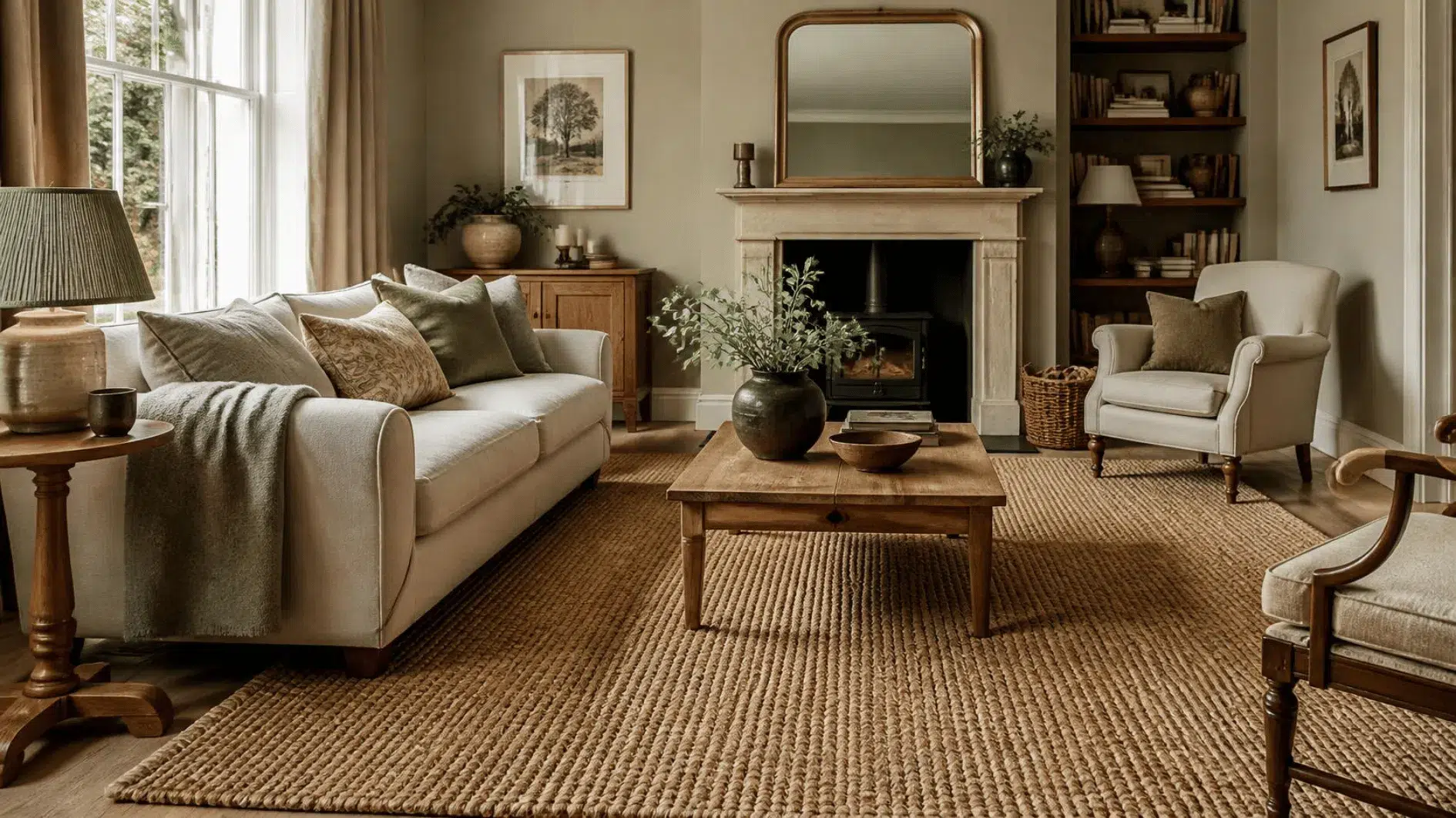
Jute rugs introduce the distinct texture of woven plant fibres into living rooms, bedrooms and other domestic spaces. Their warm neutral shades can complement timber and upholstered furniture, but appearance alone does not determine whether a jute rug is practical for a particular floor.
Moisture restrictions, rug size, thickness, weave and secure placement matter, especially when children, pets or regular spills are part of everyday life. Choosing a suitable rug may sometimes mean selecting another material—or keeping the floor uncovered.
This guide explains how jute rugs are made, how to compare constructions, where to place them and which care and safety questions to ask. For other fibres, consult our natural materials for the home guide, wool home decor and rattan furniture guides.
What Are Jute Rugs?
Jute rugs are floor coverings made wholly or partly from fibres taken from the jute plant. Their woven surfaces often have warm beige or golden-brown variation and a visibly textured character. A finished rug, however, may also contain cotton, latex or another backing or binding material.
The appearance of jute suits many natural home interiors, but its texture and moisture sensitivity mean it is not automatically suitable for every floor or household. A rug should be selected first for how it will function, then for how it looks.
This article is part of our natural materials for the home guide, which compares jute with wool, rattan, linen and other materials.
How Jute Fibre Becomes a Rug

Jute is a plant-derived bast fibre that can be spun into yarn or cord, then woven into a floor covering. The thickness of the yarn, weave construction, backing and finishing affect how a particular rug feels, lies flat and responds to everyday wear.
Rugs described as natural jute may be handmade or machine-produced, and product specifications should explain the composition rather than rely on a natural-looking photograph. Natural variation is possible; construction defects are a separate matter.
Examine close-up photographs, edges and construction descriptions before purchasing, particularly if you need a flatter surface or a rug that will sit beneath chairs.
Jute, Sisal and Seagrass: Know the Differences
Jute, sisal and seagrass are all plant-derived fibres, but they have different origins and can be processed into different textures. Jute typically offers visible woven character; a particular sisal or seagrass rug may feel more rigid or have a different surface and cleaning restriction.
The final rug’s weave and finish can be more important to comfort than a broad fibre-name comparison. Ask for a sample when possible rather than assuming all natural-fibre rugs feel alike.
Do not treat the fibres as interchangeable in cleaning advice. Product-specific care instructions should take precedence over a general tip for natural rugs.
Jute Rugs Compared With Wool and Cotton Rugs
A wool rug, a woven cotton rug and a jute rug may serve different needs. Wool constructions can include dense or soft piles, while many jute rugs have a more pronounced, relatively dry tactile quality. Cotton constructions vary and some may allow easier care.
No material is automatically the best for a family living room or a bedroom. Compare the specific rug’s weave, size, cleaning instructions, backing and expected wear.
Understand Flatweave, Braided and Chunky Jute Rugs
A flatter weave may sit differently beneath furniture from a thicker braided or chunky design. The thickness of knots, yarn, braid and joins can influence how the surface feels and whether light furniture stands evenly.
If you plan to slide a chair or use an occasional table on the rug, evaluate the surface texture and its interaction with the furniture legs. A prominent weave might catch or shift under some items.
Ask for pile or thickness measurements where relevant. Size labels and lifestyle photographs cannot establish the rug’s actual profile or suitability for a wheeled chair.
Handwoven Jute Rugs: Variation Versus Faults
Handwoven rugs may show variation in strand colour, alignment or thickness. Those details can be part of an individual piece, but loose edges, significant holes, irregular movement and poor binding should not be dismissed automatically as handmade character.
Read the seller’s tolerance information and returns conditions, and inspect the rug soon after arrival. A consistent weave and stable finished edge are practical aspects of construction.
When a rug arrives distorted or damaged, document the condition and contact the retailer rather than cutting or gluing fibres without permission.
Are Jute Rugs Comfortable Underfoot?
Comfort is personal. Some people appreciate the firm, textured feel of a jute rug, while others prefer softer coverings in areas where they walk barefoot or sit on the floor.
Construction makes a substantial difference: fine woven jute can feel unlike thick braided cord. Request a sample if texture is important, especially for a bedroom or children’s activity area.
A natural-fibre label does not guarantee softness, freedom from irritation or suitability for someone with sensory sensitivities. Test the specific product whenever possible.
Where Do Jute Rugs Work Best?
Consider rooms where the rug is unlikely to be repeatedly wet or exposed to frequent difficult spills. A living room, study or suitable bedroom may be practical for some jute products, depending on how the space is used.
Check the amount of foot traffic, access to outdoor dirt, likely spills and whether pets or young children frequently use the space. A hard-to-clean rug in a spill-prone area may create unnecessary maintenance.
Prioritise the conditions of the room and the individual product’s instructions over broad design claims that jute belongs everywhere.
Choosing Jute Rugs for Living Rooms
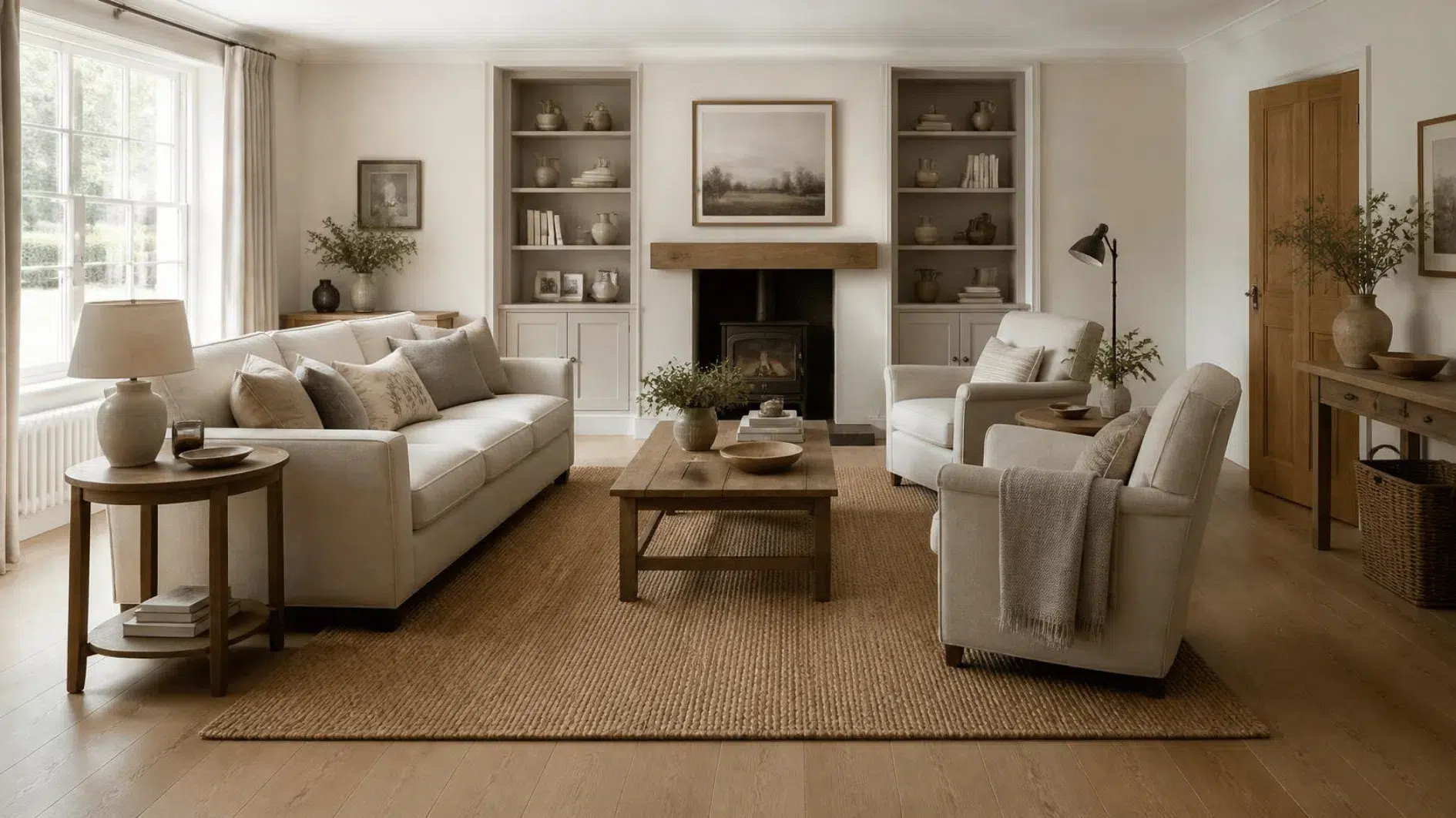
A natural jute rug may provide texture beneath a sofa and coffee table while allowing timber furniture or neutral upholstery to remain prominent. Choose a design that suits the furniture arrangement and regular cleaning needs.
Pay attention to the rug’s position under seating, the direction of walking routes and whether its edges can curl. Do not make a room harder to move through merely to create a larger layered rug arrangement.
Our cosy living room ideas guide
Jute Rugs in Bedrooms
A jute rug can frame the lower part of a bed or add texture beside a timber bedframe. Consider how it feels on bare feet, how it will be cleaned and whether furniture remains stable over its weave.
Avoid a loose small rug directly beside the bed if it may slide or curl when someone gets up. An appropriately compatible underlay and safe placement matter.
For broader bedroom comfort and access, read our cosy bedroom ideas guide. A natural rug is optional, not a prerequisite for an inviting room.
Are Jute Rugs Suitable Under Dining Tables?
A dining rug needs to tolerate chair movement, crumbs and food or drink spills. Some jute rugs may be impractical where chairs repeatedly catch on chunky weave or moisture is frequent.
Measure the table and the space required when chairs are pulled out. Confirm whether the intended rug construction permits comfortable chair movement and practical maintenance.
If spills are expected often, another easier-care floor covering—or keeping the existing floor uncovered—may serve the space better.
Jute Rugs in Hallways and Entrances
Entrances can bring in rain, grit and outdoor debris. A moisture-sensitive rug may not suit a frequently wet front door or an area that is difficult to dry completely.
Hallways also have tight circulation, doors and corners where curling edges may cause trips. Measure door clearance and choose a secure, suitable installation.
Use a product specifically suited to the actual traffic and conditions rather than assuming a natural woven mat will perform like a heavy-duty entrance mat.
Why Wet Rooms Often Need Different Rugs
Bathrooms and areas next to sinks can expose floor coverings to repeated moisture. Jute is often not the most practical option where spills, splashes or persistent damp are likely.
Check whether the product explicitly permits the proposed location and what its wet-cleaning restrictions are. Do not assume an advertised kitchen rug is moisture resistant simply because of its photograph.
Address leaks and ventilation issues directly. A decorative rug cannot resolve water damage or unsafe, slippery flooring.
How to Choose the Right Jute Rug Size
Start with the actual furniture positions and walking routes. Measure the available floor area, include open doors and consider how the rug will look with major furniture partly on or wholly off its surface.
A small rug can appear disconnected from a seating group, while an oversized one may fold against walls, interfere with doors or make cleaning more difficult. Draw the proposed footprint with removable markers before ordering.
Check dimensions in centimetres rather than assuming standard small, medium or large labels mean the same thing across retailers.
Position a Jute Rug Around Furniture
In a living room, the front legs of some seating may rest on a rug, but only if the arrangement remains stable and the product suits the furniture’s weight. A coffee table should not wobble over a pronounced weave.
A rug used in a bedroom must not obstruct wardrobes or create uneven steps by the bed. In a dining room, make sure chairs can move without catching on an edge.
The best position is the one that works for the room, not a rigid rule copied from a styled photograph.
Rug Underlays and Preventing Slips
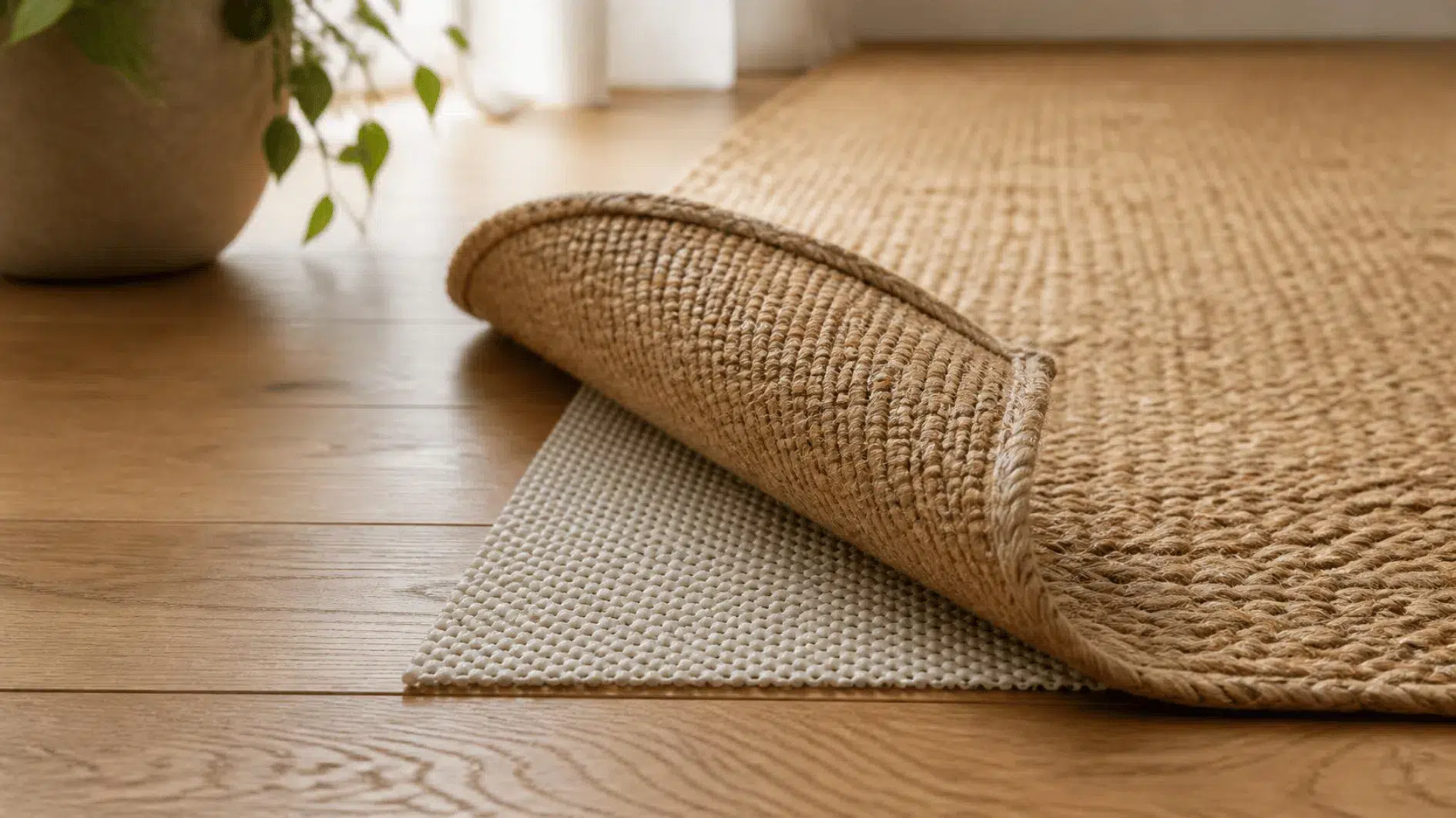
Some jute rugs can shift on hard floors, and corners may curl. A compatible non-slip underlay or other manufacturer-approved solution may help, but the choice depends on both the rug backing and the floor finish.
Check that an underlay will not stain, mark or react with timber, vinyl, laminate or other flooring. Follow care instructions for the floor and rug and ensure the rug lies safely.
Do not leave a rug in use if its edges repeatedly turn up or it moves underfoot. Fix the issue before continuing to use it.
Layering Jute Rugs With Other Floor Coverings
Layering can add contrast between the coarse weave of jute and another textile, but it also introduces further edges and potentially more movement. Consider the practical consequences before placing a smaller rug over a larger one.
A layered arrangement should remain flat, stable and compatible with floor care, especially where children, older adults or people with mobility needs use the space.
There is no requirement to layer rugs to create texture. One correctly sized, well-placed covering is often easier to maintain.
How to Clean a Jute Rug Day to Day
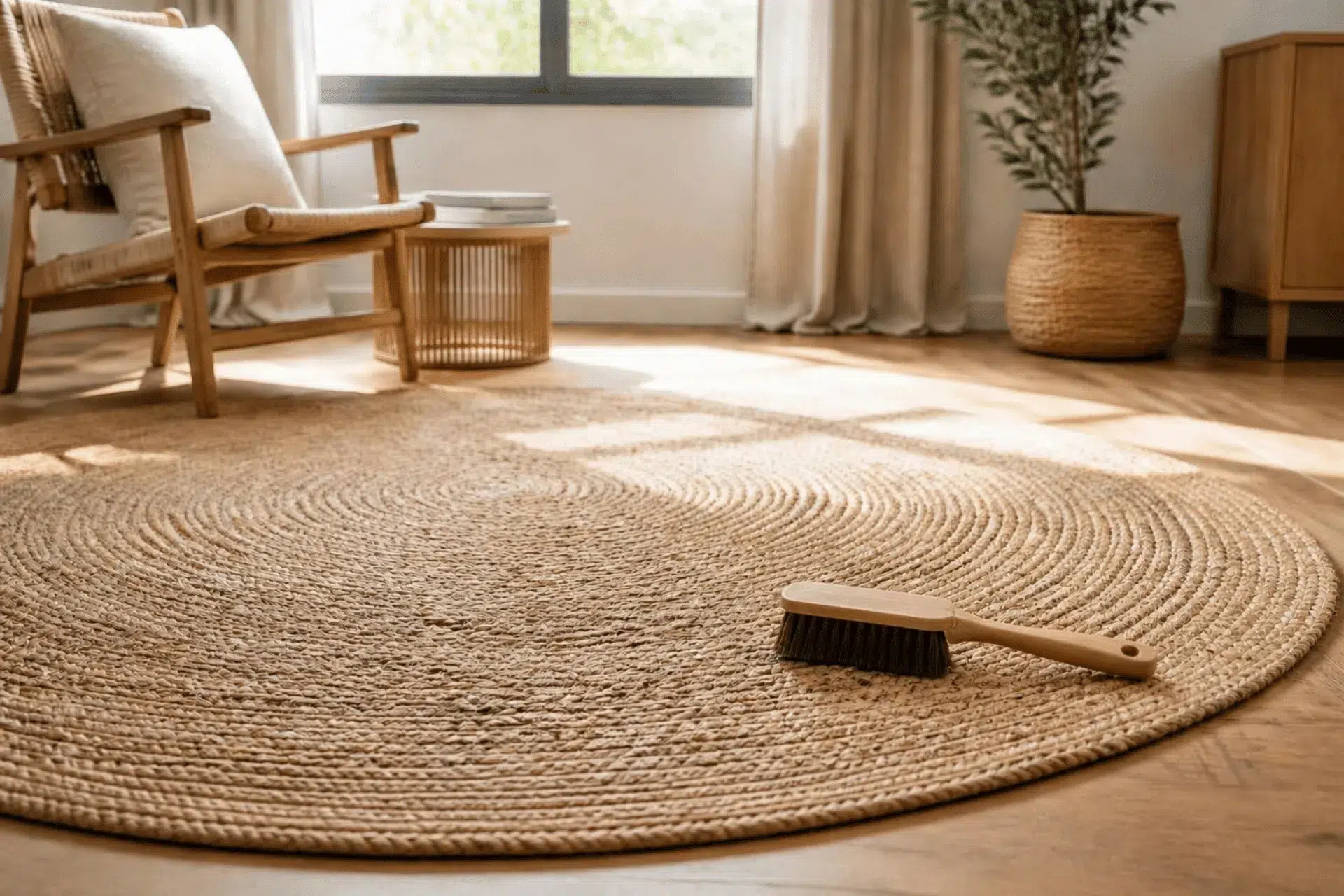
Regular maintenance should follow the rug manufacturer’s instructions. Many jute rug makers recommend dry methods, controlled vacuuming and care to avoid unnecessary moisture, but the correct approach depends on construction and backing.
Check the recommended vacuum attachment and setting. Excessive suction or aggressive beater brushes may damage some loosely woven or fringed surfaces.
Take account of the room’s dirt levels and the condition of the rug instead of following a one-size-fits-all cleaning schedule.
Vacuuming a Woven Jute Rug
Woven texture can trap fine grit or debris between strands. If vacuuming is permitted, use the maker’s guidance for suction, direction and attachments, and inspect edges that could snag.
Avoid repeatedly pulling at loose fibres with the vacuum or by hand. Where a strand or edge appears damaged, ask the retailer or a suitable rug specialist for advice.
Dust and debris do not have to be ignored, but the method should preserve the rug rather than accelerate wear.
What to Do if Something Spills on Jute
Spills should be addressed promptly under the product’s care instructions, because excess moisture can cause problems for some jute fibres, colour, backing or surrounding floor finishes.
Do not soak the rug or improvise steam cleaning, chemical treatments or vigorous rubbing without approval from the manufacturer. Even clear water can leave a change in appearance on some natural-fibre products.
For uncertain stains or valuable rugs, professional advice may be preferable to experimenting. Factor cleaning limits into your purchase decision before spills occur.
Can Jute Rugs Be Washed or Steam Cleaned?
Do not assume a jute rug is machine washable or suitable for a carpet shampooer. Many natural-fibre rugs have restrictions on water exposure, and steam may be incompatible with fibre, adhesive or backing.
The supplier’s instructions determine whether any wet method is safe. A broad online recommendation for carpets should not override those restrictions.
If repeated deep washing is necessary for the household, it may be more practical to choose a rug with a clear washable specification from the outset.
Loose Jute Fibres, Shedding and Natural Variation
Some jute rugs may release loose fibres or show small variations in yarn colour and thickness. The extent depends on the product’s manufacturing and finishing. Initial loose material is not always evidence of poor quality.
Ask the seller what is normal for that rug, and monitor persistent or excessive shedding, unravelled strands and gaps that affect its function.
Avoid cutting woven yarns or pulling loose strands without the maker’s advice, as that can worsen damage or compromise the finish.
Protect Rug Edges, Binding and Corners
The edge finish helps a rug hold its shape. Look for secure binding or other finishing appropriate to the design, and inspect corners that may be more exposed to foot traffic or vacuum attachments.
A lifting corner is a safety and practical concern, not just a styling issue. Use a compatible and safe solution, and seek retailer advice if the rug arrived curled or begins to deform.
Do not conceal unsafe edges under furniture if the hazard remains where people walk.
Protect the Flooring Beneath a Jute Rug
A rug may hold dust and grit or affect how a floor receives air and light. Check the flooring manufacturer’s requirements for underlays, moisture, cleaning and long-term coverings.
Do not trap damp beneath the rug after a spill. If the floor requires attention, remove the covering safely according to the relevant guidance.
Occasional checks can help you identify wear or marks early, particularly where the rug remains in one place for a long time.
Jute Rug Colours and Natural Fibre Variation
Jute commonly appears in beige, tan, golden and warmer brown shades, with some natural variation. Dyed or blended products can offer other colours, but the finished surface may look different in daylight and artificial light.
Compare swatches against flooring, upholstery and timber before buying. The room’s existing colours often provide enough context without adding matching accessories.
Our warm neutral colours guide
Pairing Jute With Wool, Linen and Timber
The pronounced weave of a jute rug can balance soft linen upholstery, timber furniture or a wool throw. Start with the textures already in the room and avoid crowding it with every natural-fibre product at once.
Different textiles can require different cleaning methods. Keep product labels and care instructions accessible rather than treating a natural-material scheme as one uniform fabric category.
For complementary textures, see wool home decor and linen home decor.
Jute Rugs With Children and Pets
Family life may mean frequent spills, floor play, fur and extra wear. Decide whether the rug’s texture and restricted cleaning methods suit those realities.
A firm weave may be uncomfortable for some uses; a rug that slips is a hazard regardless of its material. Assess safety, cleaning and comfort before making style the deciding factor.
A washable or easier-care alternative can be the more appropriate choice without compromising the character of a room.
Buying a Second-Hand Jute Rug
Inspect a used rug for strong odours, damp marks, stains, frayed edges, loose fibres, holes and signs of pests. Ask how it was cleaned and stored, and consider whether its condition permits safe, practical use.
Professional cleaning of natural-fibre rugs can be restricted or costly, so factor likely expenses into its value. Do not buy a damaged piece because the price is attractive if it cannot be placed safely.
Our second hand furniture guide
Are Jute Rugs Automatically Sustainable?
Jute is plant-derived, but that fact does not establish a finished rug’s overall environmental impact. Production, dyeing, backing materials, adhesives, transportation, durability and disposal all matter.
A rug that is unsuitable for its location and quickly needs replacing may be a poor practical purchase even when marketed as natural. Seek evidence for specific environmental claims.
See our sustainable materials guide for the broader distinction between natural origins and substantiated sustainability.
Jute Rugs: Practical Choice by Room
| Location | Potential benefit | Important check |
|---|---|---|
| Living room | Strong woven texture around seating | Foot traffic, spills, stable edges |
| Bedroom | Natural tone beside timber furniture | Barefoot comfort, grip and care |
| Dining area | Visible texture beneath a table | Chair movement and food spills |
| Hallway | Hard-wearing look in a narrow space | Moisture, entry dirt and door clearance |
| Bathroom or wet entrance | Natural appearance | Often unsuitable if repeatedly wet |
This is a guide to questions, not a guarantee about any product. The particular rug’s construction and manufacturer instructions determine its suitability.
Common Mistakes When Choosing Jute Rugs
- Choosing by appearance alone. Feel the weave and assess maintenance.
- Ignoring moisture restrictions. Check the intended room and cleaning instructions.
- Using a rug without adequate grip. Address movement and curling edges.
- Buying the wrong size. Measure furniture, walking routes and doors.
- Assuming all jute rugs are equally soft. Weave and construction differ.
- Trying unapproved wet cleaning. Follow product-specific instructions.
- Pulling loose fibres. Seek appropriate guidance for unravelled strands.
- Confusing natural origin with low impact. Ask for evidence.
A Practical Jute Rug Buying Checklist
- Confirm fibre composition, backing and weave construction.
- Assess underfoot comfort and the needs of household members.
- Measure the room and furniture positions in centimetres.
- Check door clearance and safe circulation.
- Confirm the product is suitable for the room’s moisture and traffic levels.
- Read cleaning and drying restrictions before buying.
- Consider the compatibility of underlay and floor finish.
- Inspect edges, joins and workmanship.
- Review returns, delivery and condition-check arrangements.
- Choose a rug only where it offers practical value and can be maintained.
Frequently Asked Questions About Jute Rugs
Are jute rugs suitable for living rooms?
They can be, depending on the rug’s construction, expected spills, comfort and maintenance needs. Follow the product’s care guidance and assess safe placement.
Are jute rugs soft underfoot?
Some constructions feel relatively firm or textured. Comfort varies by weave, thickness and personal preference; request a sample if possible.
Can you wash a jute rug?
Do not assume so. Many jute rugs have water restrictions and may not tolerate washing or steam cleaning. The particular care label is decisive.
Do jute rugs shed?
Some may release fibres, especially during early use. Check what is normal for the product and seek advice if shedding or unravelling is excessive.
Do jute rugs need a non-slip underlay?
Some rugs and floors benefit from a suitable compatible underlay. Check the rug and floor manufacturer’s advice and ensure the rug stays flat and stable.
Are jute rugs eco-friendly?
A plant origin is not sufficient evidence. Manufacturing, backing, transport, lifespan and end-of-life options must also be considered.
Choose a Jute Rug That Works for the Room
Jute rugs can add distinctive woven texture, warm colour and simple character to a home. The best purchase, however, is one that feels suitable underfoot, lies safely and can be maintained in the space where you plan to use it.
Measure carefully, check the construction and care instructions, and do not feel obliged to cover a floor that already works well. A useful rug should support the room rather than create another problem to manage.

Leave a Reply