

Home / Journal / Space & Light / Interior Atmosphere / Cosy Living Room Ideas: Creating a Comfortable, Inviting Space
SPACE & LIGHT · INTERIOR ATMOSPHERE
Cosy Living Room Ideas: Creating a Comfortable, Inviting Space
Make your living room welcoming through furniture layout, comfortable lighting, accessible everyday surfaces and balanced textures.
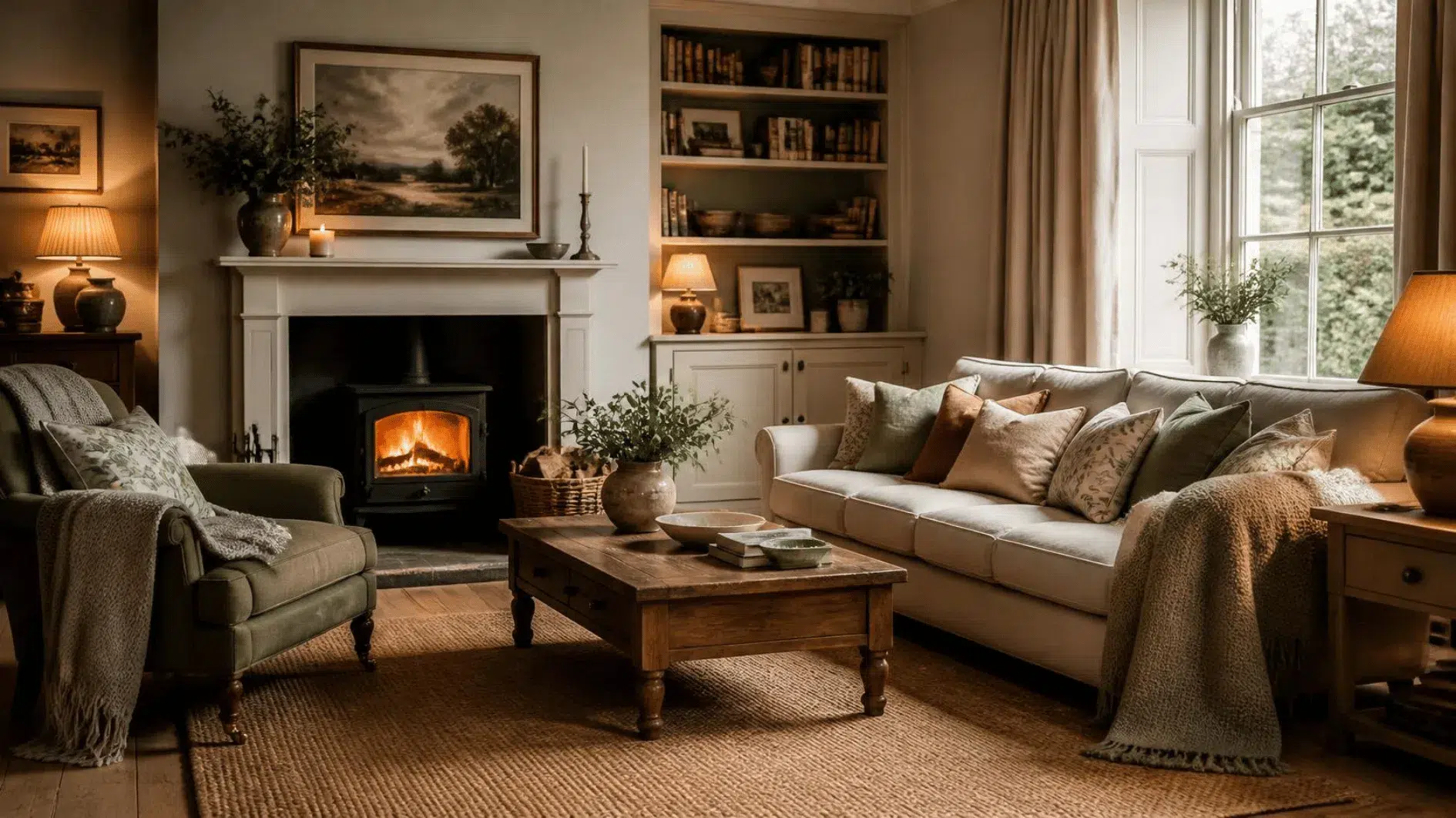
Cosy living room ideas often focus on soft furnishings and warm lamps, but comfort begins with how the space actually works. A room where people can sit, read, talk and move around freely often feels more welcoming than one filled with decorative accessories.
You do not need a fireplace, a large budget or a particular decorating style. The ideas below work as practical starting points for compact flats, traditional sitting rooms, family spaces and rented homes.
How to Make a Living Room Cosy
A cosy living room is welcoming and comfortable to use. The feeling is not created by a fixed number of cushions, a fireplace or a particular shade of beige. Seating, lighting, circulation and the things people enjoy often matter more than decorative accessories.
A modern flat, traditional terrace or shared family home can all be cosy. A practical arrangement should support the room’s actual activities and allow the people living there to settle without rearranging a display.
For a home-wide approach to light, colour and texture, read our cosy home ideas guide. This article focuses on the living room itself.
Decide What the Room Needs to Do
Begin with real activities rather than shopping. Think about conversation, television, reading, children’s play, entertaining visitors or occasional work. The same layout will not serve every activity equally well.
Notice where people sit, where they place drinks, which lamps are used and what objects regularly collect in the wrong place. That information gives you a more useful plan than copying a photograph.
Prioritise the activities that matter most and allow sufficient room for movement, doors and ordinary household use.
Arrange Seating for Conversation and Comfort
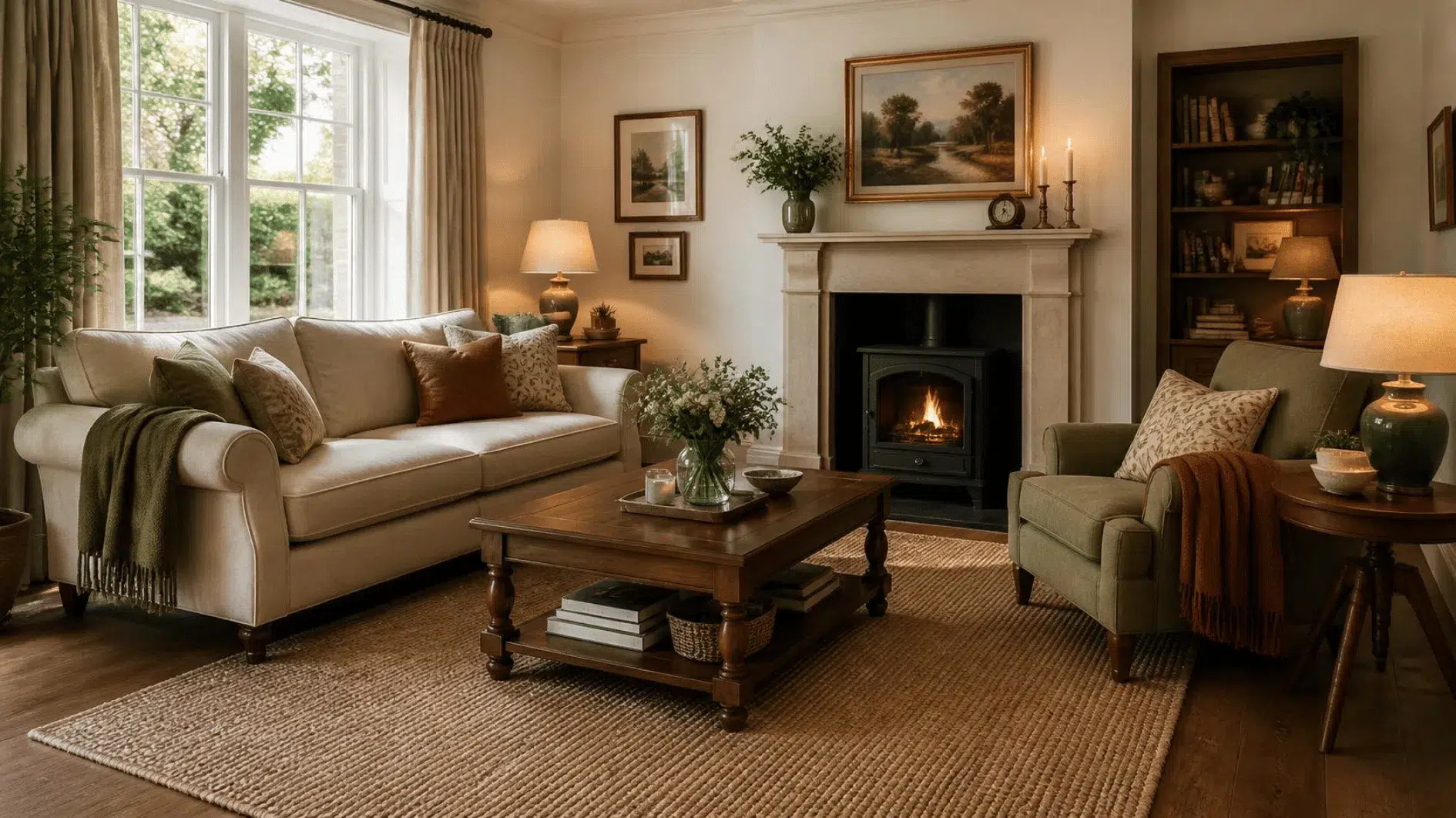
A sofa and armchair can feel more connected when they relate to each other rather than forming an unrelated row against the walls. Where there is enough room, consider a slightly angled chair or a table between nearby seats.
Do not insist on symmetry if the space is narrow or the main activity requires a different orientation. A practical arrangement for television and conversation may be preferable to a perfectly balanced furniture display.
Keep access around seats clear. A cosy arrangement stops being comfortable if people repeatedly squeeze past table corners.
Check the Sofa’s Size and Position
A large sofa can make a compact living room feel crowded, but a small sofa is not automatically the right choice either. Depth, arm width, access and comfort for the people who use it all matter.
Measure the existing furniture and the circulation around it before considering replacements. Sometimes moving a sofa away from a poorly placed wall or changing the position of a chair makes the room feel more settled.
If the sofa works well, keep it. Decorative styling is not a reason to replace serviceable furniture.
Use Coffee Tables and Side Tables Purposefully
A useful surface within reach makes seating more inviting. It may be a modest side table beside a reading chair or a coffee table that leaves enough space for legs and movement.
Look for stable proportions and a suitable height. Too many small tables can clutter walking routes; one appropriately positioned piece may solve the problem.
Timber furniture can add warmth without new decoration. See our wooden home decor guide for material, grain, finish and upkeep considerations.
Layer Living Room Lighting for Different Uses

A single bright ceiling fitting may illuminate the room while leaving the seating area feeling flat. Combining ambient illumination with a suitable reading or task light allows the space to support more activities.
Start with lamps already in the home. Move one closer to a seat that needs it and observe what changes in the evening. A useful lamp is more valuable than several decorative sources that do not give adequate light.
For more technical advice on position and layers, read lighting for a sitting room. Keep stairs, routes and practical tasks properly illuminated.
Choose Comfortable Brightness and Light Colour
Warm-looking light can contribute to an inviting evening room, but there is no universal bulb that suits every activity. Reading, crafts and general circulation may need different levels of brightness.
Check bulb and fixture compatibility rather than relying entirely on colour labels. Dimmers or adjustable lamps are useful only where the equipment supports them safely.
Evaluate light in the actual room, because paint, upholstery and timber look different after daylight fades.
Create a Simple Reading Corner
A comfortable chair, an appropriate reading light and a place to set a book or drink can create a complete quiet corner. Elaborate shelving or extra furnishings are optional.
Choose a position that does not obstruct windows, radiators, doors or walkways. If the living room is small, part of the sofa with a nearby lamp may serve as well as a separate chair.
Try the corner in daily use before adding objects. Comfort and practical reach are stronger measures of success than photographic appearance.
Make Use of Natural Daylight
Observe where light reaches at different times before moving major furniture or choosing paint. Daylight can reveal textile texture and timber grain and make small rooms feel clearer.
Avoid blocking window access with tall furnishings. If glare affects seating or television, consider how existing curtains can be used rather than buying a full new window treatment.
Build a Warm Colour Palette From What You Own
Warm neutrals, terracotta, muted green and deeper earthy colours may suit some living rooms, but comfort is not dependent on a particular wall shade.
Begin with flooring, large upholstery and fixed finishes. Small changes in how light and dark objects are distributed can bring cohesion without buying matching accessories.
View any intended paint sample in daylight and lamplight. A forthcoming guide to warm neutral colours will explore undertones and palette choices in greater depth.
Use Light and Dark Contrast for Depth
A room composed entirely of similar mid-tones may look flat. A darker side table near a pale sofa or a light object on deeper shelving can create definition.
Look for contrast in existing possessions before spending money: books, picture frames, timber furniture and cushions may provide it already.
Balance visual weight across the room rather than concentrating every dark item in one corner. Good lighting can help darker areas feel intentional rather than gloomy.
Choose Cushions for Support, Not Quantity
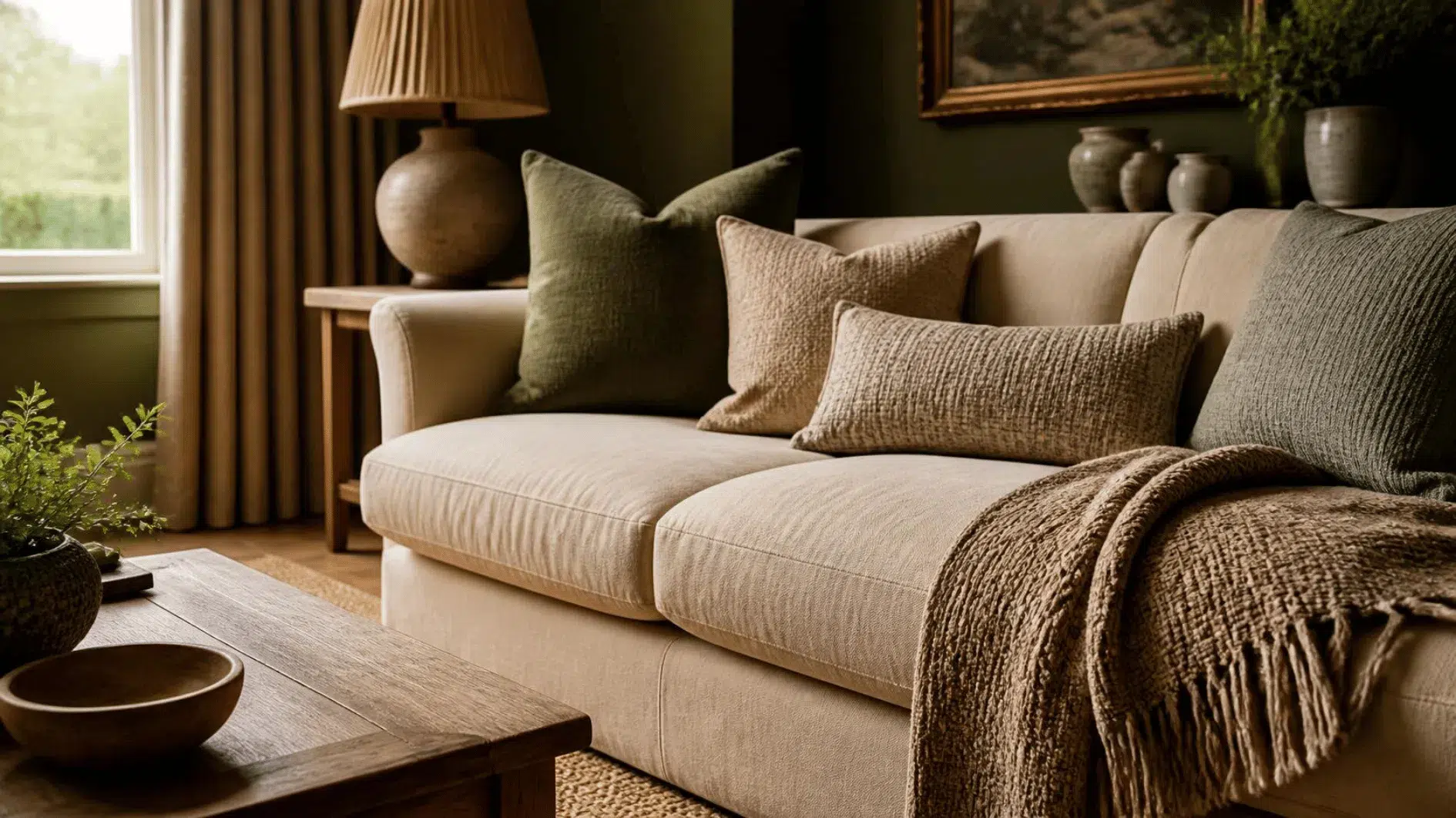
A few appropriate cushions can provide support and introduce texture. A large pile, however, may leave less room for people to sit and create more laundry or tidying.
Look at the sofa’s depth and the needs of its users. Choose covers with practical closures and care instructions suited to the household.
Rearrange owned cushions before buying a matching set. The finished seating should be easy and pleasant to use.
Use a Throw Where It Adds Real Comfort
A suitable throw can soften the visual outline of seating and be useful during cooler periods. It does not need to be arranged with precision every morning.
Choose fabric according to comfort, laundering and expected wear. A serviceable blanket already in the house may offer more value than a new purely decorative textile.
Keep textiles clear of heaters, lamps and other heat sources and avoid adding layers that obstruct furniture use.
Choose a Rug for Layout, Wear and Safety
A rug can visually connect a seating group and add texture, but only when its size, placement and maintenance suit the room.
Measure furniture placement and check door clearance. Edges that curl or slip are a hazard, so use suitable non-slip measures as appropriate to the flooring.
Rooms with attractive or practical existing flooring do not need a rug to be cosy. The right choice depends on daily use.
Mix Natural Textures Without Crowding
Timber grain, woven textiles, ceramics and metal provide different surface qualities. A small number of contrasts is often more effective than decorating every corner with a different material.
Try pairing existing wooden furniture with a soft textile or a useful ceramic bowl, then leave enough open space for the room’s functions.
Display Books and Personal Objects Thoughtfully
Books, framed pictures and keepsakes can give a living room warmth because they relate to the people who live there. They need not conform to a curated neutral colour palette.
Leave enough room to retrieve objects and keep shelves within their intended load. A few meaningful items may look stronger than a crowded display.
For practical guidance on using vases and pottery safely, see our ceramic home decor guide.
Make a Television Area Less Dominant
A television can be a useful part of the living room without determining the position of every other object. Position comfortable seating around real viewing needs and leave space for alternative activities where possible.
Place lamps to avoid distracting screen reflections and route cables safely. Follow the maker’s guidance for heavy screens and wall mountings.
An accessible bookshelf, practical table or reading lamp can help the living room support more than one activity.
Small Living Room Ideas: Making a Compact Flat Cosy
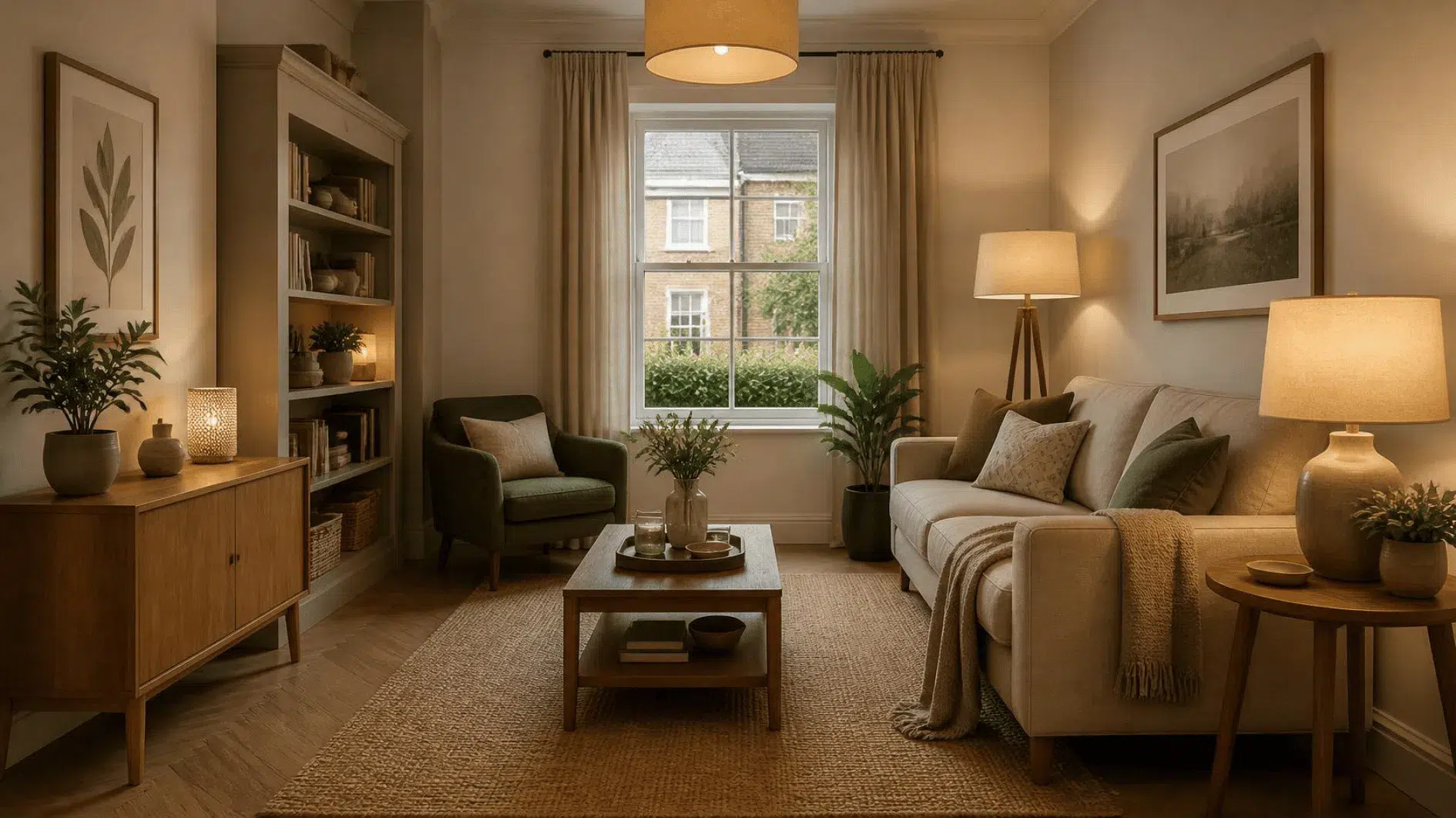
A compact living room benefits from furniture that has a clear purpose and allows good circulation. Oversized decorative pieces and too many small side tables can quickly reduce usability.
Use a suitable lamp near the main seat and keep storage close to activities. A small selection of textures and personal objects can create warmth without filling every gap.
Our minimalist home guide explains how to simplify proportions without removing everything meaningful.
How to Arrange a Small, Long or Narrow Living Room
A long room can feel like a corridor if every piece of furniture is placed against opposite walls. Consider whether one primary seating group or two distinct activity areas will better serve its dimensions.
Use a practical table, existing lamp or suitable rug to define the group, while keeping a continuous clear route through the room.
Measure and test arrangements before purchasing anything. The smallest number of appropriately scaled pieces may provide the most comfortable result.
Keep Shared Living Rooms Welcoming
A family living room may need to hold games, books, toys and objects used by several people. These are signs of everyday life rather than styling failures.
Give frequently used items accessible homes and agree on shared systems. Select upholstery and covers that can be maintained without a disproportionate amount of work.
See our home organisation ideas guide for activity-based storage and workable routines.
Create a Cosy Living Room in a Rented Home
A rented room can feel personal through moveable furniture, existing textiles, permitted artwork and appropriate freestanding lamps, without altering fixed finishes.
Check tenancy conditions before painting, installing shelves or changing fittings. Avoid unauthorised electrical work or wall damage.
If the flooring or wall colour is not ideal, consider whether existing textures and lighting can balance it rather than investing in a complete temporary makeover.
Adjust the Room Through the Seasons
Longer evenings and darker months change how the living room is used. You may prefer more practical lamp lighting or accessible throws in colder periods, then a lighter textile arrangement during brighter months.
There is no need for a complete seasonal shopping collection. Rotate or reposition items you already own when useful.
Visual warmth is not a substitute for adequate heating, ventilation or dealing with damp. Physical comfort should be addressed directly and safely.
How to Furnish a Living Room: Start With What You Have
First try shifting the main seat, adjusting lamp placement, clearing the coffee table or displaying one meaningful object more prominently. These changes can improve daily use without cost.
If a purchase is necessary, identify the problem it solves and measure the available space. Examine durability, care and whether an existing or second-hand option is suitable.
The slow living guide offers a broader perspective on making fewer unnecessary purchases and keeping routines manageable.
Common Cosy Living Room Mistakes
Common mistakes include buying cushions without assessing sofa comfort, relying on dim decorative lighting where clear task light is needed, and crowding tables with objects that must be moved whenever someone uses them.
Other problems come from ignoring circulation, choosing a rug that slips, copying another home’s proportions, and replacing serviceable furniture simply to match a trend.
A cosy room should be easy to occupy, use and maintain. Practical comfort is a more reliable guide than a styled photograph.
A Practical Cosy Living Room Checklist
Decide which activities matter most; check seating arrangements and movement; place useful tables within reach; provide appropriate ambient and task lighting; and take advantage of available daylight.
Build colour and texture around existing furniture and flooring. Choose manageable cushions and rugs. Keep fragile objects stable and shelves appropriately loaded.
Make one small change, live with it, then decide whether further rearrangement or a specific purchase will genuinely help.
Frequently Asked Questions About Cosy Living Rooms
How can I make my living room cosy without spending? Reposition furniture and lamps, clear impractical surfaces, use owned textiles and bring meaningful objects into view.
What colours create a cosy living room? Many warm and deeper shades can be inviting, but the best result depends on existing finishes, daylight, lighting and preference.
Does every cosy living room need a rug? No. Rugs are useful where they improve the arrangement and are safe and practical to maintain.
Can a small modern living room feel cosy? Yes. Comfortable seating, suitable lighting and a considered material balance matter more than the decorative style.
How many cushions are enough? As many as provide useful support without reducing the sofa’s usability.
How do I make an open-plan living room inviting? Define the main seating activity with furniture and lighting while preserving access to adjoining spaces.
A Welcoming Living Room Starts With Everyday Comfort
A truly cosy living room serves real activities: reading, conversation, relaxation and shared time. A useful lamp, correctly positioned seat and manageable arrangement of textiles may contribute more than a collection of new decorative objects.
Use what already works, make adjustments that improve comfort and leave space for ordinary life. The most inviting result is one people can enjoy without constantly maintaining the appearance.

Leave a Reply