

MINDFUL ROUTINES · SLOW LIVING
Slow Living: A Practical Guide to Slowing Down at Home
A practical approach to a more considered day: simplify repetitive decisions, use the home you already have and build small rituals around everyday life without turning calm into another task.

Slow living has become associated with beautiful interiors, leisurely breakfasts and perfectly arranged shelves. Yet the parts that make it useful are less picturesque: a day with fewer unnecessary decisions, a room that is easier to use and enough flexibility to give attention to what matters.
You do not need more space, a different job or a collection of new homewares to begin. Slow living can work through small, repeatable choices in an ordinary household, including one where time and responsibilities are limited.
This guide brings the idea back to everyday practice, from mornings and evenings to lighting, storage, consumption and realistic shared-home routines.
What Is Slow Living?
Slow living is an approach to daily life that gives more attention to how time, energy, space and possessions are used. It is not necessarily about doing everything at half speed. In a busy home, it may simply mean reducing avoidable rush, setting more realistic expectations and choosing a few routines that feel worth keeping.
The term does not describe a fixed lifestyle or a type of house. You can practise it while working full-time, caring for family members, living in a rented flat or managing a household with little spare time. The useful question is not how slow your day looks, but whether the way you organise it reflects what matters.
At home, this often connects to three decisions: keep everyday systems uncomplicated, leave room for activities you value and avoid turning relaxation into another project requiring purchases.
Slow Living Is More Than an Aesthetic
Soft linen, timber furniture, ceramics, greenery and warm lamplight may create a welcoming atmosphere, but they do not automatically produce a slower life. A beautiful tea set does not help if the ritual around it adds pressure. A minimalist room does not solve an overfilled timetable.
Design choices are worthwhile when they make life easier or more pleasant. A reading chair with a useful lamp, a clear worktop for preparing breakfast or a convenient place for shoes can make routines feel less complicated. Those improvements do not need to be bought as a matching collection.
Our minimalist home guide explores visual simplicity and layout. Here the emphasis is on the experience of living in the space, rather than its appearance.
Start by Finding Everyday Friction
Before changing a routine, notice where the day repeatedly feels awkward: rushing to find keys, deciding what to eat at the last minute, walking around misplaced belongings or having no comfortable place to sit after work.
Choose one small source of friction. Instead of setting ten goals, solve it practically and see whether the change lasts. A tray for keys, a simple shopping list, a clear bedside surface or earlier preparation for the following day may be enough.
- Which task makes mornings or evenings unnecessarily difficult?
- What can be prepared once rather than decided repeatedly?
- Does an item need a clearer place to live?
- Can a commitment be simplified, postponed or declined?
- What would make the most ordinary part of today easier?
Keep What Helps, Not Just What Looks Considered
A slower home does not have to contain fewer objects by definition. Cookware, books, tools, children’s supplies and meaningful keepsakes can all have clear purposes. The aim is to reduce unnecessary management, not remove every trace of everyday life.
Ask whether a possession supports an activity or brings lasting personal value. If it has stopped doing either, consider repair, reuse, gifting or an appropriate disposal route before replacing it with something more fashionable.
For more structured decisions, our guide to decluttering your home focuses on manageable room-by-room changes without an overwhelming clear-out.
Make Mornings More Manageable

A slower morning is not necessarily a long one. It is a routine with fewer avoidable decisions and a beginning that suits the time you actually have. For someone leaving early, that might mean clothes and a bag prepared the evening before. For someone at home, it might mean making breakfast without trying to do several unrelated tasks at once.
- Prepare the essentials you will need before leaving, where possible.
- Choose one reliable morning priority instead of an elaborate checklist.
- Use natural daylight when it is available and appropriate.
- Keep the kitchen and entrance organised around the way you use them.
- Allow a small margin where possible rather than planning every minute.
Our Morning Routine Ideas guide covers realistic starts for different household schedules without requiring a particular wake-up time.
Create an Evening Transition
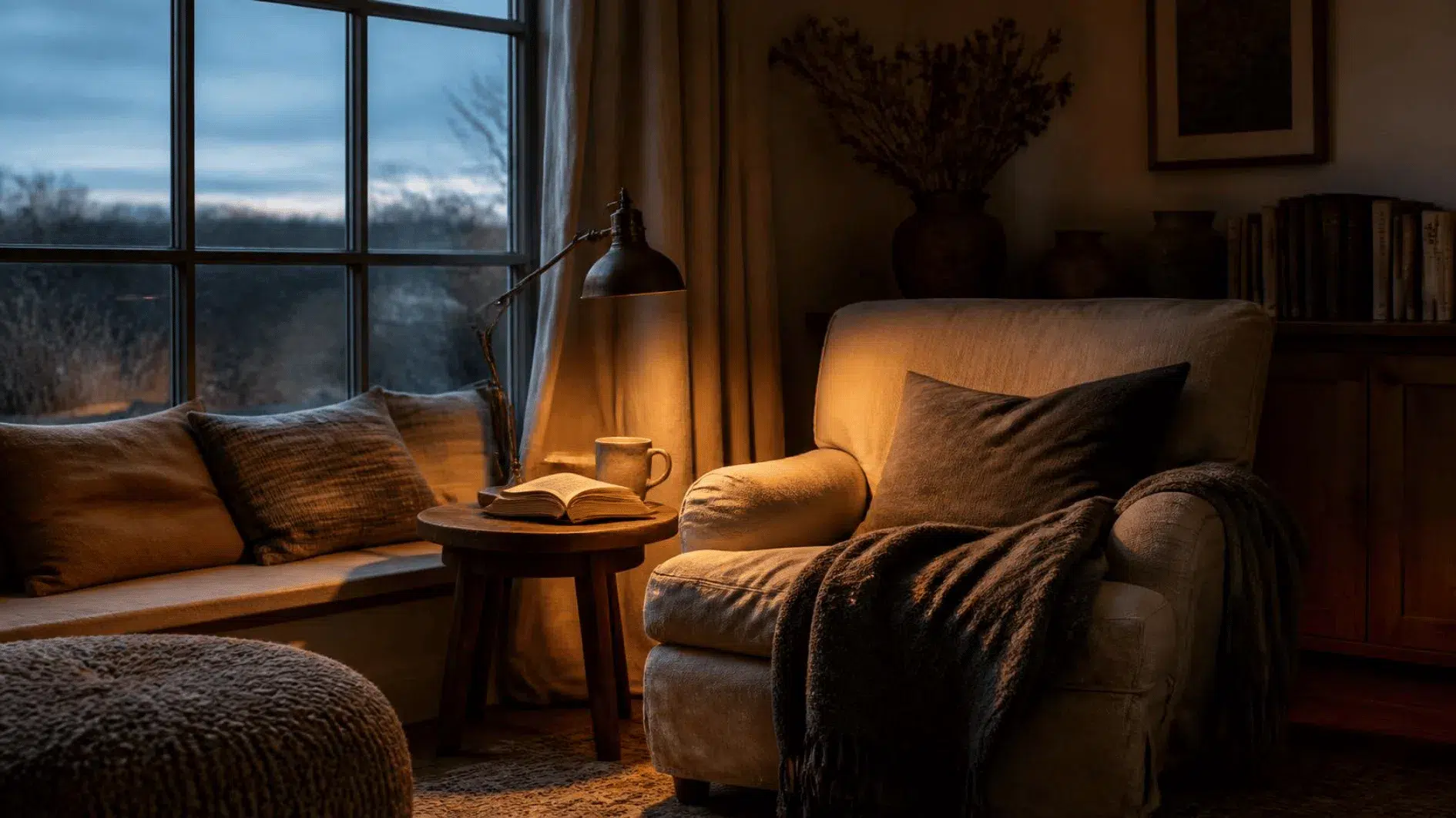
An evening can carry the unfinished decisions of the day. A short transition may help: put away what you no longer need, prepare a few essentials for tomorrow and choose how you want to spend the time that remains.
This does not need to be a perfect wind-down ritual. Some evenings are busy, unpredictable or shared with responsibilities. A ten-minute reset, a simple meal, comfortable lighting or a quiet activity can still make the space easier to use.
Our Evening Routine Ideas guide provides practical options for different schedules without promising better sleep or requiring a long list of wellness products.
Use Small Rituals Without Making Them Obligations
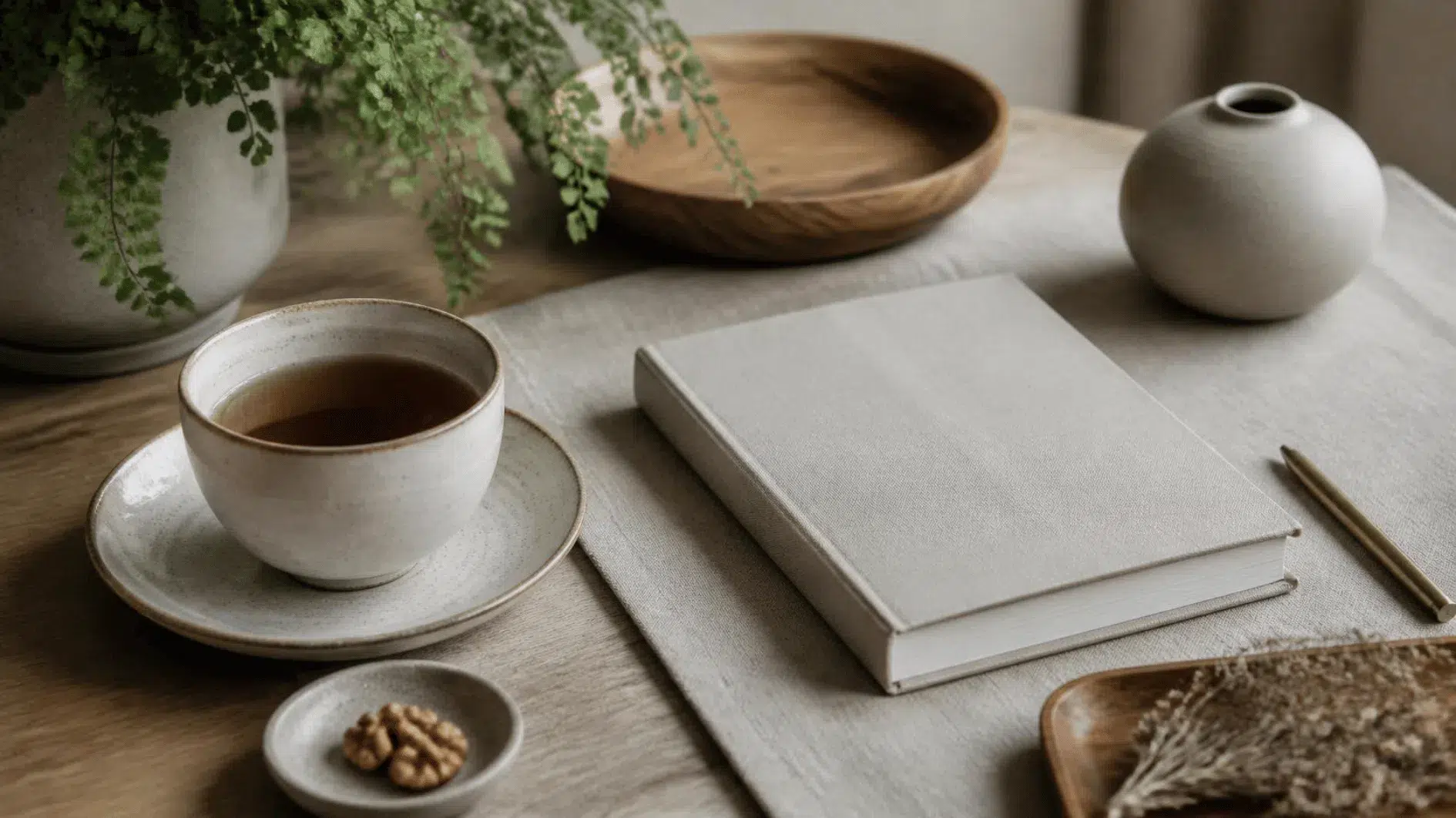
A routine helps something happen reliably; a ritual gives a familiar activity a little more intention. Preparing a cup of tea, watering a plant, opening curtains in the morning or sitting with a book can all become small moments of attention.
The difference lies in how the activity is experienced, not the object involved. You do not need special candles, a particular soundtrack or expensive tableware. Choose something that fits naturally into a part of the day that already exists.
If you enjoy home fragrance, use it as an optional part of the atmosphere, never as a health necessity. Our oil diffuser guide covers different devices and practical precautions.
Give Everyday Activities a Useful Place
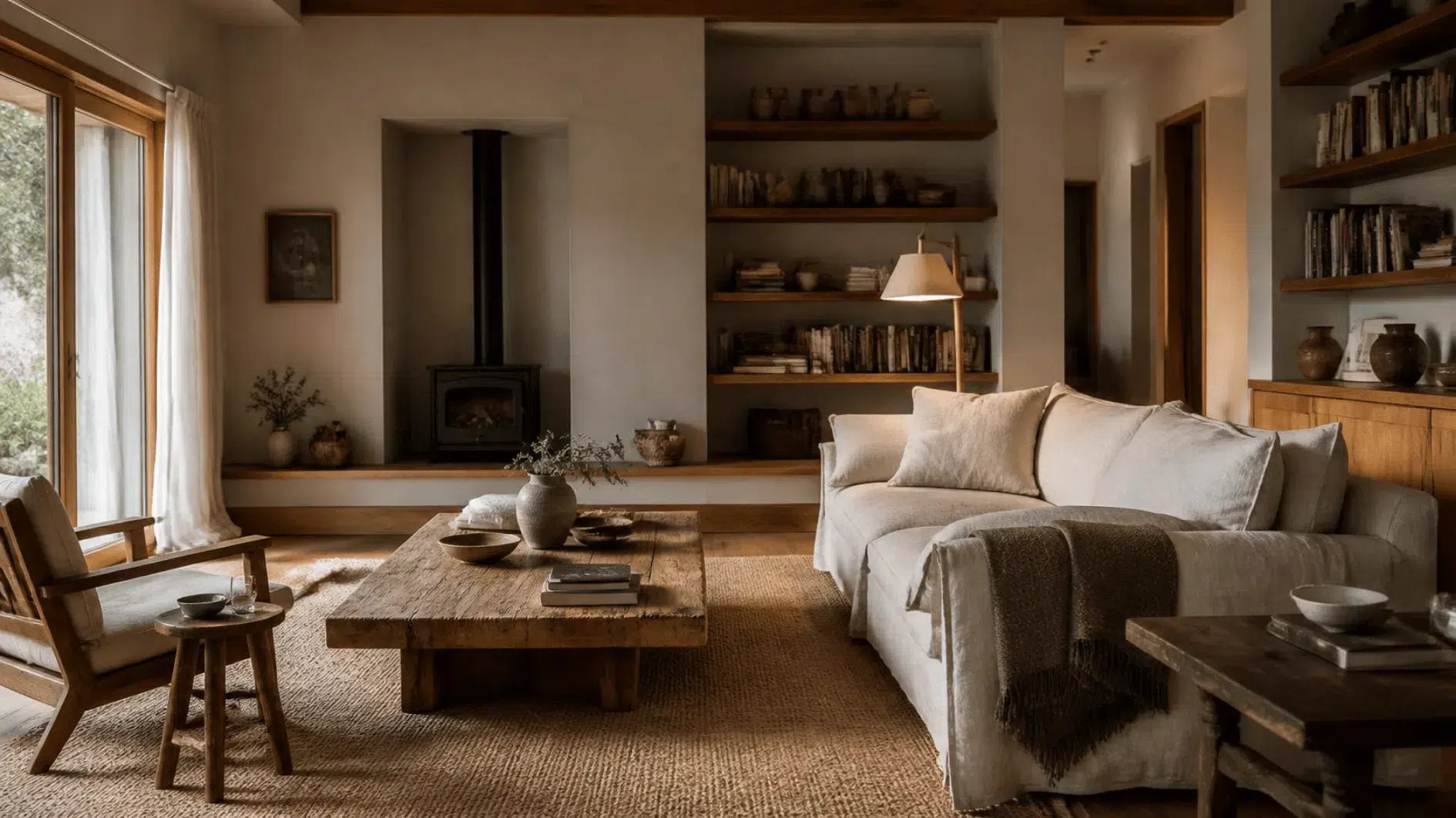
A home that supports slow living is usually straightforward to navigate. You should be able to prepare food, sit down, read, work and put possessions away without an elaborate sequence of moving other objects first.
Think in simple activity zones: breakfast items near the kitchen area where you use them, a reading lamp beside an appropriate seat or a place for outdoor items close to the entrance.
The home organisation ideas guide explains how to build these zones from existing furniture and storage before buying new containers.
Use Light to Mark Different Parts of the Day
Light has a practical and atmospheric role. Daylight can make everyday work and movement easier, while appropriate task lighting helps with cooking, reading and household jobs. Later, softer ambient lighting can create a different mood without making the room unusable.
You do not need a complicated smart home. A well-placed table lamp, an adjustable reading light and reasonable control over overhead lighting can be enough. Use safe, efficient lighting suited to each task.
For a more detailed lighting plan, see our lighting for a sitting room guide, which covers layering rather than relying on one bright source.
Keep Comfort Grounded in the Senses
Comfort at home depends on the actual conditions. Check whether a chair supports the way you sit, whether a blanket is practical to maintain, whether lighting is adequate and whether the room’s temperature and ventilation suit its use.
Natural-looking materials can add warmth and texture, but suitability still matters. Linen, wool, timber, glass and ceramic have different cleaning and durability requirements. Choose useful objects that are easy to care for rather than surfaces that add constant maintenance.
If you use scented products, consider the people and animals who share the space, follow product instructions and make ventilation a priority. An unscented room is equally valid.
Reduce Repeated Decisions Where They Add Little Value
Some decisions are enjoyable, while others consume attention without adding much. Repeating simple choices can make busy periods feel harder: searching for cleaning supplies, improvising the same shopping list or deciding where important documents belong.
Useful shortcuts include a regular place for essentials, familiar meals you enjoy and a predictable way to restock household basics. Keep these systems flexible enough to change when schedules, budgets or household needs change.
Do not over-engineer the solution. A list on paper can work as well as an app; a cupboard shelf may be a better tool than a new set of organisers.
Buy Less Often and Choose More Carefully
Slow living is often associated with quality over quantity, but higher price alone does not mean better quality or a better choice. Buy only when a real need is clear, compare product suitability, consider repair and look at the likely useful lifespan.
Before buying a new lamp, table or textile, ask whether you can move, maintain or repurpose something you already own. For products you do need, check construction, care requirements and how well they fit the room. Our simple living ideas guide brings this approach together with practical routines and household organisation.
Our zero waste lifestyle guide
Make Space for Everyday Contact With the Outdoors
A little time outside can be part of an everyday routine without becoming a demanding activity plan. Open the curtains to notice the daylight, step outside where practical or spend a few minutes tending plants if this is an activity you enjoy.
If you keep indoor plants, focus on suitable light, space and manageable care. The indoor plants guide
Do not feel obliged to bring plants into a space that cannot support them, or where they create care demands you do not want.
Slow Down Ordinary Food and Kitchen Routines
A slower approach to food is not necessarily cooking everything from scratch. It may involve using what you have, choosing straightforward meals, preparing a few components when convenient and creating enough worktop space to cook comfortably.
Organise the kitchen around activities you perform regularly. Store equipment where it can be used, keep a realistic view of cupboard contents and avoid buying extra tools for a routine you are unlikely to maintain.
Meals can still be quick. The aim is less unnecessary complication and waste, not a performance of elaborate home cooking.
Choose When Technology Helps and When It Interrupts
Technology can make home life more convenient: a calendar reminder, a useful shopping list or a lighting schedule may remove repeated decisions. But notifications, competing screens and complicated automations can also create distractions.
Instead of declaring every device a problem, choose where technology serves you. Silence non-essential alerts during an activity you value, simplify an overcomplicated system or leave your phone elsewhere while reading if that suits your routine.
Our home light automation guide
Slow Living in a Shared or Busy Home
A shared home cannot always move at one person’s ideal pace. Children, flatmates, care needs, shift patterns and work commitments create different routines. Rather than demanding universal calm, agree on specific friction points and practical improvements.
You might choose a convenient place for bags, a predictable reset for the kitchen, an agreed time for a shared meal or a way to keep a common room usable.
Respect other people’s possessions and preferences. A slower household is not achieved by imposing one person’s aesthetic or routine on everyone else.
Slow Living in a Flat or Smaller Home
The amount of available space does not determine whether daily life can be considered. A compact flat may benefit from fewer storage obstacles, furniture sized to the room and activity zones that can change through the day.
Look for what would be easiest to use, store and maintain in limited space. A folding work surface might help; alternatively, it may be one more mechanism you would rather not manage.
Avoid Turning Weekends Into Another Project
Free time can quickly fill with errands, household maintenance and plans to optimise every corner of the home. Some tasks are necessary, but not every weekend needs an extensive reset or renovation.
Choose a manageable amount to do, identify anything time-sensitive and leave space for rest or activities you enjoy when circumstances allow. If something can remain unfinished without consequences, there may be value in letting it wait.
Slow living does not demand that you do less work than your responsibilities allow. It asks whether the work and expectations you can influence are arranged sensibly.
Practise Slow Living Without a New Budget
Many useful changes cost nothing: move a lamp, simplify the morning exit routine, reuse a tray, put an item back where it is needed or set a reasonable boundary around optional commitments.
| Common source of friction | Simple, low-cost adjustment |
|---|---|
| Searching for keys and bags | Choose an accessible place close to the door. |
| Kitchen worktops filling up | Give everyday tools practical storage and remove unrelated items. |
| Harsh lighting in the evening | Use an existing shaded lamp or another suitable light source. |
| Too many duplicate household products | Check supplies before buying replacements. |
| Unclear end-of-day tasks | Choose a small reset that supports the following morning. |
Only invest in a product when it addresses a real problem. A durable and suitable replacement can be worth the cost, but new products are not prerequisites for a more intentional day.
Common Slow Living Mistakes
- Trying to change everything at once. Overly ambitious routines are hard to sustain.
- Treating the look as the goal. A pleasing interior is not the same as a more manageable day.
- Buying a collection of ritual products. Many valued daily activities need no special objects.
- Confusing slower with better in every situation. Efficiency is useful when a task does not deserve more time.
- Expecting every household member to share one routine. Consider different commitments and needs.
- Ignoring upkeep. A complicated new system can create more work than it saves.
- Making rest another achievement to track. Not every quiet moment requires a metric or plan.
A Realistic Seven-Day Starting Plan
Use this as a set of optional prompts rather than a test. Each day’s change can be as small as the available time and circumstances allow.
| Day | One practical experiment |
|---|---|
| 1 | Notice one repeated point of friction at home. |
| 2 | Give an everyday essential a reliable place. |
| 3 | Make one morning decision easier by preparing ahead. |
| 4 | Improve one source of light or comfort using what you own. |
| 5 | Choose a familiar activity to do with fewer distractions. |
| 6 | Repair, reuse or reconsider an unnecessary purchase. |
| 7 | Keep the change that helped most; release the ones that did not. |
You can repeat a day, skip several or choose a completely different improvement. The useful result is finding one sustainable habit, not completing seven boxes.
Frequently Asked Questions About Slow Living
What is slow living in simple terms?
Slow living means making more deliberate choices about how you use time, space and possessions. It focuses on useful routines and priorities rather than constant activity or the appearance of a particular lifestyle.
How can I practise slow living when I am busy?
Choose a small friction point you can influence. Preparing essentials in advance, giving belongings fixed places or simplifying one repeated decision can help without requiring a longer day.
Does slow living mean minimalism?
No. Minimalism concerns the deliberate use of possessions and space, while slow living is a broader approach to routines and priorities. They can complement each other but are not interchangeable.
Do I need to buy anything for slow living?
No. Existing furniture, light, basic household tools and familiar activities are often enough. Buy only when a product serves a clear practical need.
Is slow living the same as mindfulness?
They overlap in giving attention to everyday experience, but slow living also includes practical decisions about purchases, routines, commitments and the design of home systems.
Can a family home be a slow-living home?
Yes. There is no requirement for silence or a perfectly tidy room. Shared routines, easier storage and realistic expectations may be more relevant than any particular visual style.
Start With One Change That Earns Its Place
Slow living at home is most useful when it reduces unnecessary complication rather than adding a new set of standards. Keep what works, give essential objects sensible homes and build routines around the day you actually live.
A familiar chair, a clear kitchen surface or a short transition into the evening may be enough to begin. The aim is a home that supports attention, comfort and ordinary life without requiring you to perform a perfect version of calm.
SLOW LIVING · EVERYDAY RITUALS
Explore Slow Living at Home

Leave a Reply