

MINDFUL ROUTINES · SLOW LIVING
Simple Living Ideas: Small Changes for a More Intentional Home
A more intentional home need not mean starting over. Keep what helps, simplify repeated decisions, use existing spaces well and make small changes that last.
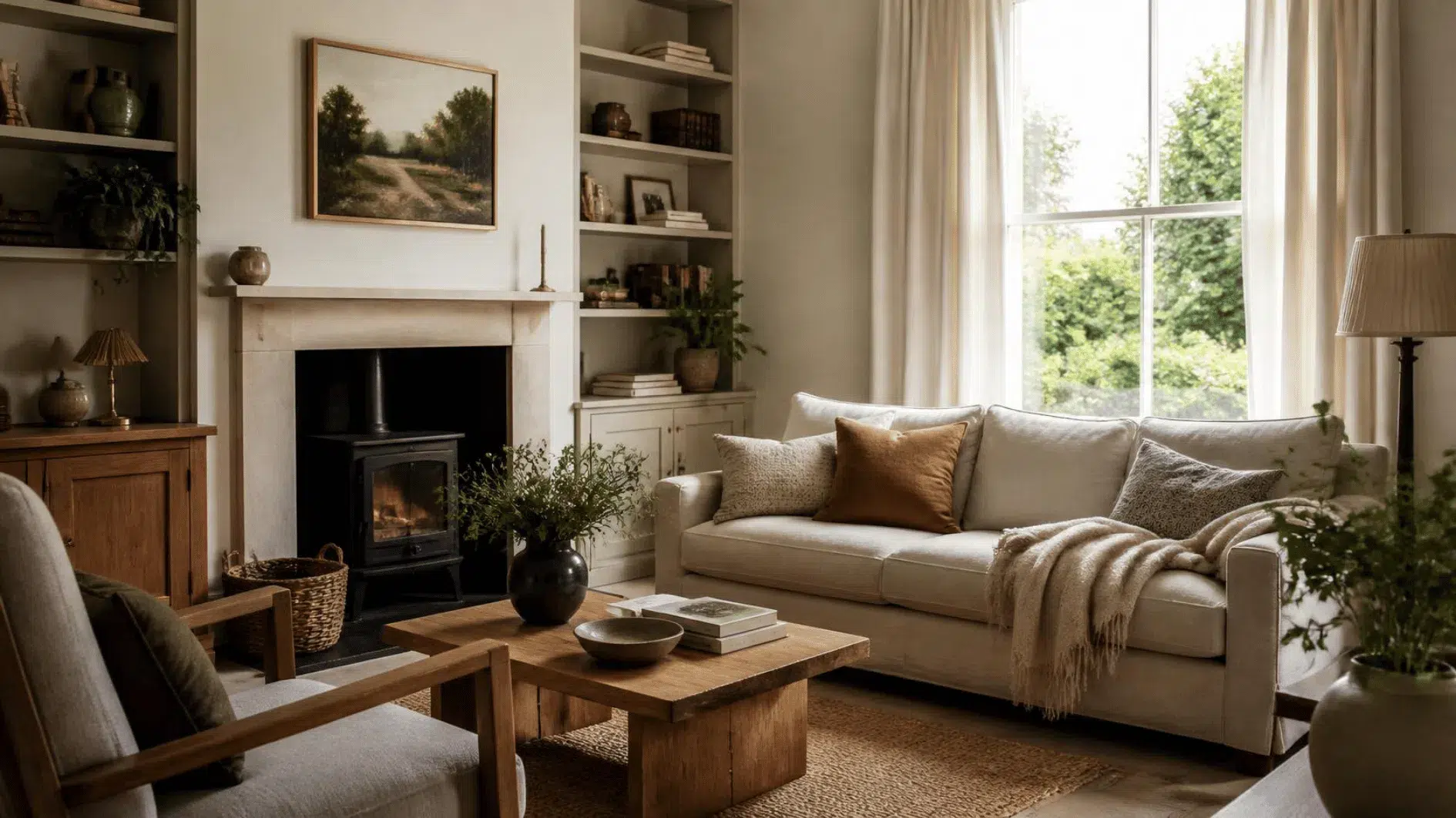
Simple living ideas often sound like demands to clear every surface, buy fewer things and keep a perfect schedule. In reality, many useful changes are smaller: a more workable kitchen, fewer duplicate supplies, a better place for everyday objects and purchases that solve genuine problems.
You do not need a new set of furniture, matching containers or a home that looks unusually sparse. The aim is to reduce unnecessary complexity while keeping what matters to you and the people you share your space with.
This guide covers practical changes to rooms, household routines, shopping, storage and everyday decisions. It complements our slow living guide by focusing on the systems and possessions that shape daily life.
What Simple Living Really Means
Simple living is the practice of reducing unnecessary complication so the home and its routines are easier to manage. It is not an instruction to own almost nothing, abandon convenience or follow a fixed aesthetic. In practical terms, it means keeping useful things, making considered purchases and designing everyday systems that require less repeated effort.
A simpler home can be full of colour, books and family life. It can also be small, busy, shared or rented. The important difference is whether the way it operates suits the people who live there.
Some changes may save time; others simply make a familiar activity more pleasant. Neither needs to be dramatic to be worthwhile.
Simple Living, Slow Living and Minimalism
These approaches overlap but answer different questions. Slow living considers how time, attention and everyday routines are used. Minimalist home design considers space, layout and visual restraint. Simple living is broader: it asks what makes household life unnecessarily difficult and what can be simplified.
| Approach | Main question | A practical example |
|---|---|---|
| Simple living | Can this process or possession be easier to manage? | Keep supplies in one useful location rather than several. |
| Slow living | Where do time and attention deserve more care? | Choose one realistic morning activity to enjoy without rushing. |
| Minimalist home | How can a room feel and function more clearly? | Improve furniture layout before buying new pieces. |
You can adopt the parts that help without subscribing to any particular lifestyle label.
Start With One Repeated Problem
Instead of trying to overhaul an entire home, notice one small difficulty that happens repeatedly: keys going missing, duplicate cleaning products, a confusing shopping list or papers collecting on the dining table.
Choose a change that can be made with what is already available. Test it under ordinary conditions, then decide whether it deserves to become part of your routine.
- Identify the one problem you most often encounter.
- Decide whether the issue is quantity, placement, maintenance or unnecessary decision-making.
- Make the smallest practical change first.
- Use the new arrangement for a normal week.
- Keep it if it helps; adapt or abandon it if not.
Decide What Your Home Needs to Support
A home can support many different activities: cooking, rest, play, work, reading, hosting people and caring for others. Not every room can serve every function equally well.
Choose the activities that matter most in your household. Then place relevant belongings where they are used and stop expecting less important activities to have a permanently dedicated space.
In a small flat, one table may support meals and working from home. A simple arrangement for changing between uses can matter more than a new piece of furniture.
Keep Useful Belongings, Not Arbitrary Numbers
Living simply is not a competition to own the fewest objects. Necessary tools, spare bedding, specialist equipment and cherished possessions have different roles. An object may be rarely used and still be worth keeping.
Ask whether you need it, use it, value it or reasonably expect to need it. Consider maintenance and storage as well as the immediate function.
If deciding what to keep is difficult, our decluttering checklist provides a practical keep, repair, donate, sell and recycling framework without rigid disposal rules.
Reduce Duplicate Purchases and Supplies
Duplicates accumulate when the same household product is stored in several places, when cupboards are hard to see into or when shopping happens without checking what is already available.
Try keeping a manageable amount of frequently used supplies where the household can locate them. Check reserves before buying more, and avoid stockpiling simply because an offer looks attractive.
A spare can be sensible for something essential or difficult to replace. The goal is a realistic quantity based on use and available space, not a universal rule against backups.
Simplify the Kitchen Around Everyday Cooking

Begin with the food and preparation you actually do. Group utensils by task, keep everyday ingredients visible and preserve enough clear worktop space to make a meal without moving a collection of decorations first.
- Keep frequently used tools near where you prepare and cook.
- Check ingredients and supplies before shopping.
- Choose familiar meals that suit your time and preferences.
- Match containers with their lids and assess redundant pieces.
- Store food safely and retain important ingredient and allergen information.
- Avoid buying extra appliances for activities you rarely perform.
A simple kitchen may still contain many well-used objects. The point is to make them convenient to use and easy to return.
Make Cleaning More Straightforward
Cleaning routines become complicated when supplies are scattered, products overlap or every surface requires a special treatment. Start by checking the materials and cleaning needs in your home, then use suitable products according to their labels.
Our household cleaning products guide covers the essentials for common tasks. You do not need to replace reliable products merely because packaging makes a new one look more natural.
Never mix cleaning chemicals unless their instructions explicitly permit it, and keep hazardous products stored safely away from children and pets.
Use Storage to Remove Everyday Friction
Good storage makes finding and returning an item easy. It does not require rows of matching baskets or labels on every shelf. A tray, existing drawer or small cabinet can be sufficient if it fits the belongings and their use.
Keep objects at practical heights and avoid blocking walkways, doors or access to necessary equipment. Measure before buying additional storage.
For detailed room-by-room approaches, our home organisation ideas guide focuses on accessible activity zones, existing furniture and low-maintenance systems.
Buy With a Clear Purpose
Before buying a home product, ask what problem it solves, where it will live, how it will be maintained and what you already own that might meet the same need. This is more useful than choosing solely by price, appearance or a broad sustainability claim.
If a new item is needed, consider dimensions, build quality, care and expected useful life. Where appropriate, look at repair or second-hand options.
Our sustainable furniture guide offers a framework for assessing construction and long-term value rather than relying on marketing labels.
Repair and Maintain Before Replacing

Small maintenance tasks can extend the usefulness of furniture and household equipment, but repairs should be realistic and safe. A loose screw or washable cover is different from an electrical fault or structural failure.
Check manufacturer care instructions, access to replacement parts, the likely cost and the skill involved. Seek competent help for electrical or other safety-critical work.
Avoid keeping a limitless repair pile. Give each item an identified action and a sensible date to decide whether the repair remains worthwhile.
Give Unneeded Objects a Sensible Next Use
If something no longer earns space, look for a practical next life before disposing of it. A usable object may be gifted, donated or sold; a damaged product might be repaired or sent through an appropriate material-specific waste route.
Donation is not an excuse to transfer unusable or unsafe objects to a charity. Check what recipients will actually accept, especially for furniture and electrical items.
The zero waste lifestyle guide explains why reducing unnecessary purchases and keeping materials in use often matters more than treating recycling as the first response.
Simplify Digital Household Admin

Paperwork, messages, bills and digital subscriptions can all create management work. A simpler system uses a small number of locations and clear responsibilities rather than adding another app for every task.
- Keep important household documents in an appropriate, secure location.
- Use clear names for digital files and group them by practical purpose.
- Review subscriptions or recurring purchases you no longer need.
- Use reminders for genuine deadlines rather than every minor preference.
- Protect personal information when sharing, storing or disposing of devices.
A written list may be sufficient. Use technology when it removes effort rather than producing another system to maintain.
Keep Morning and Evening Routines Flexible
Routines become more useful when they reduce repeated searching and decisions. They become less useful when they demand perfection, purchases or a fixed wake-up time.
Our morning routine ideas article covers practical preparation and different schedules. Our evening routine ideas guide focuses on a manageable reset, lighting and preparing for the next day.
Choose only the steps that help in your own circumstances. A shared household or variable working pattern may need more flexibility than a fixed routine allows.
Make Rooms Easier to Look At and Use

A home can feel visually busy when every surface carries unrelated objects. Try grouping functional belongings, leaving enough space to use tables and shelves, and rearranging furniture to improve access.
You can keep artwork, collections, photographs and colourful textiles. Visual calm does not have to mean an empty or monochrome room.
Use what you already have first: move a lamp, rearrange a shelf or take a less useful object out of the immediate workspace. Let the space reflect real life rather than a styled photograph.
Use Lighting That Fits Daily Tasks
Lighting can make familiar tasks easier, particularly reading, food preparation and moving safely around the home. Rather than creating a complicated scene for every moment, think about the light each area needs.
Suitable task lights and a comfortable level of ambient light may offer enough flexibility without introducing more devices. If you already use smart lighting, keep lighting automations understandable and easy to override.
Our lighting for a sitting room guide explains practical layers and placement.
Simple Living in a Family or Shared Home
Households contain different schedules, habits and personal belongings. A simpler system works only if the people involved can use it, understand it and agree where shared things belong.
Do not donate, discard or reorganise someone else’s possessions without permission. Focus on commonly used areas such as the kitchen, hallway and shared storage.
An arrangement that children, housemates or relatives can maintain imperfectly may be better than a complicated one that depends on a single person.
Simple Living in a Small Flat
Limited space can make unnecessary objects more noticeable, but it does not require extreme minimalism. Choose furniture that fits, keep walkways clear and give each activity a workable zone.
A small, durable cabinet may help more than several decorative baskets. Consider whether an existing table or shelf can serve another purpose before buying replacement furniture.
Keep heavy items at stable heights and use appropriate fixings and anchoring for tall storage where needed.
Simplify Time Commitments Without Making New Rules
A home can be well organised while daily life still feels overcommitted. Look at optional recurring tasks and decide whether they still serve your priorities. Not everything valuable needs to happen every day.
Batch a small household task when it helps, share responsibilities fairly where possible and be realistic about how much can fit into a working week.
Simple living does not require always being efficient. A familiar activity that takes time because you enjoy it may be exactly what you want to keep.
Simple Living on a Budget
A simpler home can begin with no purchases. Make the most of existing furniture, maintain items that are working and avoid assuming that low-waste or minimalist living requires expensive replacements.
| Common issue | First change to try |
|---|---|
| Objects go missing | Choose one accessible home for everyday essentials. |
| Shopping duplicates | Check the cupboard before restocking. |
| Work surfaces feel crowded | Move unrelated items to sensible existing storage. |
| Cleaning takes too many products | Review what is actually needed for your surfaces and tasks. |
| Evenings become an extended to-do list | Choose a short, realistic reset instead of an extensive routine. |
Spend when there is a specific problem worth solving, then consider durability, repairability and total long-term usefulness.
Common Simple Living Mistakes
- Replacing everything with a simpler-looking version. That often creates avoidable cost and waste.
- Decluttering by arbitrary numbers. Useful and meaningful belongings have different roles.
- Buying storage before assessing what is left. Organisers can conceal excess rather than solve it.
- Making elaborate schedules. Too many steps create more work than they remove.
- Assuming simplicity looks the same for everyone. Family, work and accessibility needs vary.
- Treating convenience as inherently bad. Useful tools and services can reduce genuine friction.
- Ignoring safety and maintenance. A beautiful arrangement is not useful if it is difficult or unsafe to manage.
Seven Small Changes to Try This Week
You do not need to do all seven, or follow them in order. Each is an optional experiment based on common household difficulties.
| Change | What to try |
|---|---|
| 1. Choose one place | Give an important everyday object a reliable home. |
| 2. Check supplies | Review one cupboard before buying more. |
| 3. Simplify a routine | Remove a step that is not helping. |
| 4. Move rather than buy | Rearrange an existing object to make a task easier. |
| 5. Repair something | Address a small, safe maintenance job you can realistically finish. |
| 6. Pass something on | Give one suitable unused object to someone who needs it. |
| 7. Keep what works | Retain the change that made daily life easier and leave the others. |
If a change increases work or discomfort, revise it or set it aside. Simplicity should be evaluated by how well it serves you.
A Practical Simple Living Checklist
- Identify a repeated source of household friction.
- Ask which activities and possessions matter most.
- Keep useful objects rather than targeting arbitrary numbers.
- Reduce duplicate supplies where appropriate.
- Put regularly used belongings at their point of use.
- Check existing storage before buying containers.
- Maintain or repair suitable belongings when safe and practical.
- Choose purchases based on need, durability and maintenance.
- Build flexible routines around real schedules.
- Review the result after living with it for a while.
Frequently Asked Questions About Simple Living
What are the easiest simple living ideas to start with?
Start with a reliable place for everyday essentials, checking for duplicate household supplies, simplifying one repeated task and using existing storage before buying new organisers.
Does simple living mean getting rid of most of my things?
No. It means choosing possessions and routines with intention. You can keep practical tools, collections and sentimental items if they have a place in your life.
Can you live simply without spending money?
Yes. Many changes involve rearranging furniture, using what you own, avoiding unnecessary replacements and simplifying household systems.
What is the difference between simple living and minimalism?
Simple living looks at reducing unnecessary complexity across routines, purchases and responsibilities. Minimalism commonly concentrates more on possessions, space and visual restraint. They can overlap without being identical.
How can a family practise simple living?
Agree on practical systems for shared belongings, respect personal possessions and focus on common friction points such as kitchen, hallway and morning preparations.
Is simple living the same as being environmentally friendly?
Not automatically. Buying fewer unnecessary products and maintaining useful goods may reduce waste, but environmental impacts depend on materials, production, transport, use and disposal. Avoid assuming any particular aesthetic guarantees sustainability.
Keep the Changes That Make Everyday Life Easier
Simple living is most valuable when it makes your home and its routines more workable. Identify what causes repeated friction, keep things you need and enjoy, and choose a small number of changes that can last.
There is no need to start over. A reliable place for keys, a practical kitchen arrangement, an accessible drawer or fewer unnecessary purchases can be enough to bring more intention into ordinary life.

Leave a Reply