

MINDFUL ROUTINES · SLOW LIVING
Morning Routine Ideas: A Gentler Start to Your Day
Realistic morning routine ideas for different schedules, shared homes and busy days—fewer rushed decisions, practical organisation and small moments that fit naturally into your day.
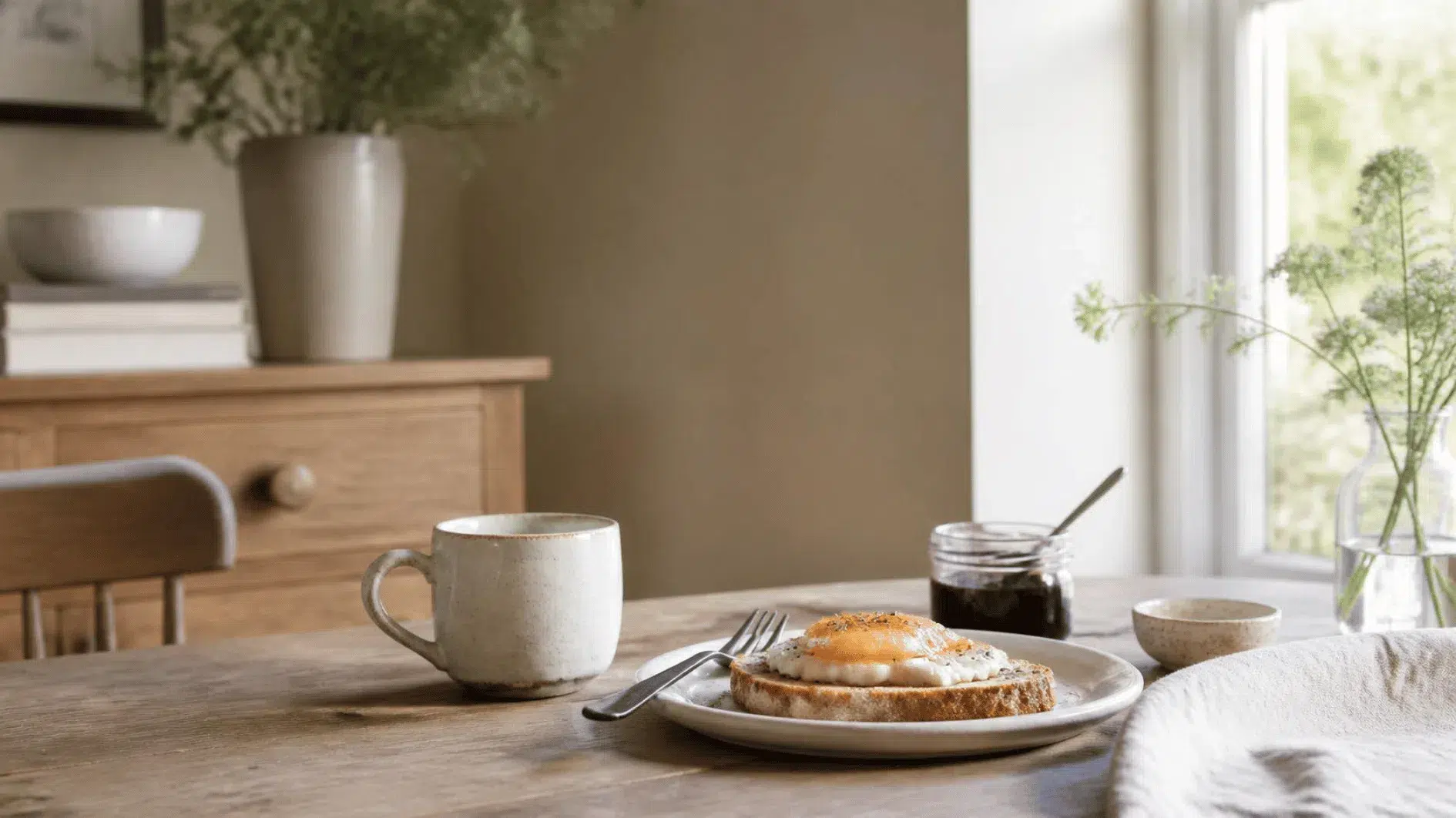
Morning routine ideas often start with strict wake-up times, lengthy checklists and a photograph of an immaculate breakfast table. Real mornings are usually more varied. Some people commute early, others work from home, share a crowded kitchen or organise the day around caring for someone else.
A useful morning routine makes those circumstances easier to manage. It helps with predictable tasks, reduces repeated searching and leaves space for a small activity you enjoy when time allows. It does not require a new personality, expensive products or a perfect schedule.
Here is a practical way to build one around the day you actually live, from preparation and breakfast to getting out of the door and making routines work for shared households.
What Makes a Good Morning Routine?
A good morning routine gives you a workable start to the day you actually have. It does not depend on waking before sunrise, completing a long checklist or making every minute productive.
For one person, that may mean finding their keys, eating breakfast and leaving on time. For another, it might mean a quiet cup of tea, preparing a child’s bag or allowing a gentler transition into work at home. What matters is reducing avoidable friction without creating additional obligations.
Our slow living guide explores the wider idea: routines should serve life rather than become another performance of it.
There Is No Single Ideal Morning
Work schedules, caregiving, health needs, commuting, daylight and household routines differ. An early start is not inherently superior to a later one, and a quiet morning may not be available every day.
Begin with the things that cannot move: when you need to be somewhere, what others rely on you to do, and the practical time each task requires. Then choose one or two changes that are realistic within those limits.
An adjustable routine is more useful than an elaborate one you can only maintain on your least busy day.
Notice Where Your Morning Gets Difficult
Before adding new habits, pay attention to the moments when your morning tends to become rushed. Perhaps breakfast equipment is scattered, the hallway is crowded, important belongings are hard to find or the first task of the day is unclear.
These are problems of layout and planning as much as mindset. A small practical adjustment may have more effect than adding another wellness activity.
- Where do you lose time searching for something?
- What decision do you make repeatedly that could be settled in advance?
- Does your morning need more preparation, less preparation or a clearer sequence?
- Who else uses the space and what do they need at the same time?
- Which activity would be worth a little extra attention if there were room for it?
Prepare the Night Before—But Keep It Small
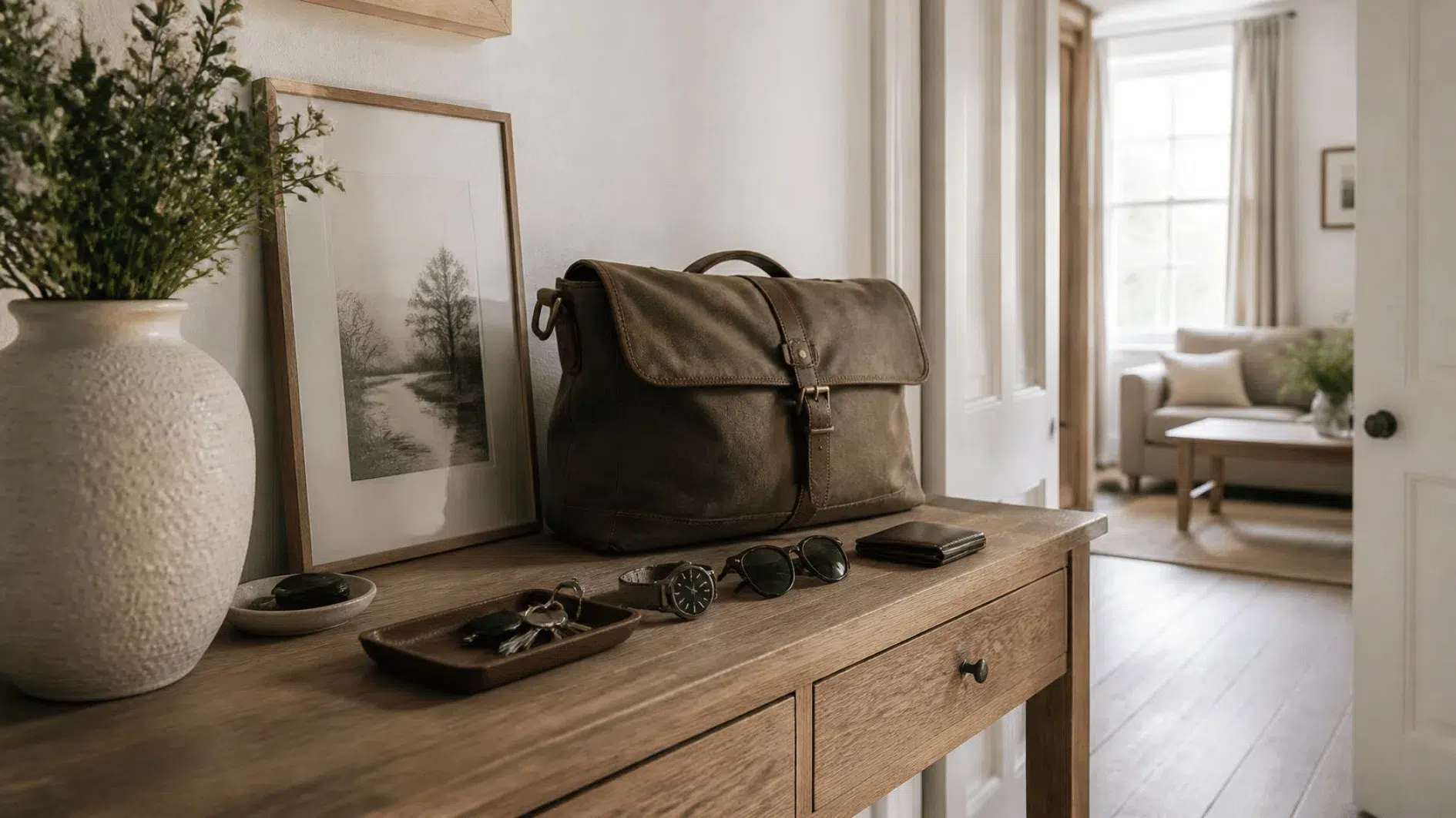
An easier morning can begin with a short evening preparation, provided it does not create an exhausting second shift. Aim to make only the next day’s predictable tasks more straightforward.
- Place your keys, wallet, bag and necessary documents somewhere reliable.
- Check the next day’s schedule and any unusual departure requirements.
- Put clean, suitable clothes where they can be found quickly.
- Prepare a simple breakfast component if it is safe and convenient to store.
- Make sure items needed by children or other household members are ready when possible.
Five useful minutes can be preferable to a long preparation ritual. Keep the process proportionate to the benefit and your evening responsibilities.
Make the First Five Minutes Simple
Try to avoid making the first moments of the day depend on several choices at once. You might open the curtains, attend to your basic needs and check the most immediate task before moving on.
The sequence does not need to be identical every day. You may have an early shift, share a bathroom or wake to the needs of someone else. Choose a starting action that is available and appropriate in your circumstances.
If screens are necessary for your work or family responsibilities, use them. If non-essential notifications tend to distract you, consider delaying those particular alerts until you have completed what matters first.
Use Daylight and Practical Lighting
Daylight helps you see, navigate and use the home comfortably. Open curtains when practical, notice where natural light reaches and arrange breakfast or preparation areas so the available light is useful.
In darker months or for early starts, appropriate task lighting matters. A well-positioned lamp or suitable overhead light is more important than creating a particular visual mood.
Our lighting for a sitting room guide explains how ambient and task lighting can work together across the day.
Keep Breakfast Realistic
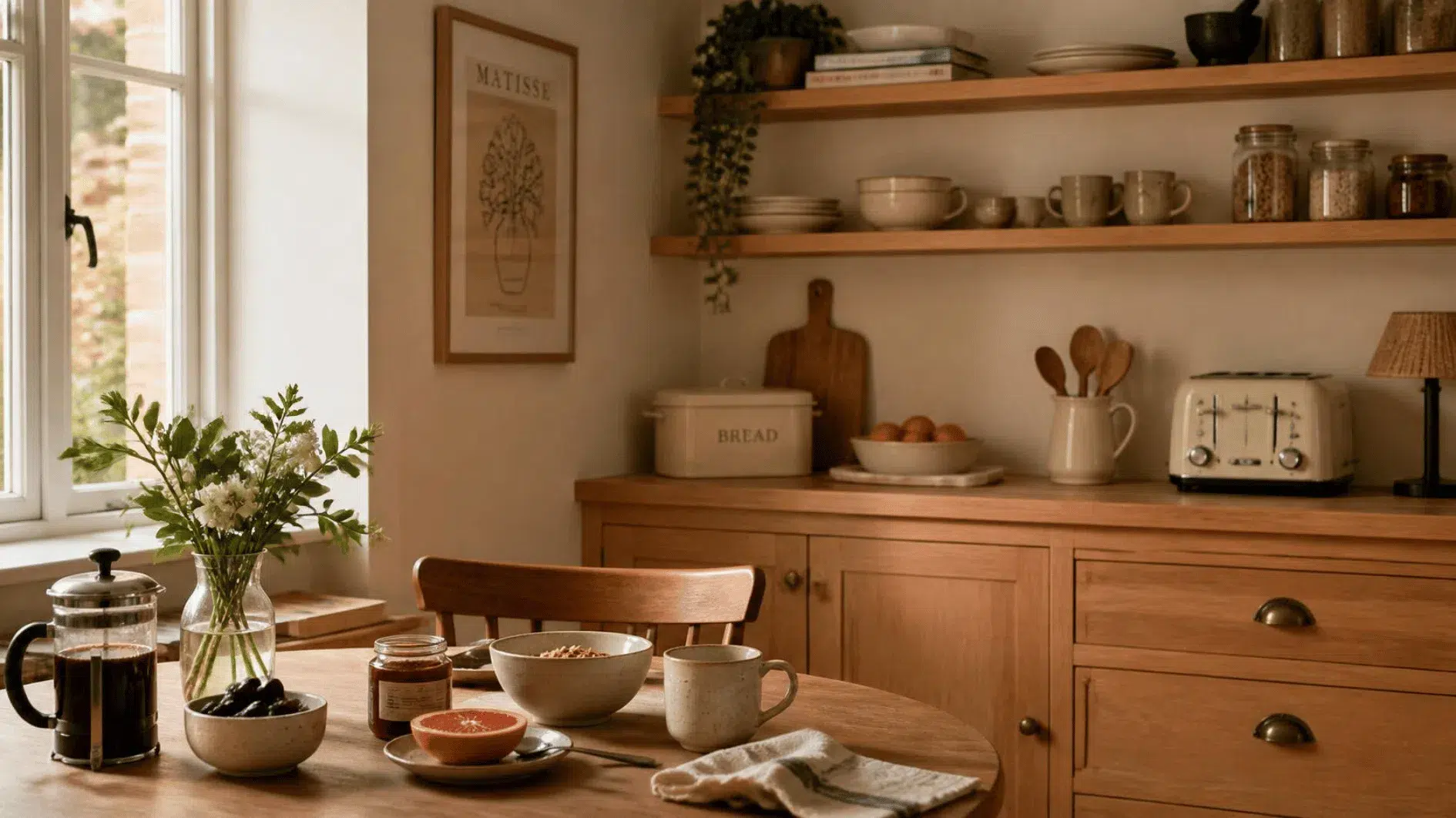
The best breakfast routine is one that suits your preferences, schedule, dietary needs and food availability. There is no requirement to prepare something elaborate or arrange a table beautifully every morning.
Try keeping a few familiar options available, checking supplies before shopping and placing frequently used kitchen tools near their point of use. Simple organisation can remove repeated searching and unnecessary decisions.
If you enjoy a slower breakfast, allow time for it when possible. If you need something portable or quick, design the preparation around that reality rather than treating it as a failure.
Turn a Familiar Activity Into a Small Ritual
A morning ritual need not involve specialist products. Making tea, coffee or another familiar drink can be a small pause, especially when the kitchen is arranged so the essentials are easy to reach.
You might use a favourite mug, sit by a window or give your full attention to the activity for a moment. Alternatively, you may simply enjoy the familiar sequence while the rest of the household gets ready.
Rituals should add meaning, not create rules. Skip them without concern on mornings when time is tight.
Make Dressing Easier With Accessible Storage
Clothes are easier to choose when everyday items are visible, wearable and stored where they can be reached. You do not need a capsule wardrobe to achieve this, nor should you dispose of useful clothes simply to reduce the number of options.
Try grouping clothing by actual use, keeping the next day’s essentials ready when needed and separating laundry or minor repairs from items that are ready to wear.
Our home organisation ideas guide
Create an Easy Leaving-the-House Zone
Keys, shoes, outerwear, travel cards and bags often cause last-minute searching. Give these items practical homes near the exit where appropriate, without blocking doors or circulation.
- Keep everyday keys in one safe, reliable place.
- Store current-season outerwear where it can be reached.
- Keep footwear accessible without obstructing the hallway.
- Put next-day bags or supplies in a defined place when possible.
- Keep shared household items understandable to everyone who needs them.
If your hallway is narrow, fewer possessions near the door may be more helpful than buying additional storage.
Morning Routines for Commuters
A commuting morning has a fixed external requirement: departure. Work backwards from a realistic leaving time and include the practical steps involved, including anything that changes by day.
Keep essential belongings ready and review travel details when needed. Rather than setting a perfect schedule to the minute, allow for some variation if your responsibilities permit it.
If a calm breakfast is not realistic on some days, prioritise the important preparations and choose a smaller routine you can actually complete.
Morning Routines for Working From Home
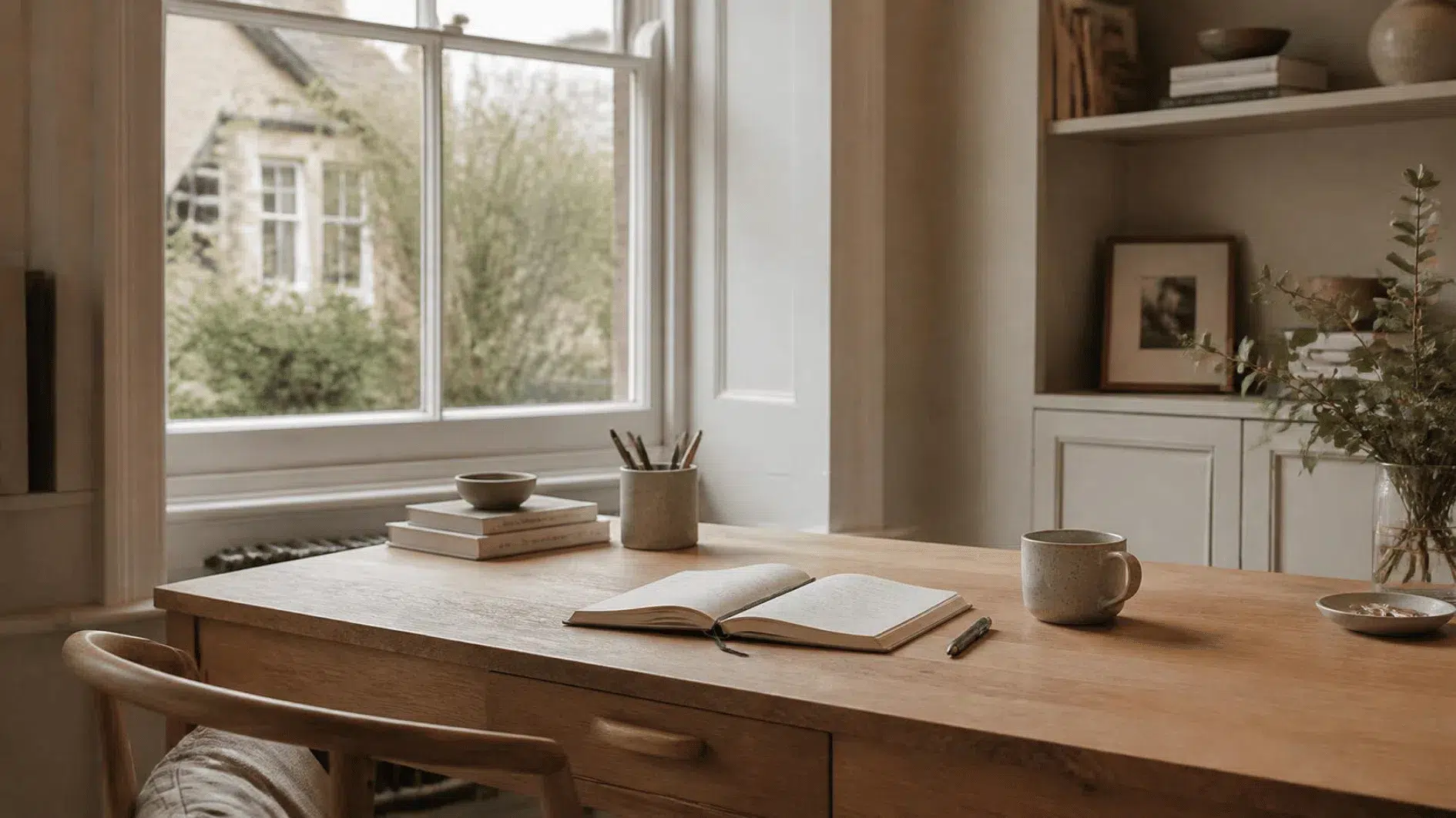
Working from home removes a commute for some people but can make the boundary between household responsibilities and work less clear. A short transition can signal that you are moving into a different activity.
That might involve opening curtains, making a drink, arranging the desk and identifying the first work task. It does not require getting dressed a particular way or leaving the house unless those choices suit you.
Keep the workspace practical rather than picture-perfect. If the desk is shared with household life, create a simple way to reset it at the end of the working period.
Morning Routines in a Shared or Family Home
A shared household rarely follows one ideal timetable. Bathroom access, meals, school supplies, caregiving and different departure times may all affect what is possible.
Focus on the repeated points of friction rather than asking everyone to adopt an identical routine. Agree on places for frequently used items, predictable handovers and practical preparations that respect the needs of others.
Do not reorganise someone else’s personal belongings without permission. Shared systems work when they are easy for the people involved to understand and maintain.
A Short Morning Routine for Busy Days
When the morning is compressed, reduce the number of steps rather than trying to rush through a longer ritual. Start with the essentials that affect safety, commitments and basic readiness.
| Moment | Practical priority |
|---|---|
| Before the day | Check departure or start time and any unusual requirements. |
| First actions | Attend to immediate needs and get oriented. |
| Getting ready | Use items already prepared or stored accessibly. |
| Food and belongings | Choose a realistic breakfast option and collect essentials. |
| Before leaving or starting work | Check what matters today, then begin. |
This is a sequence rather than a timed prescription. Leave out anything that is not relevant to your circumstances.
A Gentler Routine When You Have More Time

If your schedule allows a quieter morning, choose one or two things you genuinely enjoy: a slower breakfast, reading, tending plants, preparing a meal or sitting somewhere comfortable.
Use time as an opportunity rather than a target to fill. You do not need to turn every spare minute into exercise, journalling, organisation and self-improvement.
For people who like greenery, the indoor plants guide can help you choose appropriate low-maintenance or more involved plant-care tasks.
Weekend Mornings Without a New To-Do List
A weekend morning can be different from a workday without needing an elaborate ritual. Perhaps you prepare breakfast together, catch up with a book or tackle one necessary household task before enjoying free time.
Resist using every unscheduled hour for home improvement. Decide what needs attention and what can wait, especially when rest or shared time would be more valuable.
If your weekends are workdays, apply the same principle to whichever period of the week offers a little more flexibility.
Use Screens Deliberately, Not Dogmatically
Phones and computers serve genuine morning needs, from messages and weather to transport and family coordination. The problem is not automatically the device; it is whether the way it is used interferes with what you planned to do.
If a stream of non-essential alerts makes it difficult to complete practical tasks, consider limiting those notifications for a brief period. Keep essential contact, accessibility and work requirements in place.
Choose a boundary that you can maintain rather than imposing a dramatic digital rule on the whole household.
What You Do Not Need to Buy for a Better Morning
A new routine does not require a matching set of cups, a sunrise lamp, a journal subscription, extra storage containers or a new wardrobe. Products can be useful when they solve a defined problem, but they are not prerequisites.
Use what is already functional. Move a tray to the hall, prepare a bag in advance or adjust existing lighting before looking for a replacement. The sustainable furniture guide
This approach supports the central idea of slow living: eliminate unnecessary complication rather than adding a new layer of tasks and possessions.
How to Build a Routine That Lasts
Begin with the smallest useful change. If finding your keys is the main problem, establish a single place for them. If breakfast preparation is the problem, group the necessary supplies. Try the change under normal conditions before introducing another one.
- Choose one repeatable action that solves a real issue.
- Make the action easy to carry out with your existing space and belongings.
- Allow interruptions and less organised days without abandoning the system.
- Review what actually helps after a week or two.
- Keep, simplify or replace the approach based on experience rather than an idealised routine.
A routine that can recover after a disrupted morning is often more useful than one that depends on perfect conditions.
Common Morning Routine Mistakes
- Copying someone else’s timetable. The routine must suit your commitments and needs.
- Adding too many habits at once. An elaborate sequence can become another source of pressure.
- Ignoring shared space. Bathroom, kitchen and hallway access affect the whole household.
- Buying equipment before identifying the problem. Layout and preparation may be enough.
- Trying to control every minute. Real mornings contain interruptions and changing priorities.
- Equating a later start with failure. Shift work, caregiving and other schedules differ.
- Judging success by appearance. A functional morning need not look photogenic.
A Practical Morning Routine Checklist
- Identify when and where your day needs to begin.
- Choose the two or three tasks that matter most.
- Prepare predictable essentials in advance when convenient.
- Put keys, bags, clothes and supplies in accessible places.
- Use daylight or suitable lighting for the tasks involved.
- Keep breakfast simple enough for your actual schedule.
- Allow for other household members’ needs and access.
- Choose at most one optional activity you genuinely enjoy.
- Review the steps that repeatedly cause delays.
- Adjust the routine when circumstances change.
Frequently Asked Questions About Morning Routines
What are some simple morning routine ideas?
Start with preparation the night before, a consistent place for essentials, an easy breakfast and one small activity that suits your available time. The best idea is the one that removes a real source of morning friction.
How long should a morning routine take?
There is no universal duration. A few practical minutes may be enough, while some households need longer for work, school or care responsibilities. Build around the time and tasks your circumstances require.
Do I need to wake up at 5 a.m. to have a good morning routine?
No. Your waking time should suit your responsibilities and circumstances. A useful routine can begin whenever your day starts.
How do I make mornings calmer with children?
Focus on small predictable systems for clothes, bags, breakfast and shared spaces. Allow flexibility for interruptions and involve household members in decisions that affect them.
What if I cannot follow my routine every day?
Treat it as a flexible guide rather than a pass-or-fail test. Keep the parts that genuinely help and let the routine change when work, caregiving or other commitments change.
Is a morning routine the same as a wellness routine?
No. A morning routine can consist entirely of practical activities such as getting dressed, eating and preparing for the day. It does not need special wellness products or medical claims.
A Better Morning Starts With One Useful Change
A gentler morning is usually built from ordinary improvements: a reliable place for essentials, fewer last-minute decisions, a kitchen arranged around breakfast and a little flexibility when plans change.
You do not need to wake early, buy a new collection of products or complete a prescribed checklist. Choose one change that makes your own morning easier, try it in everyday life and keep it if it works.

Leave a Reply