

MINDFUL ROUTINES · SLOW LIVING
Evening Routine Ideas: Creating a Calmer Wind-Down
A realistic evening routine makes space for necessary tasks and time you enjoy: simpler resets, useful lighting, gentle preparation and a flexible wind-down that fits your life.

Evening routine ideas are often presented as exact schedules: switch off every screen, light a candle, write a journal and complete a long list before bed. Those routines can be pleasant for some, but real evenings also contain cooking, work, family responsibilities and unpredictable demands.
A calmer wind-down need not follow a fixed clock or a perfect sequence. A few sensible tasks can prepare the home for tomorrow, while comfortable lighting, a familiar activity and less unnecessary clutter make the remaining hours more pleasant.
This guide offers flexible evening routine ideas for busy households, small flats, shared homes and irregular work patterns—without implying that a particular product or ritual is a medical treatment.
What Makes an Evening Routine Useful?
An evening routine is a sequence of familiar actions that helps you move from the day’s demands into the time that follows. It does not need to happen at one fixed hour, and it is not a guarantee of better sleep or an absence of stress.
The most useful routine suits the household you live in. Perhaps that means clearing a kitchen worktop, checking tomorrow’s commitments and sitting in a comfortable chair for a little while. In a busy home, it may mean two practical steps rather than a long ritual.
A good routine can flex when you work late, care for someone, have visitors or simply need a different sort of evening. Its purpose is to make your home and time easier to use, not to create another standard to meet.
Start With What Slow Living Means to You
A calmer evening is one aspect of slow living, but it need not look slow from the outside. The principle is to choose deliberately where your limited time and attention go.
Rather than collecting activities that appear restful, ask what helps your own evening. A short walk may be enjoyable for some; a familiar programme, practical preparation, reading or simply doing nothing for a while may suit others.
The routine does not require candles, diffusers, fresh décor or extra purchases. Familiar, functional objects are often all you need.
Create a Clear Transition From Day to Evening
The end of a workday or a period of caregiving can blur into the next set of household tasks. A simple transition helps you recognise that one activity has finished and another is beginning.
You might shut a laptop, clear the table used for work, change the lighting or move to a different room. If you commute, putting your bag and shoes away could be the first step.
- Choose one reliable sign that work or the main daytime task has ended.
- Put away the belongings you will not need again that evening.
- Check whether there is one genuinely urgent task to complete.
- Let the rest of the evening follow the household’s needs rather than a fixed script.
Try a Small Evening Home Reset
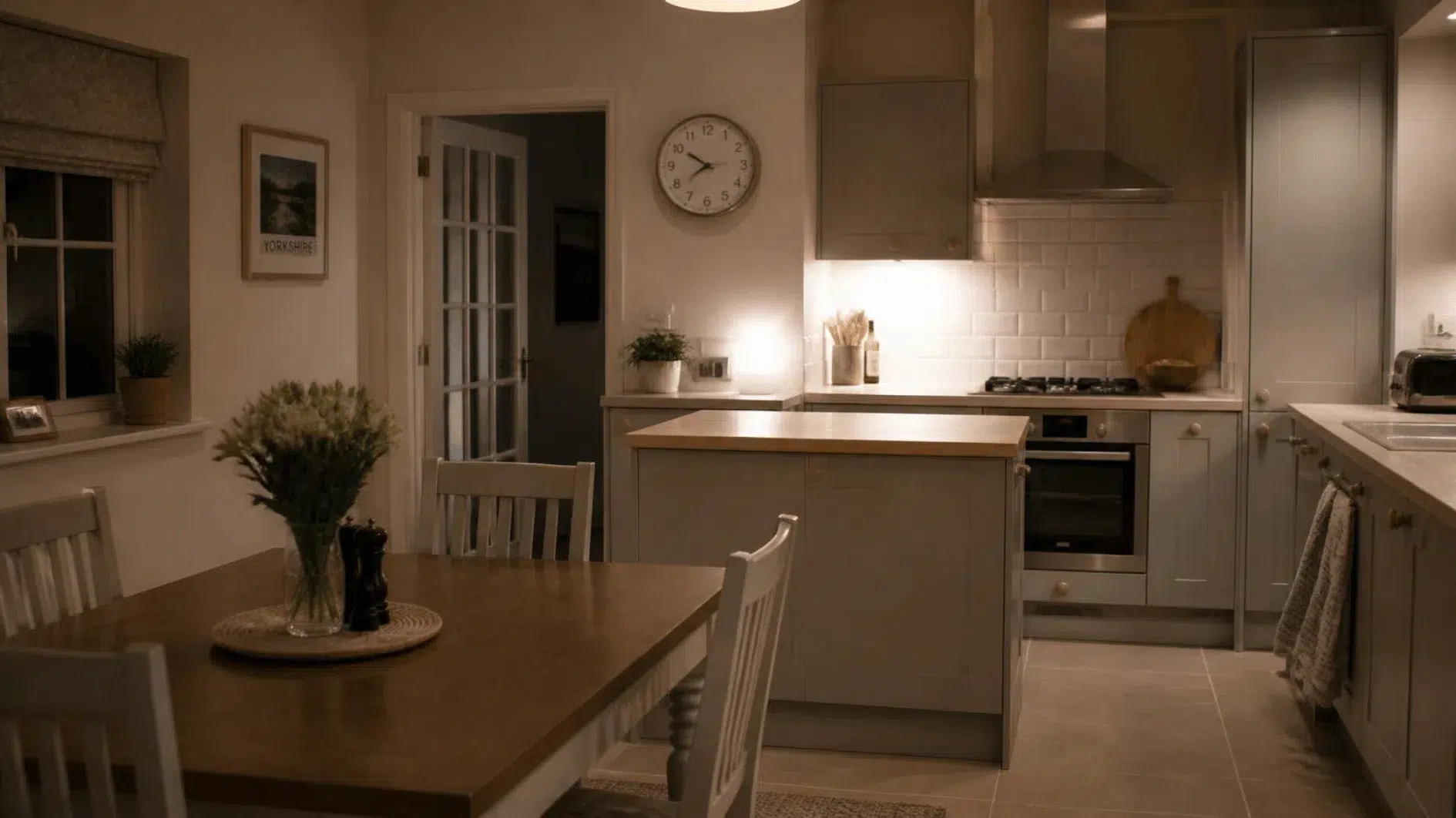
A short reset can make the morning easier without requiring a full clean. Choose only the areas that cause repeated friction: kitchen surfaces, dining table, entryway or the place where bags and papers gather.
Return everyday objects to their places, deal with immediate food or hygiene needs and leave the worktop ready for its next use. If it is too much to finish, choose the task that matters most.
Our home organisation ideas guide explains how simple storage zones make these resets easier to maintain.
Make the Kitchen Ready for Tomorrow
An evening kitchen reset can mean washing a few essential items, storing food safely and making sure the area you need in the morning is usable. It does not require every cupboard and drawer to look perfect.
Consider the way you have breakfast or prepare food. Put commonly used items where they belong, check whether you need to restock anything and avoid unnecessary duplicate purchases.
If you share the kitchen, agree on a realistic baseline rather than insisting that everyone follows the same lengthy cleaning sequence.
Prepare Tomorrow Without Rehearsing Every Detail
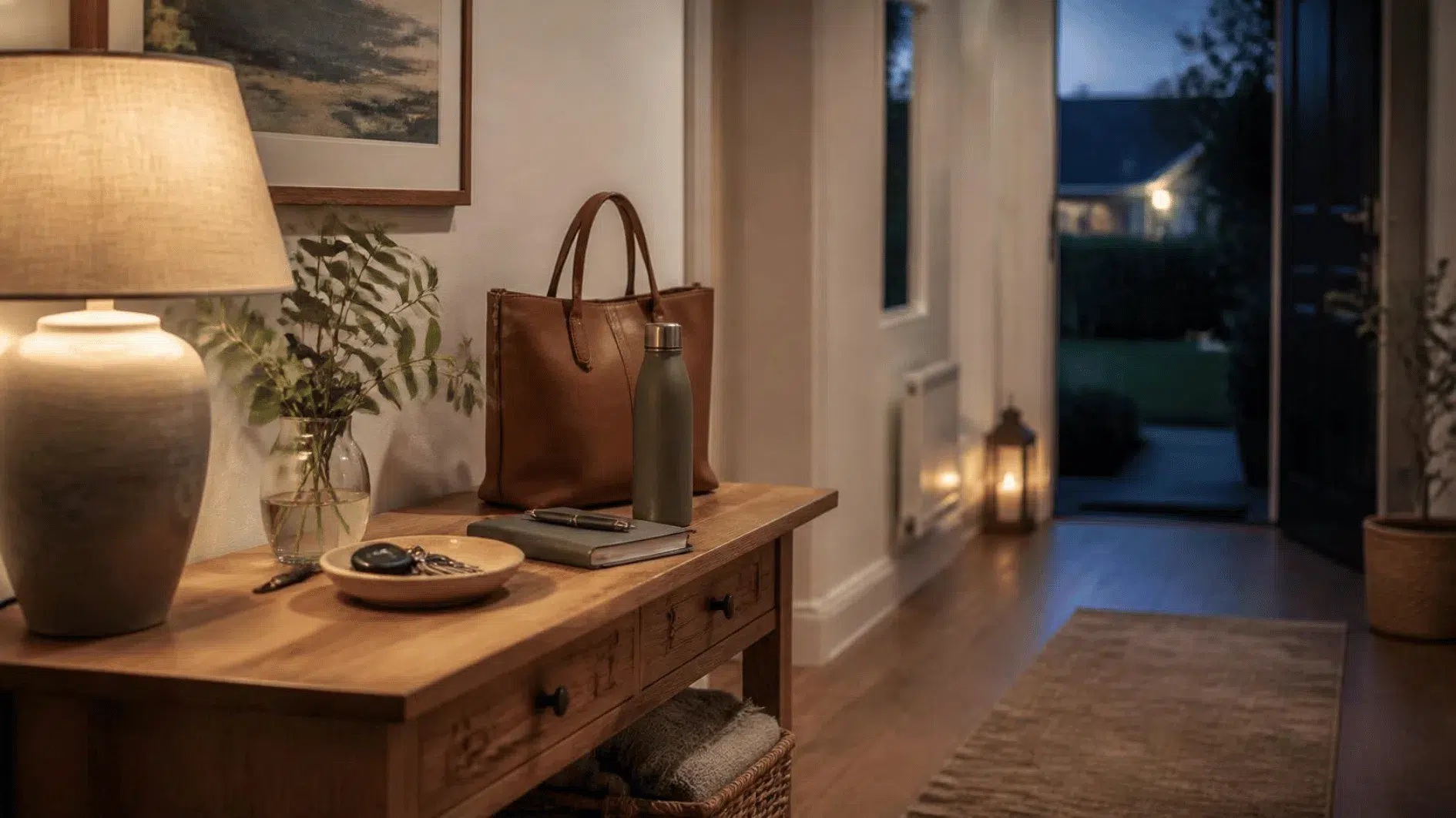
A small amount of preparation can reduce last-minute decisions in the morning. Check commitments, identify essentials and arrange anything difficult to find when you are in a hurry.
- Check any unusual start time or appointment.
- Place keys, bags, passes or necessary documents in a reliable location.
- Choose clothes or other items needed for the next day when that will help.
- Prepare breakfast components only where storage and food safety allow.
- Stop once the main practical requirements are covered.
Our morning routine ideas guide gives different starting points for commuters, working from home and shared households.
Shift the Lighting for Evening Activities

Lighting has a strong effect on how a room feels. During practical household tasks, you still need enough light to move safely, clean, cook or read. Later, a mix of suitable table lamps and softer ambient light may feel more comfortable than relying only on bright overhead lighting.
Choose the light for the task rather than assuming every evening room should be dim. A reading chair needs clear, comfortable task light; a hallway should remain safe to navigate.
Our lighting for a sitting room guide covers placement and layering. Existing lamps may provide enough flexibility without changing the whole room.
Make a Comfortable Place for Reading or Quiet Activities
A quiet activity is easier to enjoy when the space supports it. Place a book or hobby close to a comfortable seat, provide adequate lighting and leave a practical surface for items you need.
Reading is one option, not a requirement. Puzzles, needlework, music or another familiar activity may serve a similar purpose if you enjoy it. Choose something that fits the available time and space.
If an activity needs specialist equipment, consider what you already have before purchasing more.
Choose an Evening Ritual You Actually Enjoy

A ritual can be an ordinary action given a little more attention: preparing a drink, tending a plant, opening a window when conditions allow or spending time with a favourite book.
A small ceramic cup and a comfortable chair may be enough. The value comes from the activity, not from buying products that appear in slow-living photographs.
If you use home fragrance, follow the product’s safety instructions, consider sensitivities and pets, and ventilate appropriately. Fragrance is optional and should never be described as a treatment for insomnia, stress or other conditions.
Set Practical Boundaries Around Screens
Screens may be necessary for communication, work, entertainment or accessibility. The goal is not a universal ban but a deliberate choice about what you want from the remaining hours.
If notifications repeatedly interrupt an activity, consider silencing non-essential alerts for a while. If you enjoy watching a programme, enjoy it without trying to justify it as a wellness practice.
Keep essential contact and household needs in mind. A flexible boundary is easier to maintain than a strict rule that creates friction.
Make Comfort More Important Than a Perfect Look
A pleasant evening room should support the people who use it. A suitable chair, stable side table, accessible lamp and appropriate room conditions are more important than reproducing a styled interior.
Consider the practical needs of textiles and furnishings: whether covers can be washed, whether a rug slips, whether a lamp is stable and whether the furniture is comfortable for the activities you actually do.
If the room needs updating, start with moving and maintaining useful belongings before buying a new set of furniture. Our sustainable furniture guide can help when a replacement is genuinely needed.
Evening Routine Ideas for Small Flats
In a compact home, the same space may support work, meals and rest. A transition can be as simple as putting work materials into a drawer, moving a lamp and arranging the seating for a different activity.
Avoid buying organisers or foldaway furniture solely because they promise a minimalist appearance. Use what you already have and change one arrangement at a time.
Our minimalist home guide discusses practical layouts, clear circulation and the visual balance of smaller rooms.
Create an Evening Routine in a Shared Household
Shared evenings can include different work patterns, children’s routines, housemates, caregiving and varied preferences for noise or lighting. A useful system accommodates those differences instead of imposing one person’s ideal.
Agree on a few tasks with practical benefits, such as leaving the kitchen usable or giving shared keys a home. Allow different ways of winding down and protect other people’s belongings and privacy.
A quieter evening does not require everyone to be quiet at the same time. Think in terms of reasonable household arrangements and mutual consideration.
When You Finish Work Late or Work Shifts
Not every evening falls between six and ten o’clock. If your schedule is irregular, think about the transition after your working period rather than copying routines designed for conventional office hours.
Prioritise practical needs, food, travel and commitments. Choose one brief familiar action that fits your available time; do not force a long checklist into a short rest period.
If you have persistent sleep difficulties or concerns about shift-related sleep, seek appropriate professional guidance rather than treating lifestyle décor or rituals as medical solutions.
Family Evenings Without an Elaborate Schedule
Family evenings often involve meals, homework, play, preparation and shared responsibilities. Routines can help when they make repeated tasks more predictable, but a rigid plan may be impractical.
Try using simple places for school bags, clothes and household essentials. Create an agreed order for necessary tasks while leaving room for variation.
Children and other household members may need different activities or support. The aim is a routine that works for the family, not one that looks perfectly calm.
A Gentler Evening on Days Off
On a day off, you may have more flexibility, but it is easy to turn all that space into errands and home projects. Choose what genuinely matters and allow time for unstructured activities when practical.
Perhaps you spend longer cooking, reading or seeing friends. You may also decide to do very little. Slow living does not require every spare hour to be filled with meaningful rituals.
If essential tasks need doing, finish what is manageable and leave optional improvements for another time.
Use Home Fragrance as an Optional Detail
A candle, reed diffuser or another fragrance product can be part of a familiar room atmosphere, but scent is not essential to unwinding and it does not replace adequate ventilation or safe indoor conditions.
Follow the manufacturer’s instructions and never leave burning candles unattended. Keep fragrance products and oils away from children and pets as appropriate, and avoid scents that trigger irritation.
For device types, safe placement and everyday use, see our oil diffuser guide.
Create a Calmer Evening Without Shopping
Many effective changes involve no spending: clear the work surface, move an existing lamp, set out tomorrow’s essentials, put a book near a comfortable chair or give the room a small reset.
| Everyday issue | A practical change |
|---|---|
| The room remains set up for work | Put work materials away or change how the table is used. |
| Important belongings are hard to find | Give keys, bag and next-day items a reliable place. |
| Lighting feels harsh | Try an existing shaded or adjustable lamp appropriate for the activity. |
| Evening tasks multiply | Choose the few necessary tasks and defer non-urgent ones. |
| Surfaces collect objects | Use accessible storage for items that belong in the room. |
If a purchase solves a clear problem, assess quality, lifespan and maintenance. A new aesthetic is not a necessary first step.
Two Flexible Examples of an Evening Routine
These are examples, not prescribed durations. Choose only the elements that suit your responsibilities and available time.
| A busy evening | An evening with more flexibility |
|---|---|
| Put away essentials and complete an immediate kitchen task. | Reset the shared area and prepare what is helpful for tomorrow. |
| Check tomorrow’s most important commitment. | Choose an activity you enjoy, such as reading or an unhurried meal. |
| Use suitable lighting for necessary tasks. | Use layered lighting for reading or relaxing when appropriate. |
| Move into your normal next activity. | Leave time unstructured instead of filling it with more obligations. |
Build an Evening Routine You Can Maintain
Start with one repeated problem rather than a long list of improvements. If mornings are rushed, place the essential items by the door. If the living room is difficult to use at night, give the most frequently moved objects clear places.
- Identify the one evening change likely to make the next day easier.
- Keep the action small enough for an ordinary busy day.
- Use existing spaces, lamps and objects first.
- Let the routine adapt to work, household and seasonal changes.
- Review whether it genuinely helps rather than measuring perfection.
A routine that can restart after an interrupted evening is likely to be more useful than one that requires every step to be completed.
Common Evening Routine Mistakes
- Trying to reproduce an influencer’s schedule. Your home and responsibilities are different.
- Adding too many steps at once. A ritual that creates work defeats its purpose.
- Treating relaxation as a purchase. New candles, lamps and accessories are optional.
- Ignoring essential tasks. A practical evening must still work for the household.
- Overly dim lighting. Comfortable atmosphere should not compromise safe movement or necessary tasks.
- Expecting everyone to follow one routine. Shared living requires cooperation and flexibility.
- Claiming a ritual will cure sleep problems. Persistent symptoms need appropriate professional advice.
An Evening Routine Checklist
- Recognise when the main daytime activity has ended.
- Complete one small reset where it is genuinely helpful.
- Store food and leave essential kitchen equipment ready.
- Prepare a few practical items needed for tomorrow.
- Adjust the lighting to suit the current activity.
- Choose an enjoyable activity rather than an obligatory ritual.
- Keep shared spaces workable for others.
- Use fragrance only if desired and with appropriate precautions.
- Allow routines to change with late work, family needs and busy days.
- Keep the parts that work and discard unnecessary steps.
Frequently Asked Questions About Evening Routines
What is a good evening routine?
A useful evening routine is one that fits your responsibilities, makes the home workable and helps you move into your preferred evening activities. It may be only a few simple steps.
How long should an evening routine be?
There is no universal length. A brief reset and next-day preparation may be sufficient, especially on busy or irregular days. Add optional activities only when they genuinely suit you.
Do I need to avoid screens completely?
No. Choose boundaries based on how your devices affect your own activities and responsibilities. Limit non-essential interruptions if useful, while keeping essential contact and accessibility needs in place.
Will an evening routine improve my sleep?
Some people find regular evening habits helpful, but an article about household routines cannot promise a particular sleep outcome. Persistent sleep problems deserve individual medical advice.
Can I have an evening routine if I work shifts?
Yes. Focus on a repeatable transition after work rather than a conventional clock time, and keep the routine flexible around meals, travel and responsibilities.
Do I need candles or diffusers for a calming routine?
No. Lighting, a familiar activity, accessible storage and practical preparation may be all you need. Fragrance is optional and should be used safely.
A Calmer Wind-Down Should Make Life Easier
Evening routines work best when they make fewer demands on you. A small home reset, useful preparation and appropriate lighting can help the space support the next activity without turning the evening into another project.
Choose what makes sense for your actual day. Keep the simple steps that earn their place, leave room for ordinary interruptions and remember that a considered evening does not have to look perfect.

Leave a Reply