

MINDFUL ROUTINES · EVERYDAY MINDFULNESS
Mindful Journaling: Everyday Reflection Without Pressure
An everyday journal need not be a daily commitment. Explore gentle prompts, practical formats and simple observations without pressure to produce an insight.

Mindful journaling can be as straightforward as writing down one detail you noticed while making a drink, sitting at a window or moving between ordinary activities. It does not require writing about difficult emotions, following a complicated prompt programme or filling pages each day.
A journal is a tool you may choose to use, not a measure of how attentive or productive you are. A single line, a sketch or no written record at all can be equally suitable depending on your preferences and circumstances.
This guide explores easy formats, everyday observation prompts and privacy-conscious ways to reflect without pressure. It belongs alongside our mindfulness at home guide, mindful breaks and mindful cleaning guides.
What Is Mindful Journaling?
Mindful journaling is a flexible way to notice and record part of your present or recent experience. You might describe the light on a table, a familiar household sound, a task that occupied your attention or a small detail you would otherwise forget. There is no requirement to write about deep feelings.
The word mindful describes the attention you bring to observing, rather than a specific notebook, number of lines or format. You may write a single sentence, a short list or a longer reflection when that feels useful.
This is one optional aspect of mindfulness at home. You do not need to become a daily journal keeper to explore everyday awareness.
Mindful Journaling, Keeping a Diary and Planning Are Different
A diary might record what happened during the day. A planner keeps track of commitments and tasks. A reflective journal may explore observations, thoughts or questions. These formats overlap, but they are not the same thing.
Mindful journaling can be deliberately modest: noticing one detail without turning it into a long account or evaluating whether the day was good or bad. You can keep planning and reflection separate if that helps.
There is no reason to replace a system that already serves you. A note in an existing notebook or digital document can be enough.
You Do Not Need a Daily Journaling Streak
Some guides suggest writing at exactly the same time every morning or evening. A routine may suit certain people, but it is not essential. Missing a day—or several weeks—does not create a deficit you must make up.
Choose occasions naturally available to you. Perhaps a quiet moment follows making tea, a walk or a completed household task. If life is too busy, you can leave journaling aside.
The usefulness of a note is not determined by the number of consecutive days you wrote one.
How to Begin With Just One Sentence

Start with something you can observe rather than a demanding question about personal growth. An ordinary descriptive sentence is enough to see whether writing feels natural.
- Choose a notebook, loose sheet or digital note you already have.
- Notice one ordinary object, action, sound or moment.
- Write one plain sentence about it, if you wish.
- Stop there or add a detail that interests you.
- Keep the note private or discard it according to your preference.
A simple entry might be: ‘The kitchen was bright this morning, and I noticed the sound of rain before breakfast.’ It need not contain an insight or conclusion.
Notice Ordinary Details Rather Than Searching for Meaning
You do not have to discover a lesson in every moment. The shape of a leaf, the warmth of sunlight on a table or the way a familiar room looked after tidying may be enough to describe.
Choose a detail that is comfortable to attend to. Some people prefer external observations because writing about internal sensations or difficult feelings can be uncomfortable.
If nothing stands out, there is no need to invent an experience. You can leave the page blank and return to another activity.
Five Gentle Mindful Journaling Prompts

- What small detail did I notice in a familiar room today?
- Which ordinary object helped me with a task?
- Was there a colour, texture or sound that caught my attention?
- What did I observe while making a drink or preparing a meal?
- Is there a simple moment I would like to remember?
Treat prompts as suggestions, not questions that need complete answers. A phrase, sketch or single line is sufficient. If a prompt invites an unhelpful thought, change it or stop.
Describe Before You Evaluate
An observational note records what you noticed: ‘The windowsill caught the afternoon light.’ An evaluative note judges the experience: ‘I wasted the afternoon and should have done more.’ Either kind of thought may arise, but you need not build your journal around self-criticism.
When practical, return to an ordinary description of the setting or activity. That gives you something concrete without asking you to reach a positive conclusion.
This is not a requirement to suppress difficult experiences. You are free to write candidly, choose a different format or seek qualified support if reflection becomes distressing.
Choose a Format That Suits Your Attention

Prose paragraphs are only one way to keep a journal. You may prefer brief lists, a few words beside a date, a simple sketch, a photograph with a private caption or a voice note.
Different formats support different needs, including accessibility and time available. A digital note may be convenient; paper may be preferable for those who want fewer screens. Neither is automatically more mindful.
| Format | When it may suit you | Practical consideration |
|---|---|---|
| One-sentence note | A brief observation between tasks | Easy to keep without an elaborate routine. |
| Short bullet list | Several details or objects you noticed | Avoid turning it into a performance checklist. |
| Sketch or colour study | Visual details are more comfortable than writing | You do not need artistic skill. |
| Private digital note | You prefer typing or assistive technology | Check access controls and backups. |
| Voice note | Speaking is easier than writing | Consider privacy and where recordings are stored. |
Use what is available. No particular format demonstrates greater discipline or emotional insight.
Choose a Natural Moment to Write
Journaling can fit after a familiar activity rather than into a new fixed schedule. A note after watering plants or sitting near a window may be more natural than imposing a compulsory 6 a.m. session.
Some people prefer to write near the end of the day, while others find it easier to note a moment when it happens. Let household responsibilities and personal preference decide.
For flexible pauses between activities, see our mindful breaks guide. An observation can stand alone without recording it.
Write About a Familiar Tea or Coffee Moment
A mug, tea towel or kitchen window offers a manageable subject. You might record the colour of a cup, the sound of the kettle or the view while drinking something.
There is no need for a special tea set or complicated preparation. You also do not need to focus on the drink itself if that seems uninteresting.
Handle hot liquids normally and write only when it is practical and safe to do so. The household activity remains the priority.
Use Your Home as a Source of Small Observations
A familiar home changes with the time of day. Daylight moves across furniture, a table becomes a place for a different task, and ordinary objects reveal patterns of use.
A journal entry might describe the corner you most often sit in or the way curtains moved in a breeze. It does not require purchasing accessories or making the room picture-perfect.
Try Noticing a Plant or View Through a Window
If you have a suitable window view or already keep plants, seasonal light, leaf shape and weather can offer subjects. The observation can be brief and descriptive.
Not everyone has access to greenery, a quiet garden or a bright view. An indoor object, familiar texture or ordinary urban scene is equally valid.
Do not buy a plant only to create a journaling subject. If you already have one, care for it according to its actual requirements.
Journal About a Household Task Without Scoring Yourself
You could describe the sound of dishes being put away or a moment while folding towels. The note need not list how productive you were or evaluate your cleaning standards.
Keep household hygiene and safety separate from reflective writing. Do not interrupt tasks involving chemicals, hot equipment or hazards to make a note.
Writing About Thoughts Is Optional
Some people enjoy reflecting on thoughts and feelings; others prefer neutral external observations. You are not required to disclose private experiences or focus on difficult internal states.
If writing about worries becomes repetitive, upsetting or unhelpful, stop or choose a less personal subject. A journaling technique should not be presented as a substitute for support.
There is no single right depth of reflection. A useful journal may be observational, practical, creative or occasional.
Avoid Forced Positivity and Compulsory Gratitude
Gratitude prompts can appeal to some people, but a journal does not need to produce a list of positive experiences every day. Demanding that every entry end happily may feel artificial.
Ordinary observations can be neutral: the weather was grey, a delivery arrived, the room was noisy, or you enjoyed a familiar chair. A note can be valuable to you without an upbeat conclusion.
Choose the style that respects your actual experience rather than following a rule about the emotion you ought to feel.
Protect the Privacy of Your Journal
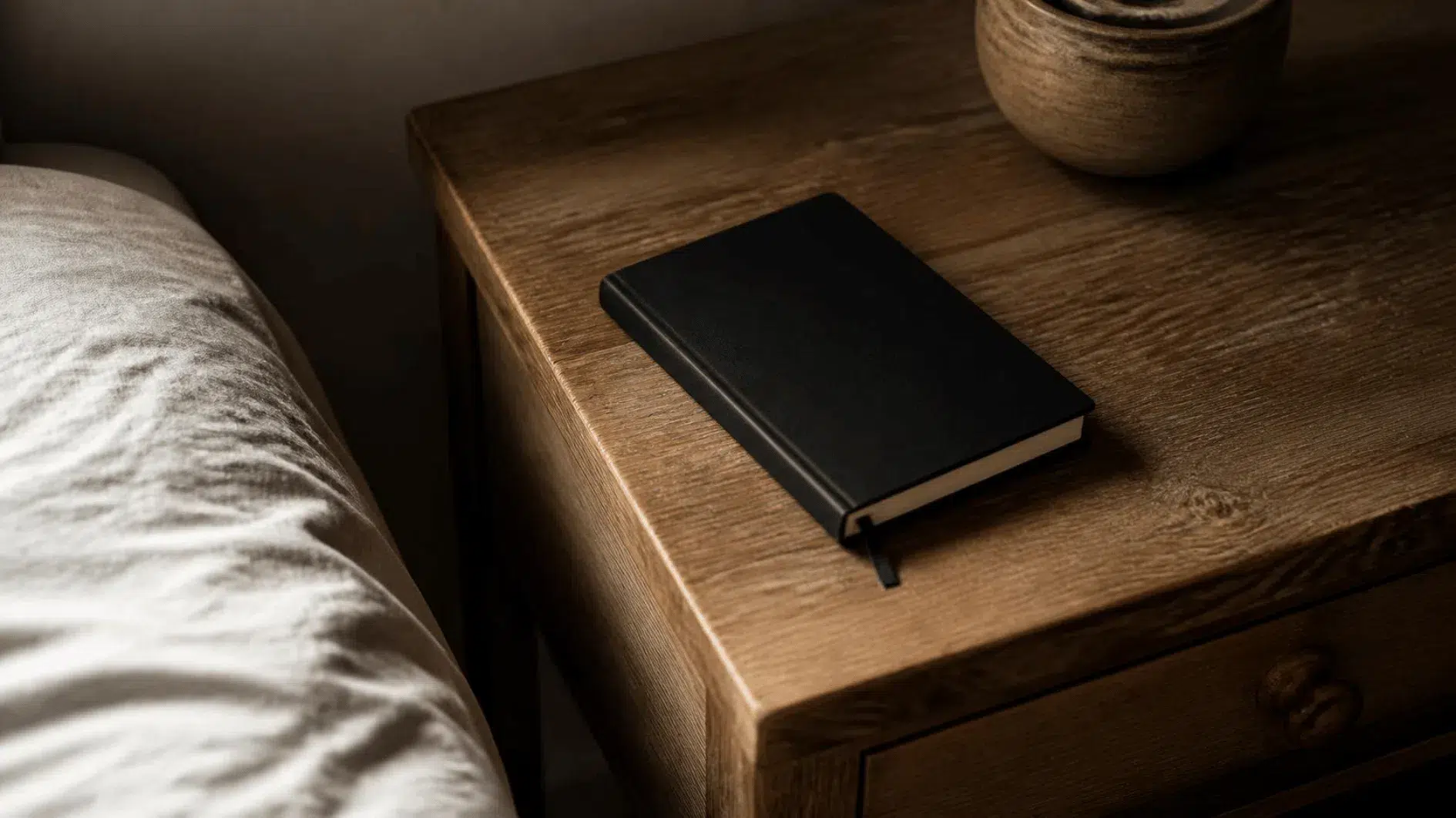
A journal may contain personal details, even when entries seem harmless. Decide how much you want to record and who, if anyone, may have access.
For paper notes, consider where they are stored in a shared household. For digital notes, review device locks, account access, cloud synchronisation and backup settings. Avoid putting sensitive information into unfamiliar services without understanding their privacy terms.
You do not need to publish, share or photograph your writing. Keeping a note private—or choosing not to preserve it—is a reasonable option.
Respect Other People’s Stories and Boundaries
Shared living spaces often involve children, partners, visitors and other household members. A private note about your own experience should avoid unnecessarily recording identifying or sensitive information about others.
If you plan to share or publish an entry, consider whether it contains personal details that require permission or greater discretion.
The practice is about your attention, not collecting information about other people or expecting them to participate.
Paper, Digital or No Notebook at All?
A plain notebook, existing document or small notepad is sufficient. Paper may feel convenient when you are already at a table; digital notes may work better for accessibility, search or portability.
Choose a method that you can use and manage. Expensive notebooks, matching pens and subscription apps are not prerequisites.
If storing entries adds more effort than value, consider writing and discarding a note, sketching briefly or making the observation without recording it.
Find a Practical Writing Place in a Shared Home
You do not need a separate study or special quiet corner. A dining table, kitchen counter after tidying or a comfortable seat may be enough when it is available.
Choose a position with usable light, appropriate comfort and respect for others who need the space. Do not leave private pages open where they may be read unintentionally.
If interruptions are common, a shorter entry or a later opportunity may be easier than trying to protect a formal writing session.
Mindful Journaling When You Have Little Time
A single sentence might be more realistic than several pages when the day is full. You may also note three words or leave it entirely until another time.
Do not sacrifice sleep, meals, rest or important responsibilities to maintain a journaling streak. Reflection is optional, whereas practical needs deserve proper attention.
For manageable everyday rhythms, see our slow living guide, which discusses priorities rather than writing habits.
Do You Need to Read Old Journal Entries?
No. Some people enjoy revisiting previous observations, but reflection does not need a review process. You may write for the moment and never look at the entry again.
If you decide to reread notes, choose material that feels comfortable and useful. There is no requirement to identify patterns, evaluate achievements or extract life lessons.
An entry can serve its purpose simply by offering a moment to notice and describe something.
What to Do When the Page Is Blank
A blank page is not a problem to solve. You can stop, switch formats or choose a very concrete prompt such as describing the nearest everyday object.
You may prefer to draw a line, write a date and one observation, or not write at all. None of these options reflects your ability or motivation.
Avoid buying new prompt decks or apps automatically. A plain question or the view in front of you is enough when you want an idea.
When Reflective Writing Feels Unhelpful
Writing can bring up thoughts that are uncomfortable or distressing, and that response should be taken seriously rather than interpreted as a necessary part of progress.
Stop, choose a neutral external subject or do something else if writing makes the moment less manageable. Persistent distress or difficulty with everyday functioning calls for appropriate professional support.
This article offers general lifestyle suggestions, not therapy, diagnosis or a treatment programme. There is no expectation to process difficult experiences privately through a journal.
Eight Everyday Mindful Journaling Prompts
| Everyday setting | Optional prompt |
|---|---|
| At a window | What changed in the light or view today? |
| At the kitchen table | Which object did I notice while having a drink? |
| After putting away laundry | What texture or movement stood out? |
| After a short break | What did I see or hear before returning to a task? |
| Beside a plant | What small detail was different or familiar? |
| In a shared living room | What ordinary detail made this room recognisable? |
| At a desk | What did I notice when one piece of work ended? |
| Before moving to another activity | What is one straightforward fact about this moment? |
You do not have to answer all eight or use them in order. Pick one that feels comfortable and treat it as a starting point, not an assignment.
Common Mindful Journaling Mistakes
- Demanding a daily streak. Reflection can be occasional.
- Expecting an insight from every note. Ordinary details are enough.
- Buying elaborate stationery first. Existing paper or digital tools work.
- Turning entries into productivity reports. Observation need not judge achievement.
- Forcing positive emotions. Neutral or difficult days need not be rewritten.
- Ignoring privacy. Consider access, storage and sharing.
- Writing about others without discretion. Respect their information and boundaries.
- Continuing when distressed. Stop or seek appropriate support.
A Simple Mindful Journaling Checklist
- Choose an ordinary, comfortable topic to notice.
- Use any available paper, device or accessible format.
- Write a sentence, phrase, list or sketch if you wish.
- Keep expectations small and leave room for interruptions.
- Do not require positivity, deep reflection or a daily streak.
- Respect your privacy and that of other people.
- Store entries thoughtfully or decide not to keep them.
- Stop or change the subject if reflection feels unpleasant.
- Do not replace proper rest or professional care with journaling.
- Return to everyday activities without evaluating your performance.
Frequently Asked Questions About Mindful Journaling
What is mindful journaling?
It is a flexible way of recording ordinary observations with deliberate attention. It need not be a long diary entry or a formal meditation practice.
What should I write in a mindful journal?
Try a simple detail from your day: a colour, sound, object, familiar task or short moment. You may also use a prompt or choose not to record anything.
How often should I practise mindful journaling?
As often as suits you, if at all. There is no required frequency, duration or streak.
Can mindful journaling be done digitally?
Yes. Paper, digital notes, sketches and private recordings can all work, provided the format is accessible and any stored information is handled appropriately.
Do I need to write positive thoughts or gratitude lists?
No. You can describe neutral experiences without forcing a particular emotional interpretation.
Can journaling replace therapy for anxiety or distress?
No. This is general lifestyle guidance, not a clinical treatment. Seek qualified support when symptoms or distress warrant it.
Let Reflection Be Simple and Optional
Mindful journaling can begin with one ordinary observation and end after a single sentence. It does not require a perfect notebook, quiet household, daily target or dramatic insight.
Keep what feels useful, protect your privacy and stop when writing does not serve you. A small note about everyday life can be enough without becoming another task to maintain.

Leave a Reply