

MINDFUL ROUTINES · EVERYDAY MINDFULNESS
Mindful Cleaning: Bringing Attention to Everyday Chores
Find small moments of attention within ordinary chores—without turning cleaning into another complicated routine or compromising safety.
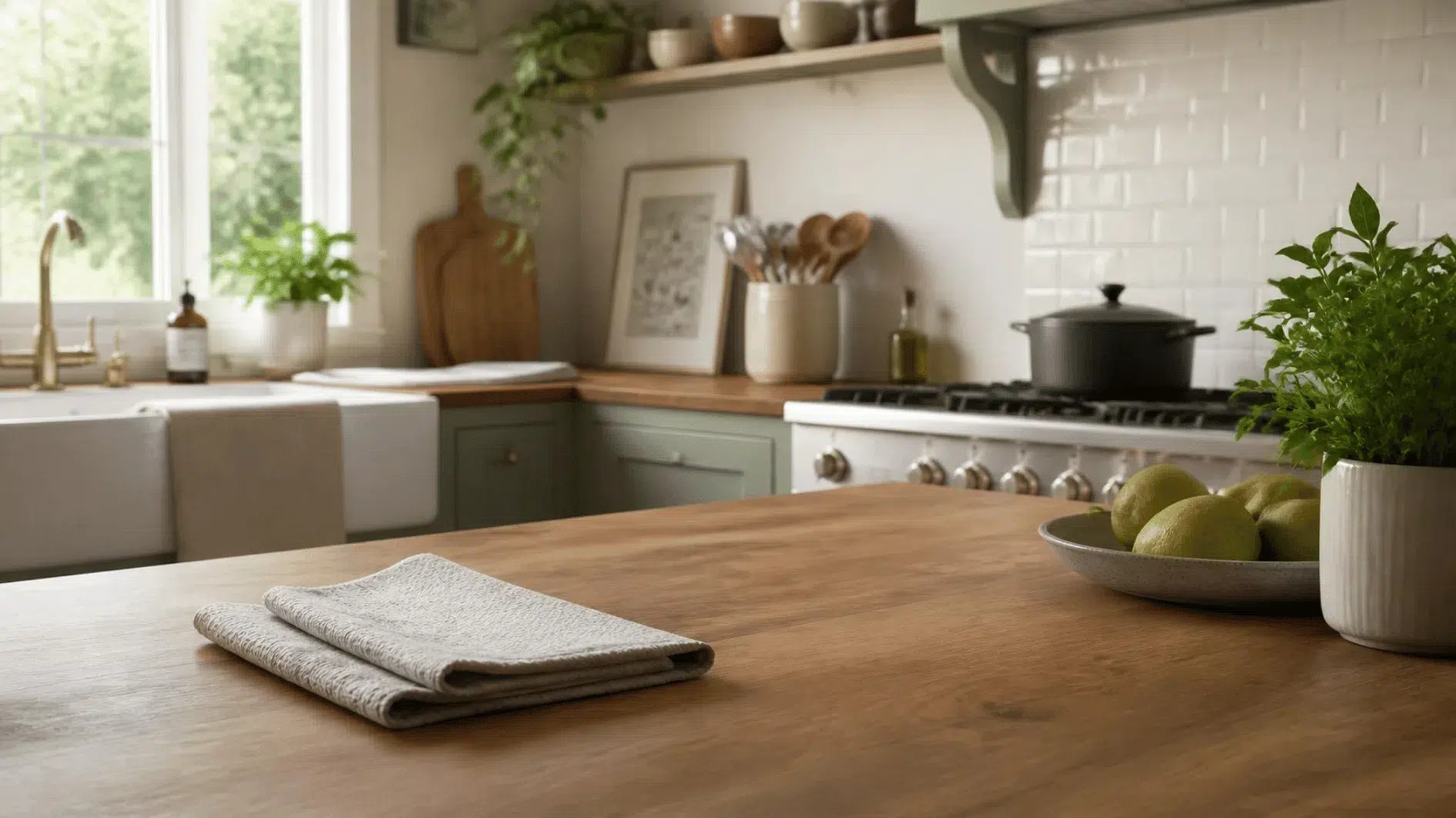
Mindful cleaning is an invitation to notice a detail of something you are already doing: the movement of a cloth, the sound of water or the feeling of putting clean towels away. It does not mean making cleaning slower, more elaborate or more pleasant than it really is.
Effective household cleaning has practical requirements that come first. You still need suitable products, correct hygiene procedures and appropriate safety precautions. A moment of attention can sit alongside those requirements but must never override them.
This guide offers flexible ways to experiment with awareness during familiar chores, alongside realistic guidance for busy, shared and accessible homes. For a broader approach to everyday awareness, see our mindfulness at home guide.
What Is Mindful Cleaning?
Mindful cleaning means choosing to pay attention to part of a routine household task while you do it. You might notice the movement of a cloth across an appropriate surface, the sound of a brush or the difference between a messy table and one that has been cleared. The activity itself remains the same.
It is not a special cleaning method or a claim that cleaning will automatically make you relaxed. A chore can be tiring, necessary, inconvenient or satisfying, and none of those responses needs to change for a moment of awareness to be possible.
For the broader distinction between awareness, meditation and slow living, begin with our mindfulness at home guide. This article concentrates on cleaning tasks that already belong to everyday home life.
Mindful Cleaning Is Not a New Cleaning Schedule
A cleaning schedule concerns what needs doing, when and with which supplies. Mindful attention concerns what you notice during the activity. You can choose to pay attention briefly without adding more chores or changing their frequency.
If the kitchen needs cleaning for food safety, follow the appropriate procedure whether or not you are thinking about mindfulness. If a surface is already clean, there is no reason to clean it again simply to create another exercise.
The most sustainable approach is often to keep your established routines and select one part of an existing task where observation is comfortable and safe.
Start With a Simple, Familiar Task
Choose an uncomplicated task such as folding a clean tea towel, returning objects to a shelf or wiping a suitable dry surface. Familiar work is often easier to observe than a task requiring new instructions or careful hazard management.
- Choose a task that genuinely needs doing.
- Gather the correct equipment before you begin.
- Notice one ordinary detail, such as colour, movement or sound.
- Keep your attention on the safety and purpose of the task.
- Finish when the cleaning is done, without adding extra steps.
You may spend only a few seconds deliberately noticing the activity. There is no minimum duration, score or completion target.
Put Cleaning Safety Ahead of Mindfulness
Cleaning products should be used according to their labels, the manufacturer’s surface guidance and relevant safety information. Use suitable ventilation and protective equipment where required, and keep chemicals away from children and pets.
Never mix cleaning chemicals unless their instructions specifically permit it. In particular, do not combine bleach with other cleaners or acids. Do not handle dangerous substances, climb on unstable furniture or work near electrical hazards while trying to concentrate on a sensory exercise.
When a task requires careful attention for safety, direct your attention to that task. There is no need for a separate mindfulness technique.
Notice Familiar Movements Without Slowing Them Down
Some chores contain repeating movements: wiping a table, sweeping a safe floor or folding fabric. You may choose to notice the contact, direction and rhythm of the movement while continuing normally.
There is no benefit in deliberately making a necessary chore much slower merely because you want it to feel mindful. Work at a pace that suits the task and your capacity.
If the movement becomes uncomfortable or painful, change position or stop as appropriate. Everyday attention does not replace ergonomic advice or appropriate healthcare.
Use an Ordinary Sensory Detail as an Anchor
A detail can be as simple as noticing daylight on a worktop, hearing water run or feeling the texture of a clean cloth. You need not engage every sense or force yourself to notice a particular sensation.
Scent should not be a required part of cleaning. Strong fragrance and airborne products may be unsuitable for people with sensitivities and for some pets; adding them offers no necessary benefit to an attention practice.
If a sensation feels unpleasant, choose a different detail or return to the task without an exercise.
Prepare the Right Supplies Before Beginning
Gather the suitable cloth, brush or cleaning product before starting. This helps make the chore practical and reduces interruptions, but it does not require an elaborate cleaning trolley or collection of specialist products.
Read labels and match the cleaner to the surface and required standard of hygiene. Different jobs may call for different products or procedures. Do not assume vinegar, essential oils or a homemade mixture are appropriate for every task.
Our household cleaning products guideeco-friendly cleaning products explains how to assess environmental claims.
Mindful Cleaning in the Kitchen
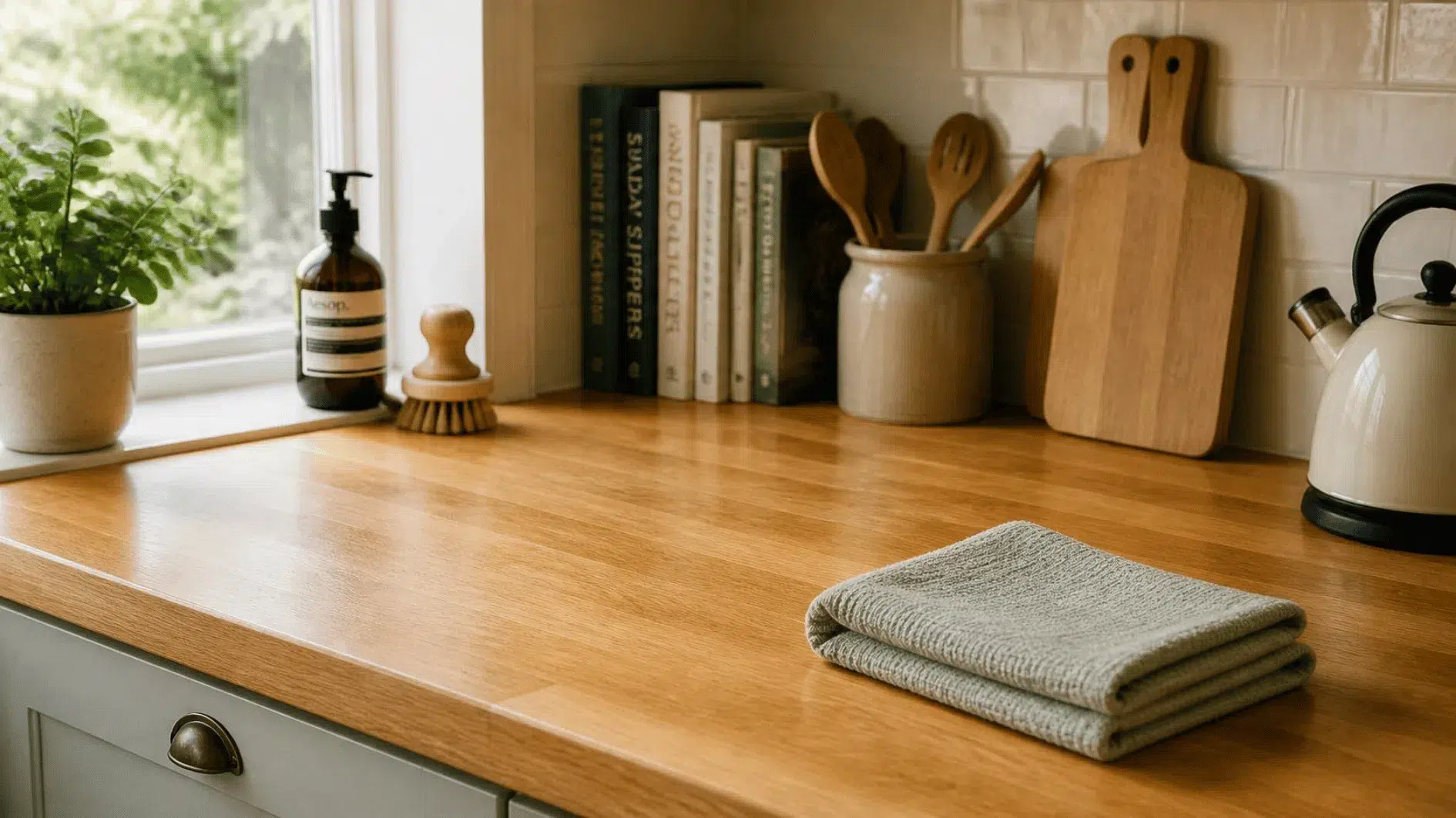
Kitchen work can offer ordinary opportunities to notice: clearing a table after eating, putting dry dishes away or wiping a suitable counter in accordance with its cleaning guidance.
Food hygiene remains the priority. Use correct procedures when dealing with raw food contamination, spills or food-contact surfaces, including the cleaning and disinfection steps required for the situation. Awareness is no substitute for an effective process.
Choose a moment away from hot hobs, sharp knives and electrical appliances when possible. A simple observation while returning clean cups to a cupboard may be more appropriate than an exercise during demanding food preparation.
Washing Dishes Without Turning It Into a Ritual
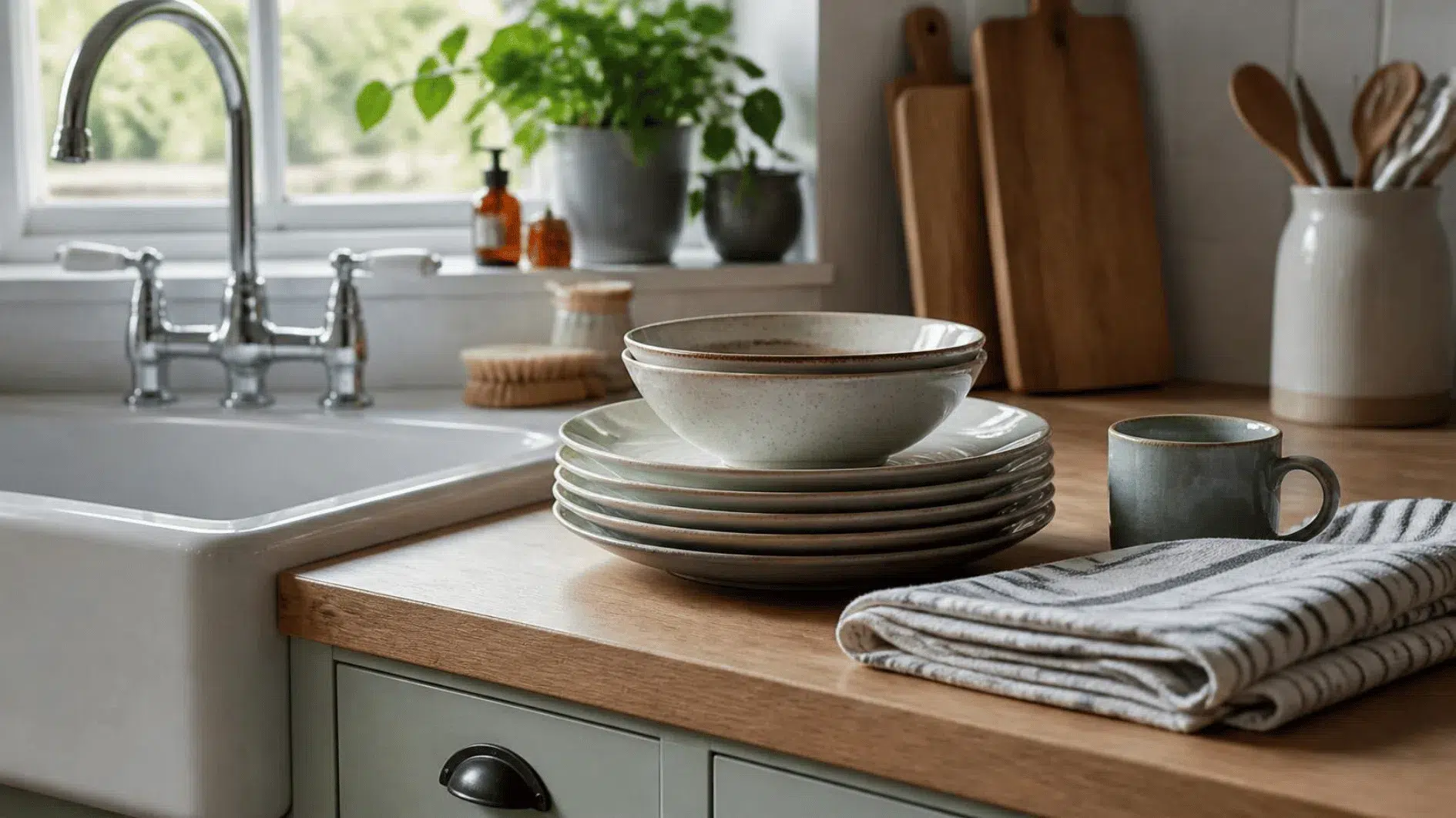
Dishwashing involves familiar sounds and movements. If appropriate, you might notice water flow, the feel of a plate or the difference between a used and a clean item.
Maintain safe water temperatures, suitable detergents and correct cleaning procedures. Handle sharp utensils carefully and keep attention on fragile objects.
You do not need to wash every dish individually with heightened concentration. A single ordinary moment of noticing is enough to try the idea.
Wiping Surfaces With Care and Purpose
A table or worktop may offer a simple task to observe as you move a suitable cloth across it. Notice what needs cleaning rather than repeating the movement once the work is complete.
Check the material first: timber, natural stone, painted furniture and manufactured worktops may require different products and moisture levels. Use the appropriate method instead of a universal homemade formula.
A useful outcome is a surface that is cleaned correctly and ready for use. The sensory detail is optional, not the purpose of the chore.
Mindful Attention While Sorting and Folding Laundry

Laundry can provide a straightforward attention anchor without involving chemical cleaning. Sorting clean items, folding towels or placing clothing in a drawer may allow you to notice texture and movement.
Follow fabric-care labels for washing and drying. Do not add unnecessary washing cycles to create a routine or judge yourself for folding quickly.
If you have a lot to put away, choose just the first towel or shirt as a brief example. The rest can be folded in your usual way.
Sweeping, Dusting and Floor Care
Sweeping or dusting an appropriate area may involve a repeated rhythm and a visible result. You can notice the sound of a brush or the way dust collects without needing to prolong the task.
Use methods suited to the floor and surface; consider slip risks, dust exposure, electrical cords and the needs of household members. Avoid raising hazardous dust or attempting to clean unknown substances without appropriate guidance.
Physical comfort matters. Use suitable equipment and take breaks as needed rather than pushing through discomfort to complete an exercise.
Cleaning the Bathroom Safely
Bathrooms may require cleaners with specific instructions and careful attention to hygiene. Treat those instructions as the task’s foundation rather than adding sensory exercises around strong chemicals.
Ensure the space is ventilated where necessary, avoid unsafe product combinations and use the required contact times and protection. Keep personal products separate from cleaning supplies.
If mindful observation would distract you, skip it. You might instead notice a simple, low-risk step such as folding a clean towel after the bathroom is ready.
For product selection and claims, see our eco-friendly bathroom cleaner guide.
Windows and Mirrors: Keep the Task Practical
Cleaning an accessible mirror can involve visible changes as marks are removed. You may notice light or a simple pattern of movement while using the appropriate cleaner.
Do not stretch from unstable furniture or lean out of windows to make cleaning part of a mindfulness exercise. Leave elevated, difficult or risky work to suitable safe methods or qualified help.
Check the cleaner and cloth are appropriate for the surface. A streak-free finish is a practical goal; a special state of mind is not required.
Mindful Tidying Versus Decluttering
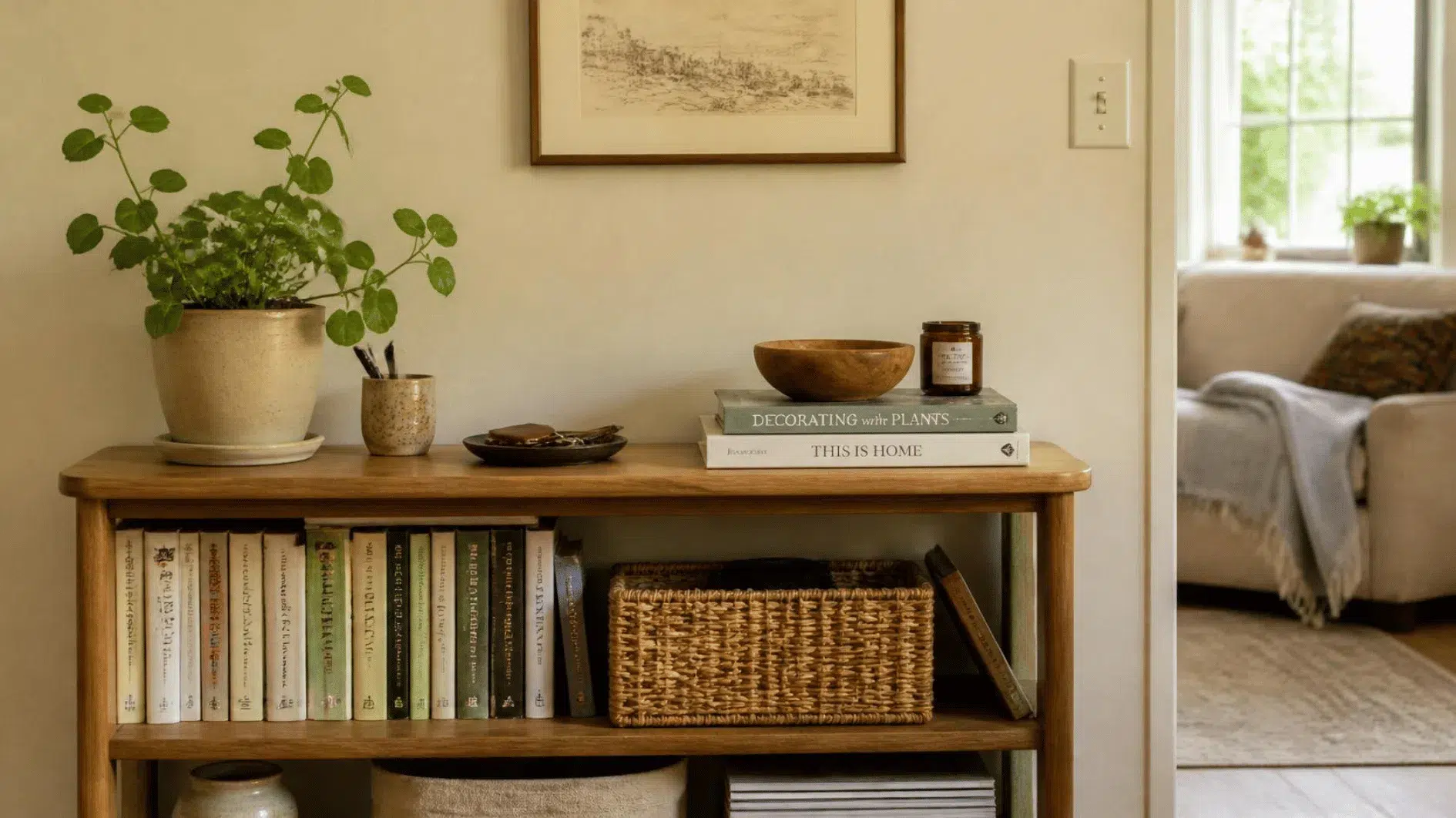
Putting a book back, clearing a dining table or returning keys to a hook can be a brief attention exercise. Decluttering, by contrast, involves decisions about what to keep, donate, repair or dispose of.
If the room is full of objects without a suitable place, more mindful wiping will not fix the underlying storage problem. Treat organising and cleaning as different tasks that may need different solutions.
Our how to declutter your home guide and home organisation ideas cover those practical decisions.
Make Shared Household Chores Respectful
A shared home includes different routines, standards and available energy. Mindful cleaning is a personal option, not a reason to expect everyone to work in the same way.
Agree on the basic cleaning responsibilities and hygiene requirements independently of any attention practice. People can complete their share efficiently without participating in mindfulness.
Children should be given only age-appropriate, safely supervised tasks, and hazardous cleaners must remain out of their reach.
When You Have Very Little Time
Some chores happen between work, school runs or other duties. If you only have a few minutes, focus on the cleaning that is necessary. You do not need to extend it by deliberately slowing your actions.
You might notice one sound or movement while continuing normally, or you might skip the idea entirely. Neither choice makes the task less valuable.
A flexible approach allows cleaning to remain one part of a day rather than expanding into a demanding routine.
When Cleaning Feels Tiring or Unpleasant
Not everyone enjoys household chores, and attention practices do not guarantee enjoyment. If you are tired, unwell or overloaded, it may be more appropriate to rest, ask for help or reduce nonessential cleaning.
Do not treat discomfort as something you must overcome through concentration. Reassess the task, products, conditions and support available.
The purpose of a mindfulness suggestion is not to rationalise an unfair division of household labour or turn necessary work into compulsory emotional self-management.
Adapt Mindful Cleaning to Different Needs
Mobility, sensory processing, dexterity and energy vary. Someone may not comfortably use the same cleaning tools, movements or attention anchors as another person.
Choose safe tasks and methods that match your abilities, available supports and household requirements. Watching a familiar object while placing it away may be more suitable than focusing on touch or breathing.
You may keep eyes open, work seated where safe and appropriate, or skip a particular exercise. An accessible, effective cleaning process is more important than following a fixed description.
Take Real Breaks Rather Than Only Attention Pauses
A few moments of noticing are not substitutes for rest, hydration, movement or suitable working conditions. Larger cleaning jobs may need genuine breaks and appropriate equipment.
When you finish one task, you can briefly notice that it is complete before moving on, but you do not need to insert a formal pause after every chore.
The forthcoming Mindful Breaks guide will look at optional short pauses during home and working days without unrealistic schedules.
Avoid Using Mindfulness to Chase a Perfectly Clean Home
A home can be hygienic and functional without being staged for photographs. Mindful attention does not mean repeatedly polishing a surface or checking for marks long after the necessary work is finished.
Decide what adequate cleaning looks like for the space and any real hygiene requirements. A clear purpose helps prevent a brief observation exercise from becoming more unnecessary work.
For wider choices about consumption and daily life, our slow living guide discusses maintaining manageable routines and priorities.
You Do Not Need Scented or Specialist Cleaning Products
Mindfulness does not require scented sprays, essential oils, expensive natural brushes or a particular brand. If products already work safely and effectively for the job, an attention practice does not justify replacing them.
Choose according to the cleaning requirement, user safety and surface compatibility. Environmental claims should be specific and credible, and product packaging or fragrance should not be confused with cleaning performance.
The natural cleaning products guide explains why natural-labelled and homemade cleaners still need careful scrutiny.
Six Small Mindful Cleaning Examples
| Ordinary task | An optional detail to notice | Keep in mind |
|---|---|---|
| Putting mugs away | The shape of each familiar handle | Handle fragile ceramics carefully. |
| Folding a dry towel | The texture and direction of the fold | Stop if movement is uncomfortable. |
| Wiping a suitable table | The changing appearance of the surface | Use the right cleaner and method. |
| Sweeping a safe floor | The movement and sound of the brush | Watch for obstacles and dust. |
| Returning books to a shelf | The size and position of a book | Keep shelves stable and accessible. |
| Clearing a worktop | The amount of practical space returned | Observe food hygiene and hazards. |
These are examples, not a checklist to complete. Select one that belongs naturally to your day, or choose an entirely different familiar task.
Common Mindful Cleaning Mistakes
- Cleaning something again solely to practise mindfulness. Choose tasks that genuinely need doing.
- Ignoring product instructions. Safety and hygiene must remain central.
- Slowing down during hazardous work. Concentrate on the safe procedure first.
- Expecting cleaning to produce calm. Notice the activity without requiring a particular feeling.
- Buying scented accessories. Mindfulness does not depend on fragrance or new supplies.
- Using it to enforce others’ behaviour. Shared responsibilities and personal practices are separate.
- Trying to notice every movement. One small observation can be sufficient.
- Treating awareness as a replacement for rest. Take appropriate breaks and seek help when needed.
A Mindful Cleaning Checklist
- Choose a safe, necessary and familiar household task.
- Use the correct equipment and products for the surface.
- Read applicable labels and cleaning instructions.
- Keep hygiene and physical safety ahead of attention exercises.
- Notice one comfortable, ordinary detail if you wish.
- Continue working at a sensible pace.
- Stop or adapt the exercise if it becomes distracting or unpleasant.
- Complete the actual cleaning without unnecessary repetition.
- Take real breaks for larger or demanding chores.
- Allow other household members their own preferences.
Frequently Asked Questions About Mindful Cleaning
What does mindful cleaning mean?
It means deliberately noticing some part of an ordinary household cleaning task while doing it. The method and safety requirements of cleaning remain unchanged.
Can cleaning count as mindfulness?
You can choose to pay attention while cleaning, but cleaning itself does not automatically constitute mindfulness. The observation is optional and need not take additional time.
Do I need natural cleaning products to clean mindfully?
No. Use products appropriate for the task and surface, following the label and relevant guidance. Natural and scented products are not requirements.
Can mindful cleaning reduce anxiety or treat stress?
It should not be treated as a medical or psychological treatment. People’s responses differ, and persistent symptoms deserve appropriate qualified support.
What if I dislike cleaning?
You do not have to enjoy it or make it an exercise. Use the simplest safe and effective process and consider how responsibilities can be shared.
How long should mindful cleaning last?
There is no prescribed duration. You might notice one detail for a few seconds while completing an ordinary task.
Let Cleaning Remain a Practical Part of Life
Mindful cleaning does not need to transform chores into an elaborate ritual. When an ordinary task is already due, you may choose to notice a sound, movement or small change in your surroundings while completing it.
Maintain proper hygiene, use products safely and stop when the job is done. The optional moment of attention can fit around real life, rather than asking real life to accommodate a new cleaning philosophy.

Leave a Reply