

SUSTAINABLE HOME · LOW-WASTE LIVING
Natural Cleaning Products: A Practical Guide for Everyday Home Care
A practical guide to natural cleaning products—what “natural” does and does not tell you, where simple ingredients can be useful, when a formulated cleaner is the better choice, and how to build a straightforward routine without unnecessary products.
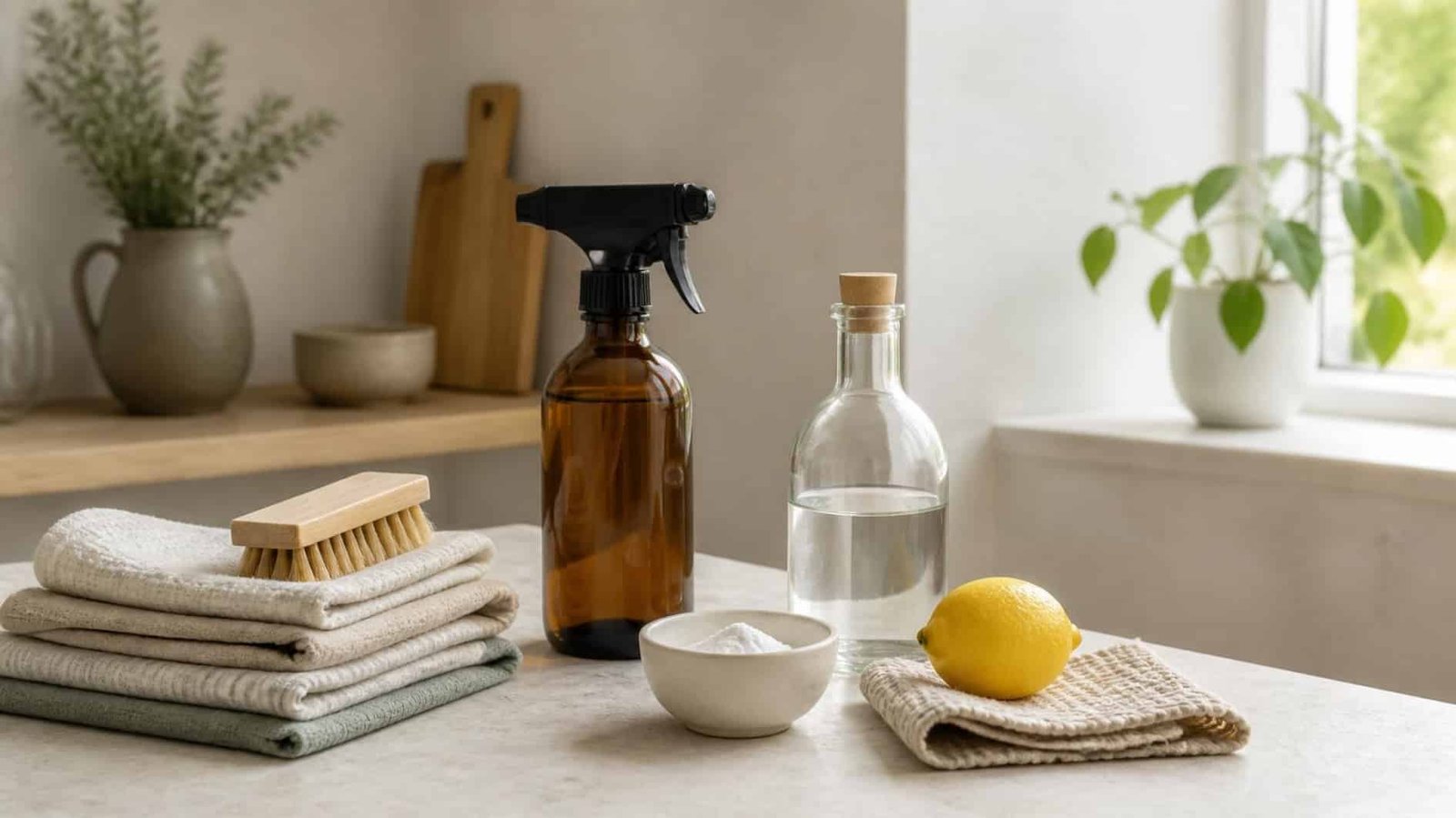
Natural cleaning products appeal for an obvious reason: the idea of using simpler, familiar ingredients can feel easier to understand than a long formulation on the back of a bottle. But “natural” is a broad description, not a guarantee of performance, low environmental impact or suitability for every surface.
A practical routine starts with the cleaning job rather than the ingredient origin. Some everyday tasks can be handled with simple products and reusable cloths. Others—such as limescale, heavy grease, laundry, dishwashing or disinfection—often work better with a cleaner formulated for that specific purpose.
For the broader buying framework, including environmental claims, packaging, concentrates and certifications, see our eco friendly cleaning products guide.
What Does “Natural Cleaning Product” Mean?
There is no single consumer definition that makes every product labelled “natural” directly comparable. One brand may use the term because most ingredients are plant-derived. Another may use it for a short ingredient list or because the product avoids certain materials.
That means the useful questions are more specific: what is in the product, what job is it designed to do, how much do you need to use and what evidence supports the environmental or ingredient claims?
Natural Is Not a Synonym for Safer or Greener
Natural origin does not automatically tell you how irritating, biodegradable, resource-intensive or effective an ingredient is. Concentration and exposure matter too.
For everyday shopping, avoid treating “natural” as a shortcut for safety. Read the usage instructions and hazard information supplied with the product, and keep cleaners stored securely regardless of how familiar the ingredients sound.
Where Simple Ingredients Can Be Useful
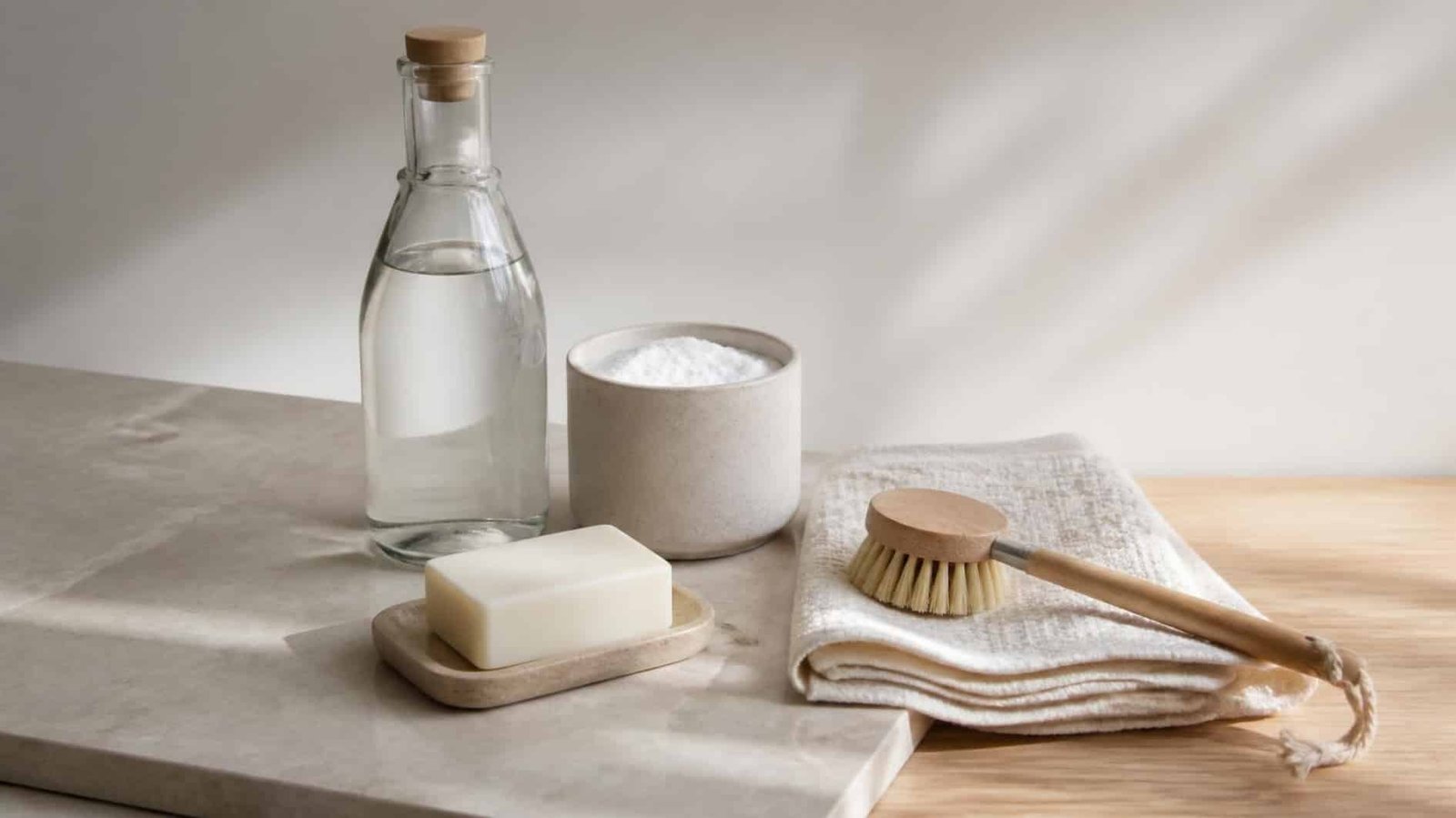
Simple ingredients can work well when the cleaning problem is simple. Warm water, a suitable soap or detergent, a reusable cloth and mechanical wiping can handle many routine marks and spills.
The advantage is not that a cupboard ingredient is universally “cleaner” or more environmentally responsible. It is that you may already own it, can use a small amount for a defined task and avoid buying an additional specialist product.
Vinegar: Useful, but Not for Every Surface
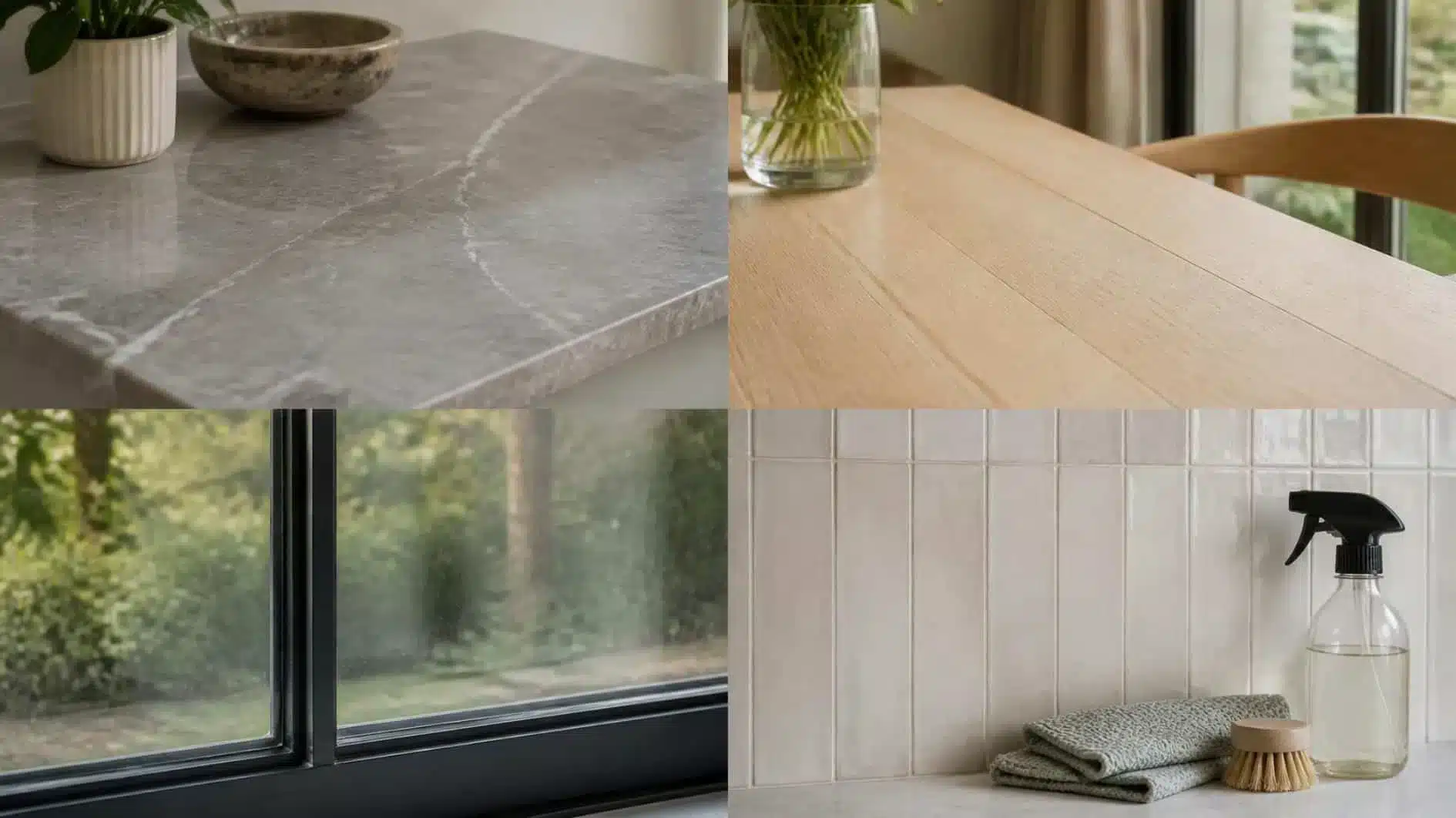
White vinegar is acidic, which makes it useful for some mineral deposits and limescale-related cleaning tasks. That same acidity is why it is unsuitable for some materials.
- Avoid using vinegar on natural stone such as marble or limestone.
- Check manufacturer guidance before using it on grout, sealed surfaces, appliance components or specialist finishes.
- Do not assume vinegar is a general-purpose disinfectant.
Surface compatibility matters more than whether the ingredient is familiar.
Bicarbonate of Soda: Best for Mild Abrasion and Odour Control
Bicarbonate of soda can provide gentle abrasive action and can help with some odours. It is useful where mild scrubbing is appropriate, but it is not suitable for every finish and it does not replace a detergent where grease needs to be lifted and carried away.
Use it sparingly and avoid scrubbing delicate glossy, coated or easily scratched surfaces without checking the care instructions first.
Soap and Surfactants Still Matter
Many cleaning jobs depend on surfactants: ingredients that help water spread and lift oily soil from a surface so it can be rinsed or wiped away. That is why a simple soap or detergent is often more effective for greasy residue than an acidic or abrasive cupboard ingredient.
“Chemical-free” is not a useful standard for cleaning products. Water, soap, vinegar and bicarbonate are all chemicals. The better question is whether a formulation is suitable for the task, properly labelled and used at the correct dose.
When a Formulated Cleaner Is the Better Choice
Some jobs justify a purpose-designed product because the formulation needs to balance cleaning power, surface compatibility and ease of use.
- Heavy grease: especially where food residue has polymerised or built up over time.
- Persistent limescale: where a controlled descaling formulation is appropriate for the surface.
- Laundry and dishwashing: where enzymes, builders and surfactants work together under machine conditions.
- Disinfection: when an actual disinfecting claim and defined contact time are required.
- Special finishes: such as natural stone, wood treatments, screens or manufacturer-specified surfaces.
Do Not Mix Cleaning Products
Do not combine household cleaners unless the manufacturer specifically instructs you to do so. In particular, never mix bleach products with acids such as vinegar or with ammonia-containing cleaners, because hazardous gases can be released.
Using products one at a time according to their labels is simpler and safer than trying to create a stronger homemade mixture.
Natural Cleaning in the Bathroom

The bathroom contains several different cleaning problems: soap residue, body oils, limescale, water marks and sometimes mould or mildew. One “natural” product will not necessarily handle all of them well.
For light routine wiping, a suitable general cleaner may be enough. For limescale, choose a product compatible with the surface. For mould or hygiene problems, use a product intended for that job rather than relying on improvised mixtures.
Our Eco Friendly Bathroom Cleaner guide compares bathroom-specific choices in more detail, including limescale, surface compatibility, packaging and green claims.
Natural Cleaning in the Kitchen
Kitchen cleaning is mainly about food residues, grease and appropriate hygiene. Start with detergent action rather than assuming an acidic ingredient will do every job.
Use a suitable washing-up liquid or surface cleaner for oily residues, clean spills promptly and follow manufacturer instructions on worktops, sealed wood, stone and appliances. Where disinfection is needed, choose an appropriate product and use it according to its directions.
Fragrance and Essential Oils
Adding essential oils changes the scent of a cleaner, not how well it cleans, and some surfaces and households are sensitive to fragrance. Our eco cleaning guide covers fragrance and allergens in ready-made products.
Cleaning Is Not the Same as Disinfecting
Simple ingredients can clean, but cleaning and disinfecting are different jobs. Our household cleaning products guide explains when a disinfectant is actually needed.
Make the Routine Lower Waste
Refills, concentrates and reusable cloths reduce waste regardless of which products you use. For how to compare refill systems and packaging claims, see our eco friendly cleaning products guide.
What to Look for in a Ready-Made Natural Cleaner
- Clear intended use: what surfaces and soils the product is designed for.
- Transparent directions: including dilution or dosage where relevant.
- Ingredient information: enough detail to understand the formulation category and relevant allergens.
- Specific environmental claims: supported by measurable information rather than broad green language.
- Practical packaging: refillable, concentrated or recycled-content formats where they genuinely reduce material per use.
Natural origin can be one factor in your decision, but it should sit alongside cleaning performance, dosage, packaging and evidence.
Common Natural-Cleaning Mistakes
- Assuming natural means harmless.
- Using vinegar on acid-sensitive stone or finishes.
- Using abrasive powders on delicate surfaces.
- Mixing cleaning products.
- Adding essential oils mainly to make a cleaner seem more effective.
- Using a homemade cleaner when a defined disinfecting performance is actually required.
- Buying several “natural” products that duplicate one another.
A Simple Everyday Routine
- Identify the soil. Dust, grease, mineral deposits and hygiene tasks need different approaches.
- Check the surface. Manufacturer care instructions take priority over generic cleaning advice.
- Use the mildest suitable method. Often water, a reusable cloth and an appropriate detergent are enough.
- Escalate only when needed. Use a targeted descaler, degreaser or disinfectant for the jobs that justify one.
- Use one product at a time. Do not mix cleaners.
- Measure concentrates properly.
- Review the cupboard periodically. Remove duplication and finish what you already own.
Frequently Asked Questions About Natural Cleaning Products
Are natural cleaning products safer?
Not automatically. Safety depends on the specific ingredients, concentration, exposure and how the product is used. Read the label and follow the directions regardless of whether the formulation is described as natural.
Is vinegar a good all-purpose cleaner?
No. Its acidity makes it useful for some mineral deposits, but it can damage acid-sensitive materials such as natural stone and is not a universal disinfectant or degreaser.
Can I mix vinegar and bicarbonate of soda for cleaning?
The visible fizz comes from an acid-base reaction, but that does not make the mixture a universally stronger cleaner. It is usually more useful to choose the ingredient or formulated product that matches the specific cleaning task rather than combining ingredients for effect.
Should I add essential oils to homemade cleaners?
There is usually no need. Essential oils mainly add fragrance and may introduce compatibility or sensitivity considerations. They do not automatically improve cleaning performance.
Are natural cleaning products better for the environment?
Not simply because they are natural. Compare the whole product: ingredient sourcing, concentration, dose, packaging, transport, performance and the evidence behind environmental claims.
Choose the Simplest Suitable Product
Natural cleaning works best when it is practical rather than ideological. Use simple ingredients where they genuinely suit the job, keep a good detergent for routine grease and soil, and use specialist products when the surface or cleaning problem requires them.
The goal is not to make every cleaner at home or eliminate every formulated product. It is to understand what each cleaning method does, avoid unnecessary duplication and choose the simplest product that can do the job well.

Leave a Reply