

SPACE & LIGHT · CALM SPACES
Visual Clutter: How to Make Rooms Feel Less Busy
Make rooms easier to use and less visually busy by arranging the belongings you already have—without an empty-house aesthetic or complicated storage systems.

Visual clutter is not necessarily a problem of owning too much. A room can feel visually busy because essentials are scattered over different surfaces, colours compete for attention or objects have no convenient place where they are used. Those are arrangement questions, and they often have practical solutions.
Making a room easier to scan and use does not require getting rid of books, photographs or keepsakes. Start with surfaces, sightlines and storage that suit real activities, while keeping individual taste and accessibility at the centre.
This article expands our calm home ideas guide, with a specific focus on visible objects and visual order. For sound-related distractions, see how to reduce noise at home; for decisions about possessions, our decluttering guide covers a separate task.
What Is Visual Clutter?
Visual clutter describes the impression of many competing objects, patterns, colours or details in a space. It may include everyday items spread over a worktop, a collection of small decorations, exposed cables or simply several surfaces that demand attention at once.
The term is descriptive, not a diagnosis or a judgement about how someone lives. A collection of books or a brightly coloured room may feel welcoming to its occupants. The practical question is whether the arrangement makes it harder to find, use or enjoy what is already there.
Our calm home ideas guide covers light, sound and layout as well. This article concentrates specifically on how objects and visible details are arranged.
Visual Clutter Is Not the Same as Owning Too Much
You can have relatively few possessions in a small space and still experience visually busy surfaces if everything has to remain visible. Conversely, a room containing many books, pictures and useful tools may feel coherent when those items are organised in a way that suits the household.
Decluttering concerns decisions about keeping or letting go of things. Reducing visual busyness often means changing the placement, grouping or visibility of belongings without changing how much you own.
If there are simply too many items to use or maintain, our how to declutter your home guide covers that different process.
You Do Not Need a Minimalist Home
A calmer-looking arrangement does not require bare walls, identical storage boxes or a palette of white and beige. Books, family photographs, patterned rugs and collections can remain important parts of a functional home.
Think about proportion and usefulness rather than an arbitrary limit on ornaments. You may prefer a colourful gallery wall in one area and a simpler background around a desk or television.
Any adjustment should make the home work better for the people who live there, not turn personal taste into another rule.
Begin by Noticing Where the Room Feels Busy
Stand or sit in the places where you actually use the room. Notice whether your attention is drawn repeatedly to an overloaded shelf, exposed cables, objects without a clear purpose or a narrow route between furniture.
Consider when the room feels most difficult to use. A kitchen island can be clear in the morning and covered with bags at the end of the school day; that pattern may reveal the need for a suitable landing place rather than a new decorative scheme.
Take note of one specific inconvenience before moving anything. Vague goals such as making everything look perfect are difficult to maintain.
Make One Small, Reversible Change
- Choose a tabletop, shelf or part of a room you use regularly.
- Identify the objects needed for the activity that happens there.
- Group related items where they are easy to reach.
- Move a nonessential item to an existing suitable location, if available.
- Keep enough clear space to perform the activity comfortably.
- Try the new arrangement for a normal day before buying storage.
A practical experiment is more useful than removing everything and creating a system nobody can follow. If you find you repeatedly need an item you moved, return it and change the plan.
Leave Somewhere for the Eye to Rest
A room with detailed wallpaper, patterned cushions, shelves of small ornaments and several strong focal points can look visually intense. This is not inherently undesirable, but a simpler adjoining surface may provide useful balance.
You might leave part of a wall unadorned, group decorative items on one shelf or choose a plainer background behind a work area. The amount of detail remains a matter of personal preference.
The goal is not emptiness. It is a deliberate relationship between detailed areas and quieter ones.
Choose a Clear Focal Point When It Helps
A distinctive painting, timber dining table or comfortable armchair can give the room a visual anchor. Competing decorative arrangements immediately around it may make that useful feature harder to notice.
Before moving other objects, decide which element you want to draw attention to and why. Consider the view from the main entrance and from the seats people normally use.
If the room is primarily practical, such as a utility room, a decorative focal point may not be needed at all. Function can organise the space on its own.
Keep Everyday Work Surfaces Usable
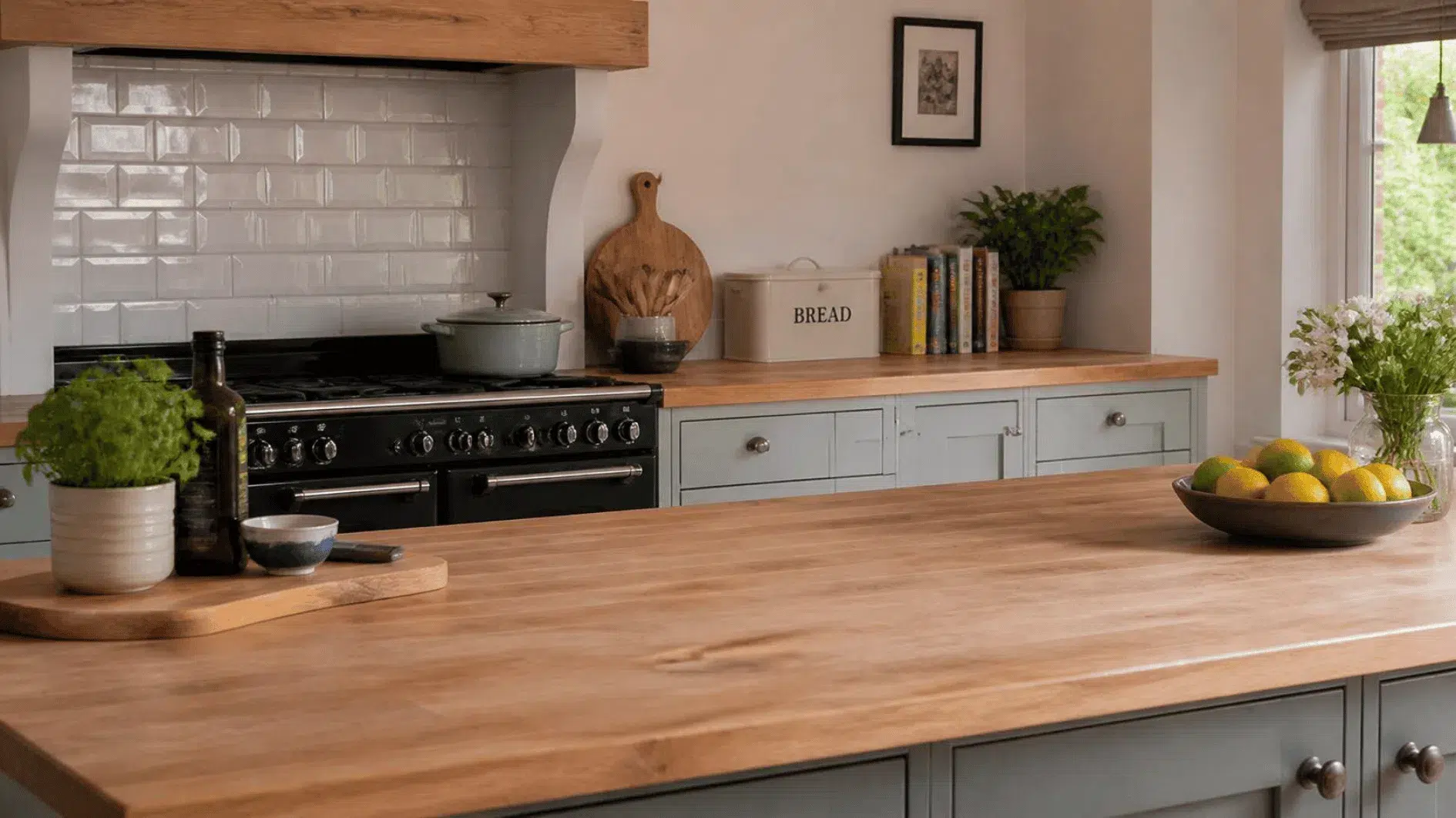
A kitchen worktop needs room for preparing food, a dining table needs space for meals, and a desk needs sufficient working area. Several decorative objects can become inconvenient if they must be moved every time the surface is used.
Choose what genuinely belongs within reach. A kettle or everyday utensil may have a good reason to stay on a counter, whereas a collection of rarely used accessories may fit better elsewhere.
Cleanability matters too. Leave enough access to wipe and maintain surfaces according to their materials and intended use.
Group Objects by Use Rather Than Appearance Alone
A few items that support one task often work better together than scattered across a room. On a reading table, a lamp, current book and glasses can occupy a practical group. In a hallway, keys and correspondence may benefit from a clearly defined landing place.
Choose a container or area only where it helps the task. A tray that repeatedly fills with unrelated objects can create another difficult-to-maintain surface.
Prioritise reach, visibility and an easy return path over matching colours or creating a picture-perfect display.
Make Open Shelving Easier to Use

Open shelves are useful for books, frequently used objects and items you want to display. They do not need to be sparsely styled, but small things scattered across every shelf may make it harder to locate what you need.
Try grouping books together and reserving a dedicated place for the few decorative items you particularly enjoy. Avoid placing heavy objects high above everyday seating or overloading shelves.
The right balance will depend on how frequently the items are used, available storage and whether household members prefer to see their belongings.
Use Closed Storage Only Where It Adds Practical Value
A cupboard or drawer can keep some supplies out of sight, but closed doors do not automatically create better organisation. If the contents become difficult to access or remember, the system may be less useful.
Keep regularly needed items at a comfortable height and arrange them so they can be reached without unnecessary lifting. Consider transparent or clearly labelled compartments if they help people identify contents.
For practical storage systems that last, read our home organisation ideas guide.
Consider Sightlines and What You See From Each Seat
The view across a room can be more visually demanding than the appearance of one tidy corner. A row of small objects on a windowsill, cables behind a television and a crowded bookcase may all appear in a single sightline.
Try moving one group of objects or rotating a piece of furniture when doing so preserves access. A clear route and an unobstructed useful view often matter more than symmetry.
Do not hide equipment that requires ventilation, or place furniture where it obstructs windows, doors or supervision of children.
Choose Furniture Proportions Before Extra Storage
Several small cabinets, stools and side tables may create more visible edges and obstacles than one well-sized item. Equally, a large cabinet can overwhelm a small room or block natural light.
Measure available space and consider the actual purpose of each piece. Sometimes removing an unused side table from a route or changing the orientation of a chair makes a bigger difference than buying another organiser.
Preserve safe circulation, access to essential items and adequate clearance for mobility needs.
Reduce Visible Cables Without Compromising Safety
Chargers, television leads and computer equipment can look busy, particularly when several cables cross an otherwise open surface. A designated charging place and appropriate cable routing can make them easier to manage.
Use suitable products and follow electrical guidance. Do not tightly bundle cables in ways that increase heat, conceal damaged cords, obstruct ventilation or overload sockets.
If an unused device has accumulated on the table, consider whether it genuinely needs to remain connected rather than disguising it with decorative accessories.
Balance Colours and Patterns Without Removing Character
Multiple colours and patterns are not inherently clutter. The relationship among them matters. Repeating a few colours across a room can make varied objects feel connected, while allowing one patterned area to stand apart may prevent competing focal points.
Existing wall colours, flooring and fabrics should guide changes. A patterned sofa does not require neutral replacements everywhere; perhaps a single plainer throw or nearby surface will give it room.
Our warm neutral colours guide
Allow Natural Textures to Be Seen Clearly
Timber grain, woven linen, wool and ceramics can create plenty of interest without large numbers of accessories. If several strong textures overlap in one small area, consider whether each piece is useful.
Choose materials that fit care and wear requirements, not merely a desired photograph. A textured rug that is awkward to clean may add more work to the household than it solves.
For material performance, see our natural materials for the home guide.
Use Lighting to Support Rather Than Complicate a Room
Glare, strong shadows and many competing decorative lamps can influence how busy a space appears. The priority should be appropriate light for reading, moving around, cooking and other everyday activities.
Try adjusting existing lamp direction, changing a shade or controlling window glare before buying additional fixtures. Keep stairs and walkways sufficiently illuminated.
Our lighting for a sitting room guide
Visual Clutter in Living Rooms
Living rooms often hold several activities at once: conversation, reading, television, play and working. Books, remote controls, toys and charging accessories naturally need somewhere to go.
Start with the sofa and the most-used surfaces. Keep items needed for sitting and relaxing accessible, while giving less-frequent objects a dependable home. Do not obstruct television ventilation or walking routes.
Our cosy living room ideas guide
Visual Clutter on Kitchen Counters
Kitchen worktops can collect appliances, utensils, letters and bags. The result may be less room for preparing meals or cleaning surfaces, regardless of whether the number of possessions is excessive.
Observe what must remain close to cooking, washing and food preparation. Store sharp tools safely and follow food hygiene practices. Move unrelated household items to a suitable landing place rather than simply hiding them in a difficult-to-reach cupboard.
Keep ventilation, appliance clearances and electrical safety in mind when positioning equipment.
Visual Clutter in Bedrooms
A bedroom may feel busy when bedside surfaces hold chargers, books, skincare, clothing and decorative objects together. Choose what genuinely needs to be within reach at night or in the morning.
A usable lamp and a few personal necessities may be more practical than matching displays on every surface. Avoid storage that obstructs access to the bed, wardrobes or essential mobility equipment.
For lighting, textiles and general comfort, see cosy bedroom ideas. The aim here is practical visual order rather than a prescribed bedroom style.
Hallways and Entrances: Reduce the Landing-Pile Effect
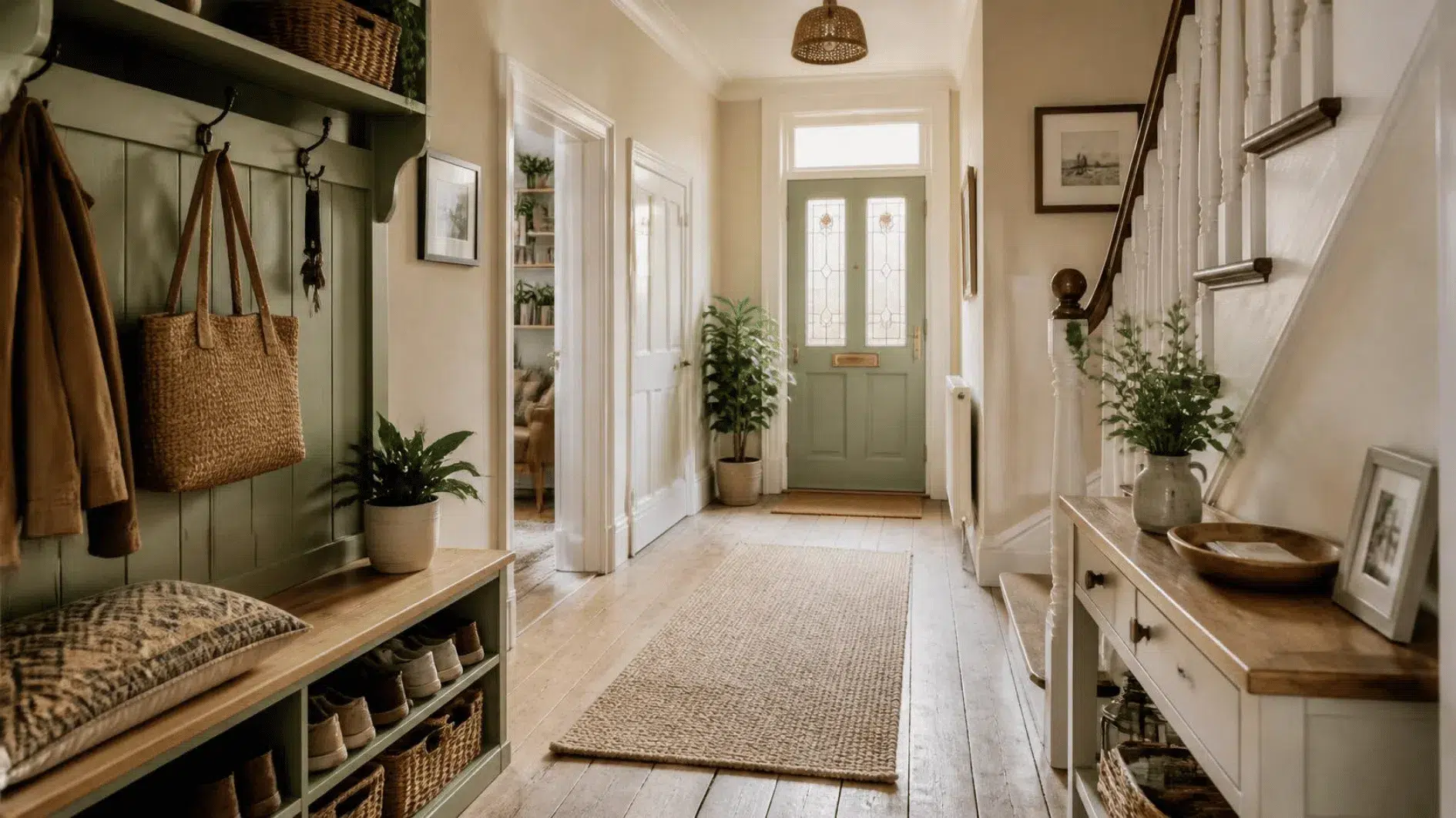
Keys, shoes, bags and post often arrive together. A designated place near the entrance may be easier to maintain than carrying every object to a distant room.
Choose hooks or storage suited to the household and fix items securely where necessary. The entrance must remain safe to pass through; do not block doors, stairways, ventilation or emergency exits.
When the same items keep appearing in a pile, treat that as feedback about the storage arrangement rather than proof that someone is untidy.
Visual Clutter Around a Home Workspace
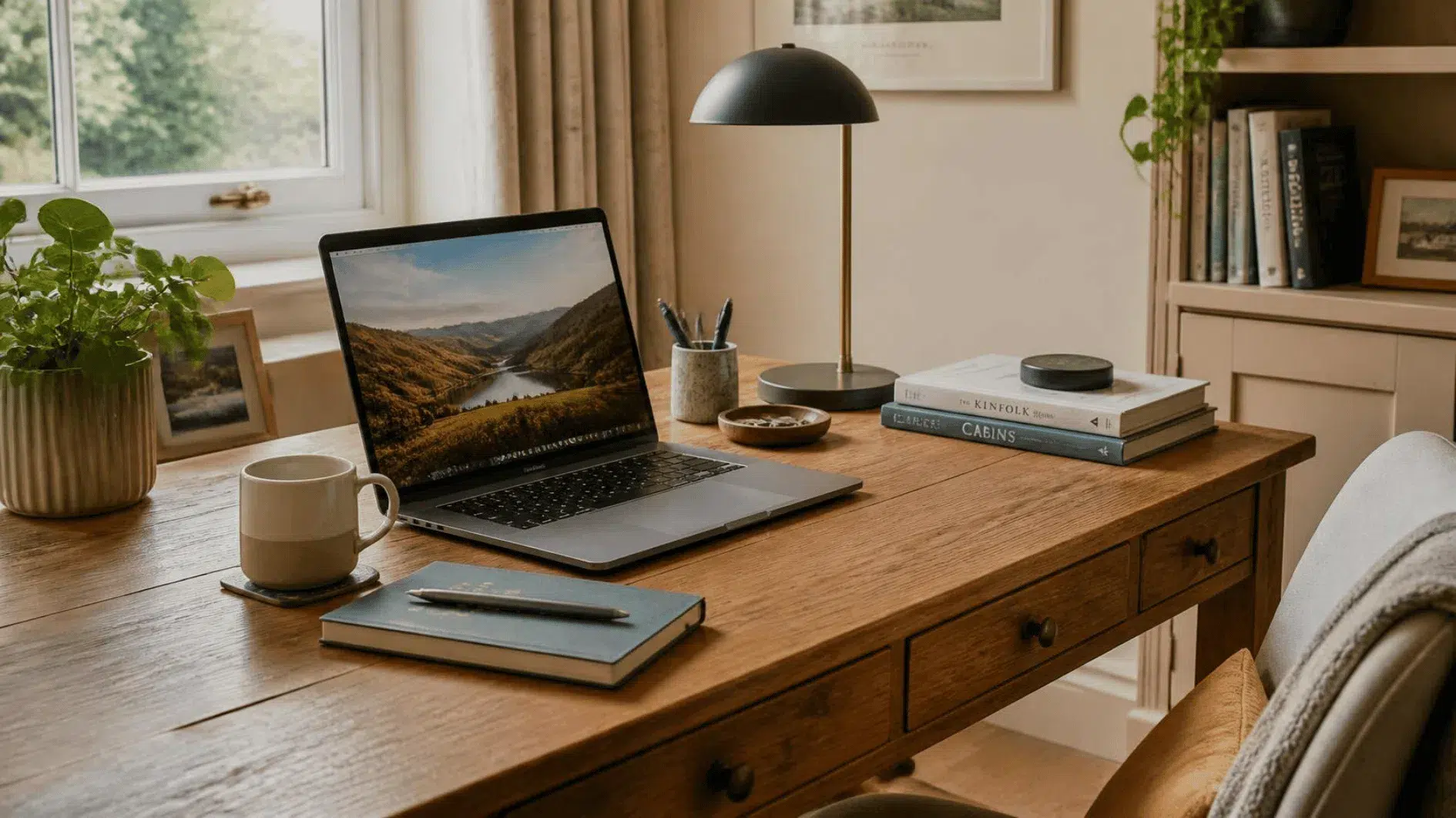
A working desk needs room for the actual work and safe access to equipment. Extra papers, unused stationery and crossing leads can make simple tasks slower when the necessary object is difficult to find.
Keep current materials within reach and store reference items in a retrievable location. A single open notebook and the tools you use regularly may be more helpful than many small containers.
Follow ergonomic and workplace needs. A tidy-looking desk is not successful if it leaves a screen too low or removes equipment someone needs.
Visual Clutter in Shared and Family Homes
Different people may prefer different levels of display and visibility. Someone might find open shelves easy to use, while another prefers fewer things in view. The same arrangement need not work for every household member.
Agree on the functions of shared surfaces and provide realistic places for belongings. Avoid treating toys, care equipment or personal aids as objects that must be concealed for a room to look calm.
Children need age-appropriate, accessible storage and safe arrangements, not an expectation of maintaining adult display standards.
Accessibility: Visibility Can Be Helpful
Putting everything behind doors may make an environment harder for someone who relies on visible cues, needs frequent access or benefits from clear, recognisable placement.
Ask the person using the space what arrangement supports them. A labelled open basket, consistent object position or accessible working surface may be better than an otherwise seamless cabinet.
Never prioritise a sparse aesthetic over mobility access, safe lighting, essential medical or care equipment, or the ability to use a room independently.
Renter-Friendly Ways to Change a Visually Busy Room
Before making permanent alterations, try grouping items, changing furniture orientation and making better use of existing shelves and drawers. Reversible solutions are especially useful when permission for drilling or new fixtures is limited.
Review tenancy agreements and avoid unsafe adhesive fixes, unsecured tall furniture or equipment installations that damage the property.
If a storage need persists, measure the actual location and choose a suitable item rather than buying an entire matching collection.
Avoid Buying Organisers Before You Know the Problem
A new basket, tray or cabinet can make visual clutter more organised-looking while leaving the underlying routine unchanged. If nobody can remember where an object belongs, the extra container may simply gather more objects.
Test a temporary arrangement with the storage you already own. Decide what needs to be visible, what needs quick access and what can be stored elsewhere.
Make the Arrangement Easy to Maintain
A system that requires several steps to put something away will often be abandoned during a busy week. Place frequently used objects where they naturally return, using simple categories rather than elaborate rules.
The arrangement should allow the room to move between daily activities. A work surface can look busy while in use and still return to a practical state afterwards.
Check whether the change continues to help after normal household use rather than judging the result immediately after a tidy-up.
Visual Clutter: Practical Changes by Room
| Area | Common visual difficulty | Small practical adjustment |
|---|---|---|
| Sitting room | Remote controls, books and charging leads spread across tables | Give current-use items one accessible location |
| Kitchen | Non-cooking objects collect around appliances | Provide a landing space away from food preparation |
| Bedroom | Bedside items compete with decorative objects | Prioritise the lamp and useful personal essentials |
| Hallway | Bags and shoes block a route | Use safe storage near where items arrive |
| Home office | Loose papers and multiple chargers cover the desk | Separate current work from reference supplies |
| Open shelf | Many unrelated small objects compete for attention | Group useful items while retaining treasured displays |
These are experiments, not aesthetic rules. Keep the arrangement that best serves the room and its occupants.
Common Mistakes When Reducing Visual Clutter
- Confusing less visible with less useful. Hidden storage can hinder access.
- Removing personal items without agreement. Shared homes deserve shared decisions.
- Buying matching boxes first. Observe where items naturally collect.
- Making surfaces impossible to use. Everyday tasks need room.
- Ignoring safety. Keep cables, doors, furniture and lighting practical.
- Over-styling every shelf. Useful books and objects can remain in view.
- Applying one design taste to everyone. Comfort with visual detail varies.
- Expecting permanent tidiness. Active homes naturally change during the day.
A Visual Clutter Checklist
- Select one area that is difficult to use or visually distracting.
- Identify the activity that should take place there.
- Keep necessary items safe and within suitable reach.
- Group related objects rather than scattering them.
- Leave enough clear surface for the actual task.
- Preserve safe routes and access to doors, windows and equipment.
- Use shelves and closed storage according to household preferences.
- Check the view from the places where people sit or work.
- Test the arrangement before purchasing extra organisers.
- Adapt it to shared, sensory and accessibility needs.
Frequently Asked Questions About Visual Clutter
What is visual clutter in a home?
It is the impression of too many competing visible details, such as scattered objects, exposed cables, overlapping patterns or crowded surfaces. It is not necessarily the same as having too many possessions.
How can I reduce visual clutter without throwing things away?
Try grouping related items, keeping worktops usable, adjusting shelf displays and providing practical storage at the point of use.
Does reducing visual clutter mean becoming minimalist?
No. Colourful rooms, personal collections, photographs and books can remain part of a coherent and functional arrangement.
What is the best room to start with?
Choose a space where visible objects interfere with a regular task, such as a kitchen counter, bedside table or working desk.
Should everything be stored in closed cupboards?
No. Open and visible storage may be easier to use for some people. Accessibility and normal household routines should guide the decision.
Can reducing visual clutter treat stress or sensory conditions?
Room adjustments may improve practical comfort for some people, but these ideas are not medical or psychological treatments. Individual needs and qualified support remain important.
Make Visual Order Serve Everyday Life
A less visually busy room is not an empty one. It is a space where the objects you need are easy to find, the work surfaces remain usable and the surrounding detail feels right for the people who live there.
Begin with one practical change, preserve what matters and revise the arrangement as everyday routines reveal what works. Visual order should make home life easier, not become another task to perfect.

Leave a Reply