

NATURAL LIVING · PLANTS & GREEN LIVING
Yellow Leaves on Houseplants: How to Check the Cause
Yellow leaves are a clue, not a diagnosis. Check which leaves have changed, compost moisture, light, roots and recent care before deciding what to do.
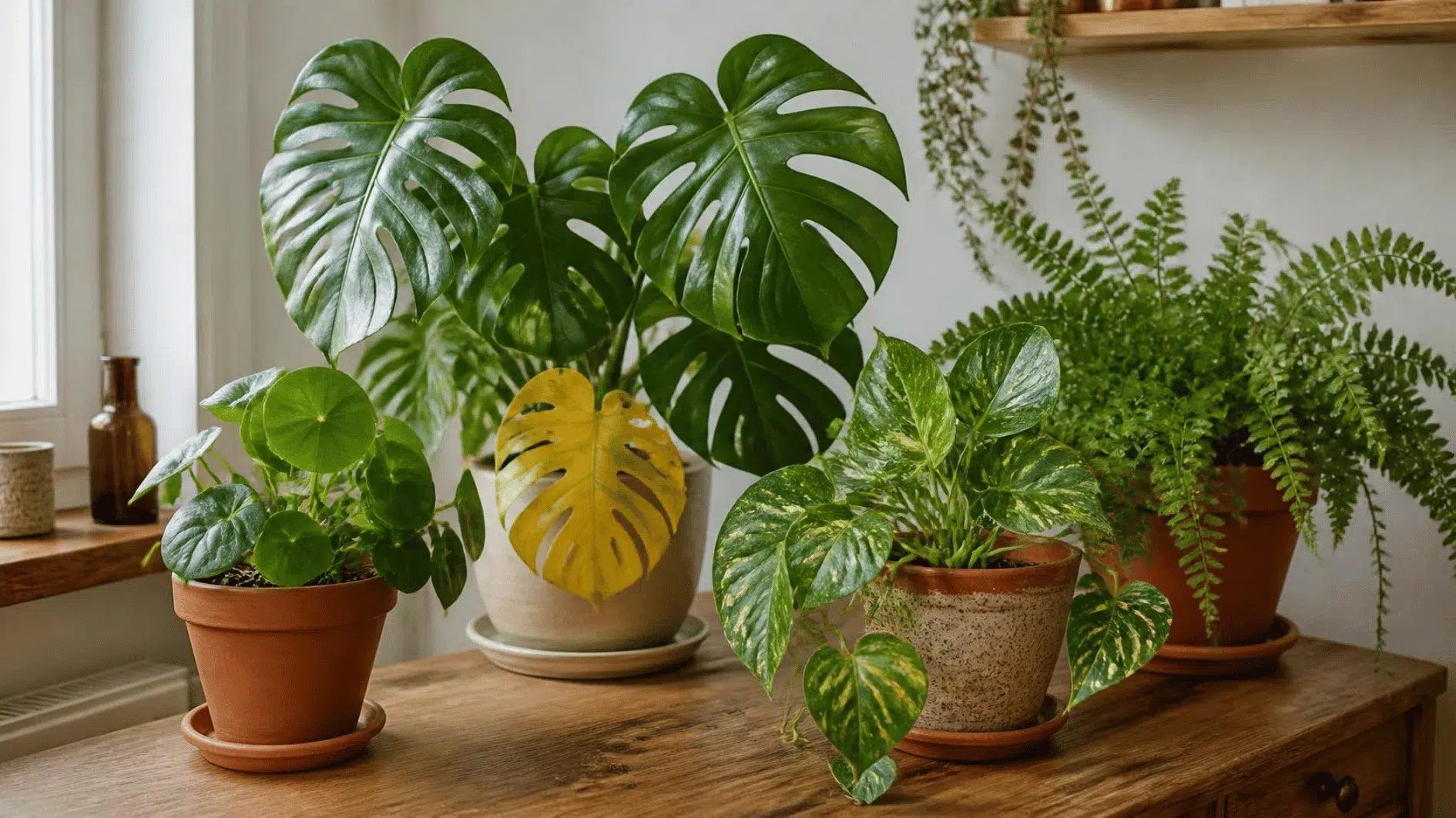
Yellow leaves on houseplants can be worrying, but the same visible change may arise for several reasons. A single older leaf may be finishing its natural lifespan, while extensive yellowing can accompany problems with moisture, roots, light or temperature. Treating every yellow leaf as overwatering is a common mistake.
This guide shows what to examine before choosing a response: which leaves are affected, whether the rootball is too wet or too dry, how much light reaches the plant and what changed recently. It explains why one symptom should not automatically trigger fertiliser, repotting or chemical treatments.
It is the final support article in our houseplant care guide, alongside how to water houseplants and repotting houseplants.
Why Do Houseplant Leaves Turn Yellow?
Yellow leaves can be part of normal ageing or a response to unsuitable growing conditions. Water availability, root health, light, cold, nutrients and pests can all influence foliage. A yellow leaf is a visible sign, not a diagnosis.
Before changing anything, find out which leaves are affected, when the change began and how the plant has been cared for recently. Making several treatments at once can obscure the original problem and make recovery more difficult.
When One Older Yellow Leaf May Be Normal
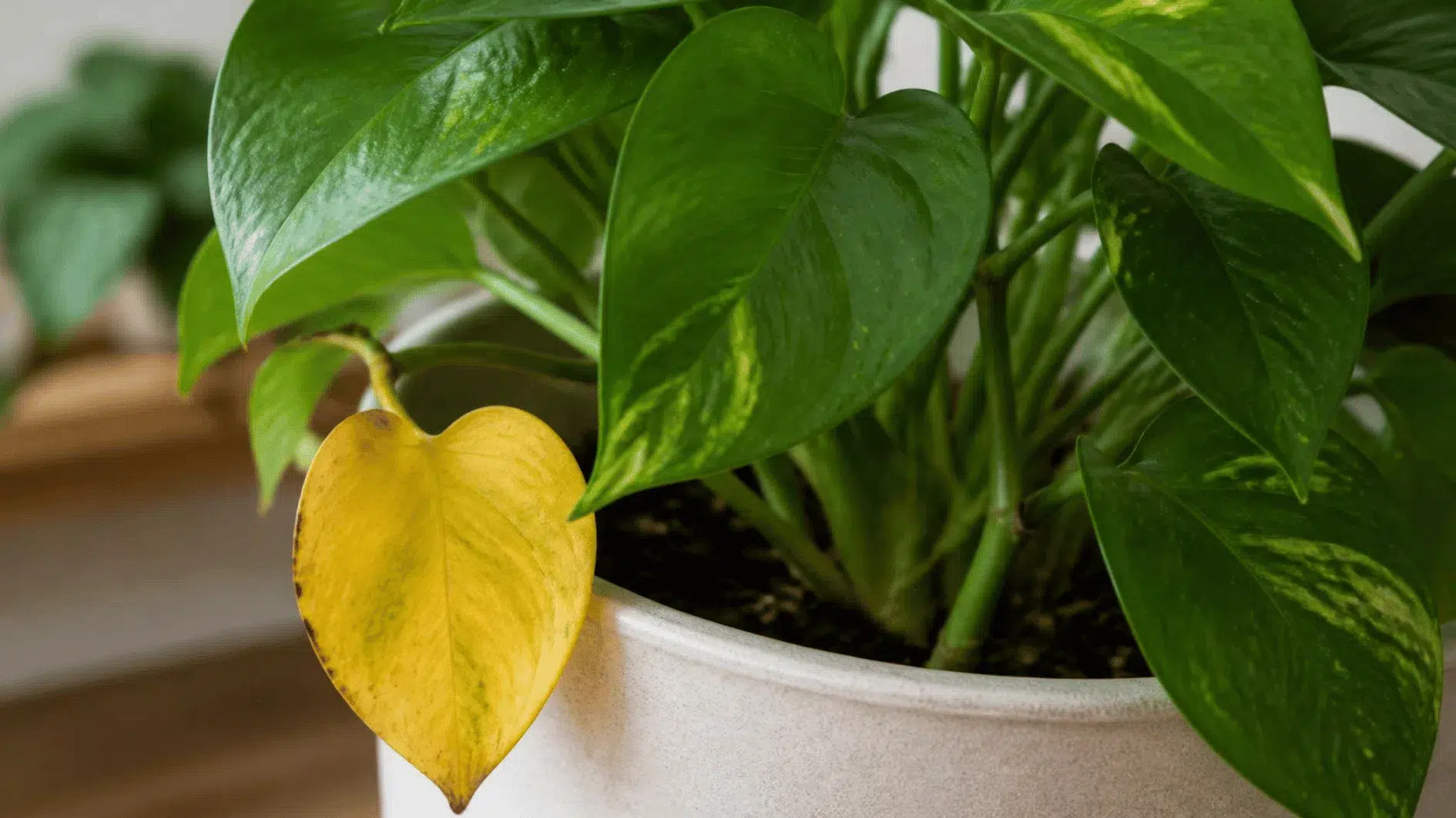
Some indoor plants regularly shed a lower or older leaf as they replace foliage. One leaf gradually yellowing while the rest of the plant grows normally may be different from many leaves discolouring rapidly.
Check the species and its expected growth habit, and monitor fresh growth. Do not repot, fertilise or increase watering solely because a single older leaf has reached the end of its lifespan.
Read the Pattern of Yellowing Before Acting
Observe whether the yellow leaves are mostly older or newer, concentrated on one side or spread throughout the plant. Note whether yellowing is uniform, between veins or accompanied by spots, soft stems or dry edges.
Different patterns can suggest different possibilities, but none identifies a cause conclusively. Patterns matter most when combined with compost moisture, temperature, exposure and any recent change in location or care.
What Yellow Lower Leaves Can Indicate
Older foliage may naturally age. Yellow lower leaves can also appear when the plant experiences inadequate light, poor root conditions, nutrient limitations or other stress. The number of affected leaves and speed of change matter.
Compare the yellow leaves with the plant’s overall health. A steady stream of falling leaves with stalled new growth deserves investigation, even if the affected leaves are near the base.
Why New Yellow Leaves Deserve Attention
New leaves can emerge in a different shade from mature foliage, depending on species. However, persistently yellow, pale or malformed new growth may also signal that the growing conditions are unsuitable.
Check botanical expectations before interpreting pale new foliage as a deficiency. Review light, roots, recent fertiliser application and plant-specific guidance rather than applying nutrients immediately.
Uniform Yellowing Versus Yellowing Between Veins
Uniform yellowing means much of a leaf changes colour together, whereas interveinal yellowing means the areas between the veins become paler while veins remain more distinct. Some conditions produce recognisable patterns, but causes can overlap.
Nutrient availability, root problems, pH, pests and environmental stresses may all affect colour. Do not diagnose a specific nutrient deficiency or add a supplement from a photograph alone.
Start With Recent Changes, Not a New Treatment
Think about the previous weeks. Was the plant moved, repotted, exposed to colder air, watered more frequently, placed in direct summer sun or brought home from a different growing environment?
A simple care history can narrow the possibilities. Correct an obvious unsuitable condition carefully, then give the plant time to respond instead of changing the pot, light, watering and fertiliser on the same day.
Check Compost Moisture Before Watering
Both excessively dry compost and persistently saturated growing medium can contribute to yellowing, directly or by affecting root function. A dry-looking surface does not reveal the condition of the whole rootball.
Use a careful check below the surface, suitable for the plant and container, and consider the recent watering history. Our how to water houseplants guide
Could Excess Water Be Causing Yellow Leaves?
If compost remains wet for longer than expected, the pot lacks effective drainage or the plant stands in pooled water, unsuitable moisture may be part of the problem. However, yellow foliage alone does not prove overwatering.
Check the actual root-zone moisture and whether the medium suits the plant. Avoid applying more water automatically or leaving the pot in standing water. If roots may be damaged, use reputable plant-health guidance.
Could the Rootball Be Too Dry?
Very dry compost, a noticeably light nursery pot and limp foliage together may suggest that the roots lack sufficient water. Some mixes become difficult to rewet after prolonged drying.
Identify the plant and carefully restore appropriate moisture when dryness is confirmed. Do not repeatedly flood the pot without checking whether water is soaking into the rootball, and allow excess drainage afterwards.
Yellow Leaves With Wilting Need a Root Check
A wilting plant may appear thirsty even when its growing medium is wet. Roots that have been damaged or have insufficient oxygen may be unable to supply the leaves despite water being present.
Look at both moisture and drainage before responding. If a yellowing, wilting plant is sitting in saturated compost, repeated watering can make its condition worse.
Check Nursery Pots, Saucers and Cover Pots
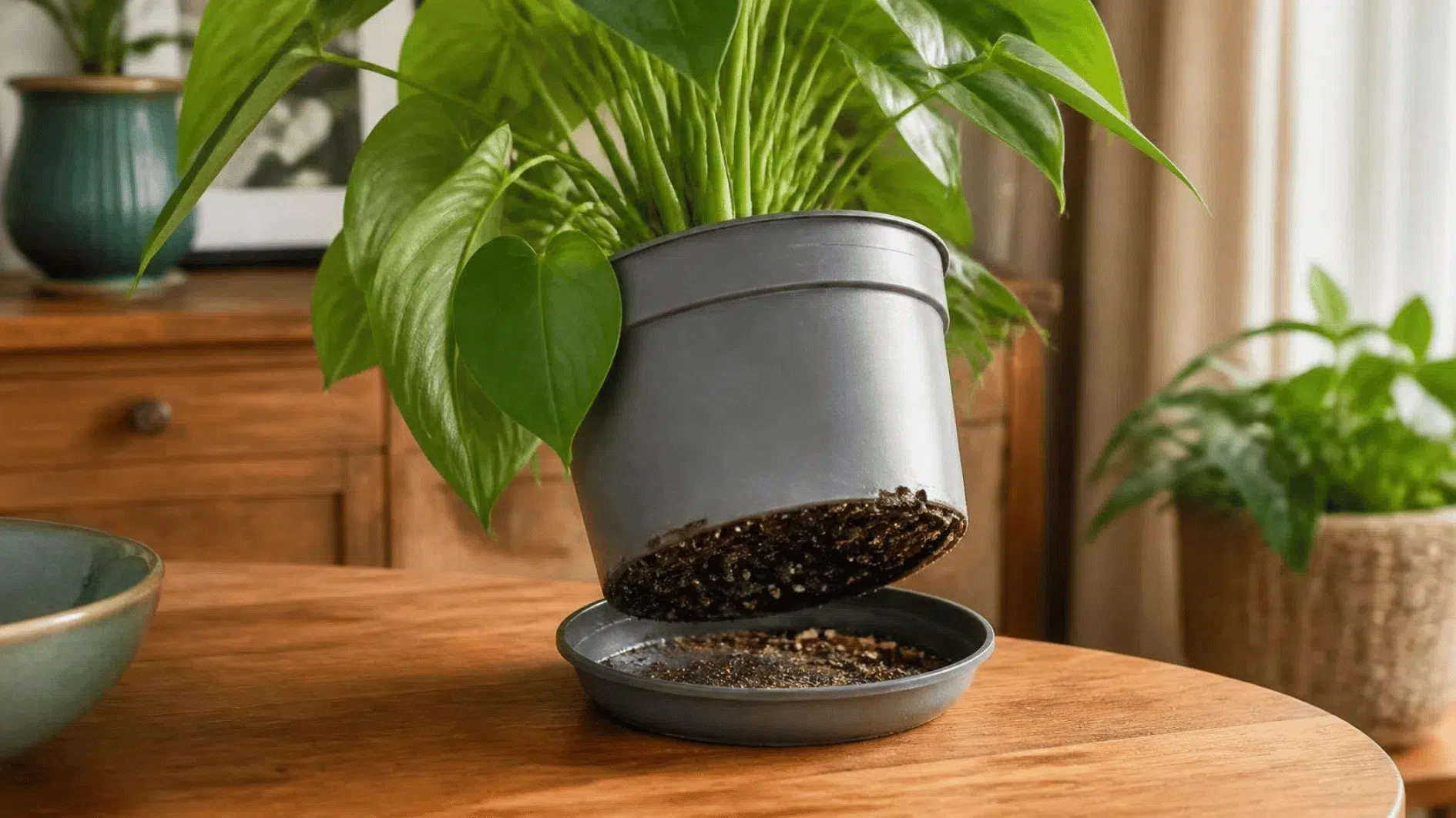
A nursery pot with drainage holes can still stand in a decorative outer pot filled with hidden water. This may keep roots wet after watering and make the true conditions harder to assess.
Lift the inner pot where safe, inspect accumulated water and empty it appropriately. Decorative stones in an undrained container do not reliably solve excess moisture around conventional potted roots.
Consider Compost Structure and How Long It Stays Wet
A compacted or very moisture-retentive mix can behave differently from an open, appropriately structured medium. The correct texture depends on the species, and newly repotted plants may need a revised watering routine.
Check whether the medium matches the plant and whether it has deteriorated. Do not replace all compost in a distressed plant without weighing the benefit against potential root disturbance.
How to Assess Root Health When There Is a Reason
Roots can be compromised by saturated medium, severe dryness, crowding or disease. Yellowing may accompany these problems, but examining the roots is most useful when the other evidence justifies it.
If you inspect a rootball, handle it gently and compare the roots with reliable species-specific information. Root colour alone is not enough to diagnose decay, since naturally healthy roots vary in appearance.
Will Repotting Fix Yellow Houseplant Leaves?
Repotting may help where the existing medium has deteriorated, roots are severely congested or the container no longer suits the plant. It can also stress healthy roots if done unnecessarily.
Do not repot merely because a leaf has yellowed. See our repotting houseplants guide for deciding when a move is worthwhile and choosing a suitable pot.
Can Too Little Light Cause Yellow Leaves?
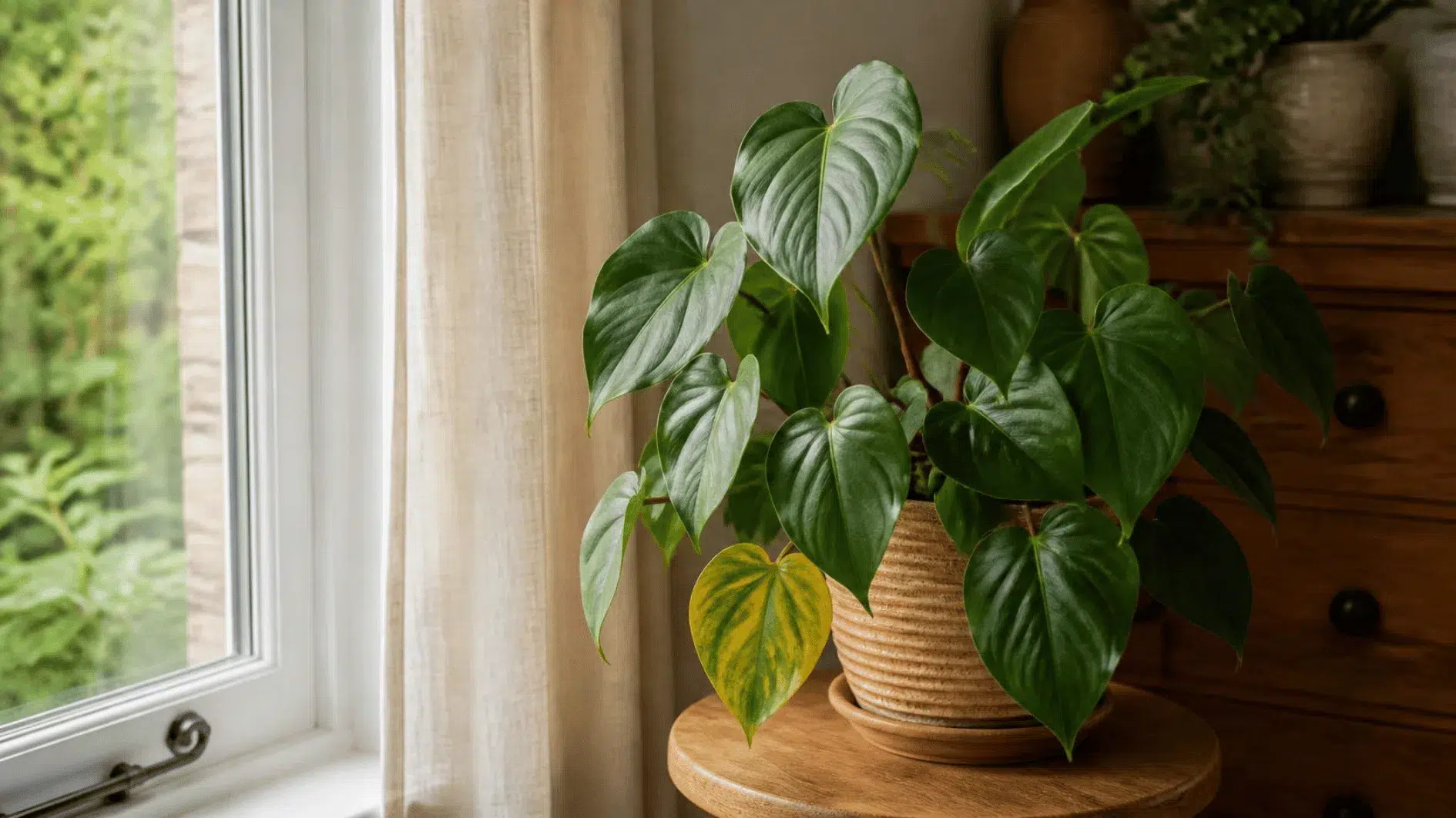
Plants need suitable light to maintain growth and foliage. A plant kept below its species’ light requirements may develop weak growth, slower growth or leaf discolouration. Low light can also slow compost drying, complicating watering.
Assess actual daylight through the seasons, nearby obstructions and how much light reaches the leaves. A move to brighter conditions may be useful, but avoid suddenly placing shade-adapted plants in intense sun.
Can Strong Sunlight Discolour Houseplant Leaves?
Plants that do not tolerate intense direct sunlight may develop faded or damaged leaf areas. This damage can look different from uniform yellowing, and physical damage or cold can sometimes cause similar marks.
Review where the affected foliage sits and when the marks appeared. Follow the species’ light requirements and introduce suitable shading if necessary rather than assuming every plant prefers a sunny windowsill.
Why Yellow Leaves May Appear in UK Winter
Shorter days, cooler windows and indoor heating all change the environment of a houseplant. For some species, slower seasonal growth and an occasional ageing leaf are normal; for others, inappropriate watering or cold may create problems.
Check both light and compost moisture instead of maintaining an unchanged summer watering schedule. Do not assume that yellowing in winter is automatically harmless or automatically a disease.
Check Cold Draughts and Chilly Windowsills
Many popular tropical foliage plants can be sensitive to cold air or direct contact with cold glass. A sudden temperature drop may damage leaves or make waterlogged roots less tolerant of their conditions.
Observe whether symptoms developed after a cold spell, an open window or a change in heating. Move sensitive plants to an appropriate location without blocking radiators, vents or access routes.
Heating and Unusually Warm Rooms
A plant beside a radiator may experience warm, dry air, direct heat or faster compost drying. Leaf damage under those conditions can have several causes, including moisture stress.
Keep suitable clearance from heating equipment, check root-zone moisture and follow the species’ temperature guidance. More watering is not automatically the answer to heat-related problems.
Could Nutrient Availability Be Involved?
Some nutrient limitations can cause pale or yellowing foliage, but symptoms overlap with poor root function, unsuitable light and other stresses. Fertiliser does not compensate for waterlogged roots or an unsuitable position.
Check whether the plant has been fed according to its species and product guidance, whether the compost is fresh and whether new growth is healthy. Avoid adding multiple nutrient products based only on leaf colour.
Too Much Fertiliser Can Create Problems Too
Overfeeding or using a product incorrectly can harm roots and contribute to foliage symptoms. A struggling plant does not necessarily need stronger fertiliser, particularly soon after repotting.
Follow the fertiliser label and avoid combining several products. If an inappropriate application is suspected, consult credible plant-care guidance rather than trying untested neutralising mixtures.
Inspect Yellowing Leaves for Pests
Mealybugs, scale insects, spider mites and other pests may affect foliage health. Their visible signs differ, and some non-pest damage can resemble an infestation.
Look carefully at leaf undersides, stems and new growth for identifiable insects, webbing, residues or characteristic damage. Identify the problem before choosing a treatment and observe all UK product-label and household safety requirements.
Fungus Gnats Do Not Explain Every Yellow Leaf
Small flies around potting compost may be fungus gnats, particularly in some moist growing environments. Their presence does not automatically mean they are responsible for discoloured leaves.
Confirm the insect and review the medium and roots. Do not withhold necessary water from a moisture-loving plant just to dry the pot, or apply unverified household chemical mixtures.
Yellow Leaves With Spots or Brown Patches
Distinct spots, softened tissue or areas of spreading damage may warrant closer attention. Possible causes range from water or physical damage to pests and disease; the pattern needs context and identification.
If an infection or pest issue is suspected, separate the plant where practical, avoid unnecessary wetting or handling of affected foliage, and seek reliable diagnosis before using control products.
Yellow Leaves After Bringing a Plant Home
A plant brought home from a nursery may experience a change in light, temperature, humidity and watering. Some adjustment can occur, but persistent or extensive yellowing still deserves a check of the plant’s condition.
Inspect the original compost and nursery pot before watering or repotting immediately. Choose a suitable location, avoid repeated moves and monitor healthy new growth over the following weeks.
Yellow Leaves After Repotting
Root disturbance, a changed growing medium or an oversized pot can alter how a plant accesses water. Foliage stress soon after repotting should be evaluated in light of those changes.
Check the pot’s drainage, the new medium’s moisture and the species’ aftercare requirements. Do not repot repeatedly to fix a symptom unless there is evidence that the new root environment is unsuitable.
When Several Houseplants Turn Yellow Together
If more than one plant shows symptoms at the same time, consider shared changes in heating, light, water source, location or care routines. Different species can still respond differently to the same conditions.
Review recent household changes and avoid applying the same treatment to every pot without checking each plant. A group of symptoms offers useful context but does not prove one common cause.
Should You Remove Yellow Leaves?
A fully yellowed or dead leaf may be removed where appropriate to the species and where it can be done safely. However, removing leaves addresses appearance, not the underlying cause.
Use clean, suitable tools and do not strip large numbers of leaves unnecessarily. Watch whether new healthy foliage develops after the growing conditions are corrected; existing damaged tissue may not regain its original colour.
How Long Before a Houseplant Looks Better?
Recovery depends on the species, season, extent of damage and whether the cause has actually been corrected. An established yellow leaf often stays damaged, so the condition of subsequent growth is a better measure of progress.
Continue appropriate routine care and observe for signs of ongoing decline. Avoid forcing fast improvement with extra feed, water or sudden major changes when there is no evidence those actions are needed.
When to Seek More Specialist Plant Advice
Rapid collapse, extensive stem softening, severe root damage or spreading unidentified spots are reasons to obtain reliable plant-health or horticultural advice. A valuable or unusual specimen may also justify specialist assessment.
Do not try random fungicides or home-made pest treatments before identifying the issue. A reputable nursery, botanical garden or appropriate horticultural professional can provide help tailored to the plant.
Yellow Leaf Patterns: A Practical Comparison
The following table outlines useful observations rather than certain diagnoses. Similar patterns can arise from different causes, particularly when a plant has more than one stressful condition.
Use the pattern, compost, light, temperature, root condition and recent history together before choosing a response.
| Leaf pattern or sign | Possible explanations | Useful first checks |
|---|---|---|
| One older lower leaf yellowing | Normal ageing or various stresses | Species, speed and health of new growth |
| Several yellow leaves plus wet compost | Moisture or root problems | Drainage, medium and roots when indicated |
| Yellow leaves plus very dry rootball | Possible insufficient water | Moisture depth, pot weight, recent heat |
| Pale elongated shoots | Potentially inadequate light | Actual room light and species guidance |
| New leaves with pale areas between veins | Several possible nutrient or root issues | Plant identification, root condition and feeding history |
| Yellow patches on sunny side | Possible light damage or other stress | Sun exposure, recent moves and pattern |
| Yellowing with webbing or insects | Possible pest infestation | Identify organisms under leaves and along stems |
| Yellow leaves after repotting | Root disturbance or changed medium | Pot size, drainage and watering adjustment |
A Step-by-Step Yellow Houseplant Leaf Checklist
Begin with the plant’s name and normal growing habit. Observe which leaves are yellow, how fast the change occurred and whether stems and new foliage appear otherwise healthy.
Then assess root-zone moisture and drainage, actual light, temperature, recent moves and pest signs. Make an evidence-based adjustment where appropriate and monitor new growth instead of changing everything at once.
- Identify the plant and check whether older leaf shedding is normal.
- Note which leaves are yellow and when symptoms began.
- Check compost moisture below the surface as appropriate.
- Inspect saucers and decorative cover pots for pooled water.
- Review actual light, recent sun exposure and UK seasonal changes.
- Check cold draughts, hot radiators and sudden changes of position.
- Inspect leaves and stems for identifiable pests or unusual spots.
- Review repotting, feeding and other recent treatments.
- Make one suitable change based on evidence and observe new growth.
Common Mistakes When Treating Yellow Leaves
Frequent errors include assuming every yellow leaf means overwatering, responding to wilting with more water without checking compost, applying fertiliser to a root-damaged plant and moving plants straight into intense sun.
Another mistake is repotting or pruning repeatedly without knowing the cause. Always consider normal leaf ageing, seasonal change and species-specific requirements before intervening.
Frequently Asked Questions About Yellow Houseplant Leaves
Do yellow leaves always mean overwatering? No. Natural ageing, dryness, light, temperature, roots, nutrients and pests can all be involved. Will a yellow leaf turn green again? Often the existing yellowed tissue will not, even when the conditions improve.
Should I cut off yellow leaves? Remove dead foliage only where appropriate and with suitable tools. Should I repot immediately? Not unless root congestion, failing compost or another clear problem justifies it. Check the whole plant before choosing any remedy.
Does a yellow leaf mean I have overwatered?
Not necessarily. Several different stresses and normal ageing can cause yellowing; inspect the compost and roots before making watering changes.
Will yellow houseplant leaves turn green again?
Often not. Existing yellowed or damaged tissue may remain discoloured even if the underlying cause is corrected; monitor new healthy growth.
Should I remove a yellow leaf?
You can remove fully dead or yellowed foliage where appropriate to the species using clean suitable tools, but this does not treat the cause.
Should I repot a plant with yellow leaves?
Only when the rootball, medium or pot needs attention. An isolated yellow leaf is not enough reason to repot.
Can too little light turn indoor leaves yellow?
Unsuitable low light can affect growth and foliage, although the symptoms overlap with other causes. Check actual light and the species.
Can houseplant pests cause yellow leaves?
Some can, but look for identifiable signs before choosing a treatment. Use products safely and according to UK label instructions.
Find the Cause Before Trying a Cure
Yellow leaves on houseplants are a reason to look carefully, not a command to add water or buy another treatment. Identifying the plant, examining the pattern and checking its roots and environment will often reveal a sensible next step.
Give the plant suitable conditions and time to respond. A simple, informed adjustment is usually preferable to a series of unrelated interventions. If a plant needs a new home, browse our planters and botanical decor.

Leave a Reply