

NATURAL LIVING · INDOOR PLANTS & BIOPHILIC DESIGN
Green Wall Vertical Garden: Ideas for Bringing Greenery Up the Wall
A practical guide to green walls and vertical gardens indoors—covering system types, light, irrigation, plant choice, maintenance and simpler alternatives when a full living wall is more than the room needs.
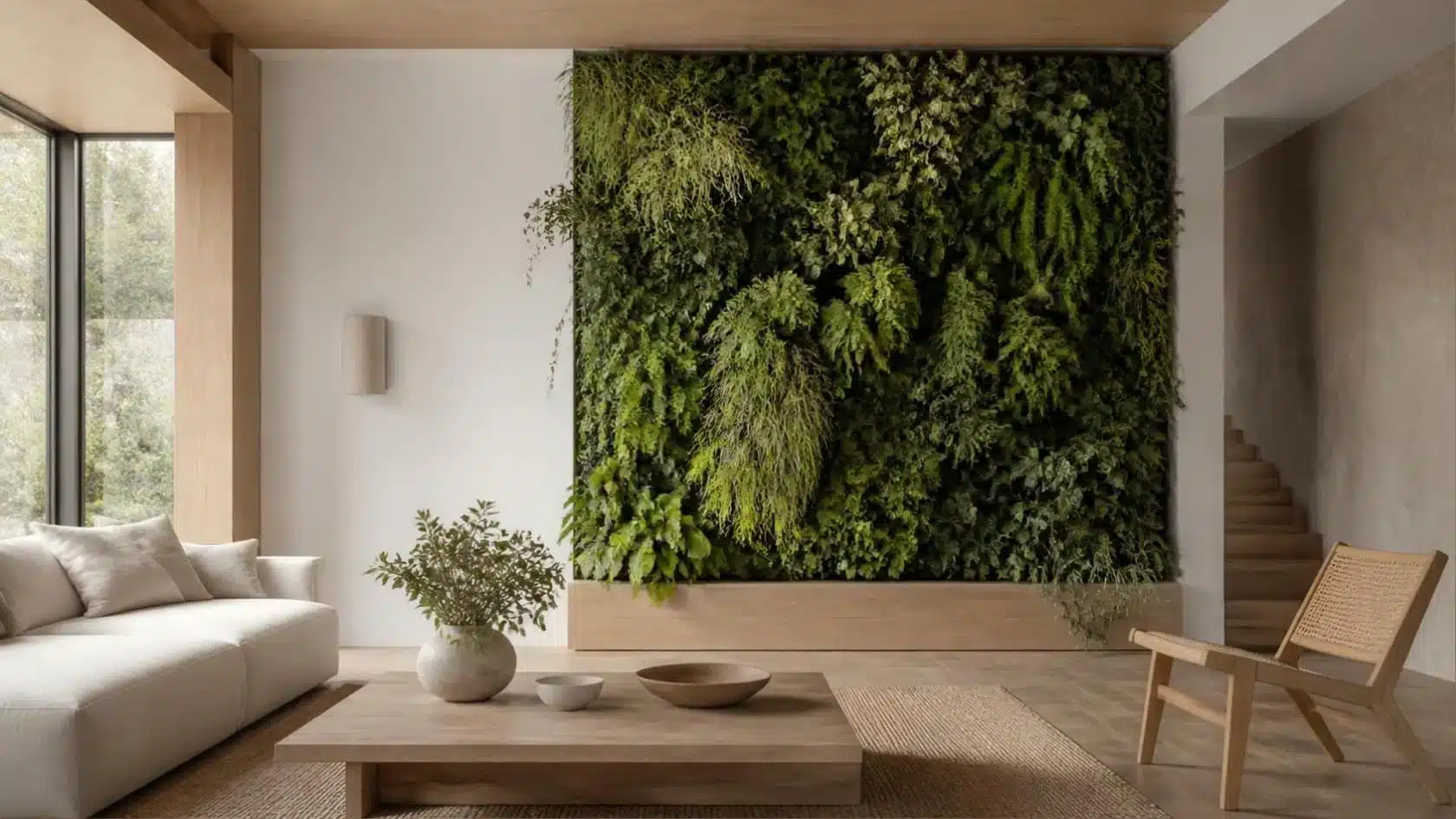
A green wall vertical garden can introduce planting where floor space is limited, but the visual effect is only one part of the decision. Once plants move onto a wall, light, irrigation, drainage, access and maintenance all become more important.
The term can describe anything from a few wall-mounted planters to a fully engineered living wall. Those systems do not have the same cost, complexity or care requirements, so it helps to decide how much planting you actually need before choosing the hardware.
If you are still deciding which plants suit the room itself, our indoor plants guide covers light, humidity, temperature, scale and care in more detail. This article focuses specifically on taking greenery vertically.
What Is a Green Wall Vertical Garden?
A green wall vertical garden is a way of growing plants upward on, against or within a vertical surface rather than relying only on floor-level containers.
At the simplest end, this might mean a small group of wall planters or a trellis supporting climbing plants. At the more complex end, a living wall can use modular planting cells, engineered growing media and integrated irrigation.
The Royal Horticultural Society distinguishes between direct greening, indirect greening and living wall systems. Direct greening uses plants attached directly to a surface; indirect greening uses supports such as wires or trellis; living wall systems use planted modules or containers fixed to the wall. RHS
Green Wall, Living Wall and Vertical Garden: What’s the Difference?
These terms are often used interchangeably, but they can describe different levels of complexity.
- Green wall: a broad term for a wall surface softened or covered by vegetation.
- Living wall: usually an engineered system in which plants grow from modules, pockets or containers attached to the wall.
- Vertical garden: a wider category that can include living walls, wall planters, trellis systems and other ways of growing plants vertically.
- Indoor plant wall: an indoor application, which may range from a small arrangement of wall planters to a full irrigated living wall.
For most homes, the distinction matters because the more engineered the system becomes, the more important irrigation, drainage, lighting and maintenance access become.
When a Green Wall Makes Sense Indoors
A living green wall can work well where the room has good natural light, enough visual scale and a genuine need to move planting off the floor.
It is particularly useful when a blank wall is large enough to support a strong planting gesture, or when the room already has a clear architectural composition and one planted surface can act as the natural focal point.
This is closely related to the principles in our biophilic design guide: greenery is most convincing when it feels integrated with light, material and spatial rhythm rather than added simply to fill a surface.
Start With Light Before Choosing a System
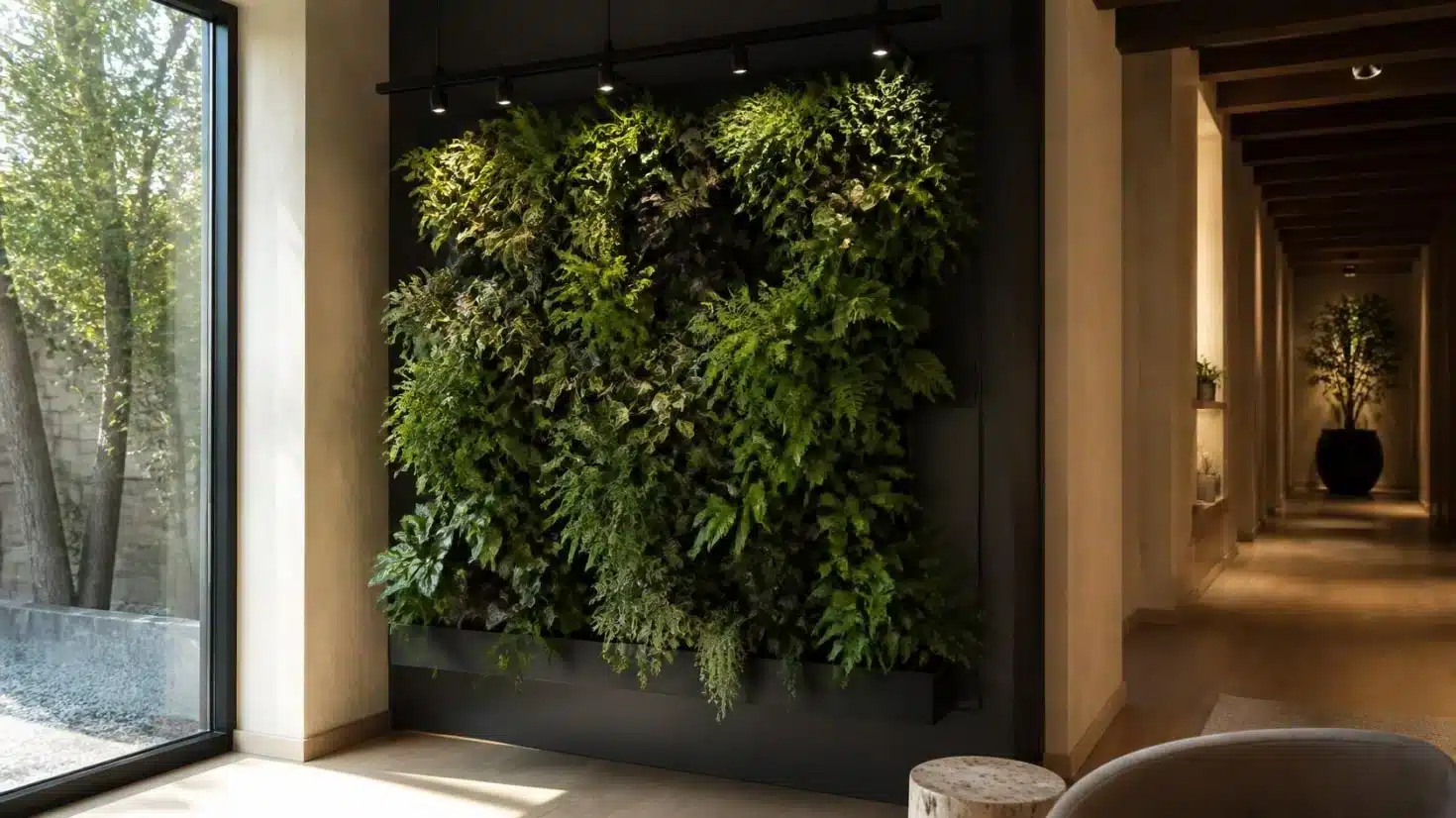
Light is the first practical limit on any indoor green wall.
The RHS notes that indoor green walls may require additional artificial lighting, especially where natural light is insufficient. Plants within the same wall also need to suit the light available across that surface. RHS
A large wall can contain different light zones. The upper section may receive stronger daylight than the lower section, while plants nearest the window may experience very different conditions from those at the far edge.
- Observe the wall at different times of day.
- Check how far it sits from the nearest window.
- Notice whether furniture or curtains shade part of the wall.
- Allow for weaker winter light.
- If supplementary lighting is needed, plan it before planting rather than after decline begins.
Choose the Right Vertical Garden System
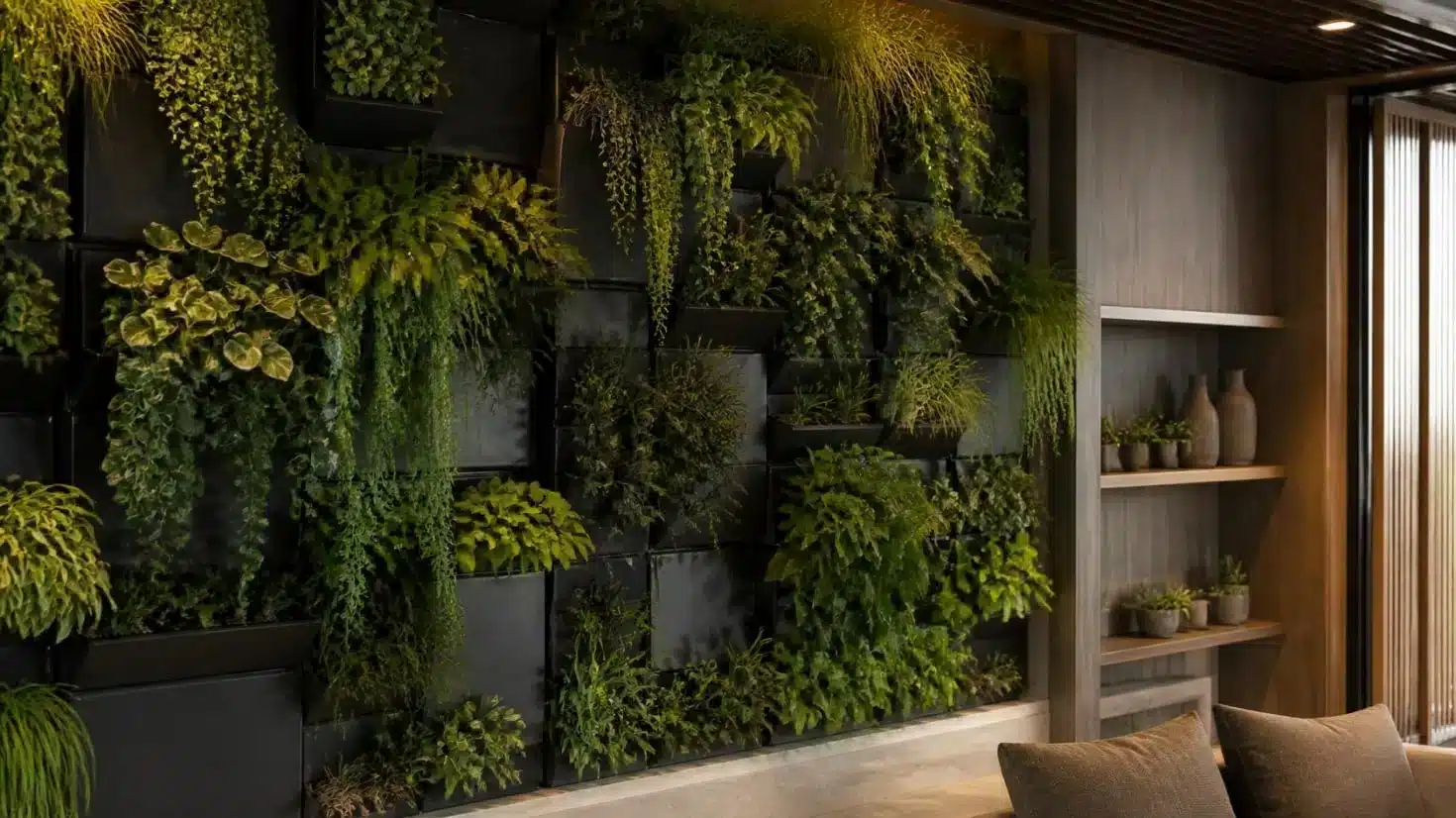
The right vertical garden system depends on how permanent, planted and maintenance-heavy you want the installation to be.
Wall-mounted planters
Separate wall planters are the simplest indoor option. Each plant remains relatively independent, so watering and replacement are easier to control. This is often the most practical way to create the look of a plant wall without committing to a single integrated system.
Pocket or modular systems
These create a denser wall of planting using repeated pockets, cells or modules. They can look highly integrated, but access becomes more important because a failing plant sits within a larger composition.
Engineered living wall systems
More substantial living walls may use specialist growing media, drip irrigation and a designed drainage strategy. The RHS notes that larger engineered systems can require professional installation and maintenance. RHS
Plan Irrigation and Drainage First
A plant wall concentrates water close to a vertical building surface, so irrigation and drainage should be resolved before aesthetics.
Small wall planters may be practical to water by hand. Dense modular walls can be much harder to water evenly, and larger systems often use drip irrigation to distribute moisture more consistently.
The important question is not simply how water reaches the plants, but where excess water goes afterwards. Any system should keep moisture away from vulnerable plaster, timber, electrical fittings and furnishings.
Protect the Wall and Surrounding Finishes
Do not treat the wall behind a living wall as an invisible surface. It still needs protection, ventilation and access appropriate to the system being used.
A manufacturer’s installation requirements should be followed for waterproof backing, fixing points, load and drainage. For larger systems, particularly those carrying significant wet growing media, professional advice is sensible before fixing anything permanently to the building fabric.
Also think about the floor beneath the installation. A discreet, well-planned system should not rely on repeated mopping, hidden water trays or moisture reaching skirting boards.
Choose Plants With Similar Needs
One of the easiest ways to make a living wall difficult to maintain is to combine plants with very different light and moisture requirements in the same irrigation zone.
The RHS recommends grouping plants with similar light and moisture needs when creating green walls. RHS
For an indoor wall, that means choosing plants for the actual conditions rather than selecting solely for foliage colour. A mixed wall can still have visual variety through leaf size, texture and growth habit without combining plants that require conflicting care.
Avoid Overplanting the Wall
A newly installed green wall does not need to look completely mature on day one.
Leaving some growing space around each plant improves access and makes future growth easier to manage. A wall packed tightly for an instant photographic effect may become harder to inspect, prune and replace later.
The same principle applies across this cluster: mature size matters more than nursery size. If you are deciding between a wall installation and one stronger floor specimen, our guide to large indoor plants may offer a simpler route to architectural greenery.
Indoor Plant Walls Need Maintenance Access
An indoor plant wall needs to be reachable. Plants will need pruning, cleaning, checking for pests, replacing and sometimes repotting or refreshing depending on the system.
A wall that looks beautifully integrated but can only be maintained with awkward furniture moving or unsafe reaching will become frustrating quickly.
Keep enough working space in front of the installation, and make sure irrigation components, reservoirs or removable modules can be accessed without dismantling surrounding joinery.
Simpler Alternatives to a Full Living Wall
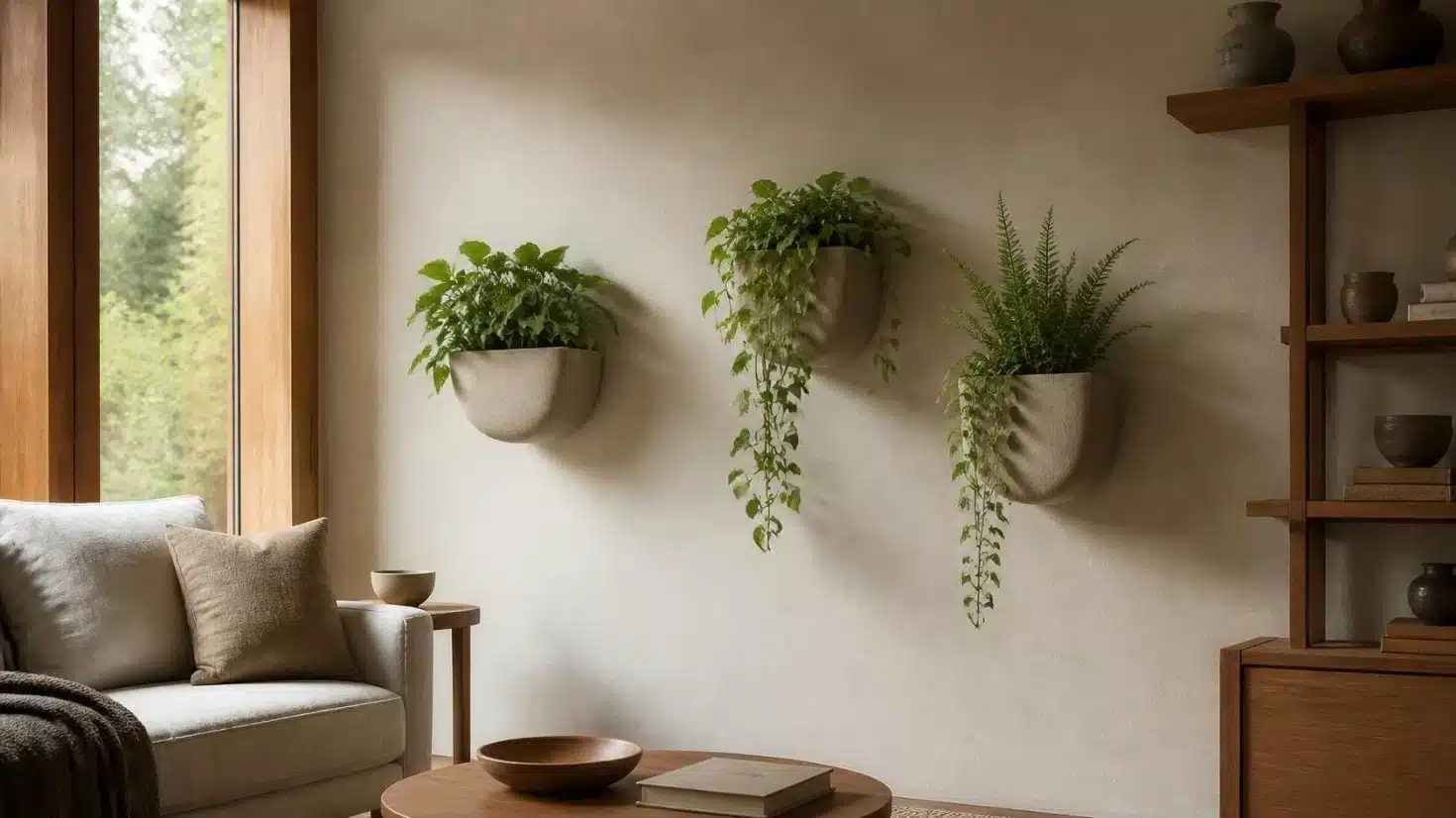
A full living wall is not always the best answer. You can create vertical greenery with far less infrastructure.
- One trailing plant on a high shelf: creates vertical movement with simple maintenance.
- A small group of wall planters: gives the impression of a planted wall while keeping plants individually accessible.
- A tall indoor tree: adds vertical scale without introducing irrigation into the wall. See our indoor tree guide.
- A climbing plant on a freestanding support: can create a softer vertical layer while protecting the building surface.
These alternatives often suit homes better because they preserve flexibility. The room can evolve without requiring an entire planted system to be redesigned.
How to Style a Green Wall Without Overwhelming the Room
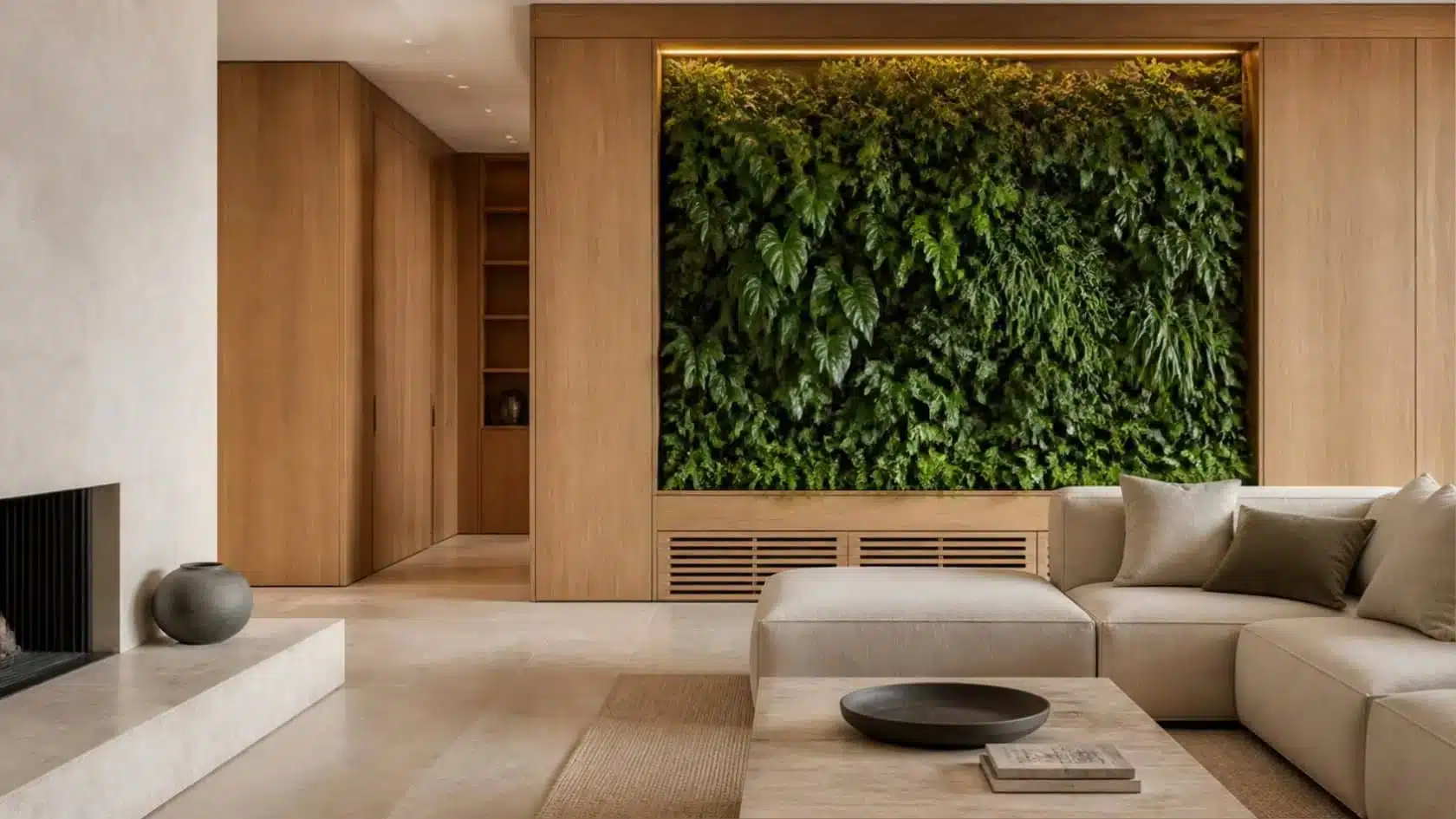
A green wall is already a strong visual element. It usually needs less surrounding decoration, not more.
- Keep nearby artwork restrained or omit it entirely.
- Use simple planters and frames so foliage remains dominant.
- Repeat one or two natural materials elsewhere in the room rather than introducing many new textures.
- Allow clear negative space around the planted area.
- Use lighting to reveal texture rather than flatten the wall with one harsh source.
The result should feel like part of the architecture. A successful plant wall should not need extra styling to explain itself.
Common Green Wall Mistakes
- Choosing the system before assessing light.
- Ignoring drainage and wall protection.
- Mixing plants with incompatible moisture requirements.
- Overplanting for an instant finished look.
- Installing the wall where maintenance access is poor.
- Assuming every indoor wall has enough natural light.
- Using a complex living wall where a few wall planters would achieve the same visual effect.
A Simple Green Wall Planning Method
- Choose the exact wall.
- Assess natural light across the whole surface.
- Decide whether you need planters, a modular wall or a full living wall.
- Resolve irrigation, drainage and wall protection.
- Check structural fixing and access requirements.
- Choose plants with compatible light and moisture needs.
- Leave room for mature growth and replacement.
- Plan ongoing maintenance before installation.
Frequently Asked Questions About Green Walls
What is the difference between a green wall and a living wall?
Green wall is the broader term. A living wall usually refers to an engineered planted system using modules, pockets or containers fixed to the wall, often with integrated irrigation.
Can you have a vertical garden indoors?
Yes, but indoor systems need enough light, reliable drainage and practical maintenance access. Where natural light is insufficient, supplementary grow lighting may be needed.
Does a living wall need irrigation?
Small wall planters can often be watered by hand. Larger or denser living wall systems commonly use drip irrigation because watering many planting pockets evenly by hand can be difficult.
Will a green wall damage an interior wall?
A correctly designed system should include appropriate backing, fixing, drainage and access. Poorly planned moisture management can damage finishes, so follow the system manufacturer’s installation requirements and use professional advice for larger installations.
What is the easiest way to create a plant wall indoors?
A small group of independent wall planters is usually easier to manage than a fully integrated living wall. It gives vertical greenery while keeping watering, replacement and plant choice more flexible.
Use Vertical Greenery With Restraint
A green wall vertical garden can be an effective way to bring plants into a room without using more floor area, but the strongest result begins with horticulture and building practicalities rather than visual impact alone.
Start with light, then choose the simplest system that achieves the effect you want. Resolve water, drainage and access before planting, and use plants with compatible needs.
When a full living wall makes sense, it can become a remarkable architectural layer. When it does not, a few well-placed wall planters or one strong floor plant can create a calmer, more maintainable result.

Leave a Reply